Suboxone to Naltrexone a withdrawal-free transition guide
Why a Withdrawal-Free Transition Matters
Can I use naltrexone to taper off Suboxone without withdrawal is a common question for those ready to end their medication-assisted treatment. While naltrexone can’t eliminate withdrawal, it can make the transition significantly easier when managed correctly.
Quick Answer:
- Naltrexone can reduce withdrawal severity when part of a medically supervised Suboxone taper.
- Research is promising: One study showed all participants remained opioid-free at 6 months after a naltrexone-facilitated transition.
- Withdrawal symptoms peak early but typically resolve after day 5.
- It’s not “withdrawal-free,” but symptoms are far more manageable with comfort medications and medical oversight.
- Medical supervision is essential for safety and success.
If you’re on Suboxone for opioid use disorder, the idea of stopping can be daunting due to fears of severe withdrawal or relapse. Traditional Suboxone tapers can take weeks or months, a lengthy process that many find difficult to complete.
This is where a naltrexone-facilitated taper can help. This approach uses naltrexone to shorten the transition timeline and reduce withdrawal discomfort. While you will likely experience some withdrawal symptoms, proper medical support and a structured protocol make the process much more tolerable than a traditional taper.
I’m Dr. Chad Elkin, founder and Medical Director of National Addiction Specialists. I’ve helped countless patients steer this transition by developing personalized plans that prioritize safety and comfort. Through our telemedicine platform, we provide the essential medical supervision for this process.
Understanding Suboxone and Why a Taper is Necessary
Before exploring how naltrexone can help, it’s important to understand Suboxone and why a proper taper is crucial for your safety and success.
What is Suboxone and Why is it Prescribed?
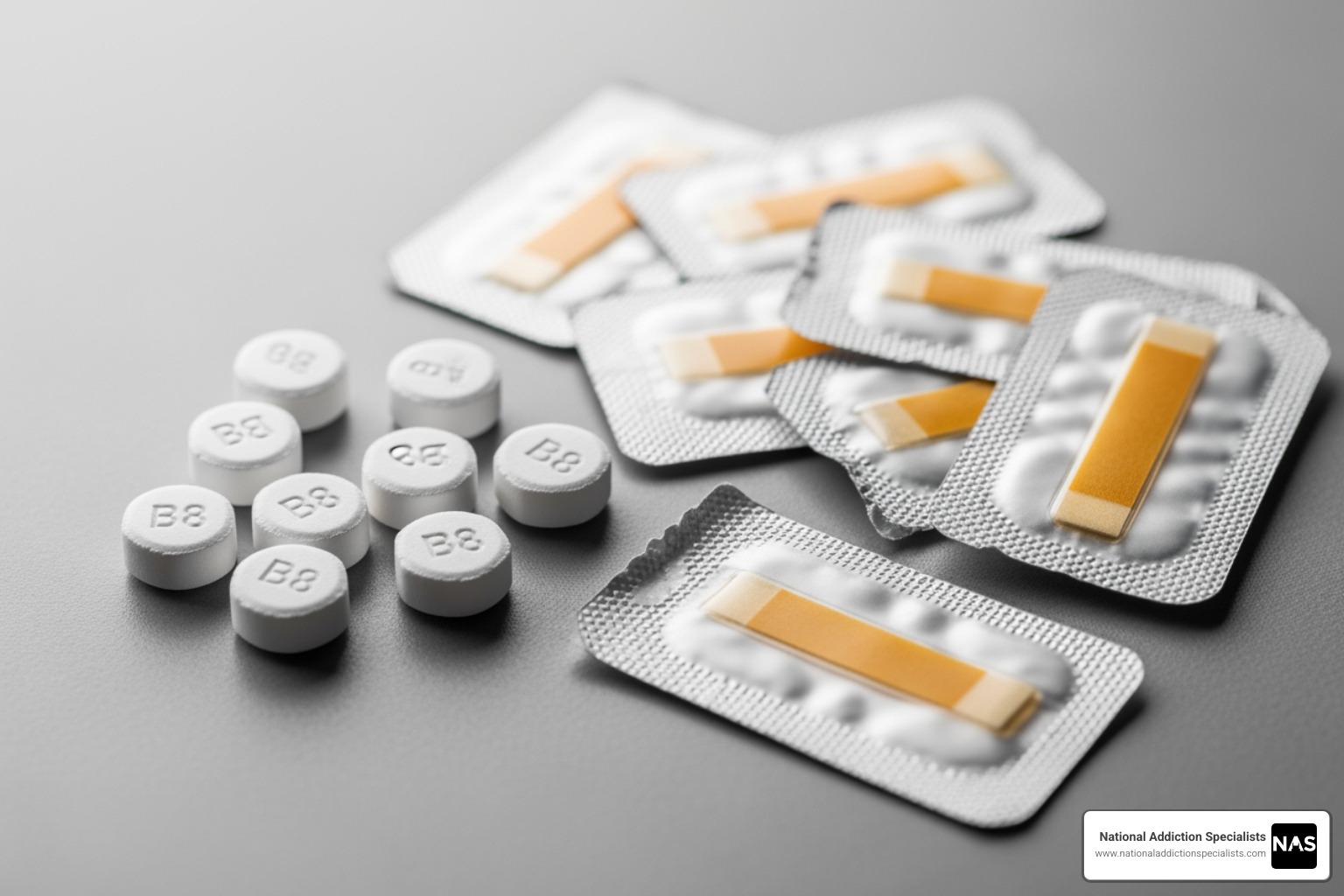
Suboxone is a key medication in the fight against opioid use disorder, combining two active ingredients:
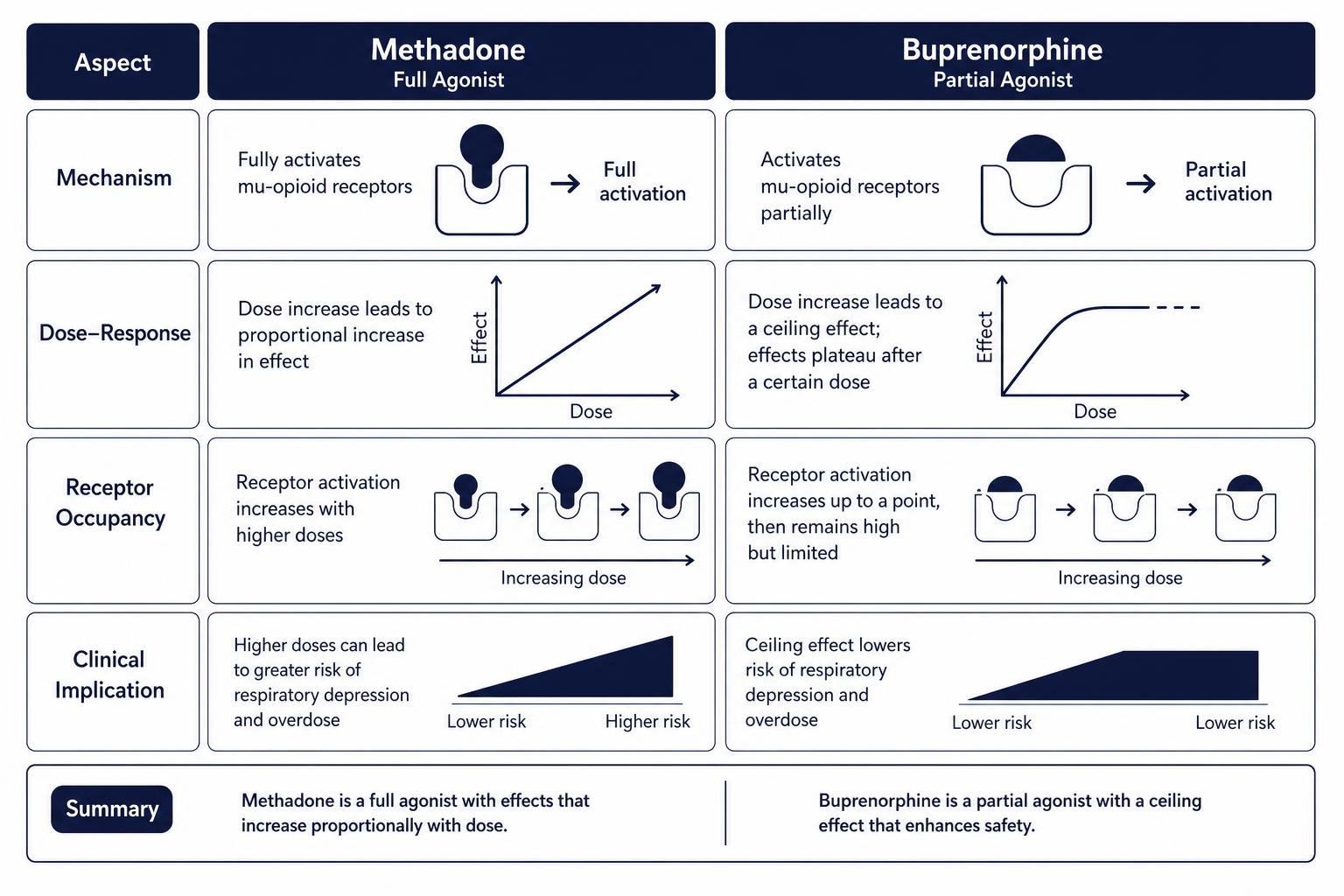
- Buprenorphine: A partial opioid agonist. It partially activates opioid receptors to reduce cravings and prevent withdrawal symptoms without producing the intense high of full agonists like heroin or prescription painkillers.
- Naloxone: An opioid antagonist that acts as a safety feature. If Suboxone is misused by injection, naloxone triggers immediate withdrawal, deterring abuse. When taken as prescribed under the tongue, very little naloxone is absorbed.
Together, these ingredients make Suboxone an effective form of Medication Assisted Treatment that helps stabilize your life and allows you to focus on recovery. For more details, you can read about what Suboxone is or review the official Suboxone information.
The Dangers of Stopping Suboxone Abruptly
Your body can become dependent on Suboxone, and stopping it suddenly (“cold turkey”) is dangerous. Buprenorphine is long-acting, so withdrawal symptoms may not appear for 24-48 hours. When they do, they can be severe and prolonged. Suboxone withdrawal can be long-lasting, stretching for 20 days or more, compared to about 10 days for short-acting opioids.
The intense physical and psychological distress of unmanaged withdrawal creates a high risk of relapse as people seek relief. Additionally, Post-Acute Withdrawal Syndrome (PAWS) can cause lingering psychological symptoms like anxiety and depression for months, further increasing relapse risk. This is why medical supervision is not just recommended—it’s essential for a safe transition.
Common Suboxone Withdrawal Symptoms
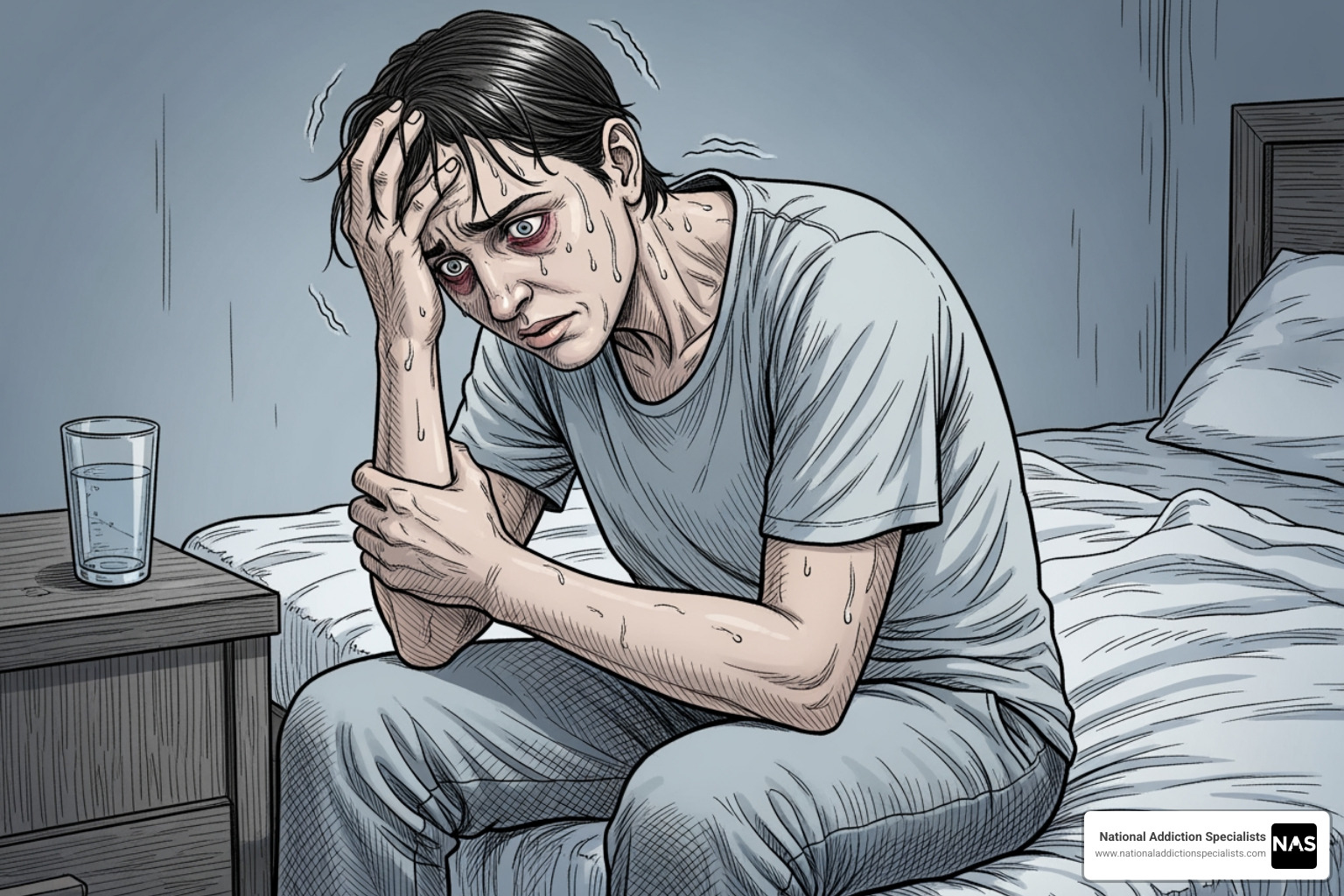
Knowing what to expect can help you prepare. Withdrawal symptoms affect both body and mind.
Physical Symptoms:
- Muscle aches and bone pain
- Insomnia
- Runny nose and watery eyes
- Excessive sweating and goosebumps
- Abdominal cramps, nausea, vomiting, and diarrhea
Psychological Symptoms:
- Agitation and irritability
- Severe anxiety or panic attacks
- Depression and hopelessness
- Intense cravings for opioids
These symptoms typically begin 12-48 hours after the last dose. Our guide on the Suboxone Withdrawal Timeline provides more detail. A comprehensive list of symptoms of withdrawal is also available in professional guidelines. With our support, these symptoms can be effectively managed.
Recommended Tapering Methods
At National Addiction Specialists, we use evidence-based tapering methods to ensure your safety and comfort.
The gold standard is direct tapering, the expert-recommended tapering method. We create a personalized schedule to gradually reduce your Suboxone dose, allowing your body to adjust slowly and minimizing withdrawal severity.
Other methods are not recommended for Suboxone. Substitute tapering (switching to a longer-acting opioid) is irrelevant since Suboxone is already long-acting. Titration tapering (dissolving Suboxone in water) is dangerous because Suboxone doesn’t completely dissolve in water, leading to unpredictable dosing and potential for severe withdrawal.
We focus on direct tapering under medical supervision as the safest strategy. Learn more about our approach in our guide on How to Taper Off Suboxone.
Can I Use Naltrexone to Taper Off Suboxone Without Withdrawal?
The better question than can I use naltrexone to taper off Suboxone without withdrawal is: can naltrexone make the transition significantly easier, faster, and more manageable? The answer is yes.
How Naltrexone Works for Opioid Dependence
Naltrexone is a pure opioid antagonist. Unlike buprenorphine (a partial agonist), naltrexone completely blocks opioid receptors without activating them. This action is key to its role in recovery:
- It prevents euphoria: If a person uses opioids while on naltrexone, they will not feel a high.
- It reduces cravings: By modulating the brain’s reward pathways, it helps lessen the mental pull toward opioids.
- It is non-addictive: Naltrexone does not cause physical dependence or withdrawal symptoms when stopped.
Naltrexone is available as a daily oral pill or a once-monthly extended-release injection called Vivitrol. While traditionally used for relapse prevention after detox, it can also be used to facilitate the detoxification process itself.
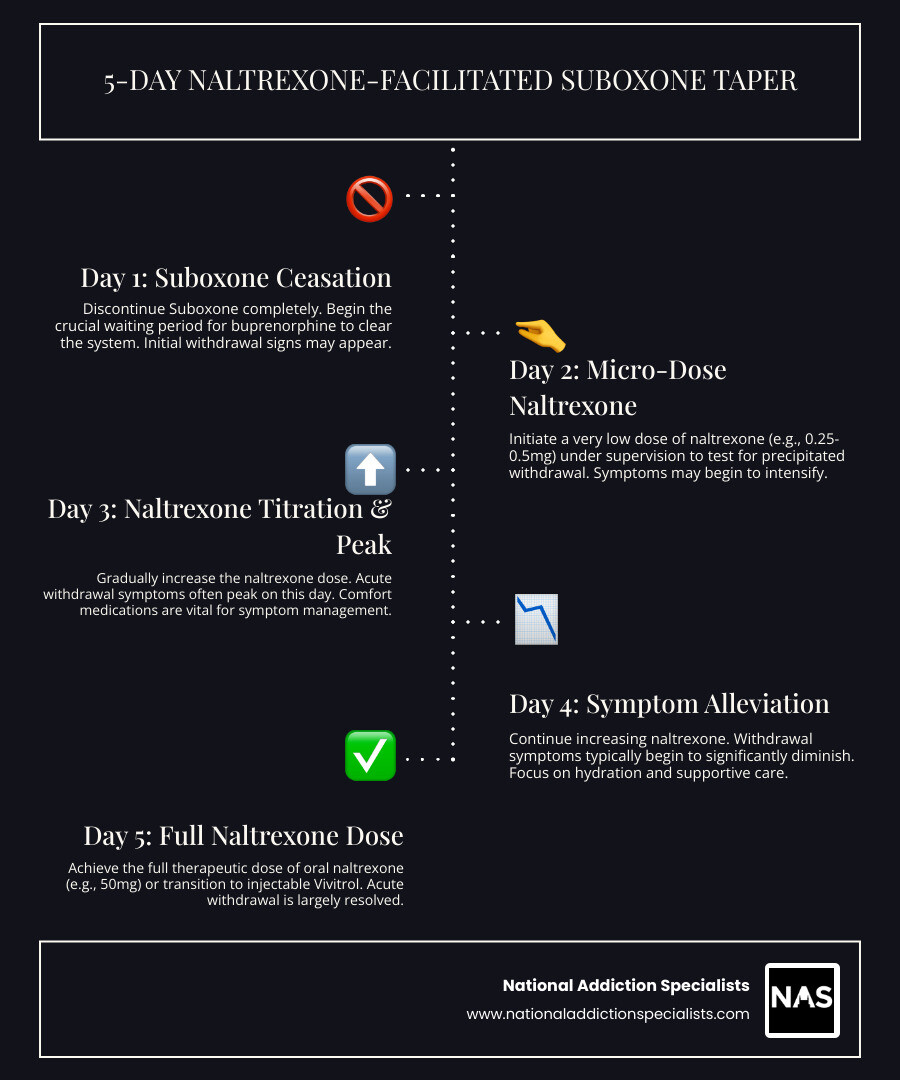
The Naltrexone-Facilitated Taper Protocol
This specialized process requires strict medical supervision to safely transition you from buprenorphine to naltrexone on an accelerated timeline.
The protocol generally involves these steps:
- Discontinue Suboxone: This is the first step, timed according to your specific dose and history.
- Wait for Clearance: A critical waiting period is required to allow enough buprenorphine to leave your system. Starting naltrexone too soon causes severe precipitated withdrawal.
- Begin Low-Dose Naltrexone: We start with a very small oral dose of naltrexone and gradually increase it over several days under close observation.
- Manage Symptoms: We prescribe “comfort medications” (e.g., clonidine, anti-nausea medication, sleep aids) to manage any breakthrough withdrawal symptoms.
- Transition to Maintenance Dose: Once you tolerate a full oral dose, you can continue with daily pills or switch to a monthly Vivitrol injection for long-term relapse prevention.
This protocol compresses the withdrawal timeline, making the acute phase shorter, though more intense. Research on naltrexone-facilitated discontinuation has shown this to be a feasible approach.
What the Research Says: Can I use naltrexone to taper off Suboxone without withdrawal?
Research shows that while a completely “withdrawal-free” transition is unlikely, a naltrexone-facilitated taper makes withdrawal significantly more manageable.
A key open-label trial by Dakwar and Kleber found the method to be both feasible and tolerable for patients in sustained remission. The results were highly encouraging:
- All 6 participants successfully completed the naltrexone induction without serious issues.
- All 6 participants remained opioid-free at the 6-month follow-up, a remarkable outcome, especially since some had failed previous attempts to stop buprenorphine.
Participants did experience some withdrawal, but the symptoms were manageable and short-lived. The study found that withdrawal symptoms peaked early but were essentially gone after day 5. In a related trial, 59% of patients had significant withdrawal on day 2, but none had withdrawal after day 5. Comfort medications like clonidine were used to manage symptoms effectively.
The research is clear: this method shortens and lessens the severity of withdrawal, offering a strategic and predictable path to transitioning off Suboxone.
Potential Risks: Precipitated Withdrawal and Side Effects
This protocol has risks, the most significant being precipitated withdrawal. This occurs if naltrexone is taken while significant amounts of buprenorphine are still in your system. Naltrexone rapidly displaces buprenorphine from opioid receptors, triggering sudden, severe withdrawal symptoms. You can learn more about what is precipitated withdrawal? This is why the medically supervised waiting period is non-negotiable.
Common side effects of naltrexone itself are usually mild and temporary, including nausea, headache, dizziness, and fatigue. In rare cases, naltrexone can affect the liver, so we monitor your liver function before and during treatment to ensure your safety.
Our medical team at National Addiction Specialists is trained to manage these risks, prioritizing your safety throughout the entire process.
Make an Appointment to Treat Addiction
Please don’t hesitate. Make an appointment today.
Start your recovery journey here.
Creating Your Medically Supervised Transition Plan
Navigating the path from Suboxone to naltrexone is a significant step that requires a skilled guide. A personalized approach and unwavering support from medical professionals are your most valuable assets on this journey.
The Critical Role of Medical Professionals
Attempting to taper off Suboxone or switch to naltrexone on your own is not only difficult but also dangerous. The process demands careful planning, monitoring, and the ability to make immediate adjustments. This is why medical guidance is essential.
At National Addiction Specialists, we provide comprehensive support through our telemedicine platform, including:
- Personalized Tapering Schedules: We create a Suboxone tapering schedule customized to your unique needs, history, and dosage to ensure the smoothest transition possible.
- Safety Monitoring: Our team closely monitors you for signs of severe withdrawal or adverse reactions through regular check-ins.
- Dose Adjustments: We adjust your Suboxone and naltrexone doses based on your body’s response to ensure a safe and comfortable progression.
- Comfort Medications: We prescribe adjunctive medications to ease common withdrawal symptoms like anxiety, insomnia, and nausea.
- A Safe Transition: Our expertise lies in managing the risks, including precipitated withdrawal, to support your journey to long-term recovery.
Our Online Suboxone Doctors provide this high level of confidential care conveniently to you in Tennessee and Virginia.
Make an Appointment to Treat Addiction
Please don’t hesitate. Make an appointment today.
Start your recovery journey here.
Comparing MAT Options: Suboxone vs. Naltrexone
Suboxone and naltrexone are both effective tools in Medication-Assisted Treatment (MAT), but they work differently and are used at different stages of recovery. Understanding these differences is key to choosing the right path for you.
| Feature | Suboxone (Buprenorphine/Naloxone) | Naltrexone (Oral or Vivitrol Injection) |
|---|---|---|
| Mechanism of Action | Partial Opioid Agonist: Partially activates opioid receptors to reduce cravings and withdrawal. | Opioid Antagonist: Completely blocks opioid receptors, preventing other opioids from having an effect. |
| Administration | Daily film or tablet dissolved under the tongue. | Daily oral pill or a once-a-month injection (Vivitrol). |
| Safety Profile | Physical dependence can occur; abrupt cessation causes withdrawal. Lower risk of respiratory depression than full agonists. | Non-addictive and does not cause withdrawal. Risk of precipitated withdrawal if started too soon. |
| Role in Treatment | Primarily for maintenance treatment to stabilize patients and manage cravings. | Primarily for relapse prevention after detox. Also used for alcohol use disorder. |
| Ideal Candidate | Individuals in early or ongoing recovery who need support managing cravings and withdrawal. | Individuals who are fully detoxed from opioids and motivated to prevent relapse. |
| Withdrawal Potential | Yes, if stopped abruptly. | No, but can cause severe precipitated withdrawal if taken with opioids in the system. |
| Duration of Action | Long-acting, providing sustained effects throughout the day. | Oral works for ~24 hours; Vivitrol injection works for ~1 month. |
Both are valuable Medication Assisted Treatment Options. Our providers can help determine the best fit for your recovery goals.
What are the long-term outcomes and considerations for using naltrexone to taper off Suboxone?
Transitioning to naltrexone is a strategic step toward lasting, opioid-free recovery. The primary long-term benefit is relapse prevention. By blocking the euphoric effects of opioids, naltrexone acts as a safety net, making relapse less likely.
Research, like the Dakwar and Kleber study, shows promising results for continued abstinence support, with all participants remaining opioid-free at a 6-month follow-up. However, medication works best as part of a comprehensive treatment plan. Ongoing therapy and Addiction Counseling Services are essential to address the root causes of addiction and develop healthy coping skills.
Research in this specific area is still growing. Your success also depends on individual factors like your treatment history, support system, and motivation. Using naltrexone to taper off Suboxone can be a powerful step toward achieving complete opioid abstinence, but it is one part of a larger recovery plan.
Your Partner in Recovery: A Smooth Transition is Possible
Deciding to taper off Suboxone is a courageous step in your recovery. The question can I use naltrexone to taper off Suboxone without withdrawal comes from a hope for a manageable path forward, and that hope is realistic.
While a completely “withdrawal-free” experience is unlikely, a naltrexone-facilitated taper under medical guidance can significantly reduce the severity and duration of withdrawal symptoms. The discomfort becomes more tolerable, and the timeline is compressed, offering a clear and achievable goal.
This process is a medical strategy, not a shortcut. It requires a partnership between your commitment and our expert supervision. You are actively transitioning from managing dependence to preventing relapse, aiming for long-term freedom from opioids.
At National Addiction Specialists, we specialize in guiding patients through this exact transition. Our telemedicine platform brings expert, personalized care directly to you in Tennessee and Virginia. We create a plan that prioritizes your safety and comfort, custom to your unique history and goals.
The move from Suboxone to naltrexone is a shift toward reclaiming autonomy in your recovery. You don’t have to do it alone.
If you’re ready to take this step, we are here to walk with you. Learn more about how to taper off Suboxone safely and find how our team can support your transition.
This article was medically reviewed by: Chad Elkin, MD, DFASAM is a board-certified addiction medicine physician, founder, and Chief Medical Officer of National Addiction Specialists, dedicated to treating substance use disorders. A Distinguished Fellow of the American Society of Addiction Medicine (ASAM), Dr Elkin currently serves as President of the Tennessee Society of Addiction Medicine (TNSAM) and has held various leadership roles within the organization. Dr Elkin chairs ASAM’s Health Technology Subcommittee and is an active member of its Practice Management and Regulatory Affairs Committee, State Advocacy and Legislative Affairs Committee, and other committees. He also serves on the planning committee for the Vanderbilt Mid-South Addiction Conference. Committed to advancing evidence-based policy, Dr Elkin is Chairman of the Tennessee Association of Alcohol, Drug, & Other Addiction Services (TAADAS) Addiction Medicine Council, which collaborates with the TN Department of Mental Health & Substance Abuse Services (TDMHSAS). He has contributed to numerous local, state, and national task forces, helping develop professional guidelines, policies, and laws that align with best practices in addiction medicine. His work focuses on reducing addiction-related harm, combating stigma, and ensuring access to effective treatment.Passionate about the field of addiction medicine, he remains dedicated to shaping policy and enhancing patient care.
Suboxone® and Subutex® are a registered trademark of Indivior UK Limited. Any mention and reference of Suboxone® and Subutex® in this website is for informational purposes only and is not an endorsement or sponsorship by Indivior UK Limited.