Why Your Tongue is the Best Place for Buprenorphine and Naloxone
What Buprenorphine and Naloxone Sublingual Actually Does (And Why It Works)
Buprenorphine and naloxone sublingual is a combination medication placed under your tongue to treat opioid use disorder (OUD). It reduces withdrawal symptoms, curbs cravings, and blocks the high from other opioids — all in a single daily dose.
Here’s what you need to know at a glance:
- What it is: A film or tablet containing buprenorphine (a partial opioid agonist) and naloxone (an opioid blocker)
- How you take it: Placed under the tongue (or inside the cheek) and allowed to dissolve completely
- What it treats: Opioid use disorder — both during induction and long-term maintenance
- Why sublingual: Absorption through the mouth lining delivers medication directly into the bloodstream, faster and more reliably than swallowing
- Common brand names: Suboxone®, Zubsolv®, Cassipa®
- Who prescribes it: Any qualified physician — including via telemedicine, right from your home
It’s one of the most well-studied treatments for OUD available, and it’s the first OUD medication that can be prescribed right in a doctor’s office rather than a specialized clinic.
But how exactly does it work — and why does where you put it matter so much? That’s what this guide breaks down.
I’m Dr. Chad Elkin, Founder and Medical Director of National Addiction Specialists, board-certified in both Addiction Medicine and Internal Medicine, with extensive clinical experience prescribing buprenorphine and naloxone sublingual as part of comprehensive, evidence-based OUD treatment. Whether you’re just starting to explore your options or already in treatment and wanting to understand it better, this guide is written for you.
Understanding Buprenorphine and Naloxone Sublingual for Recovery
When we talk about recovery from opioid use disorder, we often focus on the mental and emotional hurdles. But the physical side—the intense cravings and the agonizing withdrawal—is usually what keeps people stuck in the cycle of use. This is where buprenorphine and naloxone sublingual therapy changes the game.
To understand How Suboxone Treatment Works, we have to look at the two components of this medication. Buprenorphine is a “partial agonist.” Imagine your brain’s opioid receptors as locks. A full agonist (like heroin or oxycodone) turns the key all the way, causing a massive release of dopamine and a dangerous level of respiratory depression. Buprenorphine turns the key only halfway. It’s enough to stop the “sickness” of withdrawal and quiet the cravings, but it hits a “ceiling effect.”
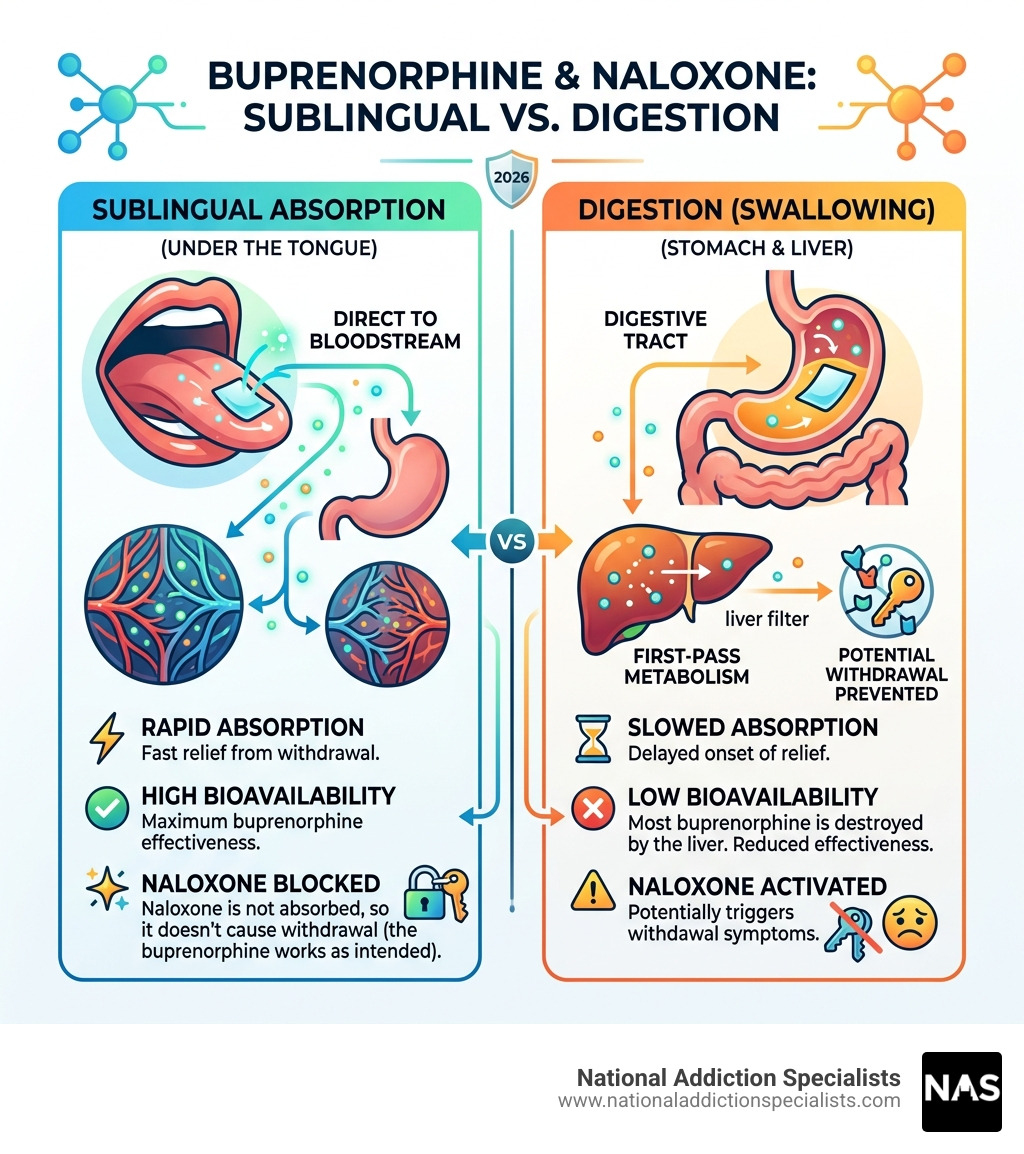
This ceiling effect is a safety feature. Once you reach a certain dose, taking more doesn’t increase the effect. This significantly lowers the risk of a fatal overdose compared to full opioids. Naloxone, the second ingredient, is an opioid antagonist (a blocker). When taken as directed—under the tongue—almost none of the naloxone enters your bloodstream. It’s essentially a “silent passenger.” However, if someone tries to dissolve and inject the medication, the naloxone activates immediately, blocking the receptors and causing “precipitated withdrawal.” This makes the medication much less likely to be misused.
Scientific research on buprenorphine/naloxone pharmacology shows that this combination is highly effective at keeping people in treatment. By stabilizing the brain’s chemistry, it allows you to focus on counseling and rebuilding your life without the constant “noise” of addiction.
Mechanism of Action
The way Buprenorphine interacts with your brain is quite unique. It has a very high “affinity” for opioid receptors. This means it sticks to them more tightly than most other opioids. If you have other opioids in your system and you take buprenorphine too soon, it will actually kick the other drugs off the receptors, leading to sudden, intense withdrawal. This is why we wait until you are in the early stages of withdrawal before starting your first dose.
Once it’s on the receptor, it stays there for a long time. This long half-life is why most of our patients only need to take their medication once a day. The Label: SUBOXONE- buprenorphine hydrochloride, naloxone hydrochloride film confirms that this steady state helps prevent the “highs and lows” associated with short-acting opioids, providing a stable foundation for long-term recovery.
Benefits of Combination Therapy
You might wonder why we use the combination of buprenorphine and naloxone instead of just buprenorphine alone (often known by the brand name Subutex®). While both are effective, there are clear Benefits of Suboxone Treatment that make it the gold standard for most patients.
When we look at Suboxone vs Subutex, the primary difference is the added safety of naloxone. Because naloxone deters injection, the combination product is less likely to be diverted or misused. This safety profile is why we can offer this treatment through telemedicine at National Addiction Specialists. It gives us—and you—peace of mind that the medication is being used as intended to support your health.
Proper Administration and Dental Precautions
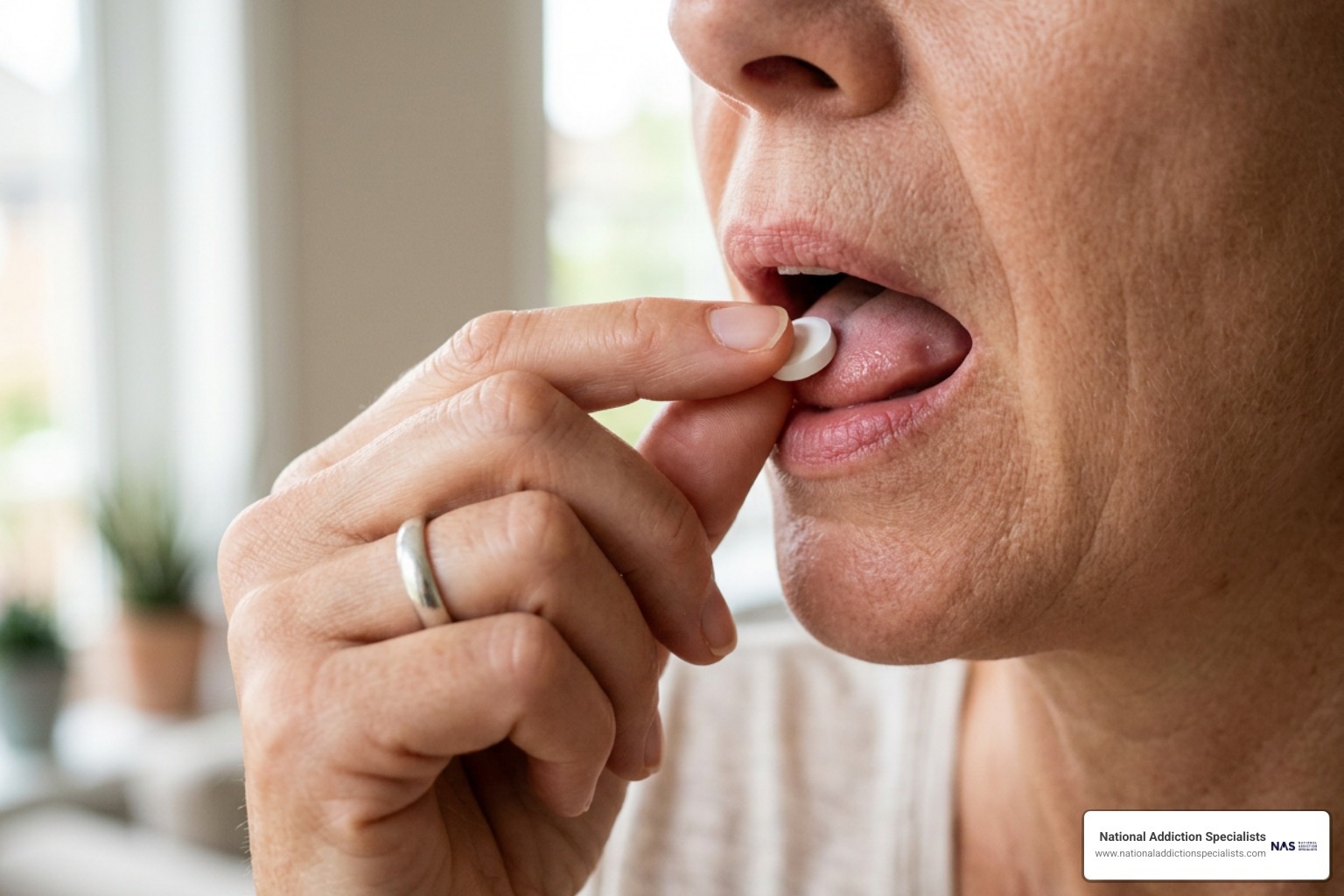
The “sublingual” part of buprenorphine and naloxone sublingual is not just a suggestion—it is vital for the medication to work. If you swallow the tablet or film, your stomach acid will break down the buprenorphine before it can reach your brain, and it won’t work.
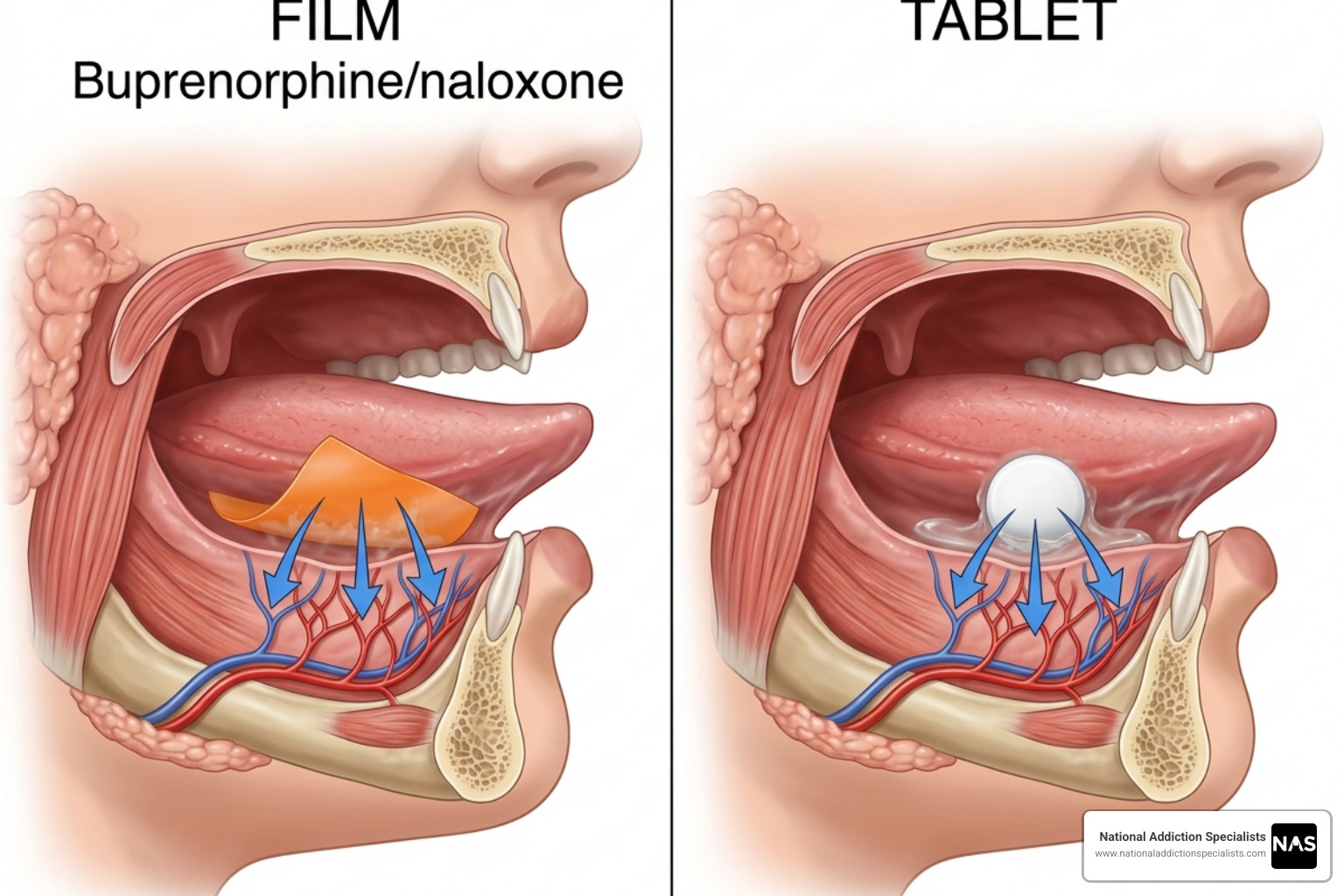
The mouth is full of tiny blood vessels called capillaries. When the medication dissolves under your tongue (sublingual) or against your cheek (buccal), it passes directly through these vessels and into your bloodstream. This bypasses the digestive system entirely.
Step-by-Step Sublingual Use
To get the most out of your treatment, follow these steps:
- Drink some water: A dry mouth makes it harder for the medication to dissolve. Take a sip of water to moisten your mouth first.
- Dry your hands: If you are using the film, make sure your fingers are completely dry so the film doesn’t stick to them.
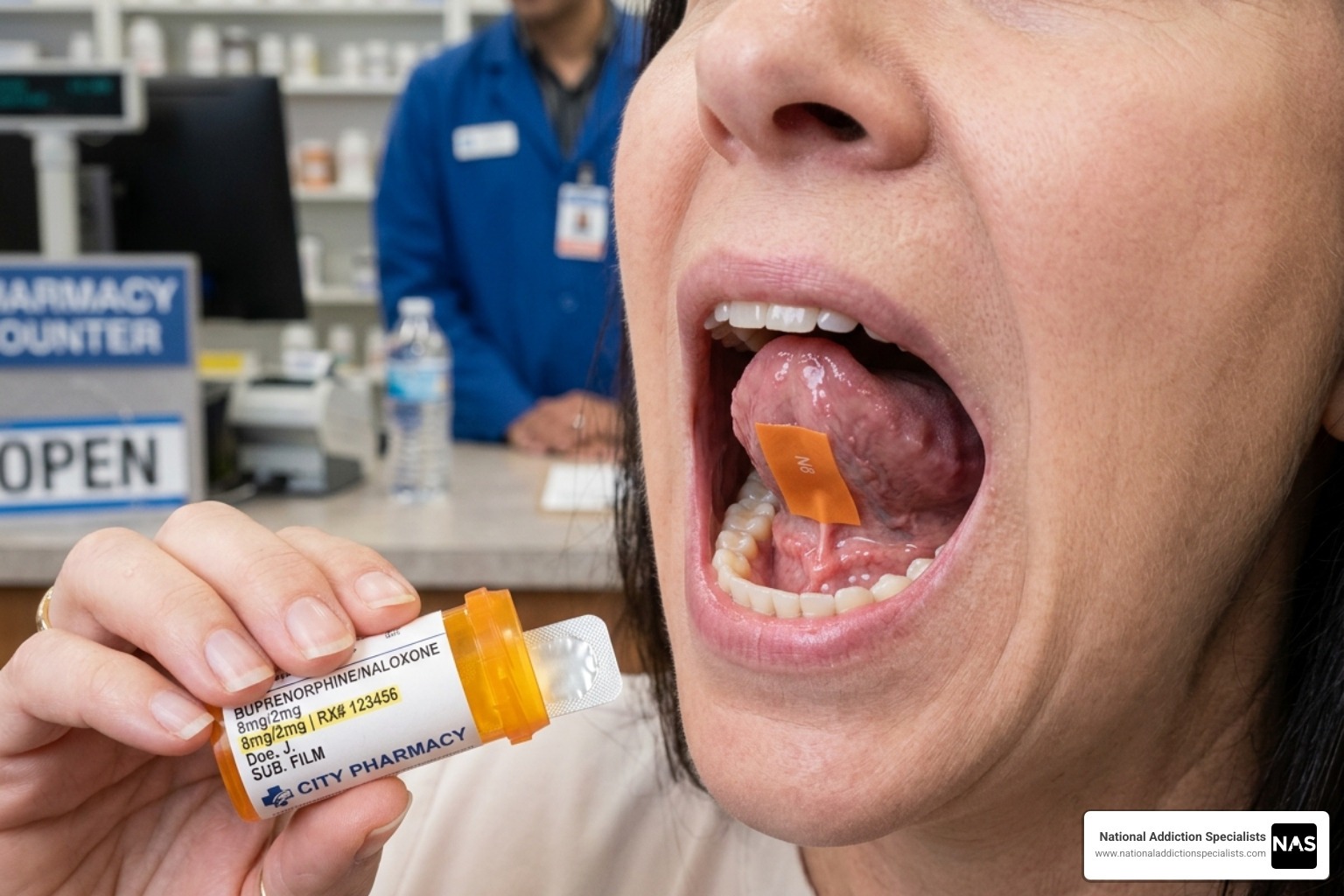
- Placement: Place the tablet or film under your tongue, to the left or right of the center. If you are using two films, place them on opposite sides, ensuring they don’t overlap.
- Wait: Keep the medication in place until it is completely dissolved. For tablets like Zubsolv®, this usually takes about 5 minutes. For films, it may take slightly longer.
- No talking or swallowing: Do not talk, eat, drink, or swallow your saliva while the medication is dissolving. Talking can move the film and prevent it from staying in contact with the blood vessels.
Our Suboxone Treatment FAQ often addresses concerns about the taste. While the flavor can be bitter or citrusy, the “hold” time is essential for your recovery. Once it’s gone, you can go about your day.
Protecting Your Dental Health
In recent years, the medical community has recognized that buprenorphine medications can be acidic, which may affect tooth enamel if not managed properly. The FDA guidance on buprenorphine dental risks highlights the importance of oral hygiene during treatment.
To protect your teeth:
- The Water Swish: After the medication has completely dissolved, take a sip of water, swish it gently around your teeth and gums, and swallow. This helps rinse away any residual acidity.
- The One-Hour Rule: Wait at least one hour after taking your medication before brushing your teeth. Brushing too soon while the enamel is softened by the acidity can actually cause more wear.
- Regular Checkups: Inform your dentist that you are taking buprenorphine and naloxone sublingual. Regular cleanings and checkups are a vital part of your overall health plan.
Induction, Maintenance, and Dosage Guidelines
Starting treatment is a structured process. We don’t just hand you a prescription and send you on your way. We guide you through two main phases: Induction and Maintenance.
Starting Your Treatment
The “Induction” phase is the first 1-2 days of treatment. As we mentioned, you must be in mild-to-moderate withdrawal before taking your first dose. If you take it while you still have full opioids in your system, you will experience “precipitated withdrawal,” which feels like the worst flu you’ve ever had, appearing almost instantly.
To ensure you’re ready, we often use the Clinical Opiate Withdrawal Scale (COWS). We look for objective signs like:
- Enlarged pupils
- Sweating or chills
- Increased heart rate
- Muscle aches
- Restlessness
For most patients, waiting 12 to 24 hours after your last use of a short-acting opioid (like heroin or oxycodone) is sufficient. If you have been using long-acting opioids like methadone, the wait time may be longer. Suboxone for Opioid Addiction is most effective when the first dose is carefully timed.
| Phase | Common Dosage Range | Goal |
|---|---|---|
| Induction (Day 1) | 2/0.5 mg to 8/2 mg | Stop withdrawal symptoms safely |
| Induction (Day 2) | Up to 16/4 mg | Stabilize and eliminate cravings |
| Maintenance | 4/1 mg to 24/6 mg | Long-term brain healing and relapse prevention |
Long-Term Maintenance
Once you are stable and no longer feeling withdrawal or cravings, you move into the maintenance phase. The goal here is to find the lowest dose that keeps you feeling “normal” and protected from relapse.
The standard target dose for maintenance is often 16 mg of buprenorphine and 4 mg of naloxone per day, though some people do well on as little as 4 mg or as much as 24 mg. Research indicates that doses higher than 24 mg usually don’t provide additional benefits due to the ceiling effect.
Long-term Effects Suboxone Use are generally very positive. Maintenance can last for months, years, or even a lifetime. There is no “right” amount of time to be on the medication; it is a tool to help you live a healthy, productive life. At National Addiction Specialists, we work with you to determine the best timeline for your unique journey.
Safety, Side Effects, and Drug Interactions
Like any medication, buprenorphine and naloxone sublingual can have side effects. Most are mild and tend to go away as your body adjusts.
Common side effects include:
- Headache: Usually manageable with over-the-counter pain relief.
- Nausea or Vomiting: Often improves if the dose is adjusted or taken at a different time.
- Constipation: A common side effect of all opioids. Increasing fiber and water intake usually helps.
- Insomnia: Taking your dose earlier in the day can sometimes help.
- Sweating: (Hyperhidrosis) is common during the first few weeks.
Some patients ask about Suboxone Side Effects Weight Loss. While weight changes aren’t a direct side effect for everyone, many people find that as they stabilize their lives and stop using illicit drugs, their appetite and metabolism return to a healthier state.
Dangerous Interactions
The most serious risks involve mixing this medication with other substances that slow down your central nervous system (CNS).
- Benzodiazepines: Drugs like Xanax®, Valium®, or Klonopin® can be very dangerous when combined with buprenorphine. This combination significantly increases the risk of fatal respiratory depression (stopping breathing).
- Alcohol: Alcohol also depresses the CNS and should be avoided.
- Sleep Apnea: If you have untreated sleep apnea, buprenorphine can make it worse.
It is vital that you tell us about every medication and supplement you are taking. We don’t ask to judge you; we ask to keep you safe. SAMHSA safety precautions emphasize that while we don’t always deny treatment to those on “benzos,” we must coordinate care very closely with your other doctors.
Special Populations
Pregnancy and Breastfeeding: Buprenorphine is considered a treatment of choice for pregnant women with OUD. It is much safer for the baby than continued illicit drug use or going through untreated withdrawal. While babies may experience Neonatal Opioid Withdrawal Syndrome (NOWS), it is a treatable condition. Buprenorphine also passes into breast milk in very small amounts, and breastfeeding is generally encouraged as it can actually help soothe a baby with NOWS.
Liver Health: Since the liver processes this medication, we will monitor your liver function through regular blood tests, especially if you have a history of Hepatitis C.
Geriatric Care: For older adults, we often start with lower doses and monitor more closely for sedation or confusion. The ZUBSOLV prescribing information notes that buprenorphine’s effects are generally not altered by age, but overall health must be considered.
Frequently Asked Questions
Is buprenorphine and naloxone sublingual effective for chronic pain?
While its primary FDA-approved use is for OUD, many doctors use it “off-label” for chronic pain, especially in patients who are at risk of addiction. A Scientific research on buprenorphine for chronic pain pilot study of 12 patients found that when they switched from full opioids to sublingual buprenorphine/naloxone, their “average and worst pain” scores significantly decreased. Because of its unique pharmacology, it can provide long-lasting pain relief with a much lower risk of overdose.
How do I store buprenorphine and naloxone sublingual safely?
This is a powerful medication. Accidental ingestion by a child or a pet can be fatal.
- Store at room temperature: Keep it in a dry place (not the bathroom cabinet, which gets humid).
- Use a lockbox: We strongly recommend keeping your medication in a secure, locked container.
- Safe Disposal: If you have unused medication, the best way to dispose of it is through a drug take-back program. If one isn’t available, the FDA lists buprenorphine on the “flush list,” meaning it is safer to flush it down the toilet than to leave it where a child might find it in the trash.
What should I do if I miss a dose?
If you miss a dose, take it as soon as you remember. However, if it is almost time for your next dose, skip the missed one and stay on your regular schedule. Never double your dose to catch up. If you start feeling withdrawal symptoms after a missed dose, contact us for guidance.
Conclusion
Recovery is a journey, and buprenorphine and naloxone sublingual is a vehicle that can help you get there safely. At National Addiction Specialists, we believe that high-quality care should be accessible and confidential.
We provide telemedicine-based treatment across Tennessee and Virginia, including local support for those in Brentwood, TN and Virginia Beach, VA. By offering appointments from the comfort of your home, we remove the barriers of travel and “waiting room anxiety.” We proudly accept Medicaid and Medicare, ensuring that financial hurdles don’t stand in the way of your health.
Whether you are in the early stages of thinking about change or you are ready to start today, we are here to help. Check our Insurance and Pricing page to see how we can make treatment work for you.
Make an Appointment to Treat Addiction Please don’t hesitate. Make an appointment today. New Patient Packet
This article was medically reviewed by: Chad Elkin, MD, DFASAM is a board-certified addiction medicine physician, founder, and Chief Medical Officer of National Addiction Specialists, dedicated to treating substance use disorders. A Distinguished Fellow of the American Society of Addiction Medicine (ASAM), Dr Elkin currently serves as President of the Tennessee Society of Addiction Medicine (TNSAM) and has held various leadership roles within the organization. Dr Elkin chairs ASAM’s Health Technology Subcommittee and is an active member of its Practice Management and Regulatory Affairs Committee, State Advocacy and Legislative Affairs Committee, and other committees. He also serves on the planning committee for the Vanderbilt Mid-South Addiction Conference. Committed to advancing evidence-based policy, Dr Elkin is Chairman of the Tennessee Association of Alcohol, Drug, & Other Addiction Services (TAADAS) Addiction Medicine Council, which collaborates with the TN Department of Mental Health & Substance Abuse Services (TDMHSAS). He has contributed to numerous local, state, and national task forces, helping develop professional guidelines, policies, and laws that align with best practices in addiction medicine. His work focuses on reducing addiction-related harm, combating stigma, and ensuring access to effective treatment. Passionate about the field of addiction medicine, he remains dedicated to shaping policy and enhancing patient care.
Suboxone® and Subutex® are a registered trademark of Indivior UK Limited. Any mention and reference of Suboxone® and Subutex® in this website is for informational purposes only and is not an endorsement or sponsorship by Indivior UK Limited.