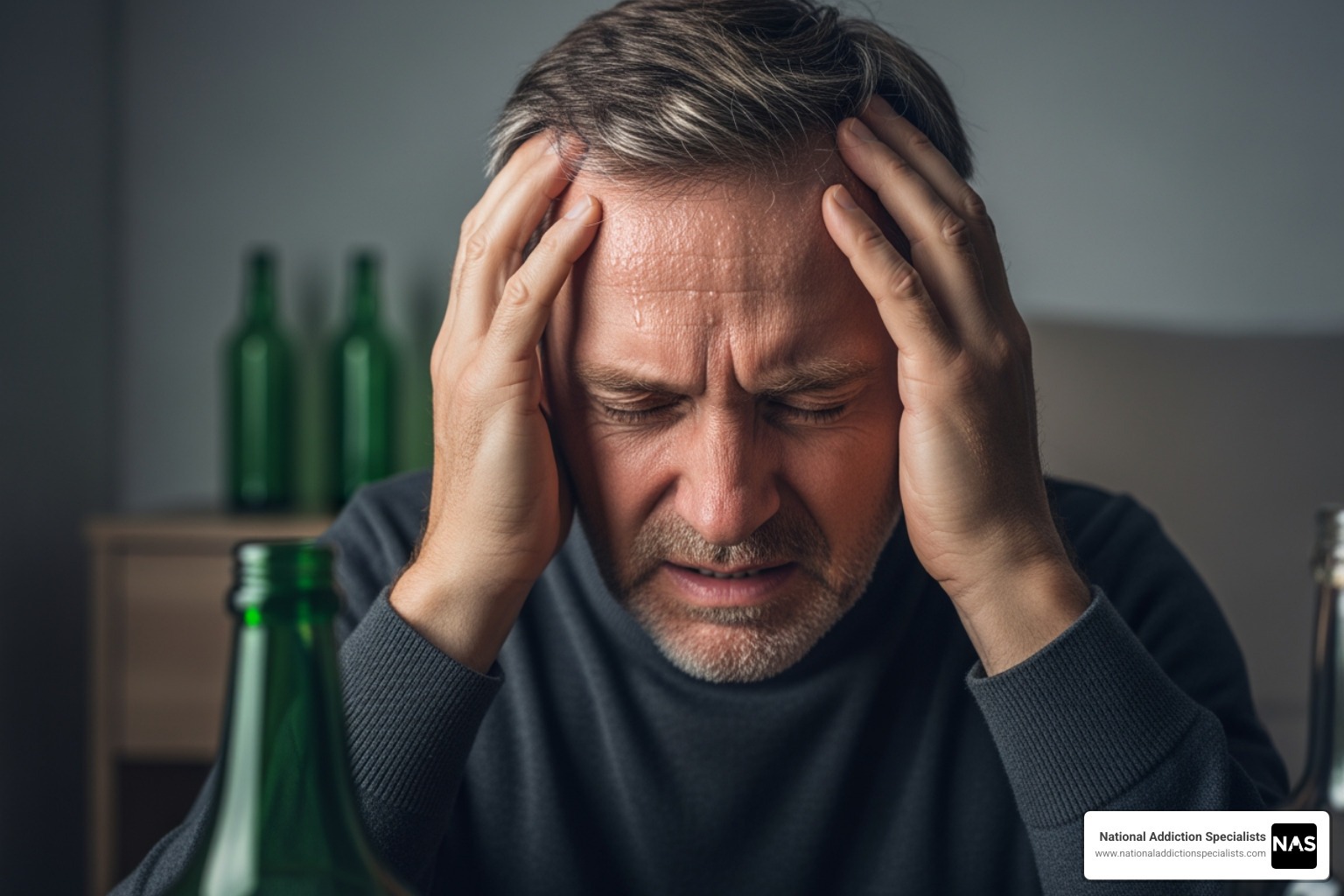
Why Your Body Throws a Tantrum When You Quit Drinking
What Quitting Alcohol Does to Your Head (And How Long It Lasts)
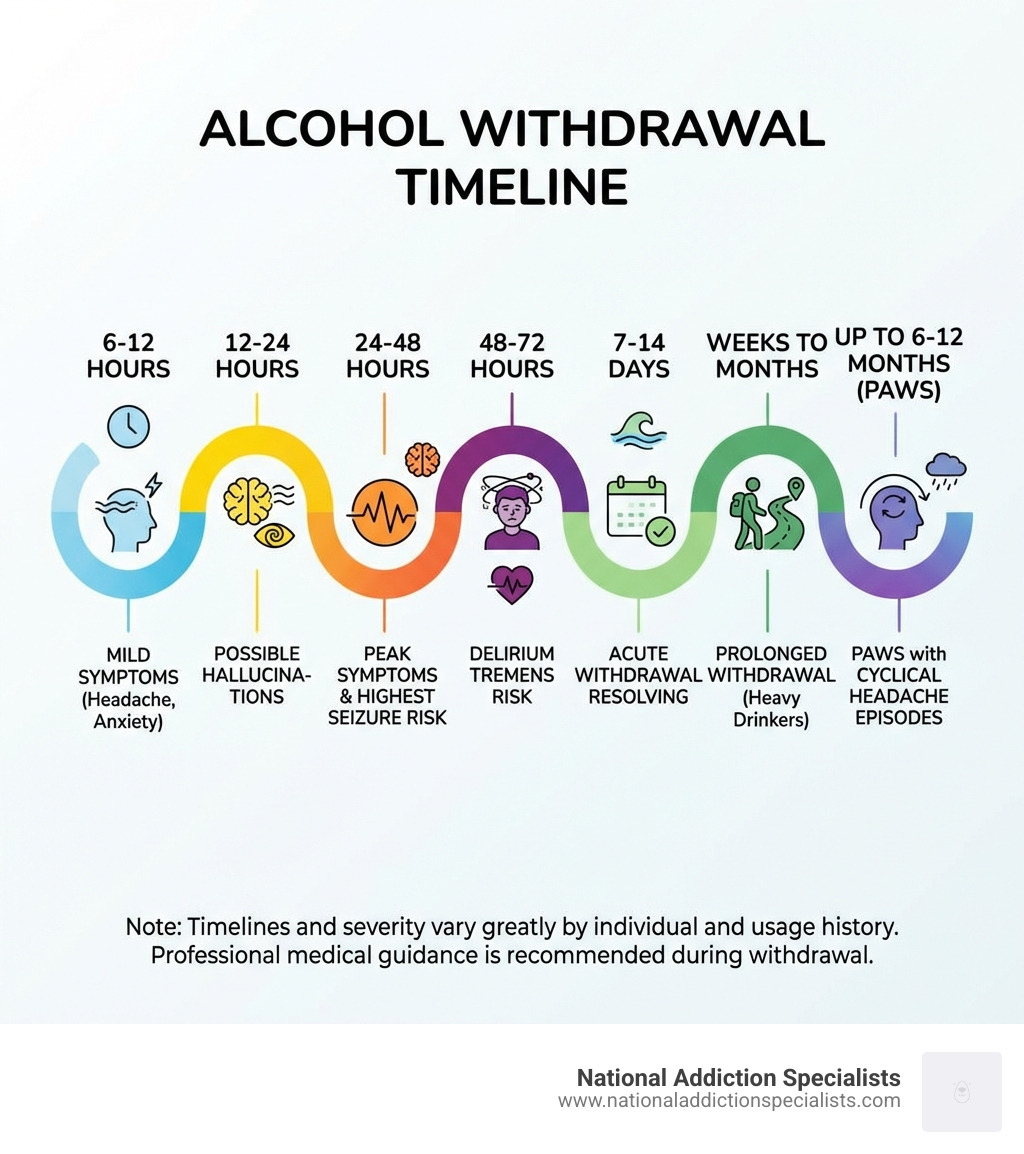
Alcohol withdrawal headache duration varies depending on where you are in the withdrawal process. Here’s a quick breakdown:
| Phase | When It Starts | How Long Headaches Last |
|---|---|---|
| Acute withdrawal | 6-12 hours after last drink | A few days to 1 week |
| Prolonged withdrawal | Days 7-14+ | Weeks to months (heavy, long-term drinkers) |
| Post-Acute Withdrawal Syndrome (PAWS) | Weeks after stopping | Cyclical episodes for up to 6-12 months |
When your body has relied on alcohol for a long time, stopping suddenly sends your nervous system into overdrive. Alcohol acts as a depressant, keeping your brain chemistry in a kind of artificial calm. The moment that’s gone, your brain rebounds — hard.
That rebound is why headaches hit so fast, and why they can linger far longer than most people expect.
The pain isn’t just an inconvenience. It’s your brain’s neurochemical system scrambling to rebalance itself after weeks, months, or even years of adaptation. And for some people — especially those with a long history of heavy drinking — that process takes time.
I’m Chad Elkin, MD, board-certified in Addiction Medicine and founder of National Addiction Specialists, and understanding alcohol withdrawal headache duration is a core part of the work I do helping patients safely navigate detox every day. In the sections below, I’ll walk you through exactly what’s happening in your body, how long it lasts, and what you can do about it.
Understanding Alcohol Withdrawal Headache Duration and Phases
When we talk about how long these headaches last, we have to look at the different “chapters” of recovery. Your body doesn’t just flip a switch and return to normal overnight. Instead, it goes through a series of stages as it tries to figure out how to function without a depressant constantly in the system.
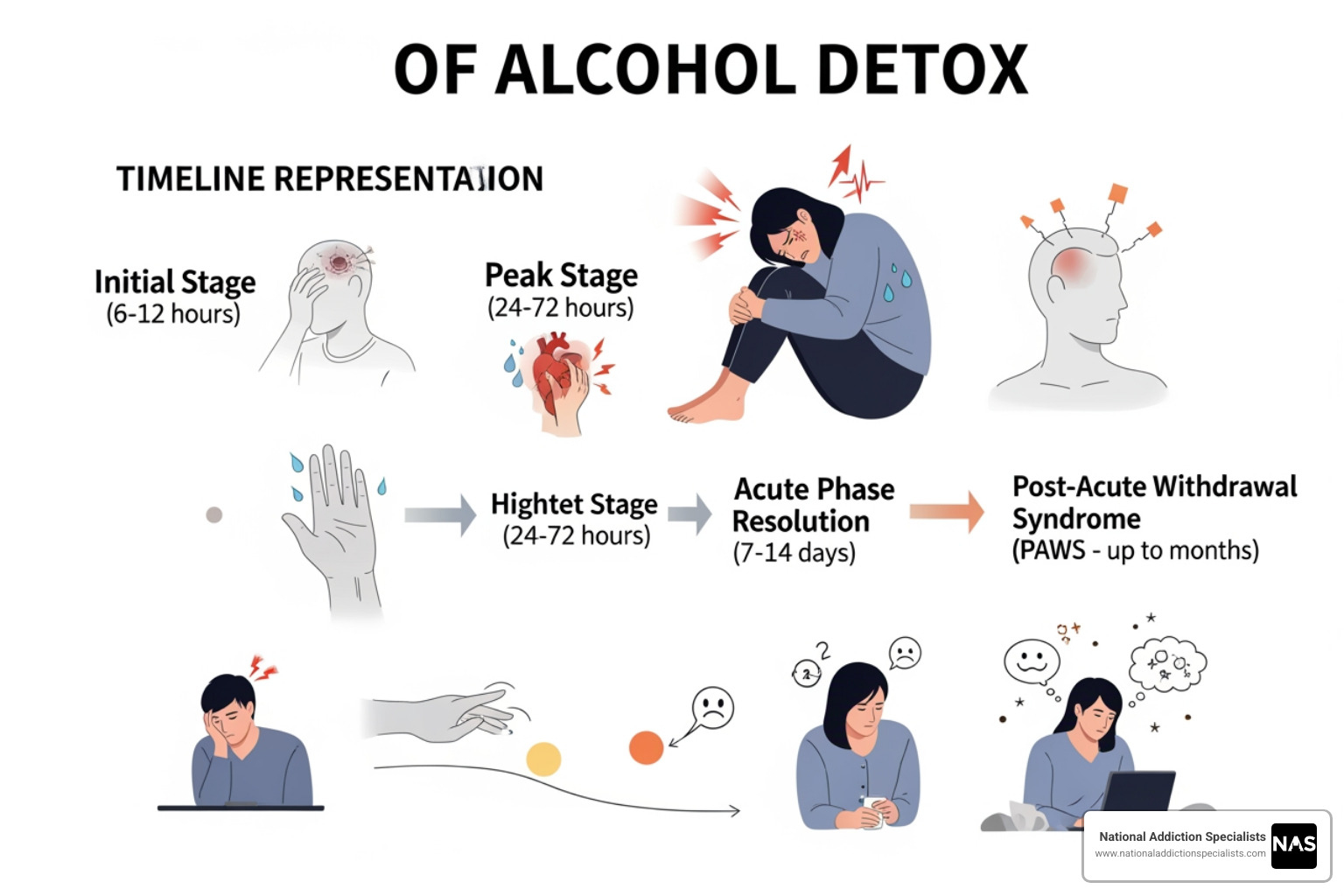
For most people, the acute withdrawal phase is the most intense. This is the 7-14 day window where the body is physically purging alcohol and reacting to its absence. According to Scientific research on Alcohol Withdrawal Syndrome, symptoms typically peak between 24 and 72 hours. During this peak, headaches are often accompanied by sweating, a racing heart, and tremors.
If you are wondering How Long Does Alcohol Withdrawal Last?, the answer depends on the severity of the dependence. While the “storm” of acute symptoms usually settles within a week, the neurological adjustments can continue much longer.
The First 24 Hours
The clock starts the moment you finish your last drink. Within 6 to 12 hours, minor symptoms begin to surface. This is often when the first signs of a withdrawal headache appear. You might feel:
- Mild to moderate anxiety: A sense of “edginess” or dread.
- GI upset: Nausea or a lack of appetite.
- Tremulousness: “The shakes,” particularly in the hands.
- Insomnia: Difficulty falling or staying asleep.
These early symptoms are the “warning shots” from your Central Nervous System (CNS). It has spent months or years producing extra stimulant chemicals to counteract alcohol’s sedative effects. Now that the alcohol is gone, those stimulants are running wild.
Factors Influencing Alcohol Withdrawal Headache Duration
Not everyone experiences withdrawal the same way. Several biological and behavioral factors can stretch out the alcohol withdrawal headache duration:
- Heavy Use History: The more you drank and the longer you did it, the more your brain had to “rewire” itself to compensate. Reversing that wiring takes longer.
- The Kindling Effect: This is a medical phenomenon where each subsequent withdrawal episode becomes more severe than the last. If you have quit and relapsed multiple times, your brain becomes more sensitive, leading to longer and more painful headaches.
- Age: Older adults (typically over 65) are at a higher risk for more severe and prolonged withdrawal symptoms, even at lower levels of consumption.
- Co-occurring Conditions: Liver dysfunction, dehydration, and mental health struggles like depression or anxiety can complicate the recovery timeline. Recognizing the Signs of Alcohol Addiction early can help in getting the right level of medical support before the kindling effect makes detox more dangerous.
Why Headaches Occur During Alcohol Withdrawal
To understand the pain, we have to look at the “tug-of-war” happening in your brain. Alcohol enhances the activity of GABA (the brain’s primary “calming” chemical) and suppresses Glutamate (the “exciting” chemical). When alcohol is removed, the GABA system crashes and the Glutamate system surges.
This neurochemical rebound causes autonomic hyperactivity. Your blood pressure spikes, your heart rate climbs, and the blood vessels in your brain may dilate (widen) or constrict rapidly. This vascular “bouncing” is a primary trigger for throbbing pain.
Furthermore, NIAAA statistics on alcohol use disorder show that millions of Americans struggle with heavy drinking, which often leads to chronic Glutamate toxicity. This over-excitation doesn’t just cause anxiety; it can actually irritate the nerves, leading to the sharp, stabbing pains many report during detox.
Sensory Characteristics of Withdrawal Headaches
What does an alcohol withdrawal headache actually feel like? It’s rarely just one sensation. Patients often describe a “cocktail” of pain:
- Throbbing/Migraine-like: A rhythmic pulsing that worsens with movement or light.
- Tension-Band Pressure: A feeling like a tight vice is being squeezed around the forehead and temples.
- Sharp Stabs: Sudden, “ice-pick” sensations that come and go.
- Light and Sound Sensitivity: A general “fragility” where normal environment stimuli feel aggressive and painful.
The Role of Dehydration and Nutrition
Alcohol is a diuretic, meaning it forces your body to flush out fluids. By the time you start withdrawal, you are likely already starting from a place of deep dehydration. Dehydration causes the brain to slightly shrink and pull away from the skull, which triggers pain receptors.
Nutritional deficiencies also play a massive role:
- Magnesium Deficiency: Magnesium helps regulate nerve function and blood vessel tone. Alcohol depletes this mineral, making headaches more likely.
- B-Vitamin/Thiamine Depletion: Chronic alcohol use interferes with B-vitamin absorption. Severe thiamine (B1) deficiency can lead to serious neurological issues beyond just a headache.
- Electrolyte Disturbances: Imbalances in sodium, potassium, and calcium can lead to muscle tension and vascular headaches.
Beyond the Acute Phase: Prolonged Symptoms and PAWS
For some, the headache doesn’t stop after the first week. This is known as the subacute or prolonged withdrawal phase. While the life-threatening risks (like seizures) have passed, the brain is still “glitching” as it tries to find its new equilibrium.
| Feature | Acute Withdrawal | Post-Acute Withdrawal (PAWS) |
|---|---|---|
| Timeline | 1–14 days | 2 weeks – 1 year+ |
| Primary Cause | Physical dependence/detox | Brain chemical rebalancing |
| Headache Type | Constant, throbbing, intense | Cyclical, “waves,” tension-like |
| Associated Signs | Tremors, sweating, nausea | Mood swings, irritability, sleep issues |
Long-term Alcohol Withdrawal Headache Duration and PAWS
Post-Acute Withdrawal Syndrome (PAWS) is a frustrating but common part of recovery. If your headaches return in cycles—perhaps every few weeks or once a month—you are likely experiencing PAWS. These headaches often coincide with periods of high stress or emotional upheaval.
The Long-term Effects of Alcohol Addiction involve deep changes to the brain’s reward and stress systems. It can take 6 months to a year (or more in severe cases) for these neural pathways to fully rewire. During this time, the “tantrum” might return in waves, but each wave is usually less intense than the one before.
Strategies to Alleviate Withdrawal Headaches
While the most effective way to manage withdrawal is through professional medical detox, there are several strategies we recommend to help manage the pain and support the healing process.
- Medical Detox and Supervision: In a clinical setting, we can use medications like benzodiazepines to “taper” the brain’s excitement, which significantly reduces the severity of headaches and prevents dangerous complications.
- Hydration Protocols: Don’t just drink water; use electrolyte-rich beverages to replenish the minerals alcohol stripped away.
- Nutrient-Rich Diet: Focus on foods high in magnesium and B-vitamins (leafy greens, nuts, lean proteins).
- Gradual Movement: While rest is vital, gentle Exercise & Alcohol Addiction Recovery can help improve circulation and release natural pain-killing endorphins once you are past the acute risk phase.
Holistic Management Techniques
When a headache strikes, these non-medical interventions can provide significant relief:
- Dark Room Rest: Reducing sensory input helps the brain calm down.
- Cold Compresses: Applying an ice pack to the base of the skull or the forehead can constrict dilated blood vessels and numb the pain.
- Deep Breathing and Mindfulness: Stress is a major trigger for PAWS-related headaches. Learning to lower your cortisol levels through breathing can “short-circuit” a tension headache before it becomes debilitating.
Make an Appointment to Treat Addiction
Please don’t hesitate. Make an appointment today.
Make an Appointment
When to Seek Medical Help for Withdrawal
It is a common misconception that alcohol withdrawal is just a bad hangover. In reality, it can be life-threatening. If you or a loved one are attempting to quit, you must be able to How to Recognize the Signs of Alcohol Withdrawal that require emergency intervention.
Seek immediate medical help if you experience:
- Seizures: Usually occurring 24-48 hours after the last drink.
- Hallucinations: Seeing, hearing, or feeling things that aren’t there (even if you know they aren’t real).
- Delirium Tremens (DTs): A severe state of confusion, rapid heartbeat, high blood pressure, and fever. This is a medical emergency with a high mortality rate if untreated.
- Severe Tachycardia: A heart rate that feels like it’s racing out of control.
- Extreme Agitation or Confusion: Inability to recognize surroundings or people.
Frequently Asked Questions about Alcohol Withdrawal
How long do alcohol withdrawal headaches typically last in the acute phase?
In the acute phase, these headaches usually last between 3 and 7 days. They tend to peak around the 72-hour mark (Day 3) and gradually subside as the body finishes the initial detoxification process.
Can alcohol withdrawal headaches last for weeks or months?
Yes. For heavy, long-term drinkers, “prolonged withdrawal” can cause headaches that linger for several weeks. Furthermore, Post-Acute Withdrawal Syndrome (PAWS) can cause headaches to appear in cyclical waves for 6 months to a year as the brain continues to rewire itself.
What do alcohol withdrawal headaches feel like?
They are often described as a mix of a migraine and a tension headache. You might feel a throbbing, rhythmic pulse, a tight “band” of pressure around the head, or sudden sharp stabs. They are frequently accompanied by sensitivity to light and sound.
Conclusion
Stopping drinking is one of the best decisions you can make for your long-term health, but the “tantrum” your body throws in the process can be painful and, in some cases, dangerous. Understanding that alcohol withdrawal headache duration is a multi-phase journey helps set realistic expectations for your recovery.
You don’t have to navigate this pain alone. At National Addiction Specialists, we provide expert, confidential care to help you manage withdrawal symptoms safely and comfortably from your own home. Whether you are in Brentwood, Virginia Beach, or anywhere across Tennessee and Virginia, we are here to support your journey toward a healthier, alcohol-free life.
This article was medically reviewed by:
Chad Elkin, MD, DFASAM is a board-certified addiction medicine physician, founder, and Chief Medical Officer of National Addiction Specialists, dedicated to treating substance use disorders. A Distinguished Fellow of the American Society of Addiction Medicine (ASAM), Dr Elkin currently serves as President of the Tennessee Society of Addiction Medicine (TNSAM) and has held various leadership roles within the organization. Dr Elkin chairs ASAM’s Health Technology Subcommittee and is an active member of its Practice Management and Regulatory Affairs Committee, State Advocacy and Legislative Affairs Committee, and other committees. He also serves on the planning committee for the Vanderbilt Mid-South Addiction Conference. Committed to advancing evidence-based policy, Dr Elkin is Chairman of the Tennessee Association of Alcohol, Drug, & Other Addiction Services (TAADAS) Addiction Medicine Council, which collaborates with the TN Department of Mental Health & Substance Abuse Services (TDMHSAS). He has contributed to numerous local, state, and national task forces, helping develop professional guidelines, policies, and laws that align with best practices in addiction medicine. His work focuses on reducing addiction-related harm, combating stigma, and ensuring access to effective treatment. Passionate about the field of addiction medicine, he remains dedicated to shaping policy and enhancing patient care.
Suboxone® and Subutex® are a registered trademark of Indivior UK Limited. Any mention and reference of Suboxone® and Subutex® in this website is for informational purposes only and is not an endorsement or sponsorship by Indivior UK Limited.