
Taming the Nausea: A Guide to Suboxone Withdrawal Vomiting
What You Need to Know About Suboxone Withdrawal Vomiting
Suboxone withdrawal vomiting is one of the most physically draining symptoms people face when stopping this medication. Here’s a quick summary of what to expect and how to manage it:
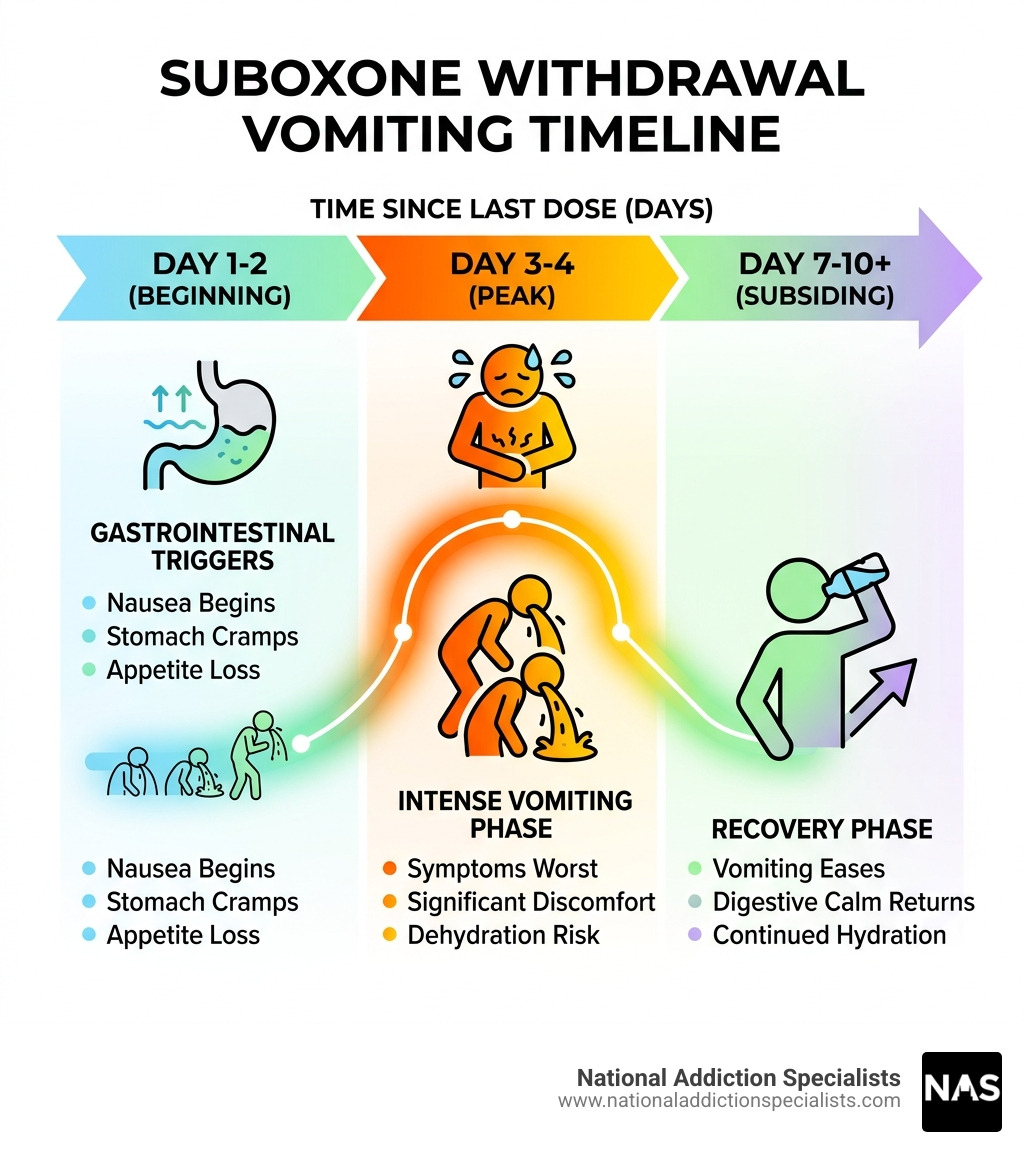
- When it starts: Nausea and vomiting typically begin 24–72 hours after your last dose
- When it peaks: Symptoms are usually worst around days 3–4
- How long it lasts: Most physical symptoms, including vomiting, ease within 7–10 days
- How to manage it: Stay hydrated, eat small bland meals, and talk to a doctor about anti-nausea medications like metoclopramide
- How to prevent the worst of it: A gradual taper under medical supervision significantly reduces severity
Stopping Suboxone isn’t easy. Your body has adapted to the presence of buprenorphine — a partial opioid agonist — and when that’s removed, your digestive system reacts strongly. Vomiting, nausea, stomach cramps, and appetite loss are all part of how your body recalibrates.
The good news? With the right plan, these symptoms are manageable. You don’t have to white-knuckle it alone.
I’m Dr. Chad Elkin, board-certified in Addiction Medicine and founder of National Addiction Specialists — I’ve spent years helping patients navigate Suboxone withdrawal vomiting and related symptoms through personalized, medically supervised care. In this guide, I’ll walk you through exactly what’s happening in your body and what you can do about it.
Suboxone withdrawal vomiting word list:
Understanding the Causes of Suboxone Withdrawal Vomiting
When we talk about Suboxone withdrawal vomiting, we have to look at the chemistry of the brain and the gut. Suboxone is a combination of two medications: buprenorphine and naloxone. Buprenorphine is a partial opioid agonist, meaning it binds to the same receptors as drugs like heroin or oxycodone but doesn’t produce the same “high.” Instead, it stabilizes the brain.
Over time, your body develops a physical dependency. Your brain and your gastrointestinal (GI) tract—which is actually packed with opioid receptors—adjust to having Suboxone around. When you stop taking it, or even when you drop your dose too quickly, it creates a massive neurotransmitter imbalance.
Receptor Displacement and GI Distress
The vomiting you experience is often a result of your GI tract “waking up” too fast. Opioids typically slow down digestion (which is why they cause constipation). When they are removed, the system goes into overdrive. This leads to Withdrawal Symptoms like cramping, diarrhea, and intense nausea.
Another factor is receptor displacement. If you take Suboxone too soon after using a full opioid, the buprenorphine kicks the other drugs off the receptors. Because buprenorphine has a higher “binding affinity,” it takes over the receptor but provides less of an opioid effect, leading to a sudden drop in receptor activation. This is what causes Suboxone Detox & Withdrawal: Symptoms and Treatment to feel so sudden and severe.
Standard vs. Precipitated Withdrawal
It is important to distinguish between standard withdrawal and precipitated withdrawal. Standard withdrawal happens when you naturally taper off or stop your medication. Precipitated withdrawal is a sudden, high-intensity reaction that happens if Suboxone is introduced while other opioids are still in your system.
| Feature | Standard Withdrawal | Precipitated Withdrawal |
|---|---|---|
| Onset | Gradual (24-72 hours) | Immediate (minutes to hours) |
| Vomiting Intensity | Moderate to High | Severe / Projectile |
| Duration | 7-10 days (acute) | 6-24 hours (intense) |
| Cause | Stopping medication | Taking Suboxone too early |
The Timeline: When Does Suboxone Withdrawal Vomiting Peak?
One of the most common questions we hear at National Addiction Specialists is, “How long will I feel like this?” Because Suboxone has a very long half-life (up to 42 hours), the timeline is stretched out compared to shorter-acting opioids like heroin.
Managing Early Symptoms
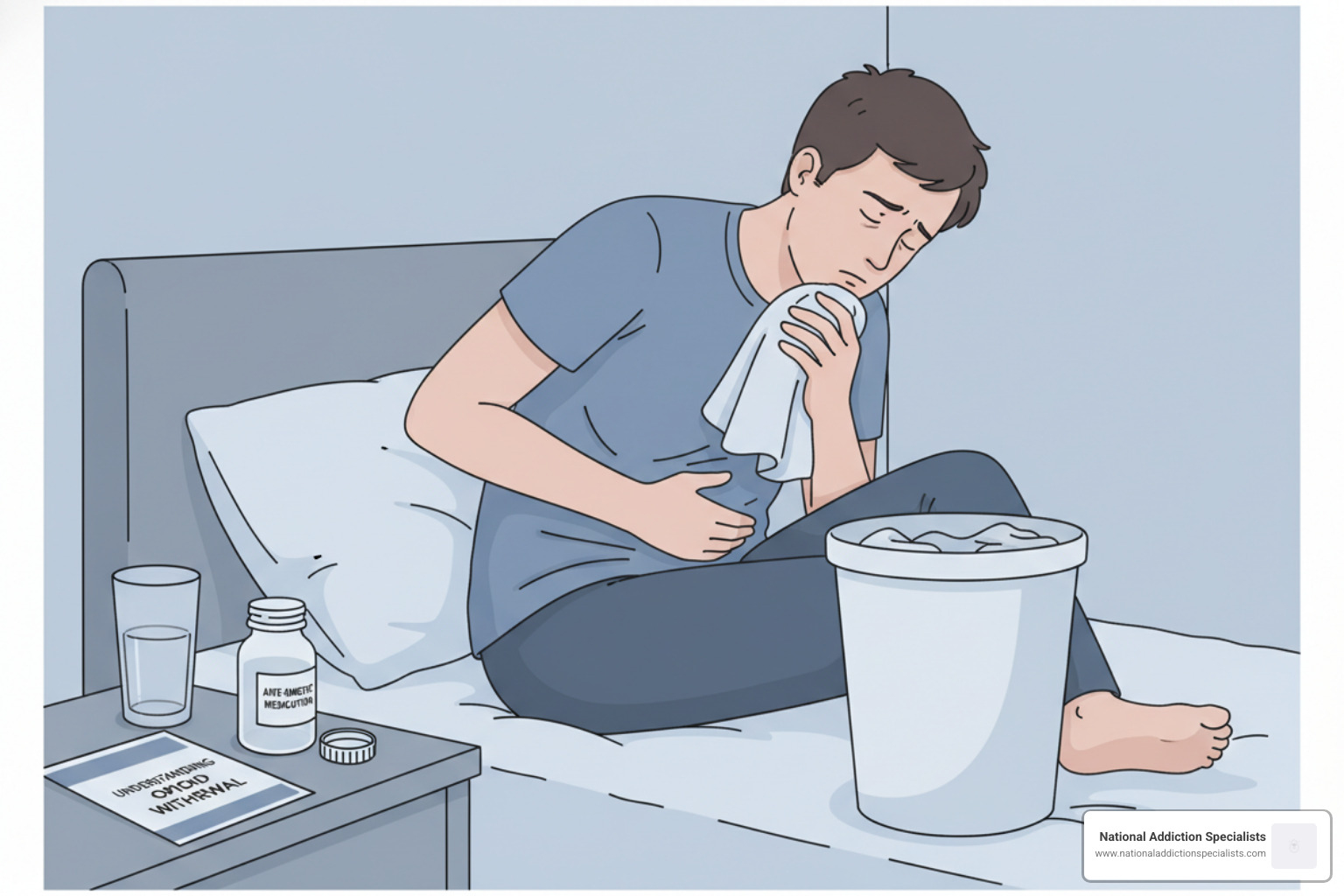
In the first 12 to 24 hours after your last dose, you might not feel much. However, as the levels in your blood begin to drop, early Opioid Withdrawal signs emerge. This usually starts with:
- Increased anxiety
- Excessive yawning
- Watery eyes and a runny nose
- Mild nausea
According to Suboxone Withdrawal: Symptoms, Timeline & Detox Treatment, the first 72 hours are when the physical symptoms truly begin to ramp up.
Navigating the Peak of Suboxone Withdrawal Vomiting
The “peak” of Suboxone withdrawal vomiting usually hits between Day 3 and Day 4. This is the window where the buprenorphine has largely left the receptors, and your body is struggling to find its new balance.
During this peak, you may experience:
- Intense muscle aches and “restless legs”
- Severe nausea and frequent vomiting
- Profuse sweating and chills
- Significant dehydration risks
By Day 7, most of the acute physical symptoms begin to fade. However, as noted in From Start to Finish: Understanding the Suboxone Timeline, psychological symptoms like depression or cravings can linger for several weeks.
Suboxone Withdrawal Treatment is most effective when it addresses both this physical peak and the long-term mental health support needed afterward.
Effective Strategies to Relieve Suboxone Withdrawal Vomiting
If you are currently experiencing Suboxone withdrawal vomiting, the goal is comfort and safety. Dehydration is the biggest medical risk during this time. If you can’t keep fluids down, your electrolytes will drop, which can lead to more serious complications.
Medical Interventions and OTC Remedies
We always recommend working with a healthcare provider rather than trying to “white-knuckle” it at home. In our telemedicine practice serving Tennessee and Virginia, we often utilize specific medications to target the GI system.
- Antiemetics: Medications like Metoclopramide (Reglan) or Ondansetron (Zofran) are highly effective at stopping the urge to vomit.
- Clonidine: This is a non-opioid blood pressure medication that is excellent for reducing the “fight or flight” response of withdrawal, which can help settle the stomach.
- NSAIDs: Over-the-counter options like ibuprofen can help with the aches that often accompany the nausea.
- Loperamide: For the lower GI issues (diarrhea), this can be a lifesaver, but it must be used only as directed.
For more details on how these medications fit into a plan, see our guide on Suboxone Withdrawal.
Home Remedies for Suboxone Withdrawal Vomiting
In addition to medical support, there are several “low-tech” ways to manage your stomach:
- The BRAT Diet: When you can finally eat, stick to Bananas, Rice, Applesauce, and Toast. These are easy on the stomach.
- Ginger and Peppermint: Ginger ale (real ginger), ginger tea, or peppermint tea can naturally soothe the stomach lining.
- Sip, Don’t Gulp: Drink electrolyte-replacement drinks (like Gatorade or Pedialyte) in very small sips every few minutes rather than drinking a whole glass at once.
- Deep Breathing: Anxiety and nausea often feed into each other. Practicing slow, box-breathing can lower your heart rate and ease the gag reflex.
For a broader look at what to expect, you can review common Drug Withdrawal Symptoms.
Preventing Intense Nausea: Tapering and Precipitated Withdrawal
Prevention is always better than a cure. If you haven’t stopped your medication yet, the best way to avoid Suboxone withdrawal vomiting is a slow, medically supervised taper.
The Power of the Taper
Stopping “cold turkey” is the fastest way to ensure severe vomiting. Instead, we recommend a gradual reduction. A common best practice is reducing your dose by about 5-10% every two to three weeks. This gives your brain and gut time to adjust to the lower levels of buprenorphine without going into a full-blown crisis. You can find more details on this in our guide on How to Taper off Suboxone.
Avoiding Precipitated Withdrawal
As mentioned earlier, taking Suboxone too soon after other opioids—especially fentanyl—is a recipe for disaster. Fentanyl is fat-soluble and stays in your system longer than many people realize.
According to Suboxone Withdrawal Symptoms, Timeline, and Treatment Support, providers often use the Clinical Opiate Withdrawal Scale (COWS) to ensure a patient is in enough withdrawal before starting Suboxone. If you start too early, you may experience “precipitated withdrawal,” which involves much more intense and sudden vomiting than standard withdrawal.
If you’re wondering, Does Suboxone Help with Withdrawal Symptoms?, the answer is yes—but only if the timing is right.
Frequently Asked Questions about Suboxone Withdrawal
How long does vomiting last during Suboxone detox?
For most people, the acute phase of vomiting lasts between 3 and 5 days. It usually starts around the 48-hour mark and peaks on Day 4. By the end of the first week, your stomach should begin to settle, although your appetite might take a bit longer to return to normal.
Is Suboxone withdrawal vomiting worse than heroin withdrawal?
It is “different.” Heroin withdrawal hits very fast and very hard, but it’s over relatively quickly (usually 3-5 days total). Suboxone withdrawal is often described as less “violent” but it lasts much longer. Because the symptoms are drawn out over 10-14 days, the physical exhaustion can feel more significant.
When should I seek medical help for severe vomiting?
You should seek immediate medical attention if:
- You cannot keep any liquids down for more than 12-24 hours.
- You see blood in your vomit.
- You experience extreme dizziness or fainting (signs of severe dehydration).
- You have a high fever or severe abdominal pain.
Conclusion
At National Addiction Specialists, we believe that recovery shouldn’t have to be a miserable experience. While Suboxone withdrawal vomiting is a known challenge, it is a hurdle that can be cleared with the right medical support and a personalized plan.
We provide telemedicine-based care across Tennessee and Virginia, allowing you to manage your recovery from the comfort and privacy of your own home. Whether you need help with a slow taper or you are looking to start your journey toward sobriety, our expert providers are here to help you every step of the way.
Make an Appointment to Treat Addiction Please don’t hesitate. Make an appointment today. https://www.nationaladdictionspecialists.com/new-patient-packet/
This article was medically reviewed by: Chad Elkin, MD, DFASAM is a board-certified addiction medicine physician, founder, and Chief Medical Officer of National Addiction Specialists, dedicated to treating substance use disorders. A Distinguished Fellow of the American Society of Addiction Medicine (ASAM), Dr Elkin currently serves as President of the Tennessee Society of Addiction Medicine (TNSAM) and has held various leadership roles within the organization. Dr Elkin chairs ASAM’s Health Technology Subcommittee and is an active member of its Practice Management and Regulatory Affairs Committee, State Advocacy and Legislative Affairs Committee, and other committees. He also serves on the planning committee for the Vanderbilt Mid-South Addiction Conference. Committed to advancing evidence-based policy, Dr Elkin is Chairman of the Tennessee Association of Alcohol, Drug, & Other Addiction Services (TAADAS) Addiction Medicine Council, which collaborates with the TN Department of Mental Health & Substance Abuse Services (TDMHSAS). He has contributed to numerous local, state, and national task forces, helping develop professional guidelines, policies, and laws that align with best practices in addiction medicine. His work focuses on reducing addiction-related harm, combating stigma, and ensuring access to effective treatment. Passionate about the field of addiction medicine, he remains dedicated to shaping policy and enhancing patient care.
Suboxone® and Subutex® are a registered trademark of Indivior UK Limited. Any mention and reference of Suboxone® and Subutex® in this website is for informational purposes only and is not an endorsement or sponsorship by Indivior UK Limited.