Medication Magic: Easing Suboxone Withdrawal with the Right Prescriptions
Why the Right Medications Make Suboxone Withdrawal Manageable
Medications for Suboxone withdrawal can make the difference between a safe, comfortable recovery and weeks of unnecessary suffering. While stopping Suboxone is challenging due to withdrawal symptoms like anxiety, muscle aches, and insomnia, the right combination of prescription and over-the-counter medications can provide significant relief.
Key medications that help with Suboxone withdrawal include:
- Clonidine – Reduces anxiety, sweating, and liftd heart rate
- Ibuprofen (800mg every 6 hours) – Manages muscle aches and pain
- Loperamide (Imodium) – Controls diarrhea and stomach issues
- Diphenhydramine (Benadryl) – Helps with sleep and restlessness
- Promethazine – Prescription medication for nausea and vomiting
- Lucemyra (lofexidine) – FDA-approved non-opioid withdrawal treatment
The key to success isn’t just knowing which medications work – it’s having proper medical supervision to create a personalized plan that addresses your specific symptoms safely.
As Dr. Chad Elkin, founder and Medical Director of National Addiction Specialists, I’ve guided hundreds of patients through Suboxone withdrawal using evidence-based medications for Suboxone withdrawal protocols. My experience as a board-certified addiction medicine physician has shown that the right medical approach dramatically improves comfort and success rates during this challenging transition.
Common Medications for Suboxone withdrawal vocab:
Understanding Suboxone Withdrawal
Suboxone is a powerful tool in the fight against opioid dependence, but like any medication that interacts with our body’s chemistry, it can lead to dependence itself. When it’s time to reduce or stop Suboxone, our bodies, having adapted to its presence, signal its absence through a range of uncomfortable symptoms – this is what we call withdrawal. Understanding why this happens and what to expect is the first step towards a successful and less painful transition.
Why Does Withdrawal from Suboxone Happen?
Suboxone, a combination of buprenorphine and naloxone, plays a crucial role in Medication-Assisted Treatment (MAT) for opioid use disorder. Its buprenorphine component is a partial opioid agonist, meaning it partially activates opioid receptors in the brain. This helps to reduce cravings and withdrawal symptoms without producing the full “high” associated with other opioids like heroin or fentanyl. The naloxone component is an opioid antagonist, added to deter misuse; it causes withdrawal if the medication is injected. You can learn more about What is Suboxone? on our dedicated page.
The reason withdrawal occurs is fascinating, albeit inconvenient for us. Our brains are incredibly adaptable. When we consistently take Suboxone, our central nervous system adjusts its chemistry to function with the medication present. This leads to physical dependence, where our body needs the drug just to feel “normal” and prevent withdrawal symptoms.
A key factor in Suboxone withdrawal is buprenorphine’s long half-life. Unlike short-acting opioids, which cause rapid and intense withdrawal, Suboxone’s effects linger in the system for a longer period. This means that when we stop taking it, withdrawal symptoms tend to have a slower onset but can be more prolonged.
This prolonged effect also highlights why a gradual tapering process is so vital. Abruptly stopping Suboxone, or going “cold turkey,” is strongly discouraged. Doing so can trigger what’s known as precipitated withdrawal, a rapid and severe onset of symptoms that can be incredibly distressing and even dangerous. This is why we always emphasize that Suboxone should not be started until there is clear evidence of objective withdrawal, such as pupil dilation and piloerection, and a COWS (Clinical Opiate Withdrawal Scale) score of 6 or more. A gradual taper allows our brain and body to slowly re-adjust, minimizing the severity of withdrawal symptoms and making the process much more manageable.
Common Symptoms to Expect
Suboxone withdrawal symptoms can feel like a really bad flu, mixed with a rollercoaster of emotions. We see a wide range of symptoms, and their intensity can vary based on individual factors like the dosage of Suboxone used, how long it was taken, and our unique physiology.
Physical symptoms are often the first to appear and can include:
- Nausea and Vomiting: A truly unpleasant experience, often accompanied by digestive distress and indigestion.
- Muscle Aches and Cramping: Imagine every muscle in your body feeling like it’s been through a marathon, even if you just binged a TV show.
- Insomnia: Despite feeling utterly exhausted, falling and staying asleep can become a frustrating battle.
- Lethargy and Fatigue: A profound lack of energy that makes even simple tasks feel monumental.
- Headaches: Persistent and throbbing.
- Runny Nose and Tearing Eyes: Classic opioid withdrawal signs, often accompanied by frequent sneezing.
- Fever, Chills, and Sweating: Our body’s internal thermostat goes haywire, leading to hot flashes, goosebumps, and excessive perspiration.
Beyond the physical discomfort, psychological symptoms can be equally, if not more, challenging:
- Anxiety and Irritability: Feeling on edge, restless, and easily annoyed.
- Depression: A profound sense of sadness, hopelessness, and lack of motivation.
- Drug Cravings: Intense, intrusive thoughts about using opioids, which can be incredibly difficult to resist.
- Concentration Difficulties: Finding it hard to focus, think clearly, or remember things.
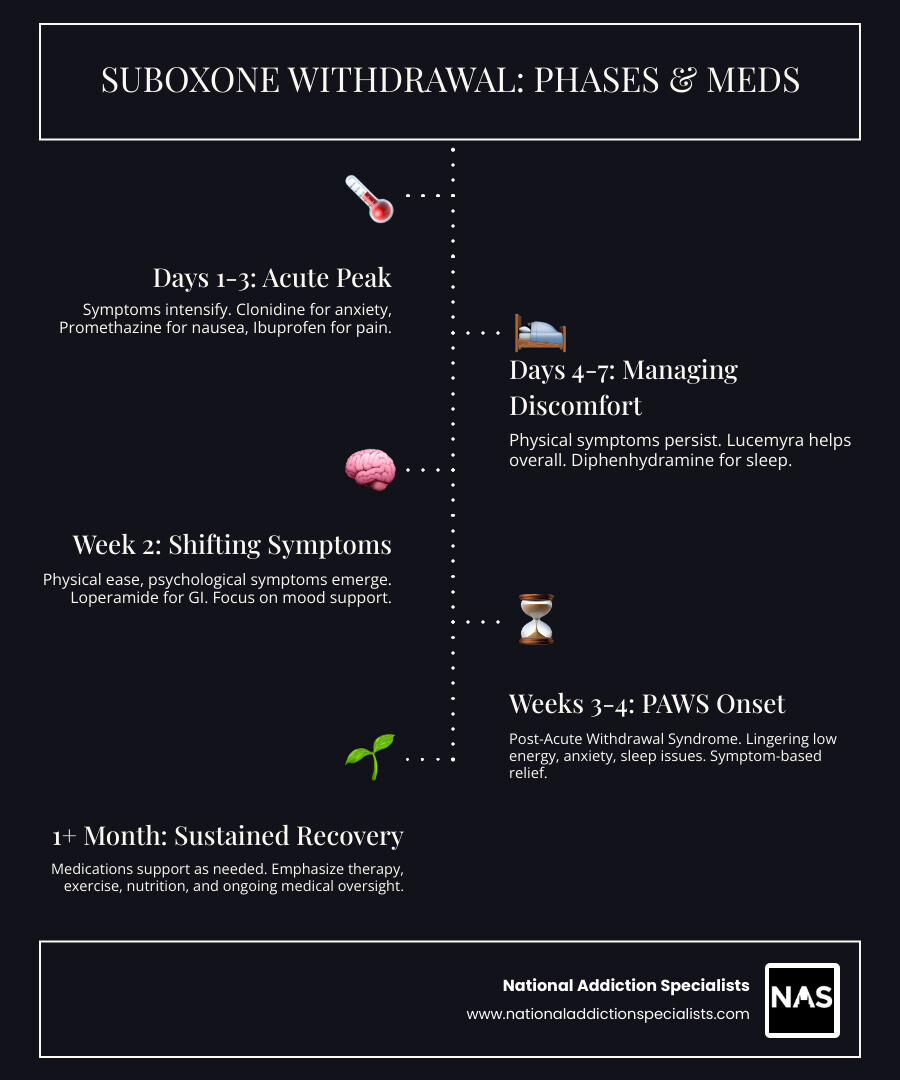
While the most intense physical symptoms typically peak within 72 hours, and generally subside after about a week, psychological symptoms can linger much longer. This brings us to a phenomenon known as Post-Acute Withdrawal Syndrome (PAWS). PAWS can occur after the acute withdrawal phase has subsided, presenting as a lingering set of symptoms that may persist for months or years. PAWS is believed to stem from neurochemical imbalances and alterations in brain function resulting from prolonged opioid use. For more comprehensive information, you can dig deeper into More on PAWS. Managing these protracted symptoms often requires a multifaceted approach involving medical intervention, therapy, lifestyle adjustments, and ongoing support.
Primary Medications for Suboxone Withdrawal: A Comprehensive List
Navigating Suboxone withdrawal can feel like sailing through a storm, but with the right medications for Suboxone withdrawal as our compass and a skilled medical team as our crew, we can make the journey smoother and safer. These medications don’t eliminate withdrawal entirely, but they significantly alleviate the most distressing symptoms, making the process much more tolerable.

The goal of using medication during Suboxone withdrawal is primarily symptom management. This means we address specific discomforts as they arise, rather than trying to completely block all withdrawal effects. This approach allows for individualized treatment plans, custom to your unique needs and symptom profile. Medical supervision is paramount here, as it ensures proper dosing, monitors for potential side effects, and allows for adjustments to your tapering schedule as needed.
Prescription Medications for Suboxone Withdrawal
When we talk about prescription medications for Suboxone withdrawal, we’re looking at tools that target specific, often severe, symptoms that over-the-counter options can’t adequately address. These are typically prescribed by a healthcare provider who understands the nuances of opioid withdrawal.
Clonidine: This medication is a true workhorse in opioid withdrawal management. It’s not an opioid itself, but it helps by reducing the overactivity of the nervous system that causes many uncomfortable withdrawal symptoms. Clonidine is particularly effective at alleviating anxiety, agitation, muscle aches, sweating, runny nose, and cramping. It helps calm the “fight or flight” response our body goes into when opioids are removed. A typical starting dosage might be 0.1 mg every 2 hours as needed for anxiety, with careful monitoring of blood pressure. Clonidine doesn’t help with cravings, but it’s a champion at taming the physical storm.
Lucemyra (lofexidine): This is a newer, exciting option in our arsenal. Lucemyra is the first non-opioid medication specifically approved by the FDA for the management of opioid withdrawal symptoms in adults. It works similarly to clonidine by reducing the release of norepinephrine, a chemical that becomes overactive during withdrawal, leading to many of the uncomfortable physical symptoms. You can find more information about this FDA-approved non-opioid treatment info directly from the source.
Beyond these primary agents, other prescription medications can be incredibly helpful for targeted relief:
Dicyclomine: For those particularly painful abdominal cramps and spasms that often accompany opioid withdrawal, dicyclomine can be a godsend. It’s an antispasmodic that helps relax the muscles in the gut. A typical dose might be 40 mg every 6 hours as needed for abdominal pain.
Promethazine: Nausea and vomiting can be debilitating during withdrawal, making it hard to keep down food or fluids. Promethazine is an antiemetic that can effectively combat these symptoms. A common dosage is 25 mg every 6 hours as needed for nausea and vomiting.
Sleep Aids (e.g., Trazodone): Insomnia is a nearly universal and incredibly frustrating withdrawal symptom. While we prefer non-pharmacological approaches first, sometimes a prescription sleep aid like trazodone can be necessary to help us get some much-needed rest, which is crucial for healing.
Over-the-Counter (OTC) Medications for Suboxone Withdrawal
Don’t underestimate the power of readily available over-the-counter (OTC) medications. When used correctly and under guidance, they can provide significant relief for many common withdrawal symptoms. We often recommend stocking up on these before starting your taper.
Here’s a handy table summarizing common OTC medications and their uses:
| Symptom | OTC Medication (Examples) | Dosage (Consult your doctor) |
|---|---|---|
| Pain/Muscle Aches | Ibuprofen (Advil, Motrin) | 800 mg every 6 hours as needed |
| Acetaminophen (Tylenol) | 1000 mg every 4 hours as needed | |
| Diarrhea | Loperamide (Imodium) | 2 mg every 6 hours as needed (do not exceed recommended dose) |
| Nausea | Dimenhydrinate (Dramamine) | As directed on package (e.g., 50-100 mg every 4-6 hours) |
| Meclizine (Antivert, Bonine) | As directed on package (e.g., 25-50 mg daily) | |
| Insomnia/Restless | Diphenhydramine (Benadryl) | 50 mg at bedtime as needed |
| GI discomfort | Antacids (Maalox, Tums) | 30 cc (Maalox) or as directed for indigestion |
It’s crucial to use these medications according to their directions and to discuss them with your healthcare provider. While they are OTC, improper use or excessive dosages can lead to their own set of problems. For instance, while loperamide can help with diarrhea, taking too much can be dangerous. Always prioritize safety and follow medical advice.
The Critical Role of Medical Supervision
Imagine trying to steer a complex maze blindfolded. That’s what Suboxone withdrawal can feel like without proper medical supervision. The journey off Suboxone is a medical process, and having expert guidance is not just helpful—it’s critical for safety and success.

At National Addiction Specialists, we provide convenient telemedicine-based Suboxone treatment, which includes comprehensive support for withdrawal management. This means you can receive personalized care from the comfort and privacy of your home in Tennessee or Virginia. Our team of expert providers ensures you have access to:
- Personalized Tapering Schedules: There’s no one-size-fits-all approach. We create a plan custom to your body’s response, dosage, and duration of use.
- Preventing Complications: Medical supervision helps us identify and prevent severe issues like precipitated withdrawal or dangerous dehydration.
- Adjusting Medications: As your symptoms evolve, we can adjust your medications for Suboxone withdrawal to ensure maximum comfort and effectiveness.
- Monitoring for Side Effects: Some medications can have side effects, and we’re here to monitor for them and make necessary changes.
- Addressing Co-occurring Disorders: Many individuals with opioid dependence also manage co-occurring mental health disorders, such as anxiety or depression. Our team is equipped to support these conditions throughout the withdrawal process.
- Safety and Efficacy: Our priority is to ensure your withdrawal is as safe and effective as possible, minimizing discomfort and supporting your long-term recovery goals.
Learn more about our treatment services and how we can support you.
Why Tapering is the Safest Method
We’ve touched upon it already, but it bears repeating: tapering is the gold standard for discontinuing Suboxone. While the idea of just stopping seems appealing (like ripping off a band-aid), the reality of opioid dependence makes it incredibly difficult and potentially dangerous.
A gradual taper involves slowly reducing your Suboxone dose over a period of weeks or even months. This method provides several key benefits:
- Minimizes Withdrawal Severity: By gradually lowering the dose, we give our brain time to adapt to less buprenorphine. This significantly reduces the intensity of withdrawal symptoms, making them much more manageable.
- Allows the Brain to Adjust: Our brain’s chemistry needs time to re-balance. Tapering provides this crucial window, preventing the shock of sudden opioid absence.
- Reduces Relapse Risk: The overwhelming discomfort of cold-turkey withdrawal often leads to relapse. A gentler taper makes it easier to stick with the plan and maintain sobriety.
Quitting “cold turkey” might sound brave, but it’s often a recipe for intense suffering and a higher risk of relapse. The body experiences an “overcorrection” when opioids are withdrawn, leading to hyperactive symptoms. This is why a slow, measured approach under medical guidance is always our recommendation.
How Long Are Medications Used?
The duration for which medications for Suboxone withdrawal are used is highly individualized. There’s no fixed timeline because it depends on several factors:
- Acute Phase Management: During the most intense acute withdrawal phase (typically the first few days to a week), medications like clonidine, antiemetics, and pain relievers are used to manage immediate symptoms.
- Symptom-Based Duration: Some medications are used on an as-needed basis for specific symptoms. For instance, sleep aids might only be needed for a few nights, while anti-diarrhea medication could be used for a week or two.
- Tapering Timeline Variance: If you’re on a slow taper, supportive medications might be used intermittently throughout the tapering process as your dose decreases and new symptoms emerge. The entire withdrawal process from Suboxone can last for as long as a month, though physical symptoms usually subside after that, with psychological dependence lingering.
- Short-term vs. Long-term Support: Most of the medications we’ve discussed are for short-term symptom relief during the active withdrawal period. Long-term support, especially for psychological symptoms or PAWS, often shifts to non-medication approaches like therapy and ongoing support.
The duration is determined by your comfort level, the severity of your symptoms, and your healthcare provider’s assessment, always aiming to use the lowest effective dose for the shortest necessary period.
Complementary and Holistic Approaches
While medications for Suboxone withdrawal are incredibly helpful, they are just one piece of the puzzle. A truly successful withdrawal and long-term recovery plan integrates a range of complementary and holistic approaches that support our overall well-being. These strategies empower us to take an active role in our healing.

Think of it this way: medications address the symptoms, but holistic approaches nourish the body and mind, building resilience for the journey ahead.
- Hydration and Nutrition: Vomiting and diarrhea during withdrawal can lead to dehydration. Drinking plenty of fluids, especially electrolyte solutions, is crucial. Eating a healthy, balanced diet, even small, frequent meals if nausea is an issue, provides our body with the fuel it needs to heal.
- Light Exercise: While intense physical activity is not recommended during acute withdrawal, light exercise like walking, gentle stretching, or yoga can boost mood, reduce anxiety, and promote better sleep. It helps release natural endorphins, our body’s feel-good chemicals.
- Relaxation Techniques: Stress and anxiety are hallmarks of withdrawal. Practicing relaxation techniques such as deep breathing exercises, meditation, or mindfulness can help calm the nervous system and improve sleep quality.
- Emotional Support: Suboxone withdrawal can be emotionally taxing. Leaning on loved ones, talking to a therapist, or attending support groups provides invaluable emotional support and helps us feel less alone.
The Power of Therapy and Support
Beyond managing physical discomfort, addressing the underlying reasons for opioid dependence and building robust coping mechanisms are essential for sustained recovery. This is where therapy and support groups shine.
- Cognitive Behavioral Therapy (CBT): This is a highly effective behavioral therapy that helps us identify and change negative thought patterns and behaviors that contribute to addiction. CBT equips us with practical coping skills for life after Suboxone, helping us steer triggers and cravings.
- Peer Support Groups: The power of shared experience cannot be overstated. Groups like Narcotics Anonymous (NA) and SMART Recovery provide a supportive, non-judgmental environment where we can connect with others who understand our struggles. These groups foster accountability and provide a sense of community, which is vital for long-term sobriety. The 12-Step treatment structure, for instance, has proven beneficial for millions.
- Other Therapeutic Interventions: Depending on individual needs, other therapies like individual counseling, case management, and even alternative therapies such as artistic therapies, food-based therapies, exercise therapies, and animal-assisted therapies can be incorporated into a comprehensive treatment plan. The key to maintaining sobriety for the long-term is therapy. Without it, it will be impossible to remain abstinent for any relevant length of time. You can explore various treatment approaches for addiction to find what resonates with you.
Make an Appointment to Treat Addiction Please don’t hesitate. Make an appointment today. Make an Appointment to Treat Addiction
Frequently Asked Questions about Medications for Suboxone Withdrawal
We hear a lot of questions from individuals considering Suboxone withdrawal, and rightly so! It’s a big step. Let’s address some of the most common concerns we encounter.
Can I manage Suboxone withdrawal without any medication?
While it is technically possible for some individuals to manage Suboxone withdrawal without any medication, it is often a very difficult and uncomfortable experience. For many, the severity of physical and psychological symptoms makes it incredibly challenging to endure without support.
We always emphasize that medical detox provides a much safer and more comfortable environment. While non-medication approaches are powerful and essential for long-term recovery, they are generally most effective when used as a complement to a medically supervised taper. Non-medicated detox, when attempted, relies heavily on highly educated professionals, intensive therapeutic follow-up, and robust long-term aftercare to succeed. Our goal is to make your journey as gentle as possible, and for most, that involves carefully managed medications for Suboxone withdrawal.
What are the risks of using benzodiazepines during Suboxone withdrawal?
This is a crucial question, and it comes with a strong caution from us. Using benzodiazepines (like Xanax, Klonopin, Valium) in conjunction with opioid withdrawal, especially with Suboxone, carries significant risks:
- High Risk of Cross-Addiction: Many individuals struggling with opioid dependence also have a history of or propensity for benzodiazepine misuse. Introducing benzodiazepines during withdrawal can easily lead to a new dependence.
- Increased Respiratory Depression Risk: Both opioids (even partial agonists like buprenorphine) and benzodiazepines are central nervous system depressants. Combining them can dangerously suppress breathing, leading to profound sedation, coma, or even death. This risk is why healthcare providers are extremely cautious about co-prescribing these medications.
Therefore, benzodiazepines should only be used under strict, short-term medical supervision for severe symptoms, and only when the benefits clearly outweigh the risks. Our preferred approach is to try to cease or taper benzodiazepines to the lowest effective dose if you are already taking them.
How is Suboxone withdrawal different from withdrawal from other opioids like heroin?
Suboxone withdrawal has distinct characteristics that set it apart from withdrawal from full opioid agonists like heroin, oxycodone, or fentanyl.
The primary difference lies in buprenorphine’s nature as a partial opioid agonist. Unlike full agonists that fully activate opioid receptors, buprenorphine only partially activates them. This means:
- Less Intense but More Prolonged Symptoms: Withdrawal symptoms from Suboxone are often less acutely intense than those from short-acting, full opioids. You might not experience the same rapid, overwhelming “crash.”
- Slower Onset of Withdrawal: Due to buprenorphine’s longer half-life, withdrawal symptoms typically take longer to appear after the last dose, often peaking around days 3-4. In contrast, withdrawal from short-acting opioids like heroin can begin within 6-12 hours.
- Longer Duration: While less intense, Suboxone withdrawal symptoms can be more protracted, lasting for weeks or even months (especially psychological symptoms and PAWS), compared to the typical 5-7 day acute withdrawal period for heroin.
This unique profile of Suboxone withdrawal means that while it may feel less severe in its peak, its prolonged nature requires a different kind of patience and a carefully managed, often longer, tapering strategy.
Start Your Recovery Journey Today
We understand that facing Suboxone withdrawal can feel daunting, but please know that you don’t have to go through it alone. Medications for Suboxone withdrawal, combined with compassionate, expert care, are powerful tools that can make this transition manageable and lead you toward a healthier, substance-free life.
Medication is a key tool in easing the physical discomfort, allowing you the space to focus on the deeper work of recovery. Professional guidance is essential to ensure your safety and to tailor a plan that works for you. A personalized plan, designed by experienced addiction specialists, significantly increases your chances of success.
At National Addiction Specialists, we are dedicated to providing convenient and confidential telemedicine-based Suboxone treatment. Whether you are in Tennessee or Virginia, our team is ready to support you with personalized recovery plans right from your home. We specialize in medication-assisted treatment and counseling, accepting Medicaid and Medicare to make care accessible.
It’s time to take control of your journey. Let us help you steer Suboxone withdrawal with the right medications and the right support.
Schedule your addiction treatment consultation today. We’re here for you.
This article was medically reviewed by: Chad Elkin, MD, DFASAM is a board-certified addiction medicine physician, founder, and Chief Medical Officer of National Addiction Specialists, dedicated to treating substance use disorders. A Distinguished Fellow of the American Society of Addiction Medicine (ASAM), Dr Elkin currently serves as President of the Tennessee Society of Addiction Medicine (TNSAM) and has held various leadership roles within the organization. Dr Elkin chairs ASAM’s Health Technology Subcommittee and is an active member of its Practice Management and Regulatory Affairs Committee, State Advocacy and Legislative Affairs Committee, and other committees. He also serves on the planning committee for the Vanderbilt Mid-South Addiction Conference. Committed to advancing evidence-based policy, Dr Elkin is Chairman of the Tennessee Association of Alcohol, Drug, & Other Addiction Services (TAADAS) Addiction Medicine Council, which collaborates with the TN Department of Mental Health & Substance Abuse Services (TDMHSAS). He has contributed to numerous local, state, and national task forces, helping develop professional guidelines, policies, and laws that align with best practices in addiction medicine. His work focuses on reducing addiction-related harm, combating stigma, and ensuring access to effective treatment.Passionate about the field of addiction medicine, he remains dedicated to shaping policy and enhancing patient care.
Suboxone® and Subutex® are a registered trademark of Indivior UK Limited. Any mention and reference of Suboxone® and Subutex® in this website is for informational purposes only and is not an endorsement or sponsorship by Indivior UK Limited.