Affordable Recovery: Finding Suboxone Doctors Who Accept Medicare
Why Medicare Coverage for Suboxone Treatment Matters
Medicare Suboxone doctors are healthcare providers who prescribe buprenorphine-based medication for opioid use disorder and accept Medicare insurance. Here’s what you need to know:
- Medicare Part B covers Suboxone treatment through Opioid Treatment Programs (OTPs), including medication, counseling, and therapy.
- Medicare Part D covers Suboxone prescriptions filled at pharmacies.
- Telemedicine options allow you to receive care from home via video appointments, overcoming common barriers like transportation.
- Treatment duration is covered as long as medically necessary—there’s no arbitrary time limit.
- Out-of-pocket costs vary but typically include Part B deductibles and copayments, unless you also have Medicaid.
If you’re one of the millions of Americans on Medicare struggling with opioid addiction, finding affordable treatment can feel overwhelming, especially when dealing with barriers like limited mobility, transportation challenges, or the desire for privacy. The good news? Medicare not only covers Suboxone treatment, but recent changes have also made it easier than ever to access this life-saving care through telemedicine. This means you can connect with a qualified provider without leaving your home.
Medication-Assisted Treatment (MAT), which combines Suboxone with counseling, is recognized by leading medical organizations as the gold standard for treating opioid use disorder due to its high success rates. Medicare fully accepts this evidence-based approach, covering these essential services through both Opioid Treatment Programs and traditional healthcare providers. Whether you prefer in-person visits or the convenience of online appointments, options exist that fit your needs and budget.
Recovery is possible, and you don’t have to steer this alone.
I’m Dr. Chad Elkin, founder and Medical Director of National Addiction Specialists, board-certified in Addiction Medicine. I’ve spent years helping patients understand their insurance coverage and access Medicare Suboxone doctors through our telemedicine platform, making evidence-based treatment accessible from the comfort of home.
Make an Appointment to Treat Addiction Please don’t hesitate. Make an appointment today.
Understanding Suboxone and Its Role in Recovery
If you’re exploring treatment options for opioid addiction, you’ve likely heard about Suboxone. But what exactly is this medication, and how does it help people break free from opioid dependence?
Suboxone is a prescription medication that combines two powerful ingredients working together: buprenorphine and naloxone. Think of it as a carefully designed tool that helps your brain heal while protecting you from misuse.
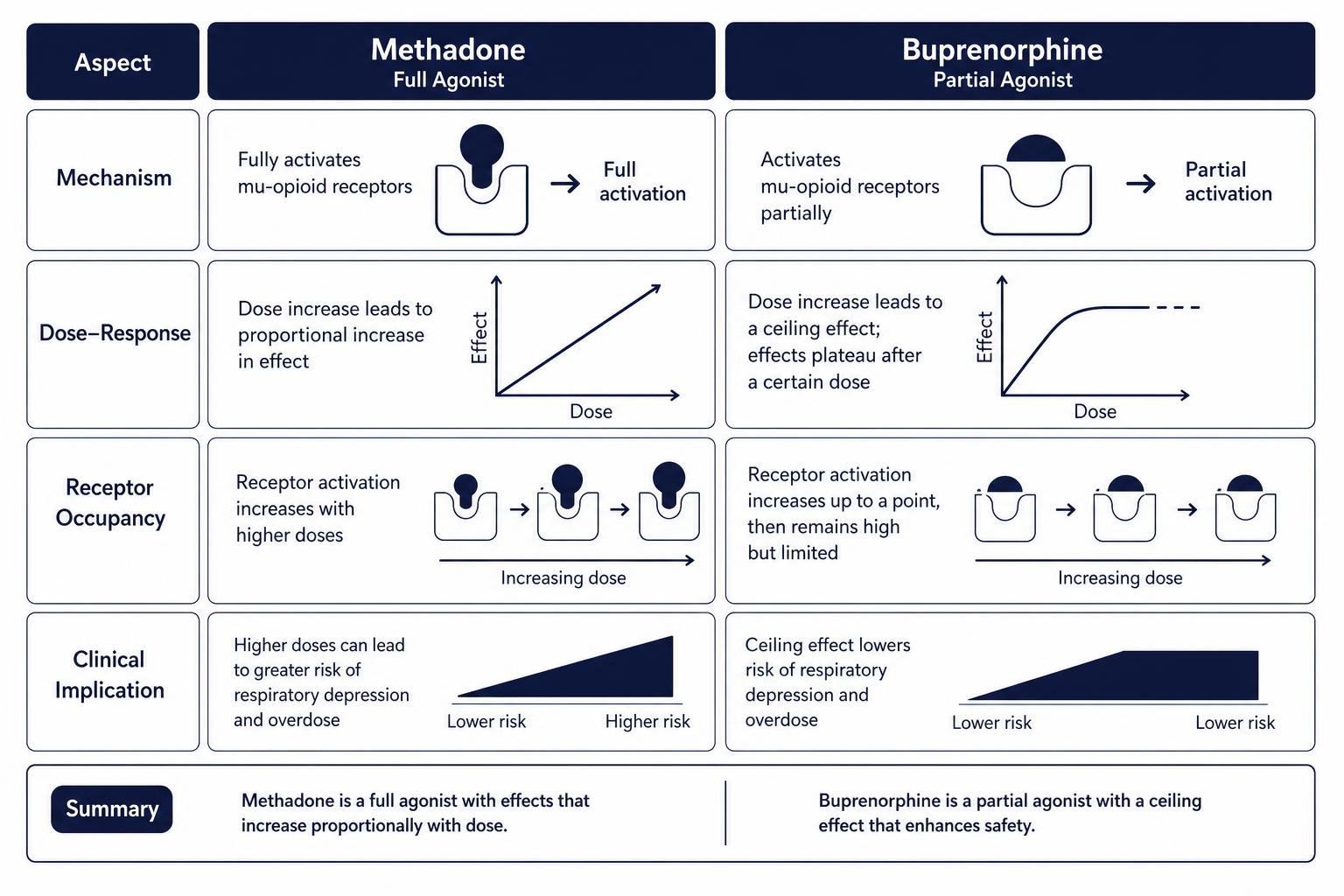
Buprenorphine is what doctors call a partial opioid agonist. Here’s what that means in plain English: it attaches to the same receptors in your brain that other opioids do, but it doesn’t create the intense high that full opioids produce. Instead, it acts like a gentle stabilizer—reducing cravings and preventing withdrawal symptoms without giving you that euphoric feeling that leads to addiction. It’s the difference between a dimmer switch and a light switch. Buprenorphine gives your brain just enough to feel normal again, not high. Feeling “normal” means you are free from the debilitating cycle of intense cravings and painful withdrawal symptoms. This stability is crucial, as it allows you to clear your mind and regain the physical and emotional energy needed to fully engage in your recovery journey.
The second ingredient, naloxone, plays a protective role. It’s an opioid antagonist that blocks opioid effects. While it doesn’t do much when you take Suboxone correctly under your tongue, it becomes active if someone tries to inject the medication. This built-in safety feature makes Suboxone much harder to misuse, which is why Medicare Suboxone doctors prefer it for outpatient treatment.
Together, these two ingredients create a medication that helps you stabilize physically and mentally. You can learn more details about How Suboxone Opioid Treatment Works and what to expect during treatment.
But here’s something important to understand: Suboxone works best as part of a bigger picture. Medication-Assisted Treatment (MAT) combines FDA-approved medications like Suboxone with counseling and behavioral therapy. This comprehensive care approach addresses both the physical dependence on opioids and the emotional and psychological patterns that often accompany addiction.
The medication handles the physical side—stopping cravings and withdrawal—while therapy helps you develop new coping skills, understand your personal triggers, and rebuild your life. There is a powerful synergy at play here: the medication provides the biological stability that makes the psychological work of therapy possible and more effective. Neither component works as well alone as they do together in a structured treatment plan. We’ve seen this in our practice, which is why we emphasize The Importance of Counseling and Therapy in Suboxone Treatment.
This comprehensive approach to Opioid Use Disorder (OUD) treatment is supported by decades of research showing that combining medication with counseling gives people the best chance at lasting recovery. For additional information about treatment options, you can visit Opioid Use Disorder (OUD) treatment.
The bottom line? Suboxone isn’t just about managing symptoms. It’s about giving you the stability you need to do the real work of recovery—rebuilding relationships, finding purpose, and creating a life you don’t need to escape from.
Decoding Your Medicare Coverage for Suboxone Treatment
Understanding Medicare coverage can feel overwhelming, especially when you’re trying to access life-saving treatment for opioid use disorder. Let’s break down exactly how Medicare covers Suboxone treatment—whether you have Original Medicare or a Medicare Advantage plan.
Medicare recognizes opioid use disorder treatment as essential healthcare. You can access coverage through Opioid Treatment Programs (OTPs) or directly from qualified healthcare providers. OTPs are specialized facilities that offer comprehensive care—medication, counseling, drug testing, and peer support—all bundled together under one roof.
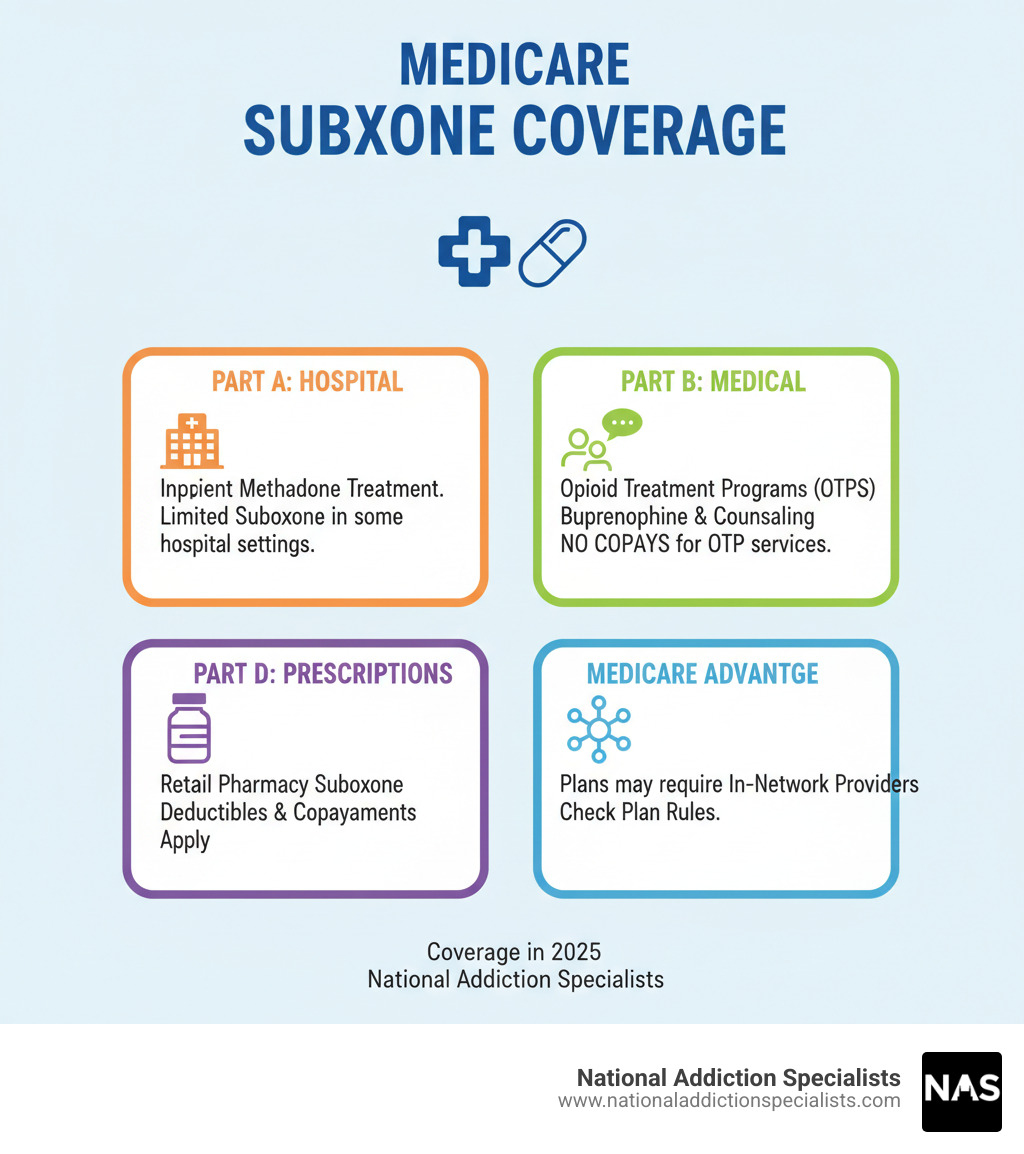
Medicare Part B Coverage
Medicare Part B is your medical insurance that covers doctor visits and outpatient services. This is where much of your Suboxone treatment coverage comes from.
When you see Medicare Suboxone doctors for appointments, assessments, and ongoing treatment management, Part B typically covers these visits. And here’s some good news: Medicare now covers telehealth appointments for counseling, therapy, and periodic check-ins using audio and video technology. This means you can receive quality care from the comfort of your own home—no travel required.
If you’re receiving treatment through an Opioid Treatment Program (OTP) enrolled in Medicare, Part B provides bundled coverage for a comprehensive range of services. This bundle includes medications like methadone, buprenorphine (the active ingredient in Suboxone), naltrexone, and nalmefene when administered or dispensed by the OTP. It also covers individual and group counseling, drug testing, intake assessments, periodic evaluations, care coordination, and peer recovery support services.
Here’s a pleasant surprise: when you receive services from a Medicare-enrolled OTP that meets all requirements, you often won’t have to pay any copayments for these bundled services. You’ll still need to meet your Part B deductible, and it may apply to certain supplies and medications obtained through the OTP. For most other doctor’s services, you’ll typically pay the Part B deductible plus 20% coinsurance.
Medicare Part D Coverage
Medicare Part D covers your prescription medications, including the Suboxone you pick up at your pharmacy. Most Part D plans cover drugs like buprenorphine, naloxone, and naltrexone—the medications used in Medication Assisted Treatment.
Each Part D plan has a formulary—essentially a list of covered drugs organized into tiers. Your out-of-pocket costs depend on which tier your medication falls into, with higher tiers generally meaning higher costs. You might also encounter prior authorization requirements, where your doctor needs to get approval from your insurance plan before you can fill your prescription. Ask your pharmacy about generic versions of buprenorphine/naloxone, which often cost less than brand-name Suboxone.
Because every Part D plan is different, it’s crucial to call your plan’s member services line directly to ask specific questions. Be prepared with your member ID and ask questions like: “Is buprenorphine/naloxone (Suboxone) on my plan’s formulary?”, “What tier is the medication on, and what will my copayment or coinsurance be?”, “Does this medication require prior authorization from my doctor?”, and “Does my plan have a preferred pharmacy for lower costs?”. Getting these answers upfront can prevent surprises at the pharmacy counter.
Medicare Advantage (Part C) vs. Original Medicare
The type of Medicare coverage you have—Original Medicare or Medicare Advantage—affects how you access treatment and what you’ll pay.
| Feature | Original Medicare (Parts A & B) | Medicare Advantage (Part C) |
|---|---|---|
| Provider Networks | See any provider who accepts Medicare | Usually must use in-network providers |
| Coverage for OTP Services | Covered under Part B with bundled payment | Covered, but network restrictions may apply |
| Prescription Coverage | Need separate Part D plan | Often includes prescription drug coverage |
| Out-of-Pocket Costs | Part B deductible plus 20% coinsurance (OTP services may have no copay) | Varies by plan; may have out-of-pocket maximum |
| Extra Benefits | Limited to Medicare-covered services | May include additional benefits like transportation |
Original Medicare gives you freedom to see any Medicare Suboxone doctors who accept Medicare. You’ll pay the standard Part B deductible and coinsurance, though OTP services often come with no copayment. You’ll need a separate Part D plan for prescription coverage.
Medicare Advantage plans (Part C) bundle everything together—medical coverage and usually prescription drug coverage too. These plans typically require you to use in-network providers and may have different cost-sharing structures. On the plus side, they often include an out-of-pocket maximum that limits your total yearly costs, and some offer extra benefits like transportation to appointments.
For detailed information about Medicare coverage for opioid use disorder treatment, visit the Official Medicare coverage details for OUD.