How to Break Kratom Addiction the Right Way
What You Need to Know About Breaking Kratom Addiction
How to break addiction from Kratom is a real and urgent challenge — and if you’re here, you’re already taking the right first step.
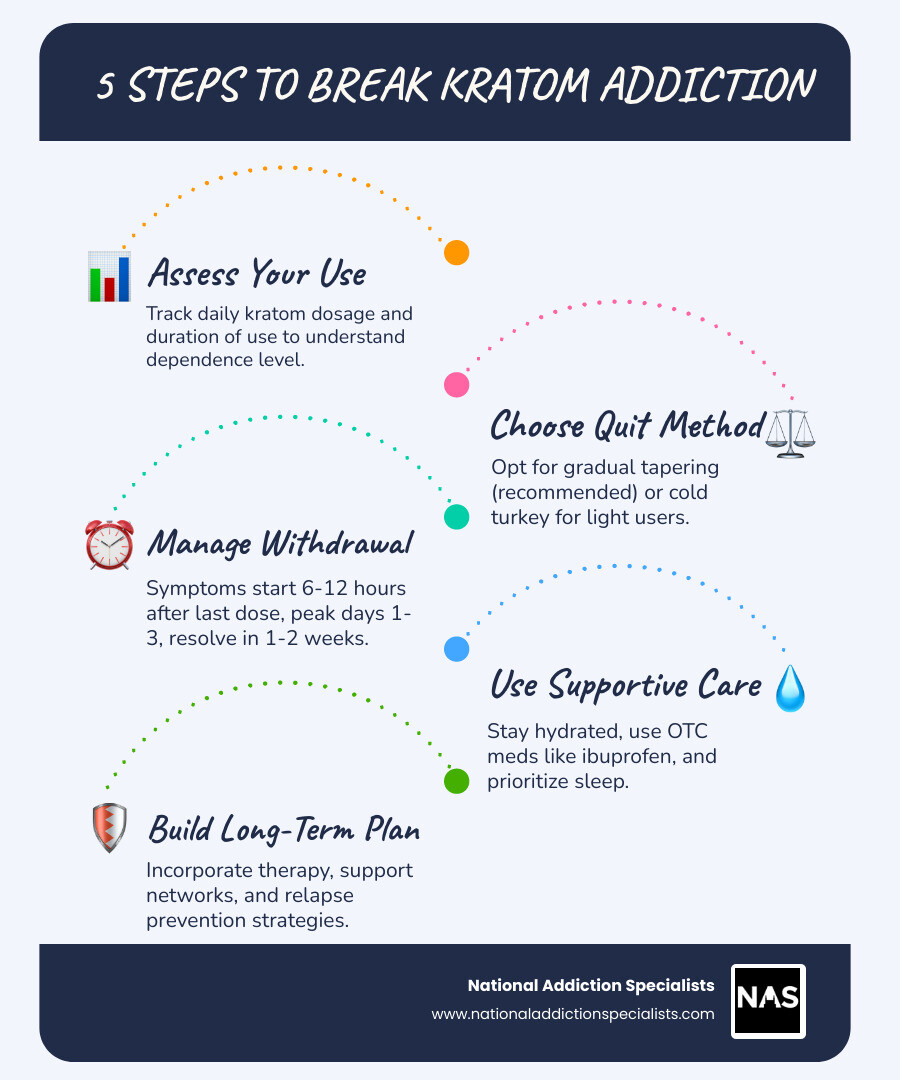
Here’s a quick overview of the safest path forward:
- Assess your use — How much kratom do you take daily, and for how long?
- Choose a quit method — Gradual tapering is recommended for most people; cold turkey is an option for lighter users.
- Manage withdrawal symptoms — Symptoms typically begin within 6-12 hours of your last dose, peak around days 1-3, and largely resolve within 1-2 weeks.
- Use supportive care — Hydration, OTC medications, and sleep support can ease discomfort.
- Get professional help when needed — Heavy or long-term users should seek medically supervised detox and medication-assisted treatment (MAT).
- Build a long-term plan — Behavioral therapy, support networks, and relapse prevention strategies are key to lasting recovery.
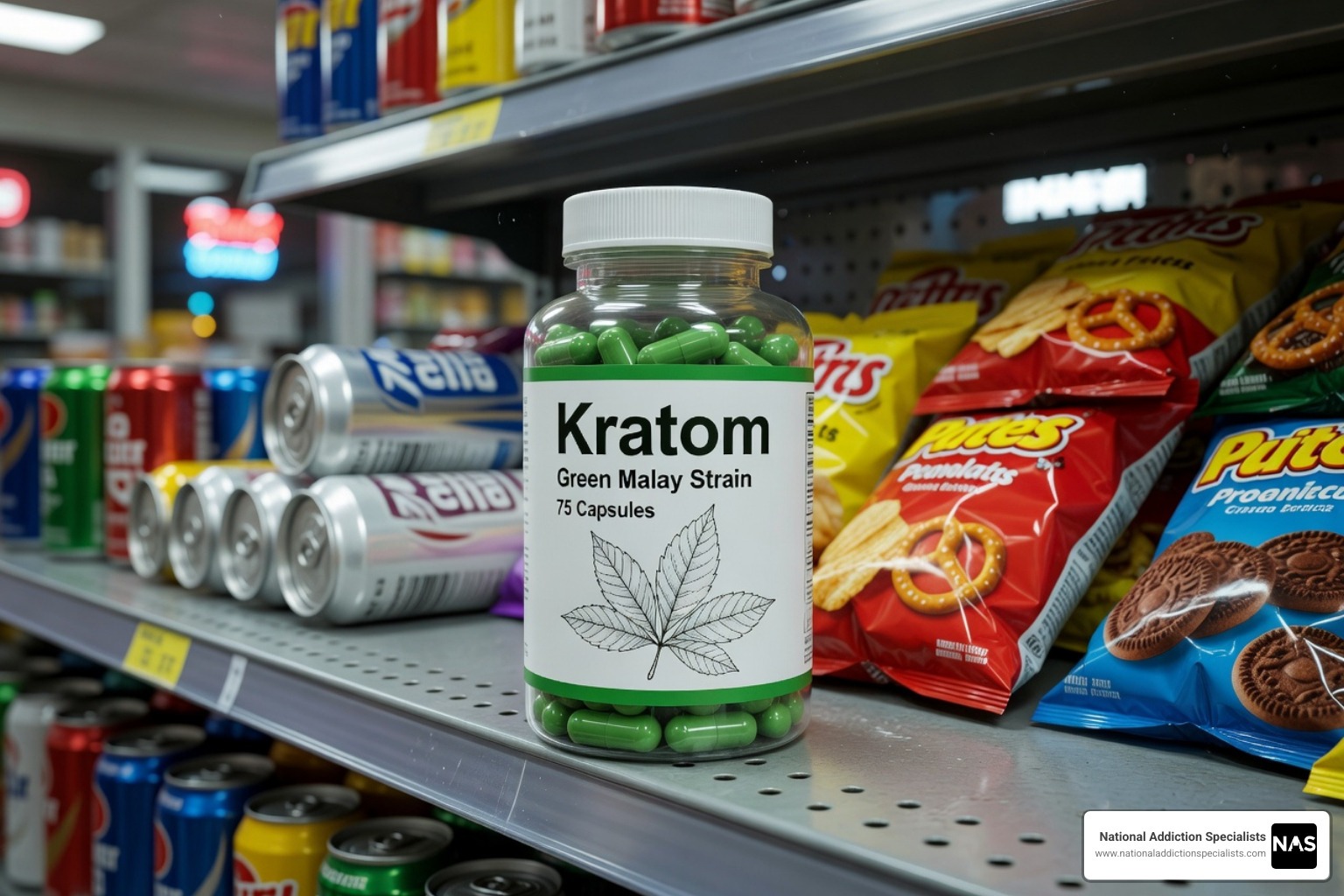
Kratom is often sold as a “natural” supplement, but its active compounds bind to the same brain receptors as opioids. That means dependence can develop within just a few weeks of daily use — and stopping suddenly can trigger real, uncomfortable withdrawal symptoms.
The good news? With the right approach, recovery is absolutely possible.
I’m Dr. Chad Elkin, board-certified in Addiction Medicine and founder and Medical Director of National Addiction Specialists — and helping patients understand how to break addiction from Kratom safely is a core part of the work I do every day. In the sections below, I’ll walk you through everything you need to know, from understanding why kratom causes dependence to the most effective treatment options available in 2026.
Similar topics to How to break addiction from Kratom:
Understanding Kratom and the Path to Dependence
To understand how to break addiction from Kratom, we first have to look at what this substance actually does to the brain. Kratom comes from the leaves of the Mitragyna speciosa tree, a relative of the coffee plant native to Southeast Asia. While it has been used traditionally for centuries to combat fatigue, its modern use in the United States has led to widespread reports of dependency.
The “magic” (and the danger) lies in two primary alkaloids: mitragynine and 7-hydroxymitragynine. These compounds are unique because they produce dose-dependent effects. At low doses, kratom acts as a stimulant, providing an energy boost similar to a strong cup of coffee. However, at higher doses, these alkaloids bind to the mu-opioid receptors in the brain, producing sedative and euphoric effects remarkably similar to traditional opioids.
As of May 2026, over 10 million Americans report using kratom. According to the National Institute on Drug Abuse (NIDA), while many start using it for chronic pain or as a “natural” way to boost mood, the brain quickly adapts. This process, known as neuroadaptation, can begin in as little as 2 to 4 weeks of daily use. Your brain starts to rely on the substance to maintain its chemical balance. When you stop taking it, that balance is thrown into chaos, leading to the withdrawal symptoms that make quitting so difficult.
For a deeper dive into the science, check out our guide on Everything You Need To Know About Kratom.
Recognizing the Signs and Symptoms of Kratom Withdrawal
If you’ve ever tried to skip a dose and felt “off,” you’ve likely experienced the early stages of withdrawal. Because kratom hits both opioid and adrenergic receptors, the withdrawal profile is a bit of a hybrid—part opioid flu, part stimulant crash.
We often tell our patients in Tennessee and Virginia that recognizing these symptoms is the first step in preparing for the journey ahead. Here is a breakdown of what to expect:
Physical vs. Psychological Withdrawal Symptoms
| Physical Symptoms | Psychological Symptoms |
|---|---|
| Muscle aches and joint pain | Intense anxiety and restlessness |
| Restless Leg Syndrome (RLS) | Irritability and “short fuse” |
| Runny nose and watery eyes | Depression or flat mood (anhedonia) |
| Diarrhea and stomach cramps | Insomnia and “racing thoughts” |
| Hot flashes and night sweats | Strong cravings for the substance |
| Tremors or muscle spasms | Difficulty concentrating |
These symptoms aren’t just in your head. Statistics show that about half of kratom exposures reported to poison control centers result in serious negative outcomes, including high blood pressure and even seizures. This is why we emphasize that learning how to break addiction from Kratom should ideally involve a medical professional who can monitor your vitals.
Withdrawal typically begins within 6 to 12 hours after your last dose. The peak intensity usually hits between days 1 and 3, which is when most people feel the strongest urge to relapse just to make the discomfort stop. For more information on managing these specific symptoms, see our page on Kratom Treatment and Withdrawal Support.
How to Break Addiction from Kratom: Tapering vs. Cold Turkey
When you decide to quit, you generally have two paths: the “Band-Aid” method (cold turkey) or the “Slow and Steady” method (tapering). Both have their place, but they require very different mindsets.
The Cold Turkey Approach
Quitting cold turkey means stopping all kratom use immediately.
- Pros: It’s the fastest way to get the substance out of your system. You don’t have to spend weeks measuring doses.
- Cons: The withdrawal symptoms are much more intense. For heavy users (those taking 20-30+ grams per day), the physical and mental strain can be overwhelming, leading to a high risk of relapse.
- Who it’s for: Generally recommended only for light, short-term users or those who have a completely clear schedule and a very strong support system.
The Tapering Approach
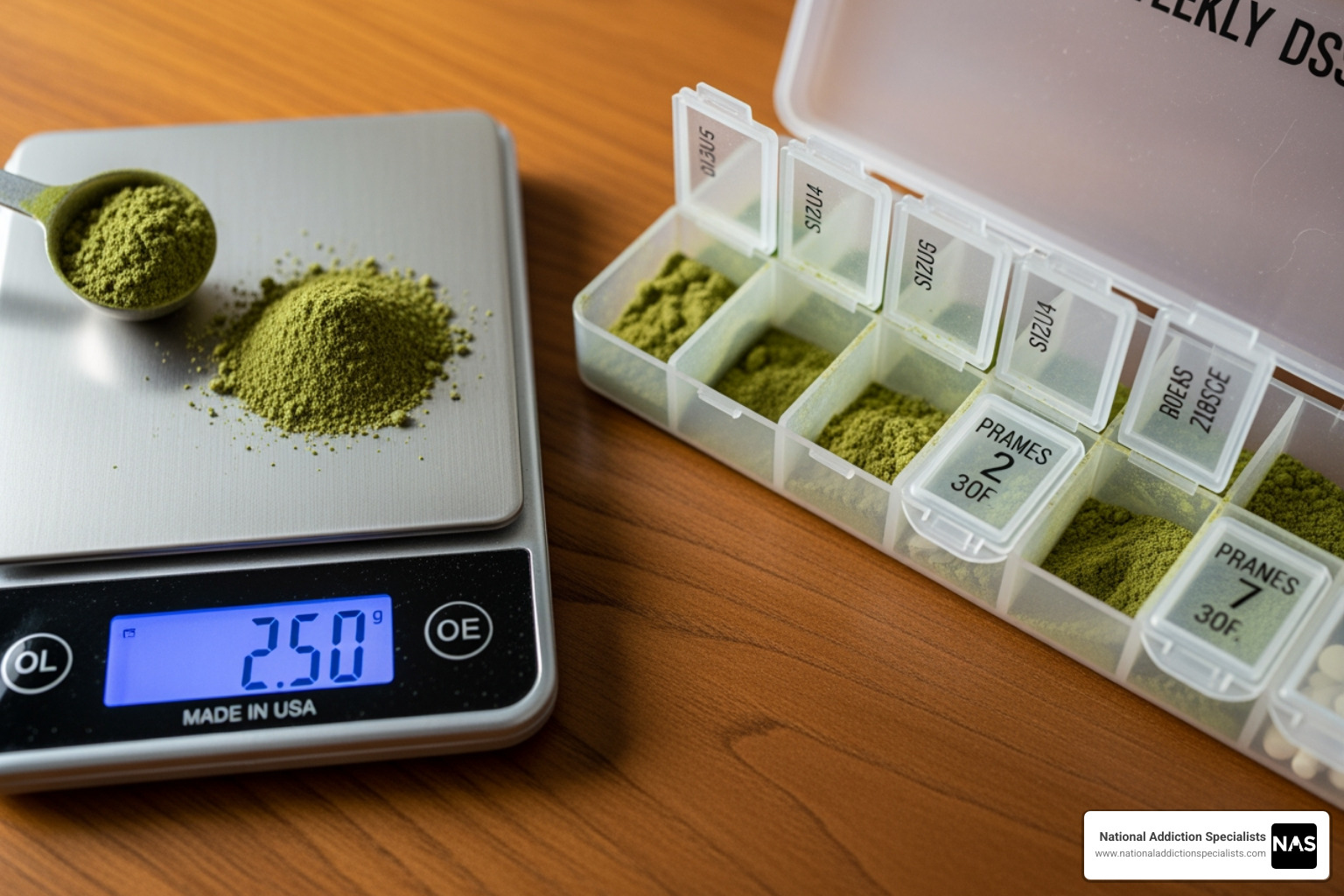
Tapering involves gradually reducing your dose over several weeks to allow your brain to slowly readjust to lower levels of the alkaloids.
- Pros: Significantly reduces the severity of withdrawal symptoms—some studies suggest a 60-80% reduction in discomfort. It allows you to continue working and fulfilling responsibilities.
- Cons: Requires extreme discipline and a long-term commitment. It can be tempting to “cheat” and take a larger dose on a bad day.
- Who it’s for: Most daily users, especially those with chronic pain or high-dose dependencies.
Regardless of the method, the acute phase usually lasts 5 to 7 days, but lingering psychological symptoms—sometimes called Post-Acute Withdrawal Syndrome (PAWS)—can last for weeks. To prepare for this, we recommend exploring Medication-Assisted Treatment for Kratom.
Step-by-Step Tapering: How to Break Addiction from Kratom Safely
If you choose to taper, precision is your best friend. You cannot “eyeball” your doses with a teaspoon; you need a digital milligram scale. Here is a conservative tapering schedule we often suggest:
- Establish your baseline: Spend three days tracking exactly how much you take. Don’t try to cut back yet—just get an honest number.
- The Initial Cut: Reduce your total daily dose by 20-25%. If you take 20 grams, drop to 15 grams.
- Divide and Conquer: Split your daily total into 4 or 5 equal doses spread throughout the day. This keeps the levels in your blood stable and prevents the “highs and lows” that trigger cravings.
- The Weekly Drop: Every 5 to 7 days, reduce your total daily amount by another 1 to 2 grams (or about 10% of your current dose).
- Listen to your body: If withdrawal symptoms become unmanageable, stay at your current dose for a few extra days until you stabilize. Never go backward.
- The Final Jump: Once you reach a very low dose (around 2 grams per day), you can choose to stop entirely.
For residents in areas facing shifting regulations, such as those in the South, our guide on How To Prepare For Tennessees Kratom Ban With 5 Quick Changes offers additional practical tips for managing your supply during a transition.
Professional Treatment and Medication-Assisted Options
Sometimes, the “do-it-yourself” approach isn’t enough, and that is perfectly okay. In fact, for many, it is the smartest choice. If you have tried to quit multiple times and failed, or if your kratom use is interfering with your job and relationships, it’s time to look at professional Kratom Treatment.
Professional treatment offers several layers of safety that home detox lacks:
- Medical Supervision: 24/7 monitoring of your heart rate and blood pressure.
- Psychological Support: Access to therapists who can help you identify the “why” behind your use.
- Structured Environment: Removing the triggers and easy access to the substance.
Make an Appointment to Treat Addiction Please don’t hesitate. Make an appointment today. Make an Appointment
When to Seek Professional Help: How to Break Addiction from Kratom with MAT
In 2026, Medication-Assisted Treatment (MAT) has become a gold standard for treating kratom dependence. Because kratom acts on opioid receptors, medications used for opioid use disorder are often highly effective.
One of the most successful options is Suboxone (a combination of buprenorphine and naloxone). Buprenorphine is a partial opioid agonist, meaning it “plugs” the receptors to stop withdrawal and cravings without producing the same intense high as kratom or traditional opioids. This allows the brain to heal while the patient remains functional.
Other medications that may be used include:
- Clonidine: Originally a blood pressure med, it is excellent for reducing the “fight or flight” symptoms of withdrawal, like anxiety and sweating.
- Gabapentin: Sometimes used to help with restless legs and sleep disturbances.
- Anti-nausea medications: To manage GI distress during the first few days.
At National Addiction Specialists, we specialize in providing this care via telemedicine in Tennessee and Virginia. This means you can receive a personalized recovery plan and prescriptions from the comfort and privacy of your own home. For more details, read An Essential Guide To Suboxone For Kratom Dependence.
Long-Term Recovery and Relapse Prevention
Breaking the physical addiction is only half the battle. The other half is staying quit. Long-term recovery requires a complete overhaul of your lifestyle and coping mechanisms.

The HALT Method
A classic but effective tool in recovery is the HALT acronym. When you feel a craving, ask yourself if you are:
- Hungry
- Angry
- Lonely
- Tired
Often, a craving is just your brain’s way of misinterpreting a basic physical or emotional need. Addressing the underlying issue (eating a snack, calling a friend, or taking a nap) can often make the craving vanish.
Lifestyle and Holistic Support
- Hydration: Kratom is notoriously dehydrating. During withdrawal, aim for 8-10 glasses of water a day, supplemented with electrolytes.
- Exercise: It sounds like the last thing you want to do when you’re achy, but even a 10-minute walk can release natural endorphins that help regulate your mood.
- Magnesium Glycinate: Many people find that 400-600mg of magnesium helps significantly with muscle cramps and restless legs.
- Cognitive Behavioral Therapy (CBT): Working with a therapist helps you “rewire” the thought patterns that lead you back to kratom use.
Building a support system is vital. Whether it’s a formal group or an online community like r/quittingkratom, having people who understand exactly what you’re going through makes the burden much lighter.
Frequently Asked Questions about Breaking Kratom Addiction
How long does kratom withdrawal typically last?
For most people, the acute physical withdrawal lasts between 5 and 10 days. The timeline usually looks like this:
- Hours 6-12: Onset of anxiety and runny nose.
- Days 1-3: Peak physical symptoms (aches, GI issues, RLS).
- Days 4-7: Symptoms begin to fade, though sleep may still be difficult.
- Week 2+: Physical symptoms are mostly gone, but psychological symptoms like fatigue or low mood can linger.
Is kratom legal in my area?
As of May 2026, kratom remains legal at the federal level in the U.S. However, it is banned in several states and specific cities.
- Tennessee: Kratom is legal but regulated. You must be 21+, and the product must be in its natural form (not synthetic).
- Virginia: Kratom is currently legal, though there have been ongoing legislative discussions regarding the Kratom Consumer Protection Act to ensure product purity and age restrictions. Always check your local municipal codes, as some counties have their own bans.
Can I use over-the-counter medications for withdrawal?
Yes, OTC options can be very helpful for mild to moderate symptoms. Ibuprofen or acetaminophen can help with muscle aches and low-grade fevers. Melatonin or valerian root may assist with sleep, though you should consult a doctor first, as some sleep aids can actually make Restless Leg Syndrome worse.
Conclusion
Learning how to break addiction from Kratom is a journey that requires patience, self-compassion, and a solid plan. Whether you choose to taper slowly at home or seek the support of a professional medical team, know that the discomfort of withdrawal is temporary, but the benefits of freedom are permanent.
At National Addiction Specialists, we are dedicated to helping our neighbors in Tennessee (from Brentwood to the mountains) and Virginia (from Virginia Beach to the valley) reclaim their lives. Our telemedicine-based Suboxone treatment offers a confidential, convenient way to manage withdrawal and focus on your long-term health. We accept Medicaid and Medicare, ensuring that high-quality care is accessible to those who need it most.
If you’re ready to take that next step, we’re here to walk it with you. Explore our options for Medication-Assisted Treatment and let’s start your recovery today.
This article was medically reviewed by: Chad Elkin, MD, DFASAM is a board-certified addiction medicine physician, founder, and Chief Medical Officer of National Addiction Specialists, dedicated to treating substance use disorders. A Distinguished Fellow of the American Society of Addiction Medicine (ASAM), Dr Elkin currently serves as President of the Tennessee Society of Addiction Medicine (TNSAM) and has held various leadership roles within the organization. Dr Elkin chairs ASAM’s Health Technology Subcommittee and is an active member of its Practice Management and Regulatory Affairs Committee, State Advocacy and Legislative Affairs Committee, and other committees. He also serves on the planning committee for the Vanderbilt Mid-South Addiction Conference. Committed to advancing evidence-based policy, Dr Elkin is Chairman of the Tennessee Association of Alcohol, Drug, & Other Addiction Services (TAADAS) Addiction Medicine Council, which collaborates with the TN Department of Mental Health & Substance Abuse Services (TDMHSAS). He has contributed to numerous local, state, and national task forces, helping develop professional guidelines, policies, and laws that align with best practices in addiction medicine. His work focuses on reducing addiction-related harm, combating stigma, and ensuring access to effective treatment.Passionate about the field of addiction medicine, he remains dedicated to shaping policy and enhancing patient care.
Suboxone® and Subutex® are a registered trademark of Indivior UK Limited. Any mention and reference of Suboxone® and Subutex® in this website is for informational purposes only and is not an endorsement or sponsorship by Indivior UK Limited.