Expert Help for Navigating Suboxone Withdrawal
Suboxone Withdrawal Help: What Actually Works
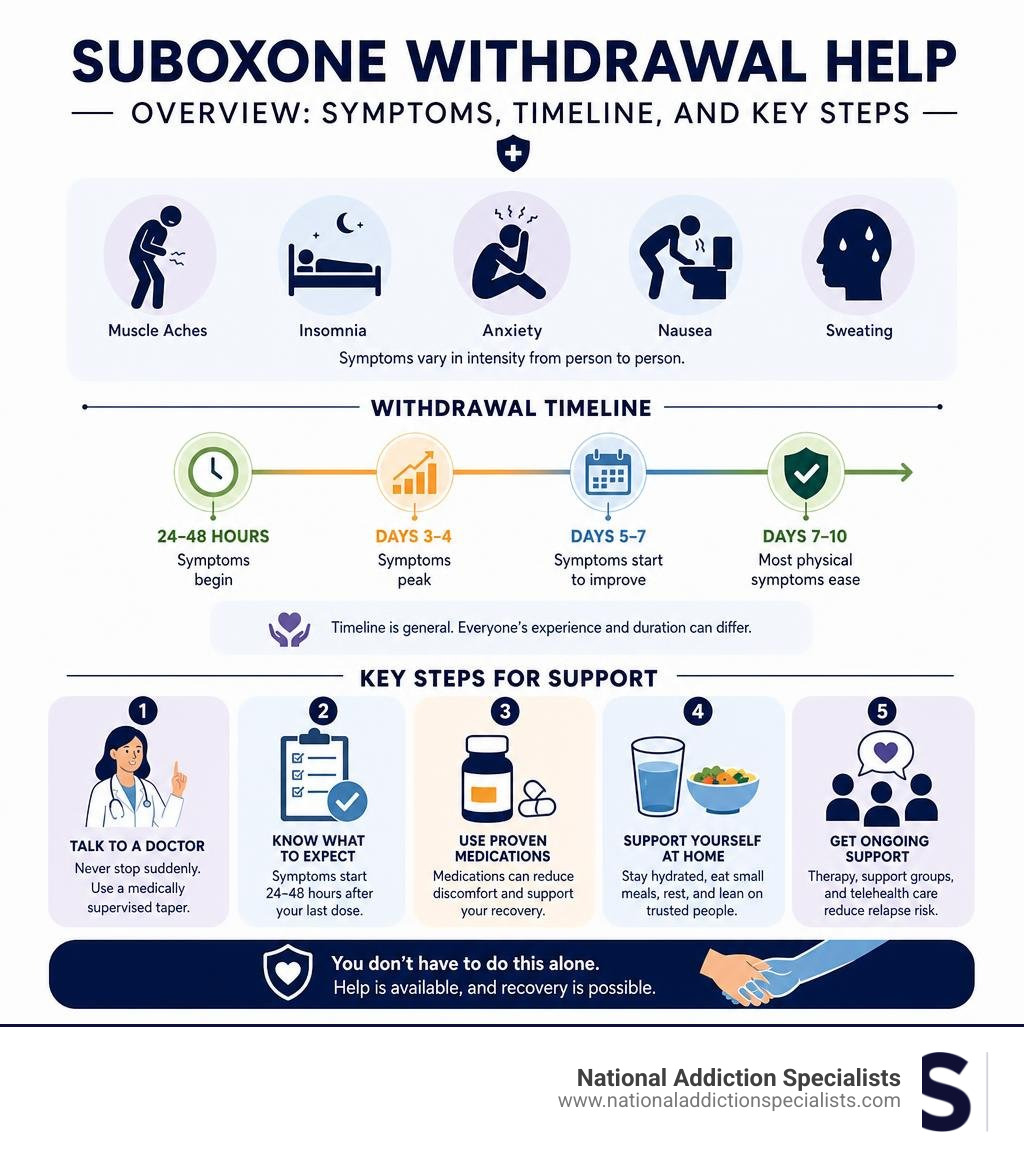
If you need suboxone withdrawal help right now, here are the most important steps to take:
- Talk to a doctor before stopping. Never quit Suboxone cold turkey — a medically supervised taper is far safer and more manageable.
- Know what to expect. Symptoms usually start 24–48 hours after your last dose, peak around days 3–4, and most physical symptoms ease within 7–10 days.
- Use proven medications. Clonidine, Lucemyra, and other non-opioid medications can reduce discomfort significantly.
- Support yourself at home. Stay hydrated, eat small meals, rest, and lean on trusted people around you.
- Get ongoing support. Therapy, support groups, and telehealth care reduce relapse risk after detox.
Deciding to stop Suboxone is a big step. Whether you’ve been on it for months or years, your body has adapted to its presence — and when you reduce or stop the dose, it takes time to adjust. That adjustment period is withdrawal, and for many people, it’s the hardest part of the recovery journey.
The good news: you don’t have to go through it alone, and it doesn’t have to be overwhelming. With the right medical support and a plan tailored to you, withdrawal is manageable — and getting through it opens the door to lasting recovery.
I’m Dr. Chad Elkin, founder and Medical Director of National Addiction Specialists, board-certified in both Addiction Medicine and Internal Medicine, and I’ve helped hundreds of patients navigate suboxone withdrawal help safely through personalized, telehealth-based care. In this guide, I’ll walk you through exactly what to expect and how to get through it.
Quick suboxone withdrawal help terms:
Understanding Suboxone and Why Withdrawal Occurs
To understand why the body reacts when we stop taking Suboxone, we have to look at how it works in the brain. Suboxone is a combination medication containing two active ingredients: buprenorphine and naloxone.
Buprenorphine is a partial opioid agonist. This means it binds to the same mu-opioid receptors in the brain as full opioids (like heroin, oxycodone, or fentanyl) but only activates them partially. It acts like a key that fits into a lock, turning it just enough to stop cravings and prevent severe withdrawal symptoms, but not enough to produce the intense, dangerous “high” associated with full agonists. Naloxone, an opioid antagonist, is added strictly as an abuse deterrent; it remains inactive unless the medication is crushed and injected, in which case it blocks the opioid receptors and triggers immediate withdrawal.
When we use Suboxone consistently, our brain undergoes a process called receptor down-regulation. The brain adjusts to the daily presence of buprenorphine by reducing the sensitivity and number of its active opioid receptors. Over time, the body develops a physical dependency. This is a normal physiological adaptation, not to be confused with active addiction.
When you suddenly stop or rapidly decrease your dose, these down-regulated receptors are left empty. Because buprenorphine is no longer satisfying the brain’s baseline chemical expectations, the nervous system goes into overdrive, resulting in the collection of uncomfortable physical and emotional symptoms known as Suboxone Withdrawal Syndrome Complete Guide. Understanding this underlying science is the first step toward finding effective suboxone withdrawal help and learning what to expect navigating suboxone withdrawal symptoms.
Professional Suboxone Withdrawal Help: Tapering vs. Cold Turkey
When it comes to stopping Suboxone, there are two primary routes: quitting abruptly (“cold turkey”) or gradually lowering the dose under medical supervision (“tapering”).
Quitting cold turkey is highly discouraged by medical professionals. Because of buprenorphine’s long-lasting nature, stopping suddenly forces the body into a state of sudden shock. This can trigger severe, unmanageable physical symptoms such as intense vomiting, diarrhea, rapid heart rate, and extreme insomnia. Beyond the physical discomfort, the psychological toll—including overwhelming anxiety, depression, and intense cravings—creates an incredibly high risk of relapse. If someone relapses and returns to full-strength opioids with a lowered tolerance, the risk of a fatal overdose increases exponentially. Severe vomiting and diarrhea can also lead to dangerous medical complications like extreme dehydration.
In contrast, a medically supervised outpatient tapering schedule is the gold standard for safely discontinuing Suboxone. By working with a medical provider, you can slowly reduce your daily dosage over weeks or even months. This gradual reduction gives your brain’s receptors the time they need to slowly recalibrate and heal, keeping physical discomfort to a absolute minimum.
If mild withdrawal symptoms do pop up during a taper, your care team can temporarily pause the dose reduction until your body stabilizes. Utilizing a Suboxone Withdrawal Taper Complete Guide ensures that you are taking safe, calculated steps toward a drug-free life without risking your physical safety or mental well-being.
The Suboxone Withdrawal Timeline: What to Expect
Because buprenorphine has an exceptionally long half-life of approximately 24 to 42 hours, it leaves the body much slower than short-acting opioids. This means that while symptoms take longer to appear, the overall withdrawal process also lasts longer.
The withdrawal process is generally split into two main sections: the acute phase (the immediate physical symptoms) and post-acute withdrawal syndrome (PAWS), which involves longer-term psychological adjustments. To help visualize this transition, we can look at how these phases differ:
| Phase | Timeline | Primary Symptoms | Severity |
|---|---|---|---|
| Acute Phase | Days 1 to 10 | Muscle aches, sweating, chills, nausea, diarrhea, insomnia, mild anxiety | High physical discomfort, peaks around day 3 or 4 |
| Post-Acute Withdrawal (PAWS) | Weeks to Months | Anxiety, depression, brain fog, fatigue, sleep disturbances, cravings | Moderate to low physical symptoms; primary challenge is emotional stability |
For a deeper dive into these stages, you can explore our resource: From Start to Finish Understanding the Suboxone Withdrawal Timeline.
Early Symptoms: The First 24 to 48 Hours
Because of Suboxone’s long half-life, you typically won’t feel significant symptoms immediately after your last dose. The earliest signs usually begin to creep in around the 24-to-48-hour mark.
During this initial window, patients often report a general sense of restlessness, mild to moderate anxiety, and persistent yawning. Physical symptoms start with watery eyes, a runny nose, goosebumps, and muscle aches. Insomnia and sweating also begin to set in during this stage. For more detail on managing this initial phase, read Suboxone Withdrawal What to Expect in the First 24-48 Hours.
Peak Symptoms: Days 3 to 10
The physical symptoms of Suboxone withdrawal typically reach their peak intensity between day 3 and day 10. This is the period where professional suboxone withdrawal help and medical support are most critical.
During these peak days, patients experience more intense gastrointestinal issues, including nausea, abdominal cramping, vomiting, and diarrhea. Muscle aches can turn into deep body soreness, often accompanied by hot and cold flashes, heavy sweating, and severe chills. Sleep becomes highly disrupted, and psychological cravings reach their highest point. Fortunately, after day 7 to 10, these acute physical symptoms begin to steadily decline. You can track this progression day-by-day using The Suboxone Withdrawal Journey What to Expect Day by Day.
Long-Term Effects and PAWS
Once the acute physical symptoms clear up, many individuals enter a phase known as Post-Acute Withdrawal Syndrome (PAWS). While the physical “flu-like” symptoms are gone, the brain is still working hard to rebuild its natural dopamine and endorphin production.
PAWS can last from a few weeks to several months and is characterized primarily by emotional and mental symptoms. These include:
- Anhedonia (the temporary inability to feel pleasure or joy in everyday activities)
- Depression and mood swings
- Brain fog and difficulty concentrating
- Persistent fatigue paired with sleep disturbances
- Intermittent drug cravings
Navigating this long-term phase requires patience, healthy coping mechanisms, and professional counseling. You can learn more about managing these lingering effects in our guide on What to Expect During Long Term Effects of Suboxone Withdrawal.
Medical Treatments and Medications for Relief
Fortunately, you do not have to rely on willpower alone to get through withdrawal. Modern addiction medicine offers highly effective, FDA-approved medications specifically designed to target and neutralize withdrawal discomfort.
- Clonidine: Originally a blood pressure medication, clonidine is widely used off-label to treat the physical symptoms of opioid withdrawal. It works by reducing the hyperactivity of the sympathetic nervous system, helping to ease anxiety, sweating, hot flashes, chills, and muscle restlessness.
- Lucemyra (Lofexidine): This is the first non-opioid, FDA-approved medication specifically indicated for easing opioid withdrawal symptoms. Similar to clonidine but designed specifically for withdrawal, it significantly reduces adrenaline-like symptoms, making the acute detox phase much more comfortable.
- Targeted Comfort Medications: Providers can also prescribe non-addictive medications to manage specific symptoms. This includes anti-nausea medications (like Ondansetron/Zofran), muscle relaxers, non-opioid pain relievers (like ibuprofen), and safe sleep aids to help combat insomnia.
To find out which options are best suited for your specific situation, read our comprehensive overview of Medications for Suboxone Withdrawal.
How Medical Providers Offer Suboxone Withdrawal Help
Attempting to manage withdrawal completely on your own can be isolating and risky. Professional medical providers offer structured, compassionate clinical monitoring to ensure your safety and comfort every step of the way.
At National Addiction Specialists, we provide personalized outpatient care plans delivered entirely through convenient telehealth visits. This means you can receive expert medical advice, prescription management for comfort medications, and emotional support from the safety and comfort of your own home in Tennessee or Virginia. Telehealth support makes getting help completely confidential and highly accessible, removing the barriers of travel and waiting rooms. If you are ready to take this step, you can explore your options through our specialized Suboxone Withdrawal Treatment services.
Home Remedies and Self-Care Strategies
While medical treatment provides the clinical foundation for a safe detox, incorporating practical home remedies and self-care strategies can dramatically improve your daily comfort level.

- Prioritize Hydration and Electrolytes: Diarrhea, sweating, and vomiting can quickly deplete your body of water and essential salts. Drink plenty of water, sports drinks, or electrolyte solutions (like Pedialyte) to prevent dehydration, which can make muscle aches and fatigue significantly worse.
- Focus on Gentle Nutrition: When your appetite is low, try eating small, bland meals. Foods like bananas, rice, applesauce, toast, and broths are easy on the stomach and provide the vital nutrients your body needs to rebuild its strength.
- Practice Good Sleep Hygiene: Insomnia is a common hurdle during recovery. Keep your sleeping space cool, dark, and quiet. Avoid screens for at least an hour before bed, and try using white noise or calming sleep meditations to help ease your mind.
- Take Warm Baths: Soaking in a warm bath—especially with Epsom salts—is incredibly effective for soothing deep muscle aches, reducing restless legs, and promoting physical relaxation.
- Engage in Gentle Movement: While you won’t feel up for intense workouts, taking a short, gentle walk can release natural endorphins, elevate your mood, and help relieve physical restlessness.
For a complete toolkit of practical soothing techniques, check out The Ultimate Guide to Suboxone Withdrawal Relief.
Practical Tips for At-Home Suboxone Withdrawal Help
Creating a comfortable environment and a solid plan before you begin your taper or detox can make a world of difference. Here are a few practical tips to keep in mind:
- Stock Up on Approved Over-the-Counter Help: Keep medications like loperamide (for diarrhea), acetaminophen or ibuprofen (for pain), and antihistamines on hand, but always consult your doctor before taking them to ensure they won’t interact with your prescribed taper medications.
- Use Distraction Techniques: Keep your mind occupied to help pass the time and keep cravings at bay. Queue up lighthearted movies, read engaging books, listen to podcasts, or try puzzle games.
- Lean on Your Support Network: Let a trusted friend, family member, or support group know what you are going through. Having someone check in on you provides vital emotional safety.
- Address Sleep Challenges Directly: Sleep is crucial for healing. For specific, actionable advice on overcoming restless nights, read Conquering Sleep During Opioid Recovery A Suboxone Withdrawal Guide.
Frequently Asked Questions About Suboxone Withdrawal
How long does Suboxone withdrawal last?
The duration of Suboxone withdrawal varies based on individual factors, but the acute physical symptoms typically peak around day 3 or 4 and begin to subside significantly after 7 to 10 days. Most physical symptoms are completely gone within 2 to 4 weeks. However, psychological symptoms, such as mild anxiety, depression, and cravings (PAWS), can persist for several months. Factors that influence this timeline include your average daily dose, how long you have taken the medication, your individual metabolism, and whether you chose a gradual taper or stopped abruptly. For a detailed breakdown of what to expect, read Suboxone Withdrawal Duration What to Expect and When It Ends.
Is Suboxone withdrawal dangerous?
In and of itself, Suboxone withdrawal is rarely life-threatening. However, it does carry real medical risks if left unmanaged. Severe vomiting and diarrhea can lead to extreme dehydration and electrolyte imbalances, which can cause cardiovascular strain. Additionally, the intense physical and emotional distress of unmanaged withdrawal creates a very high risk of relapse. Because your physical tolerance drops during detox, returning to full opioid use carries a severe risk of accidental overdose. This is why undergoing a medically supervised taper is the safest, most reliable way to stop Suboxone. For more safety guidance, consult Yes You Can Withdraw from Suboxone A Complete Guide.
How does Suboxone withdrawal compare to other opioids?
Suboxone withdrawal is unique because buprenorphine is a long-acting opioid. When compared to short-acting opioids like heroin, fentanyl, or oxycodone, Suboxone withdrawal is generally described as less physically intense, but it has a slower onset and lasts longer. While heroin withdrawal begins within hours and peaks in 1 to 3 days, Suboxone withdrawal takes 24 to 48 hours to even begin, and the symptoms stretch out over a longer period. While this extended timeline can feel frustrating, a slow, medically guided taper can keep the intensity of these symptoms very mild and entirely manageable.
Conclusion
Navigating Suboxone withdrawal is a challenging but entirely achievable milestone on your path to long-term health. Understanding how the medication affects your brain, choosing a gradual taper over quitting cold turkey, and utilizing comfort medications can turn a difficult experience into a smooth, manageable transition.
At National Addiction Specialists, we are committed to providing the expert, compassionate care you deserve. Through our convenient telemedicine platform, we offer personalized recovery plans, clinical monitoring, and medication-assisted treatment from the comfort and privacy of your own home. We proudly serve patients throughout Tennessee (including Brentwood) and Virginia (including Virginia Beach), and we accept both Medicaid and Medicare to ensure our services are accessible to everyone who needs them.
You do not have to take this step alone. If you are ready to explore a safer, more comfortable path through withdrawal, we are here to support you. Learn more about our comprehensive Opioid Withdrawal Support options today.
Make an Appointment to Treat Addiction Please don’t hesitate. Make an appointment today.
This article was medically reviewed by: Chad Elkin, MD, DFASAM is a board-certified addiction medicine physician, founder, and Chief Medical Officer of National Addiction Specialists, dedicated to treating substance use disorders. A Distinguished Fellow of the American Society of Addiction Medicine (ASAM), Dr Elkin currently serves as President of the Tennessee Society of Addiction Medicine (TNSAM) and has held various leadership roles within the organization. Dr Elkin chairs ASAM’s Health Technology Subcommittee and is an active member of its Practice Management and Regulatory Affairs Committee, State Advocacy and Legislative Affairs Committee, and other committees. He also serves on the planning committee for the Vanderbilt Mid-South Addiction Conference. Committed to advancing evidence-based policy, Dr Elkin is Chairman of the Tennessee Association of Alcohol, Drug, & Other Addiction Services (TAADAS) Addiction Medicine Council, which collaborates with the TN Department of Mental Health & Substance Abuse Services (TDMHSAS). He has contributed to numerous local, state, and national task forces, helping develop professional guidelines, policies, and laws that align with best practices in addiction medicine. His work focuses on reducing addiction-related harm, combating stigma, and ensuring access to effective treatment. Passionate about the field of addiction medicine, he remains dedicated to shaping policy and enhancing patient care.
Suboxone® and Subutex® are a registered trademark of Indivior UK Limited. Any mention and reference of Suboxone® and Subutex® in this website is for informational purposes only and is not an endorsement or sponsorship by Indivior UK Limited.