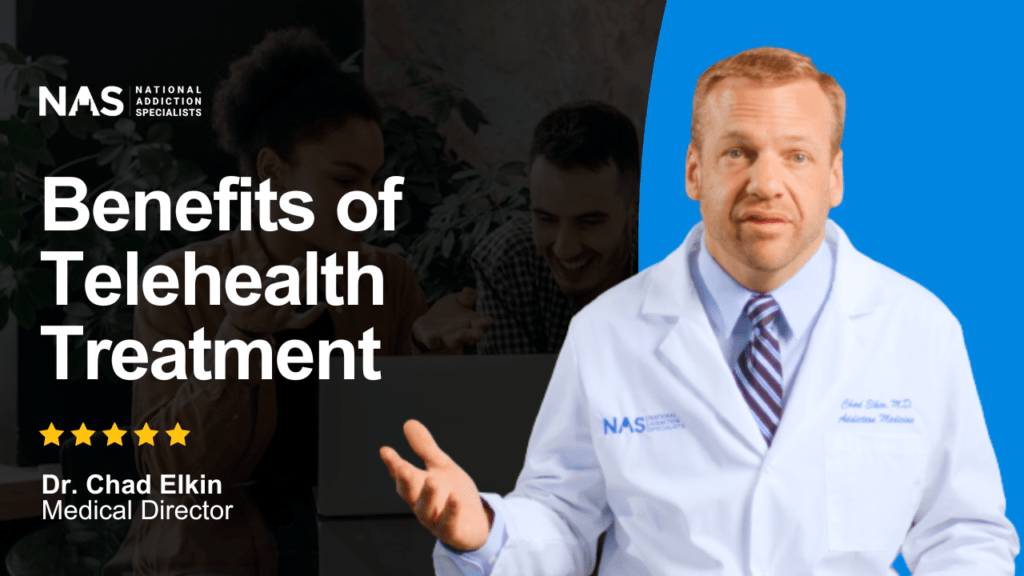
Why Telehealth Addiction Counseling is Changing Recovery
Telehealth Addiction Counseling is the use of video calls, phone sessions, and secure messaging to provide substance use disorder treatment remotely.
Key Components of Telehealth Addiction Counseling:
- Individual therapy sessions via video or phone
- Group counseling through virtual meetings
- Medication-Assisted Treatment (MAT) consultations and management
- Intake assessments and treatment planning
- Recovery support and aftercare services
Main Benefits:
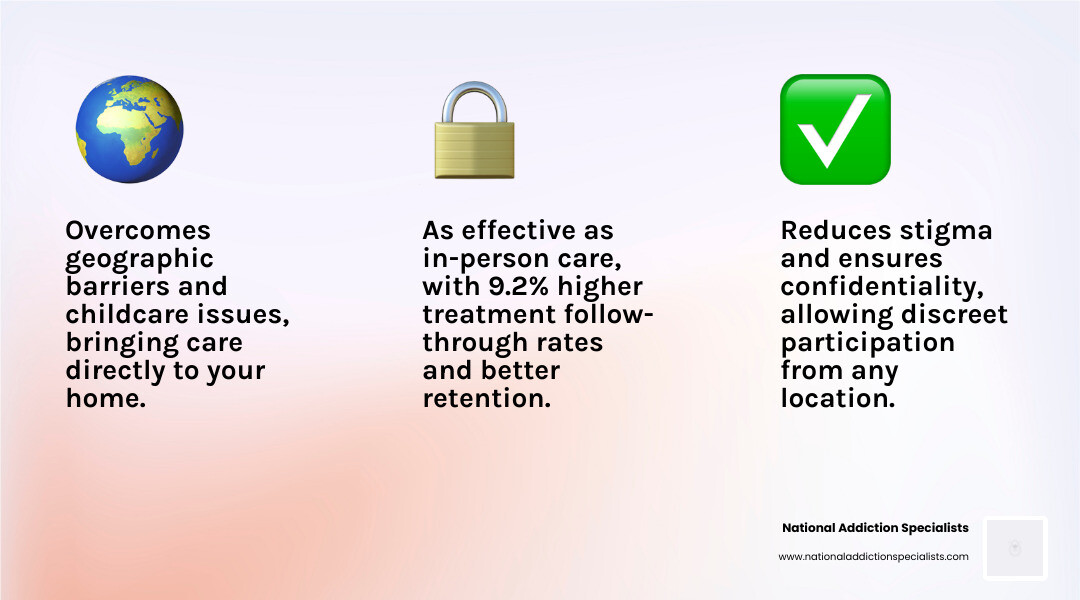
- Access care from home without travel
- Reduced stigma and increased privacy
- Flexible scheduling around work and family
- 9.2% higher follow-through rates compared to in-person care
- Equal effectiveness to traditional in-person treatment
Addiction treatment is changing. Before the COVID-19 pandemic, only 27% of specialty addiction treatment facilities in the United States offered telehealth services. Today, that number has grown dramatically as both patients and providers have seen that virtual care works.
The shift happened fast. Between March 11 and April 22, 2020, telehealth visits for mental health increased by 556%. What started as an emergency response became a permanent breakthrough in addiction medicine.
For people juggling work, family, and the fear of judgment, telehealth removes barriers that once kept effective treatment out of reach. No more arranging transportation or sitting in waiting rooms, and it is easier to maintain privacy while getting help.
Research backs this up. Seven out of eight published studies found that telehealth addiction treatment is just as effective as in-person care for treatment retention, building a strong therapeutic relationship, and reducing substance use. In California, more than 50% of patients now receive intensive outpatient treatment, individual counseling, and group therapy via telehealth.
The convenience matters. Patients who can attend virtual appointments are 9.2% more likely to stick with their treatment plans. That difference saves lives.
As the founder and Medical Director of National Addiction Specialists and chairman of ASAM’s Health Technology Committee, I’ve seen how Telehealth Addiction Counseling has transformed access to care, particularly for patients facing geographic, time, or privacy barriers. My work focuses on ensuring that evidence-based virtual treatment reaches everyone who needs it.
Simple guide to Telehealth Addiction Counseling:
Make an Appointment to Treat Addiction
Please don’t hesitate. Make an appointment today.
How Telehealth Addiction Counseling Works
Telehealth, often broadly defined as the use of electronic information and telecommunications technologies to support and promote long-distance clinical health care, has become a cornerstone of modern addiction treatment. It leverages readily available technology to bridge the gap between patients and the care they need, offering both clinical and non-clinical applications, from scheduling appointments online to delivering full therapy sessions.
The primary ways telehealth is used in addiction treatment revolve around various forms of communication and service delivery. At its core, it allows counselors to hold sessions virtually and telephonically rather than in person. This means that whether you’re in Tennessee or Virginia, you can connect with a qualified addiction specialist from the comfort and privacy of your home.
The role of technology in facilitating Telehealth Addiction Counseling is paramount. It is what makes these connections possible. We use a range of tools to help provide comprehensive care:
- Video conferencing: This is a common and effective method, allowing for real-time, face-to-face interaction. Secure, HIPAA-compliant video platforms enable us to conduct individual and group counseling sessions, offering visual cues that are vital for therapeutic rapport.
- Phone sessions: For those with limited internet access or who prefer audio-only communication, telephonic counseling provides an accessible alternative.
- Secure messaging apps and client portals: These tools support ongoing communication, appointment reminders, and sharing of educational resources or homework between sessions. They help maintain accountability and continuity of care.
- Computer screenings and assessments: Before and during treatment, technology allows for the remote administration of screening tools and assessments. This helps us diagnose substance use disorders and tailor treatment plans to individual needs.
These technological applications are not just about convenience; they are about extending the reach of life-saving care. For more information on how telehealth supports behavioral health care, you can refer to the official guidelines on Telehealth for behavioral health care. We are committed to providing support through our Counseling Program.
What to Expect from Telehealth Addiction Counseling
When you engage in Telehealth Addiction Counseling with us, you can expect a structured and supportive journey customized to your needs. Our approach integrates evidence-based practices delivered through secure virtual platforms.
Here’s a list of services typically offered via telehealth:
- Intake Assessments and Evaluation: Your journey begins with a thorough intake assessment, often conducted via video call. This step allows our providers to gather essential information, understand your history, and determine the most appropriate course of treatment.
- Individual Therapy Sessions: One-on-one counseling is a cornerstone of addiction treatment. We provide individual therapy sessions using modalities like Cognitive Behavioral Therapy (CBT) and Dialectical Behavior Therapy (DBT). These sessions help you explore the root causes of your addiction, develop coping mechanisms, and build resilience.
- Group Therapy Sessions: Our virtual group therapy sessions offer a safe environment for sharing experiences, learning from others, and developing a support network. We adapt our methods to foster engagement, recognizing the vital role of peer support.
- Medication-Assisted Treatment (MAT) Consultations: For opioid use disorder, Medication-Assisted Treatment (MAT) is highly effective. We offer MAT consultations, including prescribing and managing medications like Suboxone, through our telemedicine services. This allows you to receive pharmacological support alongside counseling. Our Online Suboxone Doctors are ready to help.
- Aftercare Planning and Relapse Prevention: Recovery is a lifelong journey. Telehealth facilitates ongoing aftercare planning and relapse prevention strategies, so you have continuous support as you steer life in recovery.
Our approach is designed to be convenient and confidential, ensuring you receive care whether you’re in Tennessee or Virginia.
The Impact of COVID-19 on Virtual Care
The COVID-19 pandemic acted as a powerful catalyst for the widespread adoption and acceptance of telehealth in addiction treatment. Before the pandemic, only 27% of specialty addiction treatment facilities in the United States reported having telehealth capabilities, and telehealth was used in a very small percentage of addiction treatment visits for individuals with private insurance and Medicare.
Then came the pandemic, and with it, stay-at-home orders and the urgent need to maintain continuity of care while ensuring safety. This led to an unprecedented expansion of telehealth services. Federal and state agencies eased many regulations that had previously constrained telehealth adoption. For instance, the Ryan Haight Online Pharmacy Consumer Protection Act, which generally required an in-person medical evaluation before prescribing controlled substances, saw temporary flexibilities. Similarly, HIPAA enforcement discretion allowed providers to use a broader range of communication platforms to connect with patients. Supporting Access to Telehealth for Addiction Services details many of these changes.
Virtual meetings and remote care became normalized, changing how healthcare, including addiction treatment, was delivered. In California, for example, providers reported that more than 50% of their patients were being treated via telehealth for intensive outpatient treatment, individual counseling, group counseling, and intake assessment. This uptake demonstrated telehealth’s capacity to mitigate access barriers during a crisis.
The post-pandemic landscape for telehealth is one of continued integration. Many of the temporary regulatory changes have either been made permanent or are under review, signaling a long-term commitment to virtual care. We have seen the Impact of Continuing Care on Recovery that telehealth can provide, breaking down barriers that once seemed impossible.
The Proven Benefits of Virtual Addiction Support
The shift to Telehealth Addiction Counseling has brought significant benefits, reshaping how individuals access and engage with treatment. These advantages go beyond convenience, influencing patient engagement, treatment retention, and recovery outcomes.

One of the most significant benefits is increased accessibility. For many, traditional in-person treatment centers pose substantial logistical challenges. Telehealth makes care available to anyone with an internet connection or phone. This is particularly important for:
- Rural populations: Residents in rural areas, like many parts of Tennessee and Virginia, often face shortages of addiction specialists and treatment facilities. Telehealth allows individuals to connect with care regardless of their geographic location, eliminating long travel times.
- Individuals with limited mobility or disabilities: Physical limitations or disabilities can make traveling to appointments difficult. Telehealth brings the clinic to them.
- Those with childcare or transportation issues: Arranging for childcare or securing reliable transportation can be obstacles to attending regular appointments. Virtual care reduces these barriers.
Telehealth also contributes to improved privacy and reduced stigma. Addiction often carries a social stigma, leading many to avoid seeking help for fear of judgment.
- Treatment from home: Receiving counseling from a private space at home eliminates the need to be seen entering an addiction treatment facility.
- Improved comfort: Being in a familiar environment can make patients feel more at ease, encouraging openness and honesty during sessions.
Improved Treatment Engagement and Retention
The convenience offered by Telehealth Addiction Counseling is a powerful tool for improving treatment engagement and retention. When accessing care is easier, people are more likely to stick with it.
- Convenience of scheduling: Telehealth allows flexible scheduling, making it easier to fit appointments around work, family commitments, and other responsibilities.
- Reduced dropout rates: Removing barriers like travel time, transportation costs, and childcare responsibilities can translate to lower dropout rates. Patients can attend sessions from almost anywhere.
- Higher follow-through: Patients who can attend virtual appointments are 9.2% more likely to follow through with their care plans. Research also indicates that Telemedicine appointments are more likely to be completed than in-person ones.
- Continuity of care: Telehealth helps keep care uninterrupted even when circumstances change. This is especially important for therapies such as our Medication Assisted Treatment Program and the Importance of Counseling and Therapy in Suboxone Treatment.
By making treatment more accessible and less burdensome, Telehealth Addiction Counseling helps more people start and stay on their recovery journey.
Make an Appointment to Treat Addiction
Please don’t hesitate. Make an appointment today.
Is Online Counseling as Effective as In-Person Treatment?
A common question is whether Telehealth Addiction Counseling is as effective as traditional in-person treatment. Research increasingly supports that, for many aspects of addiction care, it is.
Seven published studies found telehealth treatment to be as effective, but not more effective, than in-person treatment in terms of retention, therapeutic alliance (the bond between therapist and client), and substance use outcomes. This suggests that, for many individuals, the quality of care and the results achieved through virtual sessions are comparable to those delivered face-to-face.
The therapeutic alliance, often considered a cornerstone of effective therapy, has been shown to develop strongly in virtual settings. You can build a meaningful, trusting relationship with your counselor through video or phone, which is essential for deep therapeutic work.
Telehealth vs. In-Person Addiction Counseling
Below is a simplified comparison of Telehealth Addiction Counseling and in-person counseling across several key metrics:
- Effectiveness: Research shows similar outcomes for many patients in both telehealth and in-person care when it comes to reducing substance use and maintaining recovery.
- Retention: Telehealth often supports equal or better retention because it is easier to attend appointments, especially for those with transportation, work, or childcare challenges.
- Accessibility: Telehealth clearly has an advantage, particularly for rural patients in Tennessee and Virginia, individuals with mobility issues, or those who prefer more privacy.
- Cost and time savings: Telehealth can reduce indirect costs such as travel expenses and time away from work.
Effectiveness Across Different Services
Effectiveness can vary slightly depending on the specific service:
- Individual Counseling: Providers report high confidence in individual counseling via telehealth and often find it comparable to in-person sessions.
- Medication Management: Telehealth can be used effectively for medication management for opioid use disorder, including Medication Assisted Treatment with Suboxone, when combined with appropriate monitoring and follow-up.
- Group Counseling: Some providers find group sessions slightly more challenging online due to reading non-verbal cues and building group cohesion, but many patients still benefit from the added accessibility.
- Intake Assessments: Intake can be completed virtually, helping reduce waiting times and speeding up access to care.
Make an Appointment to Treat Addiction
Please don’t hesitate. Make an appointment today.
Challenges and Considerations for Telehealth Addiction Counseling
While Telehealth Addiction Counseling offers many benefits, it also comes with challenges and considerations. Understanding these helps us provide the most effective and appropriate care for each individual.
One significant challenge is the digital divide. Not everyone has equal access to the technology and internet connectivity required for virtual sessions. In some rural areas, reliable broadband access can be limited. This means some patients may struggle with consistent internet service or may not own the necessary devices (smartphones, computers with cameras). In these situations, telephone-based services can be very important.

Another key consideration is patient privacy at home. While telehealth can offer privacy by allowing sessions from home, patients still need a genuinely private space. For individuals living with family, roommates, or in crowded conditions, finding a confidential spot for therapy can be difficult and may affect how comfortable they feel sharing openly.
Building rapport virtually and interpreting non-verbal cues can also be different compared with in-person sessions. Video conferencing allows counselors to see facial expressions and some body language, but it can still feel harder to pick up on subtle signs of distress or disengagement, especially in group settings.
Issues like maintaining patient focus can also be more complex in a virtual environment, particularly for individuals with attention challenges. Home environments may include distractions that do not exist in a clinical setting. Our team at National Addiction Specialists is trained to address these challenges, using strategies to improve engagement and ensure effective care for our patients in Tennessee and Virginia.
Who is a Good Candidate for Telehealth Addiction Counseling?
Determining who is best suited for Telehealth Addiction Counseling is important for ensuring effective treatment and positive outcomes. While virtual care has expanded its reach dramatically, it is not a one-size-fits-all solution.
Telehealth is generally ideal for:
- Stable patients: Individuals who are medically stable, not in acute withdrawal, and have a relatively stable home environment often do well in a telehealth setting.
- Motivated individuals: Patients who are self-motivated and committed to their recovery journey tend to do well with the remote nature of telehealth.
- Individuals with co-occurring mental health disorders: Telehealth mental health counseling can be as effective as in-person counseling, making it a good option for managing co-occurring conditions.
- Those facing significant access barriers: People in rural areas of Tennessee and Virginia, those with limited transportation, busy work schedules, or childcare responsibilities benefit from the convenience and flexibility of virtual appointments.
- Patients seeking discretion and reduced stigma: For those who prioritize privacy, telehealth allows them to engage in treatment without the fear of being seen at a physical clinic.
Telehealth may not be appropriate for everyone, particularly for:
- Severe cases of addiction or acute withdrawal: Individuals experiencing severe addiction, especially those with unstable or acute withdrawal symptoms, often require immediate medical oversight and a higher level of care that can only be provided in an in-person setting.
- Patients requiring intensive medical supervision: Some conditions or stages of recovery require constant medical monitoring, which virtual care cannot provide.
- Individuals lacking a safe or private environment: If a patient cannot ensure privacy during sessions or is in an unsafe living situation, in-person care might be more beneficial or necessary.
For more acute or medically complex cases, inpatient rehab or a more intensive in-person program may be a better option. Inpatient rehab provides a structured environment with medical supervision, a dedicated support system, and built-in accountability. We always conduct an assessment to determine the appropriate level and mode of care for each patient.
Make an Appointment to Treat Addiction
Please don’t hesitate. Make an appointment today.
The Future of Addiction Treatment is Hybrid
The landscape of addiction treatment, significantly reshaped by the pandemic, is evolving toward a more integrated and flexible model: the hybrid approach. This model recognizes the value of Telehealth Addiction Counseling while also acknowledging the important role of in-person care for certain aspects of treatment and patient needs.
A hybrid model combines virtual care with in-person services. An individual in Tennessee or Virginia might attend weekly individual counseling sessions via video, participate in virtual group therapy, and have their Medication Assisted Treatment consultations online, but still come in for periodic in-person appointments for drug testing or more intensive initial assessments if needed.
The move towards a hybrid model is supported by several factors:
- Regulatory changes: Many of the temporary flexibilities introduced during the COVID-19 Public Health Emergency are being considered for permanent adoption or have already been made so. This includes broader coverage for telehealth services by Medicare and private insurers, and continued flexibility for prescribing certain medications via telemedicine.
- Innovation in telebehavioral health: Technology continues to advance, offering secure platforms for virtual care, including improved video quality and tools for remote monitoring and patient engagement.
- Customized care: A hybrid approach allows treatment plans to be custom more precisely to individual patient circumstances. For example, a patient in early recovery with complex medical needs might benefit from more frequent in-person contact, while a stable patient in long-term recovery might primarily rely on virtual support.
The role of Telemedicine Treatment will likely continue to grow as an important part of comprehensive treatment offerings. Ongoing research will help refine the best mix of in-person and telehealth services for different substance use disorders and patient populations.
Make an Appointment to Treat Addiction
Please don’t hesitate. Make an appointment today.
Take the First Step Towards Recovery Today
The journey to recovery from addiction is deeply personal, but you do not have to walk it alone. Telehealth Addiction Counseling has emerged as an effective and accessible pathway to healing, breaking down barriers that once seemed impossible. Virtual care can increase accessibility, reduce stigma, and improve treatment engagement and retention.
Whether you’re located in the busy cities of Tennessee or the coastal communities of Virginia, National Addiction Specialists is here to offer expert, confidential care right from your home. We provide comprehensive Opioid Addiction Treatment and support, including Medication Assisted Treatment and counseling services.
Taking the first step can feel daunting, but with Telehealth Addiction Counseling, it is easier to connect with the support you deserve. You can access care without the stress of travel, childcare, or concerns about privacy.
Empower yourself to take control of your recovery journey. We are here to guide you every step of the way, offering compassionate, evidence-based care that supports lasting sobriety.
Make an Appointment to Treat Addiction
Please don’t hesitate. Make an appointment today.
This article was medically reviewed by:
Chad Elkin, MD, DFASAM is a board-certified addiction medicine physician, founder, and Chief Medical Officer of National Addiction Specialists, dedicated to treating substance use disorders. A Distinguished Fellow of the American Society of Addiction Medicine (ASAM), Dr Elkin currently serves as President of the Tennessee Society of Addiction Medicine (TNSAM) and has held various leadership roles within the organization. Dr Elkin chairs ASAM’s Health Technology Subcommittee and is an active member of its Practice Management and Regulatory Affairs Committee, State Advocacy and Legislative Affairs Committee, and other committees. He also serves on the planning committee for the Vanderbilt Mid-South Addiction Conference. Committed to advancing evidence-based policy, Dr Elkin is Chairman of the Tennessee Association of Alcohol, Drug, & Other Addiction Services (TAADAS) Addiction Medicine Council, which collaborates with the TN Department of Mental Health & Substance Abuse Services (TDMHSAS). He has contributed to numerous local, state, and national task forces, helping develop professional guidelines, policies, and laws that align with best practices in addiction medicine. His work focuses on reducing addiction-related harm, combating stigma, and ensuring access to effective treatment.Passionate about the field of addiction medicine, he remains dedicated to shaping policy and enhancing patient care.
Suboxone® and Subutex® are a registered trademark of Indivior UK Limited. Any mention and reference of Suboxone® and Subutex® in this website is for informational purposes only and is not an endorsement or sponsorship by Indivior UK Limited.