Why Private Addiction Treatment Offers a Path to Personalized Recovery
Private addiction treatment provides individualized care through specialized facilities funded by admission fees rather than government grants, offering faster access, personalized treatment plans, and improved amenities compared to publicly funded programs. Here’s what makes private treatment distinct:
Key Features of Private Addiction Treatment:
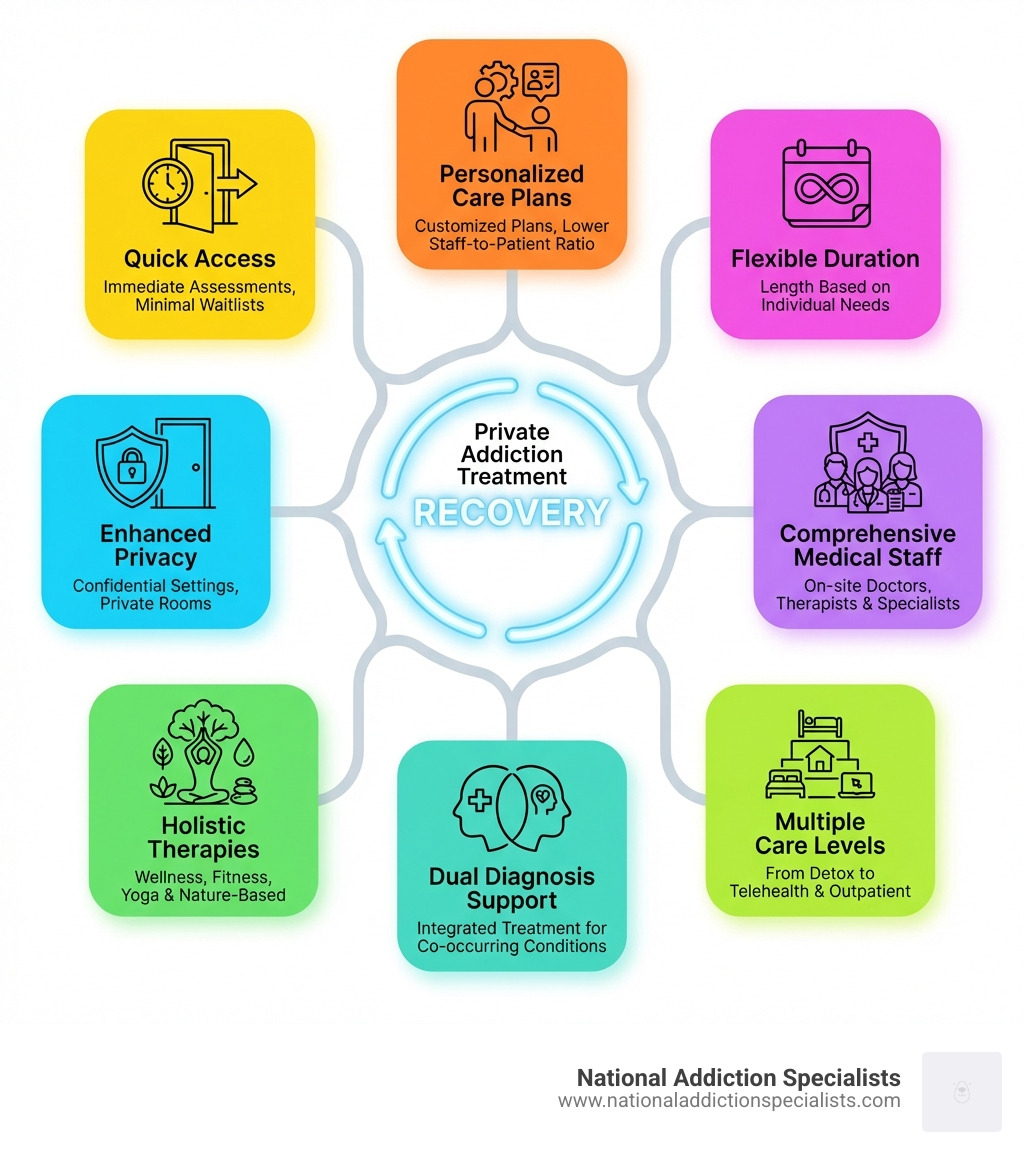
- Quick Access: Initial assessments often available within days, sometimes same-day, with minimal to no waitlists
- Personalized Care: Lower staff-to-patient ratios enabling customized treatment plans and more one-on-one counseling
- Flexible Duration: Treatment length based on individual needs rather than fixed program schedules
- Improved Privacy: Private rooms, confidential settings, and HIPAA-compliant care with minimal insurance data sharing
- Comprehensive Services: On-site medical doctors, psychologists, psychiatrists, and therapists available seven days a week
- Holistic Amenities: Access to nutritional experts, fitness facilities, yoga, meditation, and nature-based therapies
- Dual Diagnosis Support: Integrated treatment for co-occurring mental health conditions like depression, anxiety, and trauma
- Multiple Care Levels: Options ranging from medically supervised detox to inpatient residential care, outpatient programs, and telehealth services
Around 59.3 million Americans aged 12 and older report having used an illegal drug within one year of being surveyed. Yet 94% of individuals with substance use disorder did not receive any treatment. The barrier isn’t always awareness—it’s often access, privacy concerns, cost confusion, or simply not knowing where to start.
Private treatment centers address these barriers by providing immediate, confidential care custom to your specific situation. Whether you’re struggling with opioid addiction, alcohol dependence, or behavioral addictions, private facilities offer the flexibility to receive care without disrupting your work or family life.
As Dr. Chad Elkin, founder and Medical Director of National Addiction Specialists with board certification in Addiction Medicine, I’ve dedicated my career to eliminating barriers to Private addiction treatment through telehealth services and evidence-based care. My work focuses on making quality treatment accessible, confidential, and effective for individuals across Tennessee and Virginia.
What is Private Addiction Treatment and How Does It Differ?
When we talk about private addiction treatment, we’re referring to addiction recovery programs that are primarily funded by patient fees, private insurance, or other non-governmental sources. This model stands in contrast to public or state-funded programs, which rely on federal grants, Medicaid, and state government funds. The fundamental difference often boils down to resources, accessibility, and the level of personalization available.
Private facilities typically boast more robust financial resources, allowing them to offer a wider array of treatment options, more amenities, and a lower staff-to-patient ratio. This means doctors and other personnel can provide care that is highly individualized to each patient’s unique needs. For instance, private treatment centers tend to have a lower staff-to-patient ratio, ensuring more dedicated attention for each individual.
One of the most significant distinctions is access. Public programs, while vital for accessibility, often face high demand that can lead to lengthy waiting lists. This delay can be detrimental, as individuals seeking help might lose motivation or face escalating health risks while waiting. Private options, on the other hand, frequently offer immediate admission or significantly shorter wait times, providing help when it’s most urgently needed.
Another key difference lies in customization and program duration. Private treatment centers often allow individuals to receive therapy for as long as they need it—and can afford it. This flexibility contrasts with some public programs which might have fixed, shorter treatment lengths due to funding constraints. The ability to tailor the length and intensity of care is a cornerstone of effective, long-term recovery, allowing for a more thorough healing process.
Here’s a quick comparison of key aspects:
| Aspect | Private Treatment | Public Treatment |
|---|---|---|
| Funding Source | Primarily patient fees, private insurance, self-pay, loans, and other non-governmental sources. | Government grants (federal, state), Medicaid. |
| Wait Times | Typically short or non-existent, allowing for quick admission. | Can involve significant waiting lists due to high demand and limited capacity. |
| Customization | Highly individualized treatment plans, more one-on-one counseling, specialized programs based on specific needs. | Often follows more standardized protocols, with less flexibility for individual tailoring. |
| Staffing | Lower staff-to-patient ratio, access to a wider range of expert medical doctors, psychologists, psychiatrists, and clinical staff. | Higher patient-to-staff ratio, which can limit individualized attention. |
| Amenities | Can offer luxury facilities, private rooms, gourmet food, gyms, swimming pools, holistic therapies, and serene environments. | Basic facilities, often with shared rooms and fewer comfort-oriented amenities. |
| Insurance | Private for-profit facilities may accept commercial insurance (77.8% in 2020), but less accept Medicare (33.7%) and Medicaid (56.1%). Private nonprofit centers are more likely to accept Medicare (46.5%) and Medicaid (81.8%) or offer sliding scales. (Source: 2020 National Survey of Substance Abuse Treatment Services (N-SSATS) Report) | More likely to accept Medicare and Medicaid, often designed for those who cannot afford private options. |
| Privacy | Improved privacy due to individualized care and fewer administrative disclosures (especially with self-pay). | May involve more administrative processes and disclosures, potentially less privacy. |
The Core Benefits of Choosing a Private Treatment Path
Choosing a private addiction treatment path can offer numerous advantages that significantly impact the recovery journey. These benefits often translate into a more comfortable, effective, and sustainable path to sobriety.
Personalized Care and Lower Staff-to-Patient Ratios
One of the standout benefits of private treatment is the emphasis on truly personalized care. Instead of a one-size-fits-all approach, private centers prioritize creating individualized treatment plans. This means that your specific challenges, history, and goals are thoroughly assessed and directly inform your recovery strategy. With lower staff-to-patient ratios, our expert clinical staff—including medical doctors, psychologists, and psychiatrists—can dedicate more one-on-one time to each client. This ensures that you receive the focused attention and custom interventions you need.
Our multidisciplinary teams work collaboratively to address every aspect of your well-being, from physical health to mental and emotional needs. This integrated approach is crucial for understanding the complexities of addiction and fostering holistic healing. We believe that this high level of individualized attention is a key factor in achieving lasting recovery. You can learn more about our commitment to expert care and the professionals who deliver it on our More info about our team of specialists page.
Immediate Access and Flexible Program Duration
When you’re ready for help, waiting can be agonizing and even dangerous. Private treatment options typically eliminate the long waitlists often associated with public programs. This means quick admission, allowing you to begin your healing journey without unnecessary delays. Imagine reaching out for help and actually getting it right away – that’s the power of immediate access.
Furthermore, private addiction treatment centers often offer more flexible program durations. Instead of being constrained by fixed timelines, your treatment length can be adapted based on your evolving needs and progress. This means you can receive therapy for as long as it’s beneficial, ensuring a more thorough and effective recovery process. This continuity of care is vital, as addiction recovery is rarely a linear path, and having the flexibility to adjust your program can make all the difference.
Improved Comfort, Privacy, and Amenities
Let’s face it, recovery is tough enough without having to worry about your environment. Private facilities understand this, often offering a level of comfort and privacy that supports healing. Many private treatment centers provide private rooms, allowing for a space of personal reflection and respite, which can be invaluable, especially when dealing with intense withdrawal symptoms like nausea, fever, muscle cramping, insomnia, and depression.

These serene environments, sometimes resembling luxury rehab facilities, can include amenities like nutritional experts, gyms, swimming pools, and massage therapists. This focus on physical comfort, along with emotional, mental, and spiritual health, helps you feel healthier and more willing to participate actively in your treatment program. The improved privacy and confidentiality offered by private settings are also paramount, particularly for individuals who may have concerns about their treatment becoming public knowledge. We often find that being comfortable and secure empowers clients to engage more deeply in their recovery.
Comprehensive Approach to Co-Occurring Disorders
It’s a common misconception that addiction exists in a vacuum. In reality, many individuals struggling with substance use disorders also grapple with co-occurring mental health conditions, often referred to as a dual diagnosis. These can include depression, anxiety, trauma, bipolar disorder, ADHD, and more. Approximately 50% of people with substance use disorders have dual diagnoses.
Private addiction treatment centers are typically well-equipped to address these complex needs through an integrated treatment approach. Our staff are well-trained in treating various forms of co-occurring disorders, ensuring that both your addiction and any underlying mental health issues are treated simultaneously. This comprehensive care is crucial because addressing one without the other often leads to an increased risk of relapse. By offering psychiatric services, psychological therapy, and trauma therapy alongside addiction treatment, we provide a holistic path to healing. Our Addiction Counseling Services are designed to support this integrated approach, helping you steer the intertwined challenges of addiction and mental health.
Exploring Programs and Therapies in Private Addiction Treatment
The landscape of private addiction treatment is diverse, offering a spectrum of programs and therapies designed to meet varied needs and preferences. Our goal is to empower you with choices that align with your unique recovery journey.
Levels of Care in Private Addiction Treatment
The journey to recovery often involves different stages, each requiring a specific level of care. While National Addiction Specialists focuses on telehealth-based Suboxone treatment and counseling, it’s helpful to understand the broader range of options available in private settings:
- Medically Supervised Detox: For many, the first step is detoxification, especially for substances like alcohol, opioids, and benzodiazepines, where withdrawal can be severe and even life-threatening. Medically supervised detox facilities provide 24-hour medical monitoring and support to manage withdrawal symptoms safely.
- Inpatient Residential Programs: These programs involve living at a facility for a set period (often 28+ days), providing a structured, substance-free environment with around-the-clock medical and therapeutic support. While our services are telehealth-based, some private facilities in Virginia and Tennessee may offer this intensive level of care.
- Outpatient Programs (PHP/IOP): For those who don’t require 24/7 supervision but still need structured support, Partial Hospitalization Programs (PHP) and Intensive Outpatient Programs (IOP) allow individuals to live at home while attending treatment several days a week for a few hours each day. These programs offer flexibility for individuals to maintain work or family responsibilities.
- Telehealth Options: This is where we shine! Telehealth services, like those we provide, offer a flexible and convenient way to receive care from the comfort and privacy of your home. This is particularly beneficial for individuals in Tennessee and Virginia seeking Medication-Assisted Treatment (MAT) and counseling without geographical barriers. Learn more about our Telehealth Suboxone Treatment.
Evidence-Based Therapeutic Modalities
Effective addiction treatment relies on evidence-based therapeutic modalities that address the psychological and behavioral aspects of substance use. Our private treatment approach often incorporates a combination of these therapies:
- Cognitive Behavioral Therapy (CBT): This widely used therapy helps individuals identify and change problematic thought patterns and behaviors that contribute to substance use. It equips you with coping strategies to manage cravings and triggers.
- Dialectical Behavior Therapy (DBT): A form of CBT, DBT focuses on teaching skills in four key areas: mindfulness, distress tolerance, emotion regulation, and interpersonal effectiveness. It’s particularly effective for those with co-occurring mental health disorders.
- Motivational Interviewing (MI): This client-centered approach helps individuals explore and resolve their ambivalence about change, strengthening their motivation to pursue recovery.
- Group Therapy: While private settings emphasize one-on-one care, group therapy remains a powerful tool for fostering connection, mutual support, and shared experiences. It allows individuals to learn from peers and practice new social skills in a safe environment.
- Individual Therapy: This is the cornerstone of personalized care, offering a confidential space to explore personal issues, trauma, and underlying causes of addiction with a dedicated therapist.
The Role of Medication-Assisted Treatment (MAT)
Medication-Assisted Treatment (MAT) combines FDA-approved medications with counseling and behavioral therapies to provide a comprehensive approach to treating substance use disorders, particularly opioid addiction. We believe strongly in the power of MAT.

MAT helps in several critical ways:
- Easing Withdrawal: Medications can significantly reduce the severity of withdrawal symptoms, making the detox process more manageable and less painful.
- Reducing Cravings: By acting on the same brain receptors as opioids, medications like Suboxone and Buprenorphine can curb cravings, which are a major trigger for relapse.
- Supporting Long-Term Recovery: MAT helps normalize brain chemistry, allowing individuals to focus on therapy and develop new coping mechanisms without the constant battle against cravings and withdrawal.
At National Addiction Specialists, we specialize in providing telehealth-based Suboxone treatment. This allows individuals in Tennessee and Virginia to access this vital component of MAT discreetly and conveniently from home. To learn more about how MAT can support your recovery, visit our Medication-Assisted Treatment page. For specific information on Suboxone, check out our Suboxone Treatment guide.
Navigating the Cost and Selection Process
Understanding the financial aspects and making an informed choice are crucial steps when considering private addiction treatment. It’s an investment in your health and future, and we want to help you steer it with clarity.
Understanding the Cost of Private Addiction Treatment
The cost of private addiction treatment can vary widely, influenced by several factors. While it may seem daunting, the intangible costs of addiction—such as lost employment, strained relationships, legal issues, and deteriorating health—can far outweigh the financial investment in recovery.
Key factors influencing the cost include:
- Location: Treatment costs can differ based on the region.
- Amenities: Facilities offering luxury accommodations, gourmet meals, and extensive holistic therapies will typically be more expensive.
- Program Length: Longer programs, while potentially more effective for sustained recovery, will naturally incur higher costs.
- Level of Care: Intensive inpatient programs are generally more expensive than outpatient or telehealth options due to the 24/7 supervision and resources involved.
- Specialized Services: Treatments for co-occurring mental health disorders, trauma therapy, or specific behavioral addictions might add to the overall cost.
For services like ours, focusing on telehealth-based MAT and counseling, the costs can be more predictable and often more affordable than traditional inpatient programs.
Payment Options: Insurance, Self-Pay, and Financing
Fortunately, there are various ways to cover the cost of private addiction treatment:
- Private Health Insurance: Many private health insurance plans offer coverage for addiction treatment services. It’s crucial to contact your insurer directly to understand your benefits, deductibles, co-pays, and whether the provider is in-network. The Affordable Care Act (ACA) mandates coverage for mental health and substance use disorder treatment as essential health benefits, preventing denial for pre-existing conditions and setting no yearly or lifetime dollar limits.
- Self-Pay Options: For those without insurance or who prefer improved privacy, self-pay (cash, credit, or loans) is a common route. In fact, 90% of facilities surveyed in 2020 indicated they accept cash or self-payment. This option can offer a slightly higher level of privacy as it minimizes data sharing with insurance companies.
- Sliding Scale Fees: Some private non-profit treatment centers offer sliding scale fees based on income, making treatment more accessible.
- Medicaid and Medicare Acceptance: While private for-profit facilities may have lower acceptance rates for Medicare (33.7%) and Medicaid (56.1%), private non-profit centers are more likely to accept these (46.5% for Medicare, 81.8% for Medicaid in 2020). We are proud to accept Medicaid and Medicare, ensuring that our essential telehealth services are accessible to more individuals in Tennessee and Virginia.
We understand that navigating payment can be complex. That’s why we provide clear information on our Insurance and Pricing page. Our team is here to help you understand your options and ensure you can access the care you need.
How to Find and Choose the Right Center
Choosing the right private addiction treatment center is a deeply personal decision. It’s about finding a place where you feel safe, supported, and confident in the care you’ll receive. Here are some questions to guide your search, especially if you’re looking for telehealth services in Tennessee or Virginia:
- What types of addiction do you treat? (e.g., opioid, alcohol, behavioral)
- What is your philosophy of care? (e.g., evidence-based, holistic, 12-step)
- What specific therapies do you offer? (e.g., CBT, DBT, MAT, individual counseling)
- What are the qualifications and experience of your clinical staff? (e.g., board-certified physicians, licensed therapists)
- How do you handle co-occurring mental health disorders? (e.g., integrated treatment, specialized therapists)
- What is the typical duration of your programs, and how flexible are they?
- What is the cost, and what payment options do you accept? (e.g., private insurance, Medicaid, Medicare, self-pay)
- What privacy and confidentiality measures are in place?
- Do you offer aftercare or ongoing support?
- If a telehealth service, what technology is used, and how is patient engagement ensured?
When making your choice, consider checking credentials, reading reviews, and assessing the location’s convenience. For telehealth services, location might mean ensuring the provider is licensed in your state (like Tennessee or Virginia, where we operate). We encourage you to ask these questions and more to find the best fit for your recovery journey.
Make an Appointment to Treat Addiction
Please don’t hesitate. Make an appointment today.
Aftercare and Special Considerations for Lasting Recovery
Completing an initial private addiction treatment program is a monumental achievement, but it’s just the beginning. True recovery is a lifelong journey, and effective aftercare planning is paramount for sustained sobriety. Additionally, specific populations, like teens and young adults, require specialized considerations in their treatment approach.
Life After Rehab: The Importance of Aftercare Support
Relapse prevention is a critical component of any comprehensive treatment plan. Aftercare support helps individuals transition back into their daily lives with the tools and resources needed to maintain sobriety and steer potential triggers. We know that returning to the world where your addiction developed can be challenging, which is why ongoing support is so important.
Common aftercare components include:
- Sober Living Homes: These provide a safe, structured, and substance-free environment for individuals transitioning from inpatient care, offering peer support and accountability.
- Ongoing Therapy: Continuing individual or group therapy helps reinforce coping strategies, address new challenges, and provide consistent emotional support. Our telehealth addiction counseling services are perfectly suited for this ongoing need.
- Support Groups: Participation in groups like Alcoholics Anonymous (AA), Narcotics Anonymous (NA), or SMART Recovery™ offers community, shared experience, and motivation.
- Alumni Programs: Many private treatment centers foster alumni networks, providing a sense of belonging and continued connection to the recovery community.
The goal of aftercare is to empower you to build a fulfilling life free from addiction, providing a safety net as you apply the skills learned in treatment to real-world situations.
Private Addiction Treatment for Teens and Young Adults
Treating addiction in teens and young adults requires a nuanced approach, primarily because the adolescent brain is still developing. The frontal cortex, responsible for emotions, inhibitions, and decision-making, doesn’t reach full maturity until a person is in their mid-20s. This developmental stage can explain impulsive behavior and unique challenges in recovery.
Key considerations for this age group in private addiction treatment include:
- Adolescent Brain Development: Treatment programs need to be custom to how young brains learn and process information, focusing on age-appropriate interventions.
- Peer Pressure: The influence of peer groups is significant for teens. Specialized programs often address social skills, healthy relationship building, and resisting negative peer pressure.
- Family Involvement: Addiction is often called a family illness, and involving family in the treatment process is crucial for young people. Family therapy and education can help improve communication and create a supportive home environment.
- Specialized Programs: These may address issues unique to younger individuals, such as academic difficulties, electronic addiction, and developing a positive self-identity. Private facilities can often provide these specialized, age-specific programs with lower staff-to-patient ratios, ensuring more personalized attention.
Recognizing the unique needs of teens and young adults, private treatment options can offer the intensive, custom, and supportive environment necessary for them to develop healthy coping mechanisms and build a foundation for a sober future.
Conclusion: Your Path to Recovery Starts Here
Taking the first step towards recovery is undoubtedly one of the bravest decisions you can make. We hope this guide has illuminated the distinct advantages of private addiction treatment, from personalized care and immediate access to improved comfort, privacy, and comprehensive support for co-occurring disorders. Recovery is not just possible; it’s within reach, and a personalized approach is often the key to open uping lasting change.
The rise of accessible private options, including innovative telehealth services, means that quality care is closer than ever. For those in Tennessee and Virginia seeking a convenient and confidential path to recovery, services like National Addiction Specialists offer telehealth-based treatment from the comfort of home, specializing in medication-assisted treatment and counseling custom to your unique needs. We believe everyone deserves recovery, and we are here to support you every step of the way.
Begin your recovery journey today.
This article was medically reviewed by:
Chad Elkin, MD, DFASAM is a board-certified addiction medicine physician, founder, and Chief Medical Officer of National Addiction Specialists, dedicated to treating substance use disorders. A Distinguished Fellow of the American Society of Addiction Medicine (ASAM), Dr Elkin currently serves as President of the Tennessee Society of Addiction Medicine (TNSAM) and has held various leadership roles within the organization. Dr Elkin chairs ASAM’s Health Technology Subcommittee and is an active member of its Practice Management and Regulatory Affairs Committee, State Advocacy and Legislative Affairs Committee, and other committees. He also serves on the planning committee for the Vanderbilt Mid-South Addiction Conference. Committed to advancing evidence-based policy, Dr Elkin is Chairman of the Tennessee Association of Alcohol, Drug, & Other Addiction Services (TAADAS) Addiction Medicine Council, which collaborates with the TN Department of Mental Health & Substance Abuse Services (TDMHSAS). He has contributed to numerous local, state, and national task forces, helping develop professional guidelines, policies, and laws that align with best practices in addiction medicine. His work focuses on reducing addiction-related harm, combating stigma, and ensuring access to effective treatment.Passionate about the field of addiction medicine, he remains dedicated to shaping policy and enhancing patient care.
Suboxone® and Subutex® are a registered trademark of Indivior UK Limited. Any mention and reference of Suboxone® and Subutex® in this website is for informational purposes only and is not an endorsement or sponsorship by Indivior UK Limited.