A Guide to Surviving and Treating Severe Alcohol Withdrawal
When Stopping Drinking Becomes a Medical Emergency
Severe alcohol withdrawal treatment is a medical priority that requires prompt, structured intervention — and in many cases, hospital-level care.
Here is a quick overview of how it is treated:
How Severe Alcohol Withdrawal Is Treated
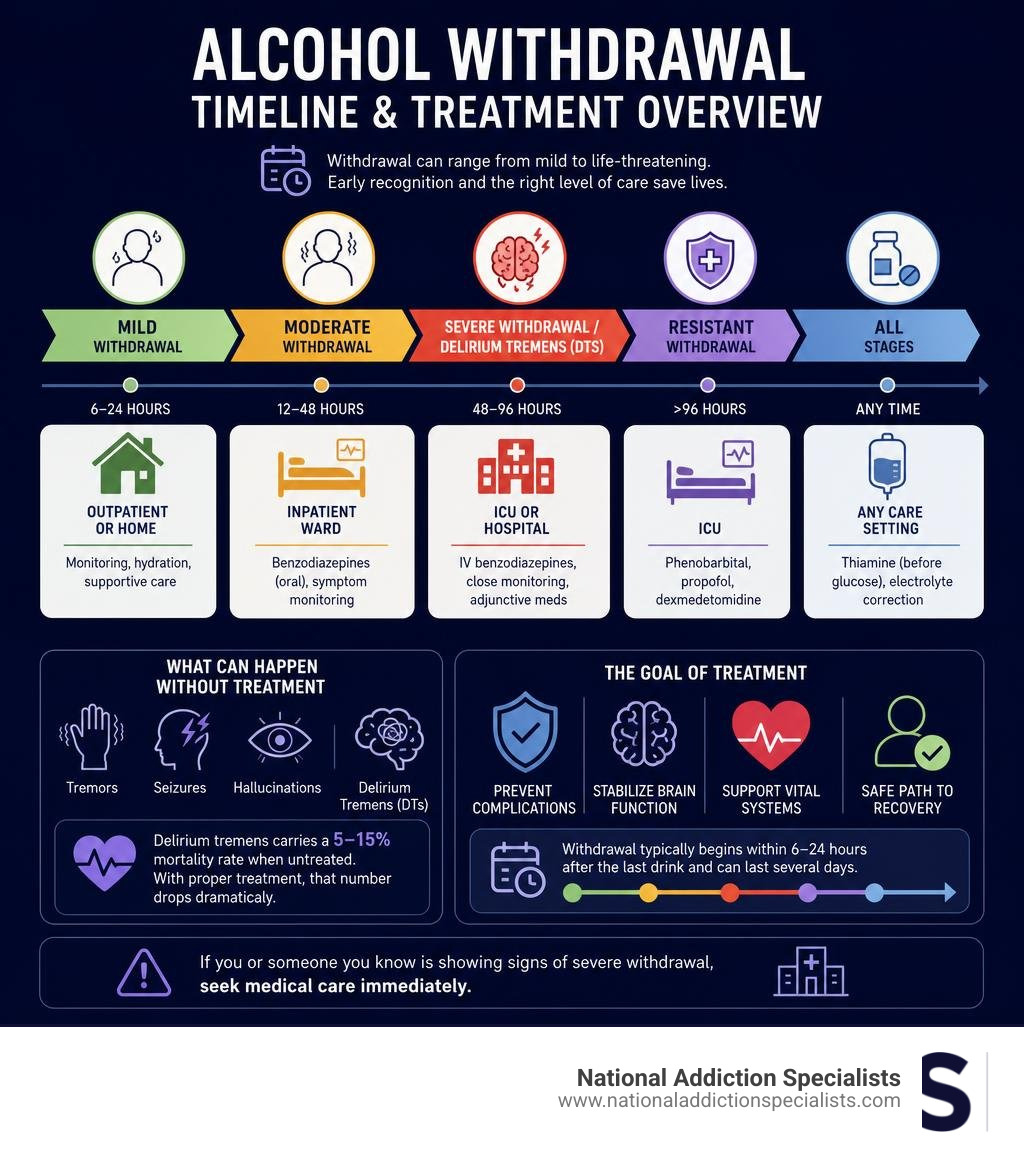
| Stage | Primary Treatment | Setting |
|---|---|---|
| Mild withdrawal | Monitoring, hydration, supportive care | Outpatient or home |
| Moderate withdrawal | Benzodiazepines (oral), symptom monitoring | Inpatient ward |
| Severe withdrawal / DTs | IV benzodiazepines, close monitoring, adjunctive meds | ICU or hospital |
| Resistant withdrawal | Phenobarbital, propofol, dexmedetomidine | ICU |
| All stages | Thiamine (before glucose), electrolyte correction | Any care setting |
Alcohol withdrawal affects roughly 50% of people with alcohol use disorder who stop or significantly reduce their drinking. For most, symptoms are uncomfortable but manageable. For some, they become life-threatening.
When alcohol use stops abruptly after prolonged heavy drinking, the brain goes into overdrive. Alcohol normally suppresses brain activity by enhancing GABA (an inhibitory chemical) and blocking glutamate (an excitatory one). Without alcohol, those systems swing hard in the opposite direction — causing tremors, seizures, hallucinations, and in the worst cases, delirium tremens (DTs).
Delirium tremens carries a mortality rate as high as 5–15% when untreated. With proper treatment, that number drops dramatically — but only if care is started in time.
Up to 20 million adults in the United States have alcohol use disorders, and emergency department visits for alcohol withdrawal are increasing every year. Despite this, withdrawal is still under-recognized — particularly in hospitalized patients admitted for unrelated conditions.
Early identification and appropriate treatment can mean the difference between recovery and a life-threatening crisis.
I’m Chad Elkin, MD, Founder and Medical Director of National Addiction Specialists, board-certified in both Addiction Medicine and Internal Medicine. My clinical work in severe alcohol withdrawal treatment spans inpatient and outpatient settings, and I’ve spent years developing evidence-based protocols and shaping addiction medicine policy at both state and national levels. In this guide, I’ll walk you through everything you need to know — from recognizing the warning signs to navigating the full treatment pathway.
Simple severe alcohol withdrawal treatment glossary:
Clinical Assessment and Risk Stratification

When a patient presents with suspected alcohol withdrawal, clinicians must act fast but methodically. We cannot rely on guesswork. The clinical presentation of alcohol withdrawal ranges from mild anxiety to full-blown autonomic instability. Understanding how to recognize the signs of alcohol withdrawal is the very first step in saving a life.
The neurobiology is straightforward but brutal. Chronic heavy drinking forces the brain to adapt by downregulating GABA (inhibitory) receptors and upregulating NMDA/glutamate (excitatory) receptors. When alcohol is suddenly removed, this delicate compensation breaks down. The result is a hyper-excitable central nervous system. This explains why your body throws a tantrum when you quit drinking—the brain is suddenly flooded with unopposed excitatory signals.
Diagnostic Criteria and Differential Diagnoses
According to the DSM-5, alcohol withdrawal is diagnosed when a patient exhibits two or more of the following symptoms within hours to days after stopping or reducing heavy, prolonged alcohol use:
- Autonomic hyperactivity (such as sweating or a pulse rate greater than 100 bpm)
- Increased hand tremor
- Insomnia
- Nausea or vomiting
- Transient visual, tactile, or auditory hallucinations or illusions
- Psychomotor agitation
- Anxiety
- Generalized tonic-clonic seizures
However, we must be careful not to jump to conclusions without ruling out other serious conditions. The differential diagnosis for these symptoms includes:
- Sepsis or severe infection: Can present with fever, tachycardia, and altered mental status.
- Thyrotoxicosis: Presents with tremors, sweating, and tachycardia.
- Other sedative-hypnotic withdrawal: Benzodiazepine withdrawal looks remarkably similar to alcohol withdrawal.
- Anticholinergic toxicity: Causes altered mental status, fever, and dry, flushed skin.
- Intracranial pathology: Traumatic brain injury or stroke can cause seizures and altered consciousness.
The Kindling Effect
A crucial concept in risk stratification is the kindling effect. Each subsequent episode of alcohol withdrawal tends to be more severe than the last. Repeated withdrawals sensitize the brain’s neural pathways, lowering the threshold for seizures and delirium tremens. If a patient has a history of multiple detoxifications, they are at a much higher risk for a complicated course, even if their initial symptoms appear mild.
Validated Risk Assessment Tools for Severe Alcohol Withdrawal Treatment
To standardize care, we rely on validated, objective tools rather than clinical intuition alone. These tools help guide severe alcohol withdrawal treatment by quantifying symptom severity and predicting complications.
- CIWA-Ar (Clinical Institute Withdrawal Assessment for Alcohol, revised): This is the gold standard for monitoring withdrawal severity. It scores 10 common symptoms on a scale. A score under 10 indicates mild withdrawal; 10 to 18 indicates moderate withdrawal; and 19 or higher represents severe or complicated withdrawal. However, the CIWA-Ar requires the patient to be communicative and cooperative. It should not be used in patients who are intubated, delirious, or unable to answer questions.
- PAWSS (Prediction of Alcohol Withdrawal Severity Scale): This tool is used to identify patients at high risk for developing severe or complicated withdrawal (like seizures or DTs) before symptoms even start. It looks at historical factors, such as previous DTs, withdrawal seizures, combined substance use, and active intoxication levels.
- MAWS (Michigan Alcohol Withdrawal Severity) Protocol: Often preferred in busy hospital wards because of its simplicity, the MAWS protocol categorizes symptoms into Type A (CNS excitation), Type B (adrenergic hyperactivity), and Type C (delirium) to guide targeted therapy.
According to clinical resources like Management of moderate and severe alcohol withdrawal syndromes – UpToDate, key individual risk factors for severe withdrawal include:
- A history of delirium tremens or withdrawal seizures
- Age over 65
- Concurrent acute medical illness (e.g., pneumonia, pancreatitis)
- Significant autonomic hyperactivity at presentation (e.g., profound tachycardia, fever)
- Elevated blood alcohol concentration (BAC) while already showing signs of withdrawal
Determining the Appropriate Level of Care
Not every patient experiencing alcohol withdrawal needs to be in an intensive care unit (ICU), but sending a high-risk patient home can be fatal. The choice between ambulatory (outpatient) care, a general medical ward, or the ICU depends on a careful risk assessment.
| Setting | Indications / Criteria |
|---|---|
| Ambulatory (Outpatient) | CIWA-Ar < 10; no history of seizures or DTs; no severe psychiatric symptoms; stable home environment with a reliable caregiver; no concurrent substance use or severe medical conditions. |
| Inpatient (General Ward) | CIWA-Ar 10–19; history of moderate withdrawal; mild concurrent medical illness; lacks a stable support system at home; pregnant patients (requiring fetal monitoring). |
| Intensive Care Unit (ICU) | CIWA-Ar ≥ 19 or refractory to initial treatment; hemodynamic instability (severe hyper- or hypotension, sustained tachycardia); active delirium tremens; recurrent seizures; severe concurrent illness (e.g., respiratory failure, severe sepsis). |
Evidence-Based Pharmacological Protocols
When it comes to severe alcohol withdrawal treatment, pharmacotherapy is the cornerstone of management. The primary goal is to safely restore inhibitory tone to the central nervous system to prevent progression to seizures and delirium tremens.
Benzodiazepine Regimens
Benzodiazepines are unequivocally the first-line class of medications for treating alcohol withdrawal. They act as cross-tolerant GABA-A receptor agonists, effectively substituting for the missing alcohol and calming the overexcited brain. There are three primary ways to administer them:
- Symptom-Triggered Dosing: Medication is given only when the patient exhibits significant symptoms (typically a CIWA-Ar score of 8 to 10 or higher). This approach is highly preferred because it reduces the total dose of benzodiazepines used and shortens the duration of treatment.
- Fixed-Dose Regimens: Patients receive a scheduled dose of benzodiazepines at regular intervals, which is gradually tapered over several days. This is useful in settings where frequent, structured clinical monitoring (like CIWA-Ar scoring) is not possible, or for patients with a very high risk of seizures.
- Front-Loading: This involves giving high, frequent doses of long-acting benzodiazepines (like diazepam or chlordiazepoxide) early in the course of withdrawal until light sedation is achieved. Because these medications have long-acting active metabolites, they self-taper over the following days, providing built-in protection against rebound withdrawal.
Choosing the Right Benzodiazepine
- Diazepam (Valium) and Chlordiazepoxide (Librium): These are long-acting agents. They provide a smoother withdrawal experience with fewer rebound symptoms due to their long half-lives. However, they can accumulate in patients with liver disease or the elderly, leading to prolonged sedation.
- Lorazepam (Ativan): This is an intermediate-acting agent. It is the drug of choice for patients with liver failure, active hepatitis, or elderly patients, as it does not rely on hepatic oxidation for metabolism and has no active metabolites.
Barbiturates (Phenobarbital)
In recent years, phenobarbital has gained significant traction in emergency departments and ICUs. Unlike benzodiazepines, which only increase the frequency of GABA channel opening, barbiturates increase the duration of channel opening and can directly stimulate GABA receptors even when GABA levels are depleted. Phenobarbital also blocks glutamate (excitatory) receptors. It can be used as monotherapy or as an adjunct to benzodiazepines, particularly in severe or resistant cases.
Adjunctive Medications
While benzodiazepines and barbiturates treat the underlying neurochemical imbalance, other medications can help manage specific symptoms. However, adjunctive medications should never be used as monotherapy, as they do not prevent withdrawal seizures.
- Clonidine and Dexmedetomidine: Alpha-2 agonists that reduce central sympathetic output, helping to control hypertension, tachycardia, and anxiety.
- Beta-blockers (e.g., Metoprolol): Can reduce autonomic symptoms but must be used with caution as they can mask early signs of delirium tremens (like tachycardia).
- Antipsychotics (e.g., Haloperidol): Useful for severe agitation or hallucinations, but they must be used cautiously as they can lower the seizure threshold and prolong the QTc interval.
For a deeper dive into hospital-based protocols, consult the Alcohol Withdrawal in Hospitalized Patients – NCBI Bookshelf guideline.
Managing Complicated and Resistant Withdrawal
Complicated withdrawal occurs when a patient develops delirium tremens, status epilepticus, or exhibits benzodiazepine-resistant withdrawal (typically defined as requiring more than 40 mg of diazepam or 10 mg of lorazepam within a single hour without clinical improvement).
According to the Management of Acute Alcohol Withdrawal Syndrome in Critically Ill Patients review, managing these critical cases requires escalating to continuous infusions or alternative sedatives:
- Propofol: A powerful anesthetic that acts on GABA-A receptors and inhibits NMDA receptors. It is highly effective for refractory delirium tremens but requires mechanical ventilation and intensive ICU monitoring.
- Ketamine: An NMDA receptor antagonist. By blocking the overactive glutamate system directly, low-dose ketamine infusions can rapidly stabilize patients with benzodiazepine-resistant withdrawal and reduce the total sedative requirement.
Comprehensive Supportive Care and Safety Measures
Managing the pharmacological aspect of withdrawal is only half the battle. Severe alcohol withdrawal is physically exhausting and can cause profound systemic complications.
Hydration and Electrolyte Correction
Patients in severe withdrawal are frequently dehydrated due to sweating, vomiting, hyperventilation, and the diuretic effects of alcohol. Intravenous fluids should be initiated promptly. Furthermore, severe electrolyte derangements—particularly hypokalemia, hypomagnesemia, and hypophosphatemia—are common and must be aggressively corrected to prevent cardiac arrhythmias and seizures.
Wernicke-Korsakoff Syndrome Prevention
Wernicke’s encephalopathy is a life-threatening, reversible neurological emergency caused by thiamine (Vitamin B1) deficiency. If left untreated, it can progress to Korsakoff syndrome, which causes irreversible, devastating brain damage.
- The Golden Rule: Always administer thiamine before giving any glucose-containing IV fluids. Glucose metabolism rapidly depletes remaining thiamine stores, which can precipitate acute Wernicke’s encephalopathy.
- Dosing: For patients at high risk or with suspected Wernicke’s, high-dose parenteral thiamine (typically 500 mg IV three times daily for 3 to 5 days) is required, followed by oral supplementation.
For detailed recommendations on managing these physical complications, refer to the Alcohol-use disorders: diagnosis and management of physical complications – NCBI Bookshelf guidelines.
Addressing Concurrent Medical and Psychiatric Conditions
Patients undergoing withdrawal rarely present with alcohol use disorder in a vacuum. We must evaluate and address concurrent conditions:
- Psychiatric Disorders: Alcohol use disorder frequently co-occurs with anxiety, depression, and PTSD. Understanding how alcohol use disorder affects mental health is essential for long-term recovery planning.
- Pregnancy: Withdrawal during pregnancy carries high risks of fetal demise and complications. Pregnant patients require close inpatient monitoring, often coordinated with maternal-fetal medicine specialists. Lorazepam is typically preferred due to its shorter half-life. You can read more about alcohol addiction during pregnancy risks and consequences to understand the clinical stakes.
- Concurrent Opioid Use: If a patient has a co-occurring opioid use disorder, managing both withdrawal syndromes simultaneously is critical. At National Addiction Specialists, we provide telemedicine-based Suboxone treatment for opioid addiction, allowing patients in Tennessee and Virginia to access personalized recovery plans from the comfort of home.
Severe Alcohol Withdrawal Treatment in Special Settings
The clinical approach to severe alcohol withdrawal treatment must adapt to the setting in which the patient presents.
- Emergency Departments (ED): The ED serves as the primary safety net. The focus here is rapid stabilization, screening using tools like the CAGE questionnaire or AUDIT-C, and determining the appropriate disposition (discharge with outpatient referral vs. medical ward admission vs. ICU).
- Primary Care: Primary care providers in Virginia and Tennessee are uniquely positioned to screen for unhealthy alcohol use before severe withdrawal ever occurs. Using brief interventions and prescribing medications for alcohol use disorder can prevent emergency hospitalizations.
- General Medical-Surgical Wards: Up to 20% of patients admitted to community teaching hospitals have alcohol dependence. These patients often begin withdrawing 24 to 48 hours into their admission for an unrelated issue (like pneumonia or surgery). Universal screening at admission is crucial to catch these cases early.
Transitioning to Long-Term Alcohol Use Disorder Recovery
Completing acute withdrawal management is a major milestone, but it is not a cure. Withdrawal management alone is not an effective treatment for alcohol use disorder. It is simply the gateway to long-term recovery.
Initiating Long-Term Treatment
Before discharge, clinicians should engage patients in a discussion about long-term treatment options. This includes:
- FDA-Approved Medications:
- Naltrexone: Reduces alcohol cravings and the reinforcing effects of drinking.
- Acamprosate: Helps restore chemical balance in the brain after quitting.
- Disulfiram (Antabuse): Produces an unpleasant physical reaction if alcohol is consumed, serving as a behavioral deterrent.
- Behavioral Therapies: Cognitive Behavioral Therapy (CBT), Motivational Enhancement Therapy, and participation in mutual support groups (like AA or SMART Recovery).
Continuity of Care and Severe Alcohol Withdrawal Treatment Outcomes
To prevent relapse and ensure safety, patients transitioning from inpatient withdrawal management should have a scheduled follow-up appointment with a primary care provider or addiction specialist within 2 weeks of discharge.
If you or a loved one are struggling with addiction, taking the first step toward professional help is life-saving.
Make an Appointment to Treat Addiction Please don’t hesitate. Make an appointment today. https://www.nationaladdictionspecialists.com/new-patient-packet/
Frequently Asked Questions about Severe Alcohol Withdrawal
What are the first signs of delirium tremens (DTs)?
The early warning signs of delirium tremens usually appear 48 to 72 hours after the last drink. They include extreme confusion, visual or tactile hallucinations (feeling things crawling on the skin), severe tremors (the “shakes”), profound sweating, a dangerously high heart rate, and fever. DTs is a medical emergency with a high mortality rate if left untreated.
Why must thiamine be given before glucose during withdrawal?
Thiamine is a critical co-factor in glucose metabolism. Chronic alcohol use depletes thiamine stores. If you administer glucose (sugar) to a thiamine-deficient patient before giving them thiamine, the sudden burst of glucose metabolism will consume the brain’s remaining thiamine, potentially triggering acute, irreversible brain damage known as Wernicke-Korsakoff syndrome.
Can severe alcohol withdrawal be managed safely at home?
No. Severe alcohol withdrawal is highly unpredictable and can rapidly progress to life-threatening seizures or delirium tremens. Anyone with risk factors for severe withdrawal—such as a history of seizures, older age, or severe sweating and tremors—must be evaluated by a medical professional to determine if inpatient or ICU-level care is required.
Conclusion
Severe alcohol withdrawal treatment is a complex clinical challenge that demands rapid risk stratification, evidence-based pharmacological protocols, and comprehensive supportive care. By utilizing validated tools like the CIWA-Ar and PAWSS scales, administering timely benzodiazepine or barbiturate regimens, and ensuring proper thiamine and fluid resuscitation, we can reduce the mortality of delirium tremens to less than 1%.
At National Addiction Specialists, we recognize that recovery is a continuous journey. While our clinical focus is providing convenient, confidential, telemedicine-based Suboxone treatment for opioid addiction across Tennessee (including Brentwood) and Virginia (including Virginia Beach), we are passionate about helping patients navigate all aspects of substance use disorder recovery. We accept Medicaid and Medicare, offering personalized recovery plans from home.
This article was medically reviewed by: Chad Elkin, MD, DFASAM is a board-certified addiction medicine physician, founder, and Chief Medical Officer of National Addiction Specialists, dedicated to treating substance use disorders. A Distinguished Fellow of the American Society of Addiction Medicine (ASAM), Dr Elkin currently serves as President of the Tennessee Society of Addiction Medicine (TNSAM) and has held various leadership roles within the organization. Dr Elkin chairs ASAM’s Health Technology Subcommittee and is an active member of its Practice Management and Regulatory Affairs Committee, State Advocacy and Legislative Affairs Committee, and other committees. He also serves on the planning committee for the Vanderbilt Mid-South Addiction Conference. Committed to advancing evidence-based policy, Dr Elkin is Chairman of the Tennessee Association of Alcohol, Drug, & Other Addiction Services (TAADAS) Addiction Medicine Council, which collaborates with the TN Department of Mental Health & Substance Abuse Services (TDMHSAS). He has contributed to numerous local, state, and national task forces, helping develop professional guidelines, policies, and laws that align with best practices in addiction medicine. His work focuses on reducing addiction-related harm, combating stigma, and ensuring access to effective treatment. Passionate about the field of addiction medicine, he remains dedicated to shaping policy and enhancing patient care.
Suboxone® and Subutex® are a registered trademark of Indivior UK Limited. Any mention and reference of Suboxone® and Subutex® in this website is for informational purposes only and is not an endorsement or sponsorship by Indivior UK Limited.