Your Guide to Medication-Assisted Treatment for Opioid Dependency
Understanding MAT Treatment Programs: Your Questions Answered
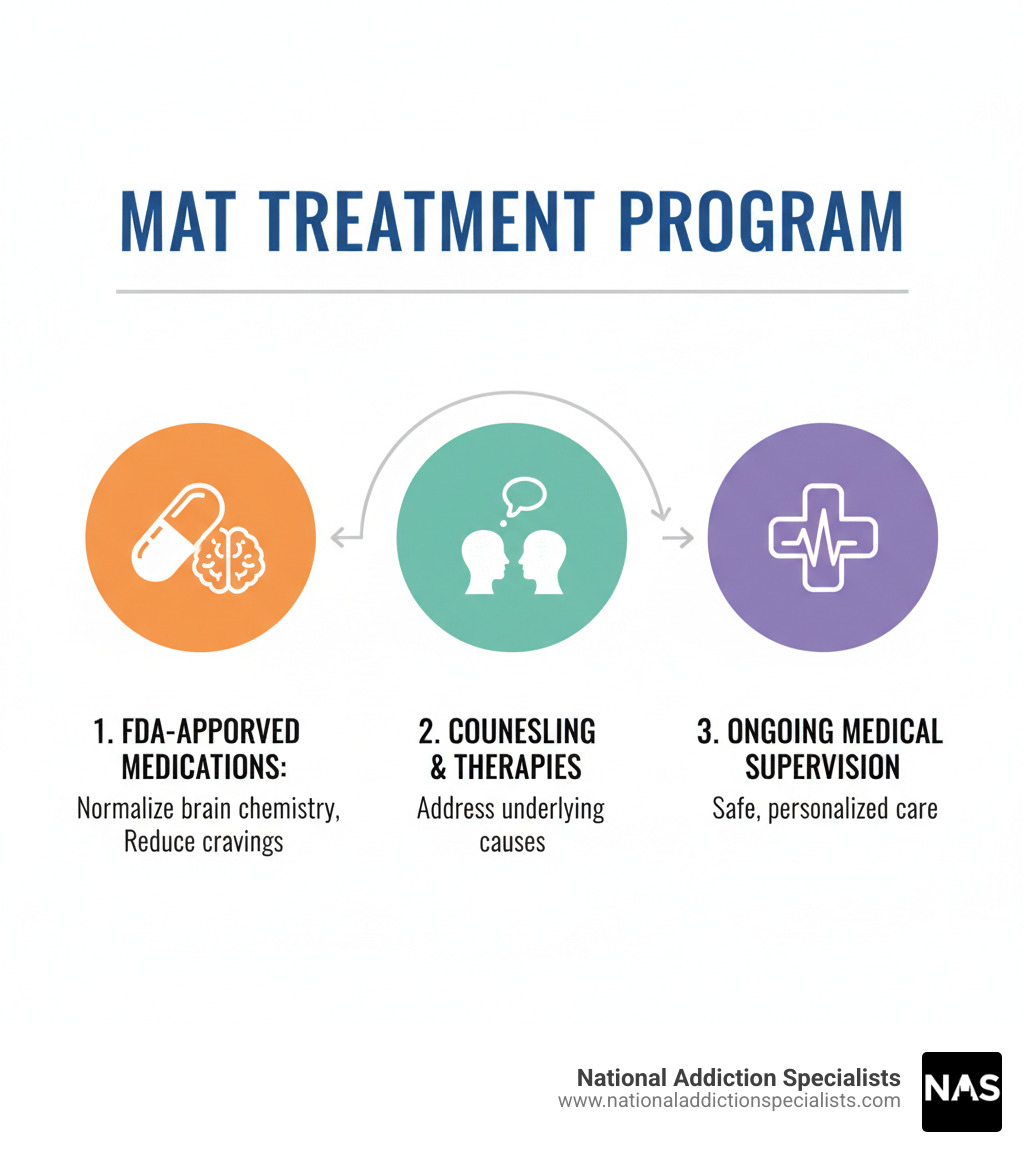
A MAT treatment program combines FDA-approved medications with counseling and behavioral therapies to treat opioid use disorder effectively. Here’s what you need to know:
What is a MAT Treatment Program?
- Medication: FDA-approved drugs like buprenorphine that reduce cravings and withdrawal symptoms
- Counseling: Individual and group therapy sessions to address underlying issues
- Behavioral Support: Evidence-based therapies like Cognitive-Behavioral Therapy (CBT)
- Medical Supervision: Ongoing care from addiction medicine specialists
Key Benefits:
- Reduces overdose deaths by helping normalize brain chemistry
- Increases treatment retention and success rates
- Improves employment and social functioning
- Decreases criminal activity and disease transmission
Nearly 47,000 people died from opioid overdoses in the United States in 2018. The opioid epidemic has touched millions of lives, creating a crisis that affects families, communities, and individuals across the nation. If you’re struggling with opioid dependency—or supporting someone who is—you’re likely feeling overwhelmed, isolated, and uncertain about where to turn.
The good news? Medication-Assisted Treatment (MAT) programs offer a proven, evidence-based path to recovery. Unlike outdated approaches that rely on willpower alone, MAT treats opioid use disorder as what it truly is: a chronic medical condition that responds to comprehensive treatment combining medication, counseling, and support.
MAT is not about substituting one addiction for another. It’s about restoring balance to your brain chemistry, relieving the physical grip of cravings, and giving you the mental clarity to rebuild your life. Research consistently shows that MAT increases survival rates, helps people stay in treatment longer, and significantly reduces the risk of relapse and overdose.
This guide will walk you through everything you need to know about MAT treatment programs—from how they work to what medications are used, what to expect during treatment, and how to access care that fits your life. Whether you’re considering treatment for the first time or exploring options that offer more flexibility and privacy, you’ll find clear, honest answers here.
I’m Dr. Chad Elkin, founder and Medical Director of National Addiction Specialists, where I’ve dedicated my career to expanding access to MAT treatment programs through evidence-based telemedicine care. As President of the Tennessee Society of Addiction Medicine and an active leader in national addiction policy, I’ve seen how MAT transforms lives when barriers to treatment are removed.
What is Medication-Assisted Treatment (MAT)?
If you’ve heard about MAT treatment programs and wondered what they really involve, you’re not alone. There’s a lot of confusion out there, and we want to clear it up.
At its heart, Medication-Assisted Treatment (MAT) is a comprehensive, evidence-based approach to treating Opioid Use Disorder (OUD). Think of it as treating the whole person, not just the symptoms. A MAT treatment program combines FDA-approved medications with counseling, behavioral therapies, and support services. The goal isn’t just to help you stop using opioids—it’s to help you rebuild your life, address the reasons behind your substance use, and give you the tools to maintain long-term recovery.
Here’s something we hear often: “Isn’t MAT just substituting one addiction for another?” It’s an understandable concern, especially when the medications used have opioid-like properties. But here’s the truth—MAT is not about creating a new addiction. It’s about managing a chronic medical condition.
Think about it this way: someone with diabetes takes insulin to manage their blood sugar. Someone with high blood pressure takes medication to protect their heart. No one accuses them of being “addicted” to their medicine. Opioid use disorder changes your brain chemistry in profound ways, and the medications used in MAT help restore that balance. When taken as prescribed, they don’t produce the high associated with illicit opioids. Instead, they normalize brain chemistry, relieve cravings, and block the euphoric effects of other opioids—all without the devastating consequences of continued drug use.
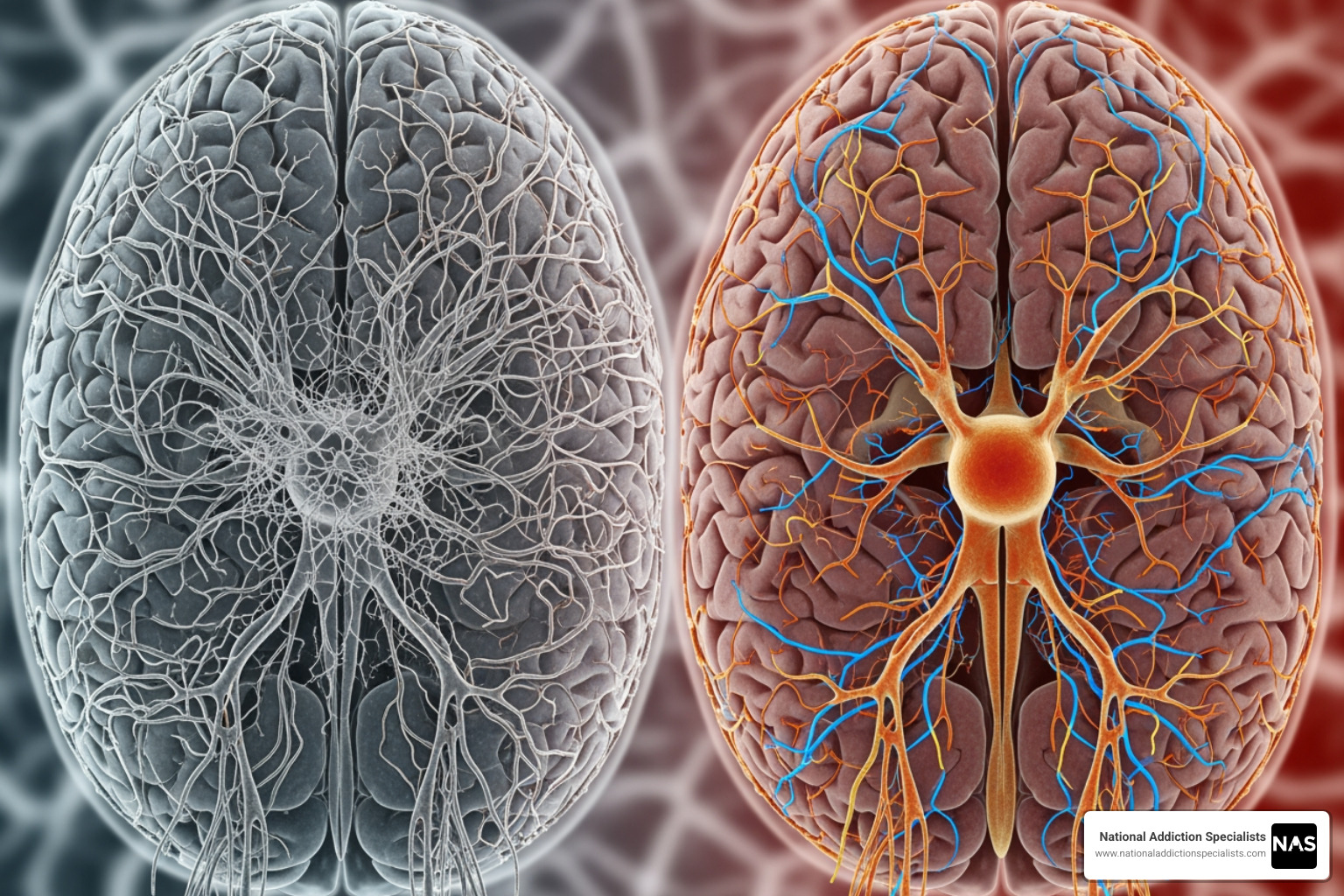
When you’re dependent on opioids, your brain gets stuck in a cycle of intense cravings and severe withdrawal symptoms. This makes it nearly impossible to quit on willpower alone. MAT helps break that cycle by restoring normal brain function. This gives you mental clarity—freedom from the constant preoccupation with finding and using drugs. And that clarity? It’s essential for engaging in therapy and building the life you want. You can learn more about this approach on our Medication-Assisted Treatment page.
The Core Components of a Successful MAT Program
A truly effective MAT treatment program doesn’t rely on medication alone. It’s built on several interconnected components that work together to support your recovery:
FDA-approved medications form the foundation. These medications—like buprenorphine—manage withdrawal symptoms, reduce cravings, stabilize brain chemistry, and help prevent relapse. They give your body the stability it needs while you work on the deeper issues.
Counseling provides the safe space you need to explore what led to your opioid use in the first place. Whether it’s trauma, chronic pain, mental health challenges, or life circumstances, individual and group counseling sessions help you understand your triggers and develop healthier ways to cope.
Behavioral therapies teach you practical skills for living life without opioids. Evidence-based approaches like Cognitive-Behavioral Therapy (CBT), Contingency Management, and Motivational Improvement Therapy help you identify triggers, change harmful thought patterns, and build new, healthier habits.
Psychosocial support addresses the broader challenges that addiction creates. This might include peer support groups, family therapy, help finding employment, or other services that rebuild the foundation of your life. Recovery isn’t just about stopping drug use—it’s about creating a life worth living.
Every person’s journey is different, which is why we create individualized treatment plans custom to your specific needs, circumstances, and goals. The combination of medication and behavioral support consistently produces the best outcomes. Learn more about why therapy is so crucial on our Importance of Counseling and Therapy in Suboxone Treatment page.
The Proven Benefits of MAT for OUD
The effectiveness of MAT treatment programs isn’t just something we believe in—it’s backed by decades of research and real-world results. When patients take their medication as prescribed and participate in counseling, the benefits are substantial:
MAT increases patient survival rates—plain and simple. By stabilizing brain chemistry and reducing cravings, it dramatically reduces the risk of fatal overdose. This is perhaps the most important benefit: MAT saves lives.
It decreases illicit opioid use and overdose deaths. Medications like buprenorphine reduce the compulsion to use street drugs, helping you step away from dangerous substances that could kill you.
Patients stay in treatment longer. Treatment retention is one of the strongest predictors of long-term recovery success, and MAT helps people stick with their recovery plan.
Criminal activity decreases. When you’re no longer driven by cravings and the need to obtain drugs, illegal behavior naturally declines. This helps you avoid legal troubles that can derail recovery.
It improves outcomes for pregnant women with substance use disorders. MAT is the standard of care for pregnant women with OUD, leading to healthier pregnancies and better outcomes for both mothers and babies.
Employment and social functioning improve. With mental clarity and stability, you’re better able to find and keep a job, repair relationships, and engage fully with your family and community. MAT helps you become the person you want to be.
It reduces the transmission of infectious diseases like HIV and Hepatitis C, especially for those who previously used intravenous drugs.
These aren’t just claims—they’re consistently demonstrated in scientific studies. Research like this comparative effectiveness study shows just how powerful MAT can be in fighting the opioid crisis.
If you’re ready to explore how a MAT treatment program can help you, please don’t hesitate to make an appointment today. Taking that first step is the hardest part—but it’s also the most important.
FDA-Approved Medications Used in MAT
When you’re on the path to recovery, knowing that there are proven tools to help makes all the difference. At National Addiction Specialists, we’re here to guide you with effective, evidence-based care that’s custom just for you. The U.S. Food and Drug Administration (FDA) has given its stamp of approval to several medications for treating Opioid Use Disorder (OUD). You might hear about three main ones: methadone, buprenorphine, and naltrexone. Here at National Addiction Specialists, our focus is on buprenorphine-based treatments. Why? Because they work wonderfully in the comfortable, private setting of office visits and, especially, through telemedicine.
For a deeper dive into this medication, explore our page More info on Buprenorphine.
Buprenorphine (e.g., Suboxone®): The Partial Opioid Agonist
Let’s talk about buprenorphine. This medication is a true hero in our MAT treatment program for OUD. It’s special because it’s called a partial opioid agonist. What does that mean in plain terms? Imagine your brain has little “parking spots” (receptors) where opioids usually attach. Buprenorphine also attaches to these spots, but it only turns on the effects a little bit, not fully. Think of it like a light dimmer switch – it brings the light down low, instead of turning it off completely or blasting it at full power. This clever way of working gives buprenorphine some truly amazing benefits.
First, it’s fantastic at reducing withdrawal symptoms and cravings. By gently filling those “parking spots” in your brain, buprenorphine helps stop those intense feelings that make recovery so hard, all without giving you the full “high” that other opioids cause. This means you can focus on getting better, not on fighting overwhelming urges.
Another big plus is its “ceiling effect” for safety. Unlike stronger opioids that just keep increasing their effects as you take more, buprenorphine has a limit. Once you reach a certain dose, taking more won’t make you feel more “high,” and critically, it won’t lead to more dangerous breathing problems. This “ceiling” is a huge reason why buprenorphine has a much lower risk of overdose, especially when you’re taking it at home, outside of a hospital setting. It’s like a built-in safety net.
You’ll often find buprenorphine in special formulations like Suboxone®. This medication cleverly combines buprenorphine with another medicine called naloxone. When you take Suboxone® as prescribed (usually dissolved under your tongue), the naloxone part stays quiet. But if someone were to try and misuse it by injecting it, the naloxone would kick in, causing uncomfortable withdrawal symptoms. This makes Suboxone® a really smart choice for preventing misuse and helping you stay on track.
These qualities make buprenorphine, especially in formulations like Suboxone®, perfectly suited for modern treatment approaches. It’s ideal for office-based opioid treatment (OBOT), and even more importantly, for the telemedicine model we use at National Addiction Specialists. This means if you’re in Tennessee or Virginia, you can get this life-changing medication and support from the comfort and privacy of your own home. No need for frequent clinic visits – just convenient, confidential care.
If you’re ready to explore this option, please don’t hesitate. Make an appointment today. It could be the first step towards a brighter future.
Want to learn even more about how Suboxone® can help? Check out our page, What is Suboxone?. We are truly proud to offer Telehealth Suboxone Treatment because we believe recovery should be accessible to everyone.
Navigating Your MAT Treatment Program Journey
Taking the first step toward a MAT treatment program can feel daunting, but you don’t have to walk this path alone. We’ve designed our process to be straightforward, supportive, and—most importantly—built around your unique needs and circumstances. Through our telemedicine platform, we’ve removed many of the traditional barriers that keep people from getting help.
Your journey starts with an initial assessment. This isn’t just paperwork or a checkbox exercise. It’s a real conversation where we take the time to understand your story—your history with opioid use, your overall health, any mental health concerns you might be facing, and what you hope to achieve in recovery. We’ll talk about where you’ve been, where you are now, and where you want to go. This comprehensive evaluation helps us determine if MAT is the right fit for you and gives us the foundation to build an effective treatment strategy.
After your initial assessment, you’ll meet with one of our experienced physicians for a consultation. This is where things get personal. Your doctor will review your medical history, explain the medications available (particularly buprenorphine), and answer all your questions—no matter how small they might seem. Together, you’ll create a personalized recovery plan that addresses not just the physical aspects of addiction but the emotional and psychological factors too. This plan includes both medication and counseling custom to your specific situation.
We believe in treating the whole person, not just the addiction. That’s why our programs integrate comprehensive Addiction Counseling Services alongside medication. Recovery touches every corner of your life—your relationships, your work, your sense of self—and we’re here to support all of it.
What to Expect: From Induction to Maintenance
Every MAT treatment program moves through distinct phases, each one supporting you at different points in your recovery journey. Understanding these phases can help you know what’s ahead and feel more prepared.
The induction phase is where you begin taking your MAT medication, typically buprenorphine. This initial stage is about safely starting the medication while keeping withdrawal symptoms at bay. It usually happens when you’re already experiencing mild to moderate withdrawal from opioids. For our telemedicine patients, we provide clear, detailed instructions and close support to make sure this transition goes as smoothly as possible. You won’t be left guessing or feeling alone during this critical time.
Next comes the stabilization period. Once you’ve started the medication, we work together to find your “sweet spot”—the optimal dose that controls cravings and withdrawal symptoms without unwanted side effects. During this time, you’ll check in regularly with your medical provider to fine-tune your medication as needed. This is also when you’ll dive deeper into counseling and behavioral therapies. Many people describe this phase as when they start to feel like themselves again—clearer, more stable, and ready to focus on healing.
The maintenance phase is where the real work of rebuilding your life happens. Once you’re stable on your medication, you’ll continue with ongoing medical management, counseling, and support. This isn’t just about staying on medication—it’s about developing new coping skills, repairing relationships, pursuing goals, and creating a life you’re proud of. The maintenance phase is crucial for sustaining recovery and preventing relapse.
Throughout all these phases, counseling plays a vital role. We use proven approaches like Cognitive-Behavioral Therapy (CBT), which helps you recognize and change the thought patterns and behaviors that fuel addiction. Motivational Improvement Therapy can strengthen your commitment to change when you’re feeling uncertain. These therapies, combined with medication, give you practical tools and strategies for lasting recovery.
How Long Does a MAT treatment program Last?
“How long will I need to be on MAT?” It’s one of the first questions most people ask, and it’s a good one. The honest answer? It varies from person to person. There’s no one-size-fits-all timeline for a MAT treatment program, and that’s actually a good thing.
We take an individualized approach to treatment duration because your recovery is uniquely yours. For some people, MAT serves as a shorter-term bridge—helping them through acute withdrawal and stabilizing them as they transition to other therapies. For many others, MAT becomes a longer-term commitment, lasting several years or even indefinitely. And that’s perfectly okay. Research consistently shows that people can safely take MAT medications for as long as they need them—whether that’s months, years, or a lifetime.
Think of it like any other chronic condition. Someone with diabetes doesn’t stop taking insulin after a few months just because they’re feeling better. They continue treatment because it’s what keeps them healthy. The same principle applies to MAT.
How long you stay on MAT depends on several factors: the severity of your opioid use disorder, how you’re progressing in recovery, your overall health, and—importantly—your own preferences in partnership with your medical provider. We believe you should have a voice in your treatment decisions. If and when the time is right, we can develop a medically supervised tapering plan, but we approach this carefully and collaboratively to minimize relapse risk. You can learn more about treatment duration on our page about How Long Does Suboxone Treatment Last?.
Does Insurance Cover a MAT treatment program?
Money worries shouldn’t stand between you and recovery. We know that concerns about cost and insurance coverage can feel overwhelming, especially when you’re already dealing with so much. Here’s some encouraging news: most health insurance plans cover at least part of MAT treatment programs, and many cover them entirely.
Thanks to the Mental Health Parity and Addiction Equity Act (MHPAEA), group health insurance plans are required to provide the same level of benefits for mental health and substance use disorders as they do for medical and surgical care. In plain language, this means if your plan covers medical treatments, it should cover MAT treatments similarly.
At National Addiction Specialists, we’ve worked hard to make our telemedicine-based MAT programs accessible to as many people as possible. We proudly accept both Medicaid and Medicare, helping ensure that individuals in Tennessee and Virginia who rely on these programs can get the care they need without financial barriers.
We encourage you to contact your insurance provider to verify your specific benefits and understand your coverage details. Every plan is a little different, and it helps to know exactly what yours includes. Our team is also here to help answer questions about insurance and pricing—you’re not navigating this alone. For more detailed information, visit our pages on Does Insurance Cover Suboxone Treatment? and Medicaid Suboxone Treatment.
Finding the Right MAT Program for You
Choosing the right MAT treatment program is a very personal journey. What works best for one person might not be ideal for another. We believe that easy access and flexibility are key ingredients for a successful recovery.
For a long time, MAT was mainly offered in a couple of ways. You might have heard of Opioid Treatment Programs (OTPs), sometimes called “methadone clinics.” These often require daily, in-person visits. There are also office-based opioid treatment (OBOT) settings. While these options work well for some, they can be tough for others. Think about long travel times if you live far away, or trying to fit daily appointments into a busy work or family schedule.
This is where the amazing convenience of telemedicine truly shines! Our approach brings expert care right to your doorstep. Whether you’re in a busy city like Virginia Beach or Nashville, or living in a quieter, rural part of Tennessee or Virginia, we’re here for you.
Our telemedicine model lets you access a full MAT treatment program from the comfort and privacy of your own home. No more worrying about transportation, finding childcare, or taking time off work. This makes recovery much more achievable for so many people. We focus on Online Suboxone Treatment. This ensures you get top-notch care from experienced providers, all through a secure and easy-to-use virtual platform.
You deserve to start your recovery journey without delay.
Make an Appointment to Treat Addiction. Please don’t hesitate. Make an appointment today.
Resources for Locating Treatment
If you’re ready to take that important first step, or just exploring your options, there are many helpful resources out there. They can help you find a suitable MAT treatment program:
- The SAMHSA National Helpline is a great place to start. It offers confidential, free help. You can find information and substance use treatment options from public health agencies.
- Check out FindTreatment.gov. This is a private and anonymous tool for anyone looking for mental health and substance use disorder treatment in the U.S. It’s super easy to search for treatment centers near you.
- There’s also a Buprenorphine Practitioner Locator. This tool helps you find doctors who are approved to prescribe buprenorphine. This is especially useful if you’re looking for an office-based or telemedicine provider.
At National Addiction Specialists, we are proud to be part of this network of care. We are committed to making effective MAT treatment programs more widely available in Tennessee and Virginia. Our own page, Comprehensive Online Addiction Resources: SAMHSA and Suboxone Treatment Locator, offers even more guidance.
Conclusion: Take the First Step Towards Recovery
If you’ve made it this far, you’re already on your way. Simply seeking information about recovery is a powerful act of courage—and you should feel proud of that.
Throughout this guide, we’ve explored how a MAT treatment program offers more than just medication. It’s a comprehensive, life-saving approach that combines FDA-approved medications like buprenorphine with counseling, behavioral therapies, and ongoing support. This isn’t about trading one problem for another. It’s about giving your brain the chance to heal while you build the skills and support system you need for lasting recovery.
The evidence is clear: MAT works. It increases survival rates, reduces overdose deaths, helps people stay in treatment longer, and gives individuals the stability they need to rebuild their lives—whether that means repairing relationships, returning to work, or simply feeling like themselves again.
At National Addiction Specialists, we’ve built our entire practice around one simple belief: recovery should be accessible. That’s why we offer convenient telemedicine care from the comfort of your home in Tennessee and Virginia. No long drives to a clinic. No waiting rooms. No judgment. Just expert, compassionate care delivered on your schedule, with providers who truly understand what you’re going through.
You don’t have to have everything figured out before you reach out. You don’t need to hit “rock bottom.” You just need to take one step—and we’ll walk alongside you for every step that follows.
Recovery is possible. Hope is real. And your story doesn’t end here—it’s just beginning.
Find a Suboxone doctor near you to begin your journey with us today.
This article was medically reviewed by:
Chad Elkin, MD, DFASAM is a board-certified addiction medicine physician, founder, and Chief Medical Officer of National Addiction Specialists, dedicated to treating substance use disorders. A Distinguished Fellow of the American Society of Addiction Medicine (ASAM), Dr Elkin currently serves as President of the Tennessee Society of Addiction Medicine (TNSAM) and has held various leadership roles within the organization. Dr Elkin chairs ASAM’s Health Technology Subcommittee and is an active member of its Practice Management and Regulatory Affairs Committee, State Advocacy and Legislative Affairs Committee, and other committees. He also serves on the planning committee for the Vanderbilt Mid-South Addiction Conference. Committed to advancing evidence-based policy, Dr Elkin is Chairman of the Tennessee Association of Alcohol, Drug, & Other Addiction Services (TAADAS) Addiction Medicine Council, which collaborates with the TN Department of Mental Health & Substance Abuse Services (TDMHSAS). He has contributed to numerous local, state, and national task forces, helping develop professional guidelines, policies, and laws that align with best practices in addiction medicine. His work focuses on reducing addiction-related harm, combating stigma, and ensuring access to effective treatment. Passionate about the field of addiction medicine, he remains dedicated to shaping policy and enhancing patient care.
Suboxone® and Subutex® are a registered trademark of Indivior UK Limited. Any mention and reference of Suboxone® and Subutex® in this website is for informational purposes only and is not an endorsement or sponsorship by Indivior UK Limited.