The Science of Better Moods Through Medication
What Is Mental Health Treatment Medication — and Do You Need It?
Mental health treatment medication refers to prescription drugs that work on brain chemistry to reduce symptoms of conditions like depression, anxiety, bipolar disorder, schizophrenia, and substance use disorders.
Here is a quick overview of the main types:
| Medication Class | Common Uses | Examples |
|---|---|---|
| Antidepressants (SSRIs, SNRIs) | Depression, anxiety, PTSD, OCD | Fluoxetine, Sertraline |
| Mood Stabilizers | Bipolar disorder | Lithium, Lamotrigine |
| Antipsychotics | Schizophrenia, bipolar disorder | Risperidone, Quetiapine |
| Anti-Anxiety Medications | Anxiety, panic disorder | Buspirone, Benzodiazepines |
| Stimulants | ADHD | Methylphenidate, Amphetamine |
| MAT Medications | Opioid and alcohol use disorders | Buprenorphine, Naltrexone |
These medications do not cure mental illness. They reduce symptoms — often enough to make daily life manageable and therapy more effective.
Most psychiatric medications take 4 to 8 weeks to reach their full effect. Finding the right medication often takes time and patience. The process is rarely one-size-fits-all.
I’m Chad Elkin, MD, board-certified in both Addiction Medicine and Internal Medicine, and founder of National Addiction Specialists — my work with mental health treatment medication spans over a decade of treating patients with substance use disorders and co-occurring mental health conditions. In this guide, I’ll walk you through everything you need to know to make informed decisions alongside your healthcare provider.
Understanding Mental Health Treatment Medication and How It Works
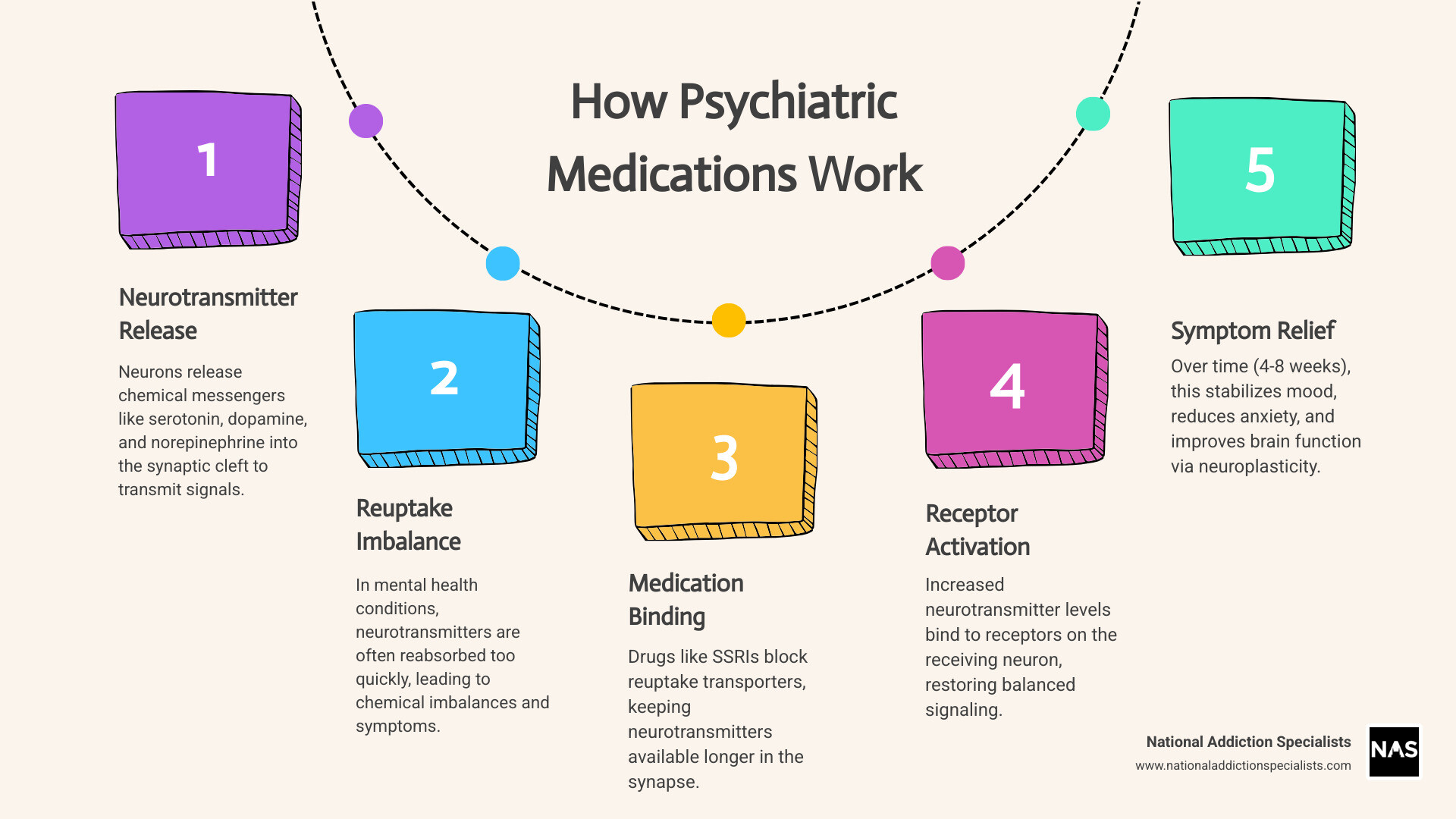
To understand how mental health treatment medication works, we have to look at the brain’s communication system. Our brains are made up of billions of neurons that talk to each other using chemical messengers called neurotransmitters. When these messengers are out of balance, it can lead to changes in mood, perception, and behavior.
The most well-known neurotransmitters include:
- Serotonin: Often called the “feel-good” chemical, it helps regulate mood, sleep, and appetite.
- Dopamine: Involved in the brain’s reward system, motivation, and motor control.
- Norepinephrine: Helps the body respond to stress and regulates attention.
Modern research suggests that medications don’t just “fix” a simple chemical leak. Instead, they often promote neuroplasticity—the brain’s ability to form new connections and adapt. This is a more scientific overview of psychiatric medications that explains how these drugs stabilize the environment in which our brain cells operate.

How Medications Target Brain Chemistry
When a neuron releases a neurotransmitter, it travels across a tiny gap called the synaptic cleft to bind with receptors on the next neuron. Mental health treatment medication typically works by ensuring these chemicals stay in that gap longer or by mimicking the chemicals themselves to “unlock” the receptors.
For example, SSRIs block the reabsorption (reuptake) of serotonin, making more of it available to improve communication between neurons. If you are just starting your journey, reviewing our mental health new patient packet can help you prepare for these clinical discussions.
The Importance of a Whole-Patient Approach
At National Addiction Specialists, we believe medication is rarely the entire solution. We advocate for a “whole-patient” approach. This means combining medication and talk therapy to address both the biological and the behavioral aspects of mental health.
Medication can lower the “volume” of symptoms like intense anxiety or deep lethargy, which then allows you to engage more effectively in psychotherapy. Think of medication as the floor that stabilizes you, while therapy is the work you do to build the house.
Common Classes of Psychiatric Medications
Choosing the right mental health treatment medication depends on your specific diagnosis, medical history, and even your genetics.
| Feature | SSRIs/SNRIs | Mood Stabilizers | Antipsychotics |
|---|---|---|---|
| Primary Goal | Lift mood/reduce anxiety | Prevent “highs” and “lows” | Reduce hallucinations/delusions |
| Typical Onset | 4-8 weeks | 1-3 weeks | Days to weeks |
| FDA Uses | Depression, GAD, PTSD | Bipolar Disorder | Schizophrenia, Bipolar |
Antidepressants as a Mental Health Treatment Medication
Antidepressants are among the most commonly prescribed drugs in the U.S. While they are primarily used for depression, they are also effective for anxiety, OCD, and chronic pain.
- SSRIs and SNRIs: These are usually the first line of defense because they have fewer side effects than older drugs. You can find detailed information on SSRIs and SNRIs through mental health advocacy resources.
- Tricyclics and MAOIs: These are older classes of medication. While very effective, they often require stricter dietary or medication restrictions.
- Esketamine: This is a newer, FDA-approved nasal spray used specifically for treatment-resistant depression when other medications haven’t worked.
Mood Stabilizers and Antipsychotics
For conditions like bipolar disorder or schizophrenia, mood stabilizers and antipsychotics are essential.
- Lithium: A naturally occurring salt that remains one of the most effective treatments for bipolar disorder.
- Lamotrigine: An anticonvulsant often used to prevent the “lows” of bipolar depression.
- Antipsychotics: These are divided into first-generation (older) and second-generation (newer). They help manage reality testing and can also be used as “add-on” treatments for severe depression. For those navigating these complex conditions, the Depression and Bipolar Support Alliance offers excellent peer resources.
Anti-Anxiety and Stimulant Medications
Anxiety medications like benzodiazepines can provide rapid relief but are generally intended for short-term use due to the risk of dependence. Beta-blockers are sometimes used “off-label” to manage the physical symptoms of anxiety, like a racing heart.
Stimulants are the gold standard for ADHD, helping to increase focus and impulse control. Interestingly, some patients find that managing their primary mental health condition also helps stabilize their recovery from substance use. For instance, some research looks at how Suboxone can help with anxiety disorder when it is part of a comprehensive treatment plan.
Managing Side Effects and Safety Precautions
Every mental health treatment medication carries the potential for side effects. Most are mild and fade within the first few weeks as your body adjusts. Common issues include dry mouth, nausea, or changes in sleep patterns.
Understanding the Black Box Warning
The FDA requires a “black box warning” on antidepressants regarding the risk of suicidal thoughts in children, teens, and young adults under 25. While the risk is statistically small (about 4% vs 2% in placebo groups), it requires close monitoring by families and providers, especially during the first few weeks of treatment. You can read more in the FDA warnings for young adults guide.
Risks of Drug Interactions and Serotonin Syndrome
It is vital to tell your doctor about every supplement you take. For example, combining certain antidepressants with St. John’s Wort or specific migraine medications (triptans) can lead to serotonin syndrome. This is a rare but life-threatening condition caused by too much serotonin in the system, leading to confusion, rapid heart rate, and muscle rigidity.
The Dangers of Sudden Discontinuation
Never stop taking your mental health treatment medication “cold turkey.” Doing so can cause “discontinuation syndrome,” which feels like a severe flu combined with anxiety or “brain zaps.” We always recommend a slow, medically supervised taper. Research on SSRI/SNRI discontinuation syndrome shows that a gradual reduction allows the brain to recalibrate safely.
Medication-Assisted Treatment (MAT) for Substance Use Disorders
At National Addiction Specialists, we specialize in MAT, which uses FDA-approved medications to treat substance use disorders. This is a “whole-patient” approach that saves lives by reducing cravings and preventing overdose.
The Role of Suboxone in Mental Health Treatment Medication
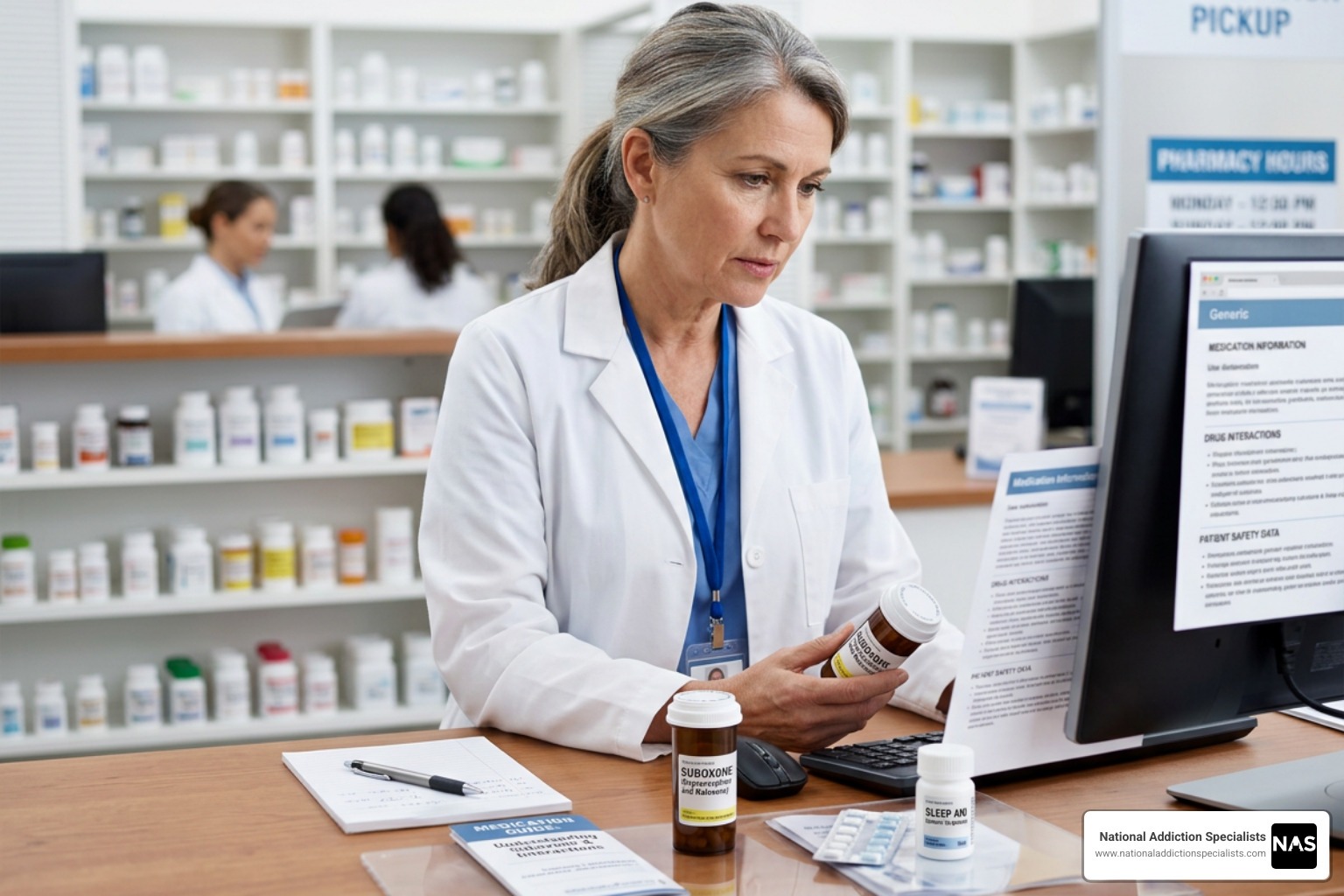
Suboxone (buprenorphine and naloxone) is a cornerstone of opioid use disorder treatment. It stabilizes brain chemistry, allowing patients to focus on their recovery without the constant distraction of withdrawal.
We often see a significant overlap between addiction and mental health. Stabilization on Suboxone can sometimes reveal or help manage underlying mood issues. We’ve explored topics like Suboxone for major depression and how Suboxone affects mental health stability for those with co-occurring disorders.
FDA-Approved Medications for Alcohol Recovery
For those struggling with alcohol, three main medications are used:
- Naltrexone: Blocks the “buzz” from drinking.
- Acamprosate: Helps the brain maintain balance after stopping alcohol.
- Disulfiram: Causes an unpleasant reaction if alcohol is consumed.
Understanding how alcohol use disorder affects mental health is a critical step in choosing the right MAT path.
Finding the Right Treatment Plan for You
The “trial and error” phase of medication can be frustrating, but science is helping us get more precise.
Pharmacogenomics and Genetic Testing
We now have access to pharmacogenomics, which uses a simple cheek swab to see how your body metabolizes certain drugs. This can help us skip medications that are likely to cause side effects or simply won’t work for your genetic makeup.
Navigating Brand vs. Generic Options
Many patients worry that generic medications aren’t as good as brand names. However, the FDA requires generics to be “bioequivalent,” meaning they work the same way in the body. For those on a budget, an authorized generic product finder can help you find the most cost-effective version of your prescription.
Working with Your Healthcare Provider
Open communication is your best tool. Don’t be afraid to ask your doctor:
- How long will I be on this?
- What should I do if I feel worse?
- Are there long-term risks for my kidneys or liver?
You are the expert on your own body. Your provider is the expert on the medicine. Together, you form the best team for your recovery.
Frequently Asked Questions about Psychiatric Medication
How long does it take for mental health medication to work?
Most mental health treatment medication takes 4 to 8 weeks to show full benefits. You might notice improvements in sleep or appetite within the first week or two, but the “lift” in mood or reduction in anxiety usually takes longer.
Can I take mental health medication while pregnant?
This requires a careful risk-benefit analysis. Untreated depression or anxiety can also pose risks to a pregnancy. There are many safe options, and resources like the Center for Women’s Mental Health provide specialized guidance for pregnant and postpartum people.
What should I do if I miss a dose?
Generally, you should take the missed dose as soon as you remember, unless it is almost time for your next dose. Never “double up” to catch up. When in doubt, call your pharmacist—they are an incredible (and often underutilized) resource for medication safety.
Conclusion
Finding the right mental health treatment medication is a journey, not a sprint. Whether you are in Brentwood, TN, or Virginia Beach, VA, the goal is the same: to find a balance that allows you to feel like yourself again.
At National Addiction Specialists, we provide confidential, expert care through telemedicine across Tennessee and Virginia. We accept Medicaid and Medicare because we believe everyone deserves access to life-changing treatment. If you are struggling with thoughts of suicide, please reach out to the 988 Suicide & Crisis Lifeline immediately.
Make an Appointment to Treat Addiction Please don’t hesitate. Make an appointment today. https://www.nationaladdictionspecialists.com/new-patient-packet/
This article was medically reviewed by: Chad Elkin, MD, DFASAM is a board-certified addiction medicine physician, founder, and Chief Medical Officer of National Addiction Specialists, dedicated to treating substance use disorders. A Distinguished Fellow of the American Society of Addiction Medicine (ASAM), Dr Elkin currently serves as President of the Tennessee Society of Addiction Medicine (TNSAM) and has held various leadership roles within the organization. Dr Elkin chairs ASAM’s Health Technology Subcommittee and is an active member of its Practice Management and Regulatory Affairs Committee, State Advocacy and Legislative Affairs Committee, and other committees. He also serves on the planning committee for the Vanderbilt Mid-South Addiction Conference. Committed to advancing evidence-based policy, Dr Elkin is Chairman of the Tennessee Association of Alcohol, Drug, & Other Addiction Services (TAADAS) Addiction Medicine Council, which collaborates with the TN Department of Mental Health & Substance Abuse Services (TDMHSAS). He has contributed to numerous local, state, and national task forces, helping develop professional guidelines, policies, and laws that align with best practices in addiction medicine. His work focuses on reducing addiction-related harm, combating stigma, and ensuring access to effective treatment. Passionate about the field of addiction medicine, he remains dedicated to shaping policy and enhancing patient care.
Suboxone® and Subutex® are a registered trademark of Indivior UK Limited. Any mention and reference of Suboxone® and Subutex® in this website is for informational purposes only and is not an endorsement or sponsorship by Indivior UK Limited.