Home Alone? Understanding Suboxone Withdrawal Options
Why Understanding Your Withdrawal Options Matters
Suboxone withdrawal after taper is a critical step in recovery that requires careful planning. After a medically supervised taper, knowing what to expect can turn an overwhelming experience into a manageable transition.
Key facts about Suboxone withdrawal after taper:
- Timeline: Acute symptoms typically last 7-10 days, with psychological effects potentially lasting weeks to months.
- Symptoms: Include muscle aches, insomnia, anxiety, mood swings, and cravings.
- Severity: Generally milder than other opioids but longer-lasting due to Suboxone’s extended half-life.
- Management: Best handled with medical supervision, supportive care, and ongoing therapy.
- Success factors: Slow tapering, professional support, and comprehensive aftercare plans.
Completing a Suboxone taper is just the beginning. Your brain and body need time to readjust after long-term medication-assisted treatment. While this can feel daunting, especially at home, the right information and support make it manageable.
Many patients worry about facing withdrawal alone. As one patient shared after completing their taper: “I was terrified of what would happen when I stopped completely, but having a clear plan and knowing what to expect made all the difference.”
I’m Dr. Chad Elkin, founder of National Addiction Specialists and a board-certified addiction medicine physician. I’ve helped many patients through Suboxone withdrawal after taper and have seen how preparation and support can lead to success. This guide will cover managing symptoms, seeking help, and setting yourself up for long-term recovery.
Find more about Suboxone withdrawal after taper:
Understanding Suboxone and Its Role in Recovery
To understand what happens during Suboxone withdrawal after taper, it’s helpful to first grasp what Suboxone is and how it works.
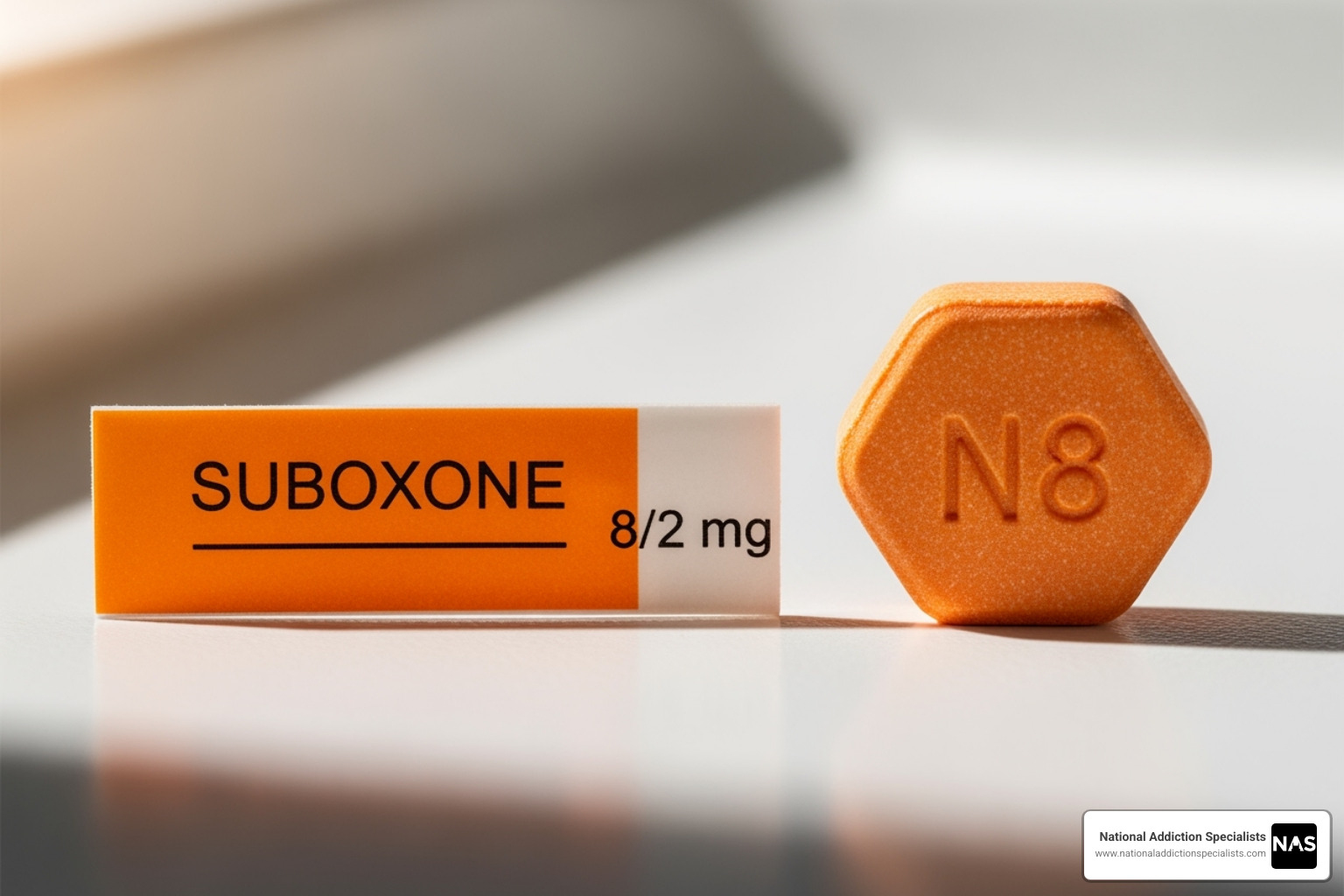
What is Suboxone?
Suboxone is a prescription medication vital for breaking free from opioid dependence. It acts as a bridge from active addiction to recovery, providing stability as you rebuild your life.
This medication contains two key ingredients. Buprenorphine, a partial opioid agonist, activates the brain’s opioid receptors just enough to reduce cravings and prevent withdrawal without producing a high. The second ingredient, naloxone, is a safety feature that blocks opioid effects if the medication is misused, ensuring it’s used as prescribed.
A key feature of buprenorphine is the ceiling effect, meaning that after a certain dose, taking more won’t increase the effects. This significantly reduces the risk of overdose. You can learn more on our What is Suboxone? page.
How it Works
Suboxone is the foundation of Medication-Assisted Treatment (MAT), an approach that combines medication with counseling to treat opioid use disorder comprehensively.
The medication works by reducing cravings—the overwhelming urge for opioids that can make recovery feel impossible. By gently activating opioid receptors, buprenorphine quiets these intense desires.
Suboxone also prevents severe withdrawal symptoms. This allows you to focus your energy on recovery, such as attending therapy and rebuilding relationships.
The ultimate goal of treatment is often to taper off the medication once a solid foundation for recovery is built, though some benefit from long-term maintenance. This is why understanding Suboxone withdrawal after taper is so important.
Our Medication Assisted Treatment page provides more detail on how MAT supports recovery. Suboxone provides the breathing room needed to heal and grow stronger before living medication-free.
The “Why” and “How” of a Medically Supervised Suboxone Taper
Once you’ve found stability with Suboxone, you might wonder if you can stop taking it. For many, the answer is yes, and tapering is the next step in the recovery story.
Purpose of Tapering
The goal of tapering is to gently wean off dependence on Suboxone, allowing you to achieve medication-free recovery if that’s your goal. It allows your nervous system to slowly readjust to functioning without buprenorphine, giving your brain time to remember how to manage on its own.
Tapering vs. Quitting “Cold Turkey”
While the desire to be free from medication is understandable, quitting Suboxone “cold turkey” carries significant risks of abrupt cessation, including severe symptoms and a much higher relapse risk. Because Suboxone is a long-acting medication, withdrawal can be prolonged and uncomfortable, often leading people back to opioid use for relief.
| Feature | Tapering Off Suboxone | Quitting Suboxone “Cold Turkey” |
|---|---|---|
| Withdrawal Severity | Gradual reduction minimizes intensity, making it more manageable. | Severe and intense withdrawal symptoms are common. |
| Relapse Risk | Lower risk, as symptoms are controlled, and ongoing support is in place. | Higher risk due to overwhelming discomfort and cravings. |
| Duration of Symptoms | Generally, acute symptoms are shorter and less severe. | Physical symptoms can last up to 20 days, with psychological effects lasting longer. |
| Medical Supervision | Essential for safety and personalized adjustments. | No medical oversight, increasing health risks. |
| Comfort | Designed to be as comfortable as possible. | Extremely uncomfortable and potentially dangerous. |
A medically supervised taper gives your body time to adjust, reducing the intensity of Suboxone withdrawal after taper. Learn more in our guide: How to Taper Off Suboxone.
The Importance of Medical Supervision
Tapering should not be attempted alone. Medical supervision is essential for your safety and success. Your provider will create a personalized tapering schedule based on your dose, treatment duration, mental health, and support system.
Our dose reduction strategy involves small reductions, typically 5-10% every two to three weeks. This slow, steady pace allows us to constantly monitor symptoms and ensure your comfort. One of the biggest advantages of working with National Addiction Specialists is our telemedicine approach. You get expert medical guidance with at-home support in Tennessee or Virginia, so you can focus on your health without traveling to appointments.
The expert-recommended tapering methods we follow focus on direct tapering. We do not recommend mixing Suboxone with water, as it does not dissolve completely, making accurate dosing impossible.
How Long Does a Suboxone Taper Take?
A common question is about the taper duration. There’s no simple answer, as timelines have a variable duration from weeks to months, depending on individual factors. These factors include your starting dose, treatment duration, metabolism, and other health conditions.
The debate between slow vs. rapid tapers is ongoing. Research on buprenorphine tapering schedules shows mixed results, with some studies suggesting shorter tapers can be effective, while longer ones may offer more comfort. However, I’ve learned that patient comfort should always be the priority. The goal is not to rush but to set you up for success in managing Suboxone withdrawal after taper and maintaining long-term recovery.
Navigating the Symptoms of Suboxone Withdrawal After Taper
Even with a careful taper, your body will need to adjust to functioning without Suboxone. This adjustment period is what we refer to as Suboxone withdrawal after taper.

Why Withdrawal Happens
Your brain gets used to the daily presence of Suboxone. When you stop, your body needs time to find its new normal. Buprenorphine works with your brain’s opioid receptors, which control pain and mood. As you taper, your system must re-establish its own balance. The symptoms you experience are signs that your body is working to find its natural equilibrium again.
You can learn more about this process on our page about Suboxone Withdrawal.
Common Physical and Psychological Symptoms
The symptoms of Suboxone withdrawal after taper are both physical and mental. While they can feel overwhelming, they are temporary and manageable.
Physical symptoms often resemble a persistent flu. You may experience:
- Muscle aches and body pains
- Trouble sleeping (insomnia)
- Runny eyes and nose
- Sweating and chills
- Frequent yawning and enlarged pupils
- Abdominal cramps, diarrhea, and nausea
- Goosebumps
- Lethargy and fatigue
Psychological symptoms can be equally challenging. These include:
- Anxiety and agitation
- Irritability and mood swings
- Depression
- Intense drug cravings
- Difficulty concentrating
These symptoms are typically manageable under medical supervision. We follow clinical guidelines for withdrawal management to ensure you receive the best possible care.
Comparing Suboxone Withdrawal to Other Opioids
Many patients ask how Suboxone withdrawal after taper compares to withdrawal from other opioids like heroin. The difference lies in how the drugs leave your system.
Withdrawal from short-acting opioids like heroin is intense but brief, peaking within 72 hours and resolving in 7-10 days.
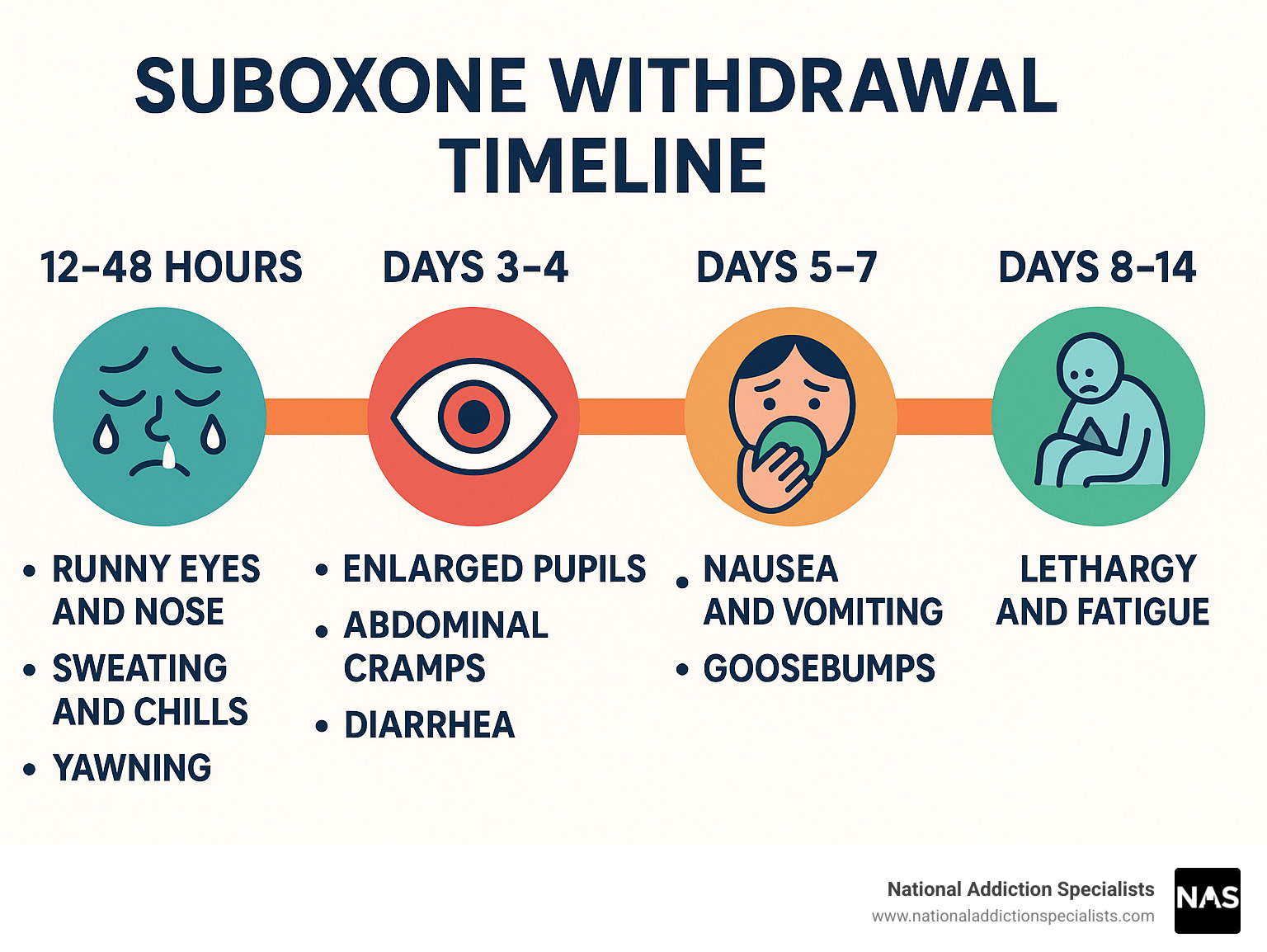
Suboxone withdrawal is longer. Because Suboxone has a half-life of up to 42 hours, symptoms start 12-48 hours after the last dose, with acute physical symptoms lasting up to 20 days. Psychological effects may linger even longer.
The good news is that while Suboxone withdrawal after taper lasts longer, the acute physical symptoms are generally milder than those of full opioid agonists. The real challenge is often the persistent psychological symptoms, like depression and cravings, that can test your resolve for weeks or months. This is why a strong support system and ongoing care are so vital.
The Suboxone Withdrawal Timeline: What to Expect Day by Day
Understanding the timeline for Suboxone withdrawal after taper can ease anxiety and help you prepare. While everyone’s experience is unique, there are common patterns. Your timeline depends on your dosage, duration of use, overall health, and the speed of your taper.
Think of withdrawal as your body healing and readjusting. We’ve explored this process in more detail on our page: From Start to Finish: Understanding the Suboxone Withdrawal Timeline.
Acute Withdrawal Phase (First 1-2 Weeks)
This initial phase involves the most physical adjustment. It’s temporary and manageable with the right support.
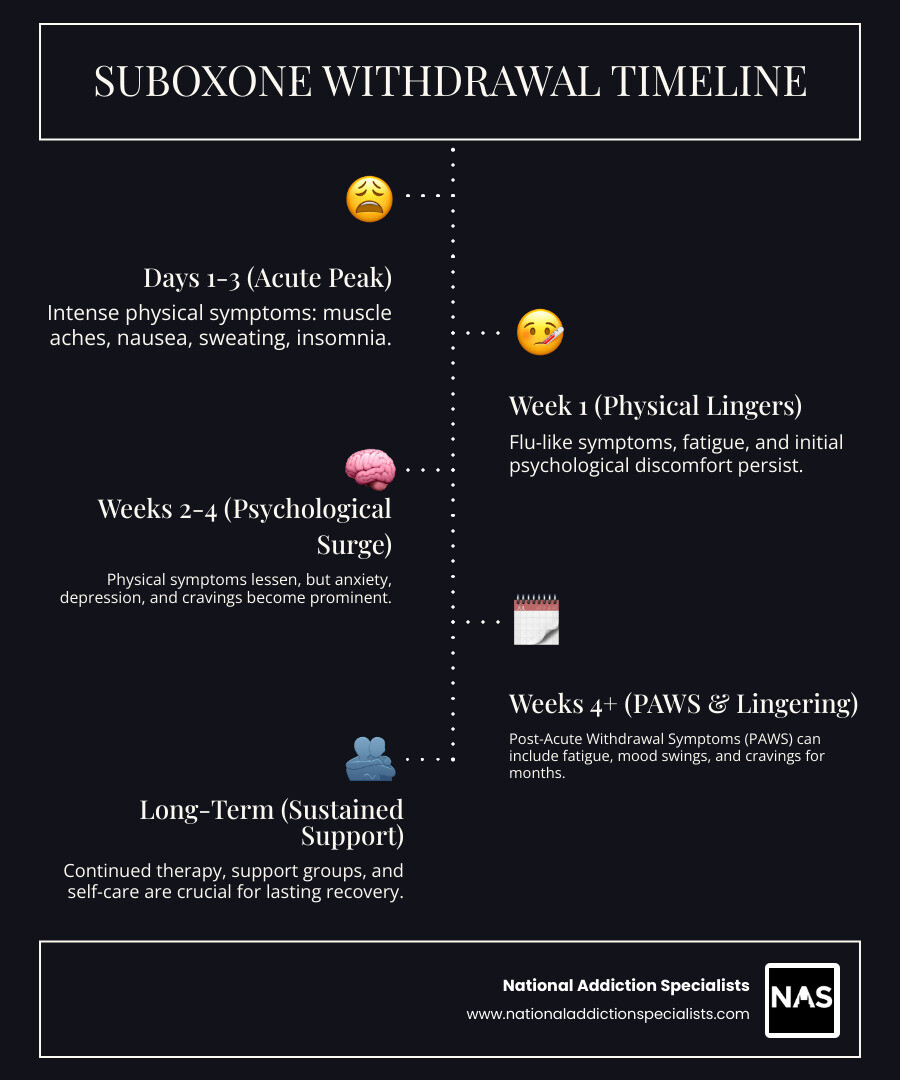
The first 72 hours are often the most challenging. Symptoms begin 12-48 hours after the last dose, peaking around day 3 or 4. Expect flu-like symptoms such as muscle aches, nausea, sweating, and chills. Getting over this peak is a key milestone.
During week 1, intense physical symptoms start to ease, but you may feel exhausted yet unable to sleep. Body aches, insomnia, and mood swings are typical. Your appetite may be low, and you might feel restless.
By week 2, most physical symptoms fade as your body adjusts. However, this is often when psychological symptoms like depression become more noticeable as your brain chemistry rebalances.
Post-Acute and Long-Term Challenges of Suboxone withdrawal after taper
After the acute phase, many people experience Post-Acute Withdrawal Syndrome (PAWS), which can be less predictable and more challenging.
PAWS can last for weeks to months, with symptoms that come and go in waves. You might feel fine for days, then suddenly experience intense cravings, depression, or anxiety. This unpredictability is frustrating but normal.
Common PAWS symptoms include lingering depression, anxiety, fatigue, and drug cravings. You might struggle with motivation, energy levels, or finding pleasure in activities. Sleep patterns can remain disrupted for months.
The importance of ongoing support cannot be overstated during this phase. Your brain is still healing, which is why many find the psychological aspects of Suboxone withdrawal after taper more challenging than the physical ones. A strong support system through therapy, support groups, or provider check-ins makes a significant difference.
Managing Withdrawal: Supportive Strategies for a Smoother Transition
Navigating Suboxone withdrawal after taper successfully requires a holistic approach. The good news is you have control over your comfort. We empower our patients with effective strategies for a smoother transition. Find more information on our page: Suboxone Withdrawal Treatment.

At-Home Comfort Measures and Self-Care
While medical supervision is key, you can do a lot at home to ease withdrawal discomfort.
- Hydration and nutrition are foundational. Drink plenty of water. To manage nausea, eat small, frequent meals of bland foods.
- Over-the-counter medications can help. With your doctor’s approval, use ibuprofen for muscle aches or anti-nausea remedies.
- Light exercise, like a short walk or gentle stretching, can help with restless legs and improve your mood. Listen to your body and don’t overdo it.
- Relaxation techniques are crucial. Deep breathing, meditation, or mindfulness can calm anxiety. These positive coping strategies for stress help you manage without unhealthy alternatives.
- Sleep hygiene is important for insomnia. Create a consistent bedtime routine, keep your room dark and quiet, and avoid screens before bed. Ask your doctor before trying supplements like melatonin.
The Role of Professional and Peer Support
You don’t have to face Suboxone withdrawal after taper alone. Professional and peer support are often the difference between success and struggle.
- Behavioral therapy and counseling offer a safe space to process emotions, develop coping skills, and address the root causes of addiction. Therapeutic approaches to drug addiction are proven to be effective.
- Support groups, like 12-Step programs or other peer groups, connect you with people who understand your experience. Sharing with others on a similar journey creates a powerful sense of community.
- Knowing when to seek immediate help is vital. Contact your provider immediately for severe symptoms like hallucinations, uncontrolled vomiting or diarrhea, or any thoughts of suicide. These may require medically supervised detox for your safety.
Reaching out for help is a sign of strength.
Make an Appointment to Treat Addiction. Please don’t hesitate. Make an appointment today.
Frequently Asked Questions about Suboxone Withdrawal
I’ve helped patients steer Suboxone withdrawal after taper for years, and certain questions always come up. Here are honest answers to the most common concerns.
How long does Suboxone withdrawal last after a taper?
This is the most common question. Acute physical symptoms—like muscle aches and nausea—typically last 7-10 days after your final dose. These are uncomfortable but manageable.
However, psychological symptoms, known as Post-Acute Withdrawal Syndrome (PAWS), can last for weeks or months. These include depression, anxiety, fatigue, and persistent cravings. A well-planned, medically supervised taper significantly reduces the intensity and duration of all symptoms.
Is it possible to have no withdrawal symptoms after tapering?
While a perfect, symptom-free taper isn’t realistic, a very slow, medically supervised taper can minimize symptoms dramatically. Your body needs time to readjust after long-term Suboxone use.
The goal isn’t to eliminate all discomfort but to make symptoms manageable enough that you can continue with daily life. Most of our patients can work and care for their families throughout the process.
What’s the biggest challenge after completing a Suboxone taper?
In my experience, the biggest challenge is not the physical symptoms, but the lingering psychological ones.
Depression and anxiety can be stubborn, and many patients feel emotionally “flat” or unmotivated for weeks. Persistent cravings can also be surprising, especially during stressful times. The real challenge is preventing relapse during this vulnerable period.
This is why ongoing therapy, support groups, and strong coping strategies are crucial after your taper is complete. Our telemedicine approach continues to support you well beyond your final dose, helping you steer these challenges with expert care.
Conclusion
Completing Suboxone withdrawal after taper is a significant milestone in your recovery, a testament to your strength and commitment. While withdrawal symptoms are a natural part of this process, they are temporary and manageable with the right support.
The key takeaways are that tapering slowly under medical supervision is safest, withdrawal is manageable, and recovery is a long-term journey. Every day forward is an achievement.
Having the right team makes this journey manageable. At National Addiction Specialists, we’ve guided countless patients through their Suboxone withdrawal after taper. We understand the unique physical and psychological challenges you face.
Our telemedicine approach delivers expert addiction care to your home in Tennessee or Virginia. You receive personalized medical supervision without the stress of travel, ensuring your recovery is convenient and confidential. You can focus on healing in your own space.
The road ahead has challenges, but you are not alone. With medical guidance, self-care strategies, and ongoing therapy, you can successfully steer this transition and build a foundation for lasting sobriety.
Ready to take the next step? Learn more about our Suboxone treatment programs and find out how we can support you through every phase of your healing process.