Why Online Addiction Counselors Are Changing Recovery
Online addiction counselors provide professional treatment for substance use and behavioral addictions through secure video calls, phone sessions, and messaging platforms. Here’s what you need to know:
Quick Answer: Finding Online Addiction Counselors
- Where to Find Them: Online therapy platforms, telehealth providers like National Addiction Specialists, referrals from your doctor, or professional directories like NAADAC
- What to Look For: State-licensed counselors (LPC, LCSW, LMFT) with addiction specialization, at least 1,000 clinical hours, and credentials from recognized certifying bodies
- Cost: Can cost $70-$100 per week for platform subscriptions, or per-session rates that may be covered by insurance, Medicaid, or Medicare.
- Effectiveness: Research shows online therapy is as effective as in-person treatment for many addiction types, with some studies showing higher success rates and lower dropout rates
Over 20 million people in the United States have an addiction, but only 10% get treatment due to barriers like stigma, time constraints, and lack of local services. Online addiction counselors are changing this. Virtual care has grown, with millions now using online therapy. The field is projected to grow 22% between 2021 and 2031, reflecting the urgent need and proven effectiveness of virtual treatment.
I’m Dr. Chad Elkin, a board-certified addiction medicine physician and founder of National Addiction Specialists. Through my work with online addiction counselors and telehealth platforms, I’ve witnessed how virtual treatment breaks down barriers and helps people access life-saving care from the privacy of their own homes.
Online addiction counselors terms to remember:
- mat clinics near me
- Suboxone doctors Medicaid
- suboxone dr near me
Understanding Online Addiction Counseling
Addiction is a complex, chronic brain disease, not a moral failing. The American Society of Addiction Medicine (ASAM) defines it by characteristics like an inability to abstain, impaired behavioral control, intense cravings, and a diminished recognition of the problems it causes. Understanding addiction as a treatable disease is the first step, and this is where online addiction counselors provide crucial support.
What is Online Addiction Counseling and How Does it Work?
Online addiction counseling (teletherapy) provides professional counseling remotely via secure video, phone, or messaging. This makes therapy accessible and convenient, especially for those in areas like Brentwood, TN, or Virginia Beach, VA. Like in-person therapy, the process is talk-based, with sessions scheduled to fit your needs. Some platforms offer subscription models with unlimited messaging. This flexibility allows you to get support from the privacy of your home. Research shows that online therapy is as effective as in-person treatment for mental health disorders like depression and panic disorders, meaning you can expect the same quality of care.
Here’s a quick comparison of online vs. traditional in-person counseling:
| Feature | Online Addiction Counseling | Traditional In-Person Counseling |
|---|---|---|
| Accessibility | Highly accessible, especially for those in rural areas, with mobility issues, or without transportation (e.g., across Tennessee and Virginia). | Limited by geographic proximity, transportation, and physical mobility. |
| Convenience | Flexible scheduling, no travel time, sessions from home or any private location. | Requires travel to an office, fixed appointment times, can be difficult to fit into busy schedules. |
| Privacy | Discreet, reduced social stigma as you can attend from a private space. | May involve being seen entering/leaving a clinic, which can deter some individuals. |
| Cost | Often more affordable, with subscription models or per-session rates that may be covered by insurance, Medicaid, or Medicare. | Generally higher per-session costs, though insurance coverage varies. |
| Communication | Video calls, phone calls, messaging, chat. | Face-to-face conversations. |
| Technology | Requires reliable internet access and a suitable device. | No technology required beyond phone for scheduling. |
| Rapport | Can be built effectively, though some non-verbal cues might be harder to read. | Easier to read non-verbal cues, can feel more “intimate” for some. |
| Crisis Care | Not suitable for immediate crisis intervention or severe cases requiring inpatient detox/hospitalization. | Can provide immediate in-person support for some crises, though severe cases still require hospitalization. |
The Benefits and Drawbacks of Virtual Support
Embracing virtual support for addiction recovery comes with a unique set of advantages and some considerations.
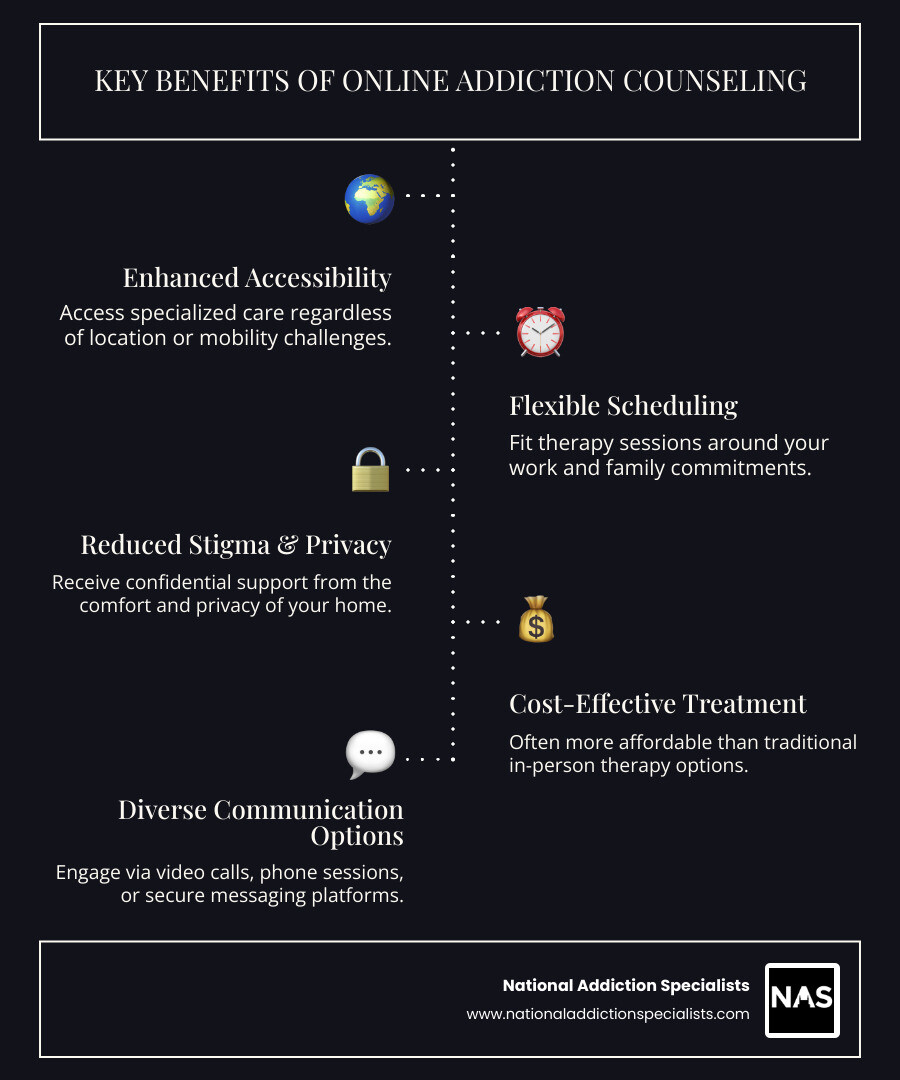
Benefits of Online Addiction Counseling:
- Accessibility: Overcomes geographical barriers, bringing expert care to you in remote areas of Tennessee or Virginia, or if travel to an office in Brentwood or Virginia Beach is difficult. It’s vital for those with mobility issues or chronic illnesses.
- Convenience: Sessions fit your schedule, eliminating commutes and childcare issues. You can schedule appointments around work and family, making it easier to stay consistent with treatment.
- Privacy: Offers a discreet way to get help from your own private space, reducing the stigma of seeking treatment and making it easier to open up.
- Destigmatizing Care: Removes the need to visit a clinic, which helps reduce stigma and normalizes seeking help for mental health and addiction.
Potential Drawbacks of Online Addiction Counseling:
- Technology Barriers: Requires reliable internet and a suitable device. Technical issues can sometimes disrupt sessions.
- Lack of Non-Verbal Cues: Some non-verbal cues may be missed compared to in-person sessions, which can affect the connection for some people, though skilled counselors can mitigate this.
- Not for Severe Cases: Not suitable for severe cases requiring crisis intervention, supervised detox, or residential treatment for acute mental health crises.
- Crisis Limitations: In an emergency, an online counselor cannot physically intervene. They rely on established crisis protocols and coordinating with local emergency services.
We believe that for many, the benefits of accessibility and convenience far outweigh the potential drawbacks, especially when the right care is provided by qualified professionals.
How to Find Qualified Online Addiction Counselors
The demand for addiction counselors is soaring, especially in communities across Tennessee and Virginia. With the field projected to grow significantly faster than average, over 77,500 new jobs are expected between 2021 and 2031. This high demand makes it crucial to find qualified and licensed online addiction counselors. Verifying credentials is a key step in ensuring you receive effective, evidence-based care.

Credentials and Licensing for Online Addiction Counselors
Like other healthcare professionals, online addiction counselors must meet strict requirements, which generally include:
- Education: A master’s or doctoral degree in counseling, social work, or a related field.
- Clinical Hours: At least 1,000-2,000 hours of supervised clinical experience.
- State Licensing: A license to practice from a state board, such as Licensed Professional Counselor (LPC) or Licensed Clinical Social Worker (LCSW). Our providers at National Addiction Specialists are licensed in Tennessee and Virginia.
- National Certifications: Specialized certifications from organizations like NAADAC, the Association for Addiction Professionals, which show expertise in addiction treatment.
Always verify a counselor’s license with their state board (e.g., the Virginia Board of Counseling or the Tennessee Department of Health) to ensure they are qualified.
How to Find the Right Counselor for You
Finding the right online addiction counselor is a personal journey. Here’s how we recommend you approach it:
- Assess Your Needs: Before you start, consider what you need help with. Are you dealing with opioid addiction, alcohol dependency, or a behavioral addiction? Do you have co-occurring conditions like anxiety or depression?
- Consider Therapist Specialties: Therapists often have specialties. Look for a counselor with experience in the issues you’re facing, whether it’s a specific addiction type or a therapeutic approach like CBT.
- Use Platform Directories and Referrals: Online therapy platforms often let you browse counselor profiles. You can also ask your primary care provider for a referral to a reputable online addiction counselor.
- Read Reviews and Testimonials: While not the only factor, reading about others’ experiences can provide valuable insights.
- Initial Consultation: Many providers offer initial consultations. Use this opportunity to ask questions and see if you feel a connection with the counselor before committing.
- Understand Insurance and Pricing: Costs vary. Check if your insurance covers online counseling. Many providers, including National Addiction Specialists, accept Medicaid and Medicare. For more information, explore our insurance and pricing details.
We want to make this process as seamless as possible for you, helping you connect with the expert care you deserve.
What to Expect From Your Therapy Journey
Starting therapy with online addiction counselors is a brave, collaborative process. Building a strong, trusting relationship (rapport) with your counselor is fundamental. This connection helps you feel safe to explore difficult emotions and commit to recovery. Our counselors are trained to foster this connection through a screen using active listening and empathy.

The First Session and Beyond
Your first session is an intake process for your online addiction counselor to get to know you. You’ll discuss your history, current situation, and goals. This is your chance to ask questions and for us to understand your story. Afterward, you’ll collaborate on a personalized treatment plan using evidence-based approaches proven to be effective for addiction.
Two common and highly effective approaches include:
- Cognitive Behavioral Therapy (CBT): Helps you identify and change negative thought patterns and behaviors linked to addiction. You’ll learn healthier coping skills and strategies to manage triggers. You can find more information on cognitive behavioral therapy here.
- Motivational Interviewing: A supportive, non-judgmental approach that helps you explore your feelings about change, strengthen your motivation, and recognize the benefits of stopping substance use.
Subsequent sessions will involve working through your treatment plan, learning coping strategies, and applying them in your daily life through “homework” assignments.
Privacy, Confidentiality, and Technology
Privacy and confidentiality are paramount in addiction counseling. Reputable providers of online addiction counselors ensure the highest standards:
- HIPAA Compliance: All providers, including National Addiction Specialists, must be HIPAA (Health Insurance Portability and Accountability Act) compliant, protecting your health information under federal law.
- Secure Platforms: Sessions occur on secure, encrypted platforms to keep all communications confidential.
- Informed Consent: You will review and sign documents outlining privacy policies and confidentiality before starting.
- Finding a Private Space: It’s your responsibility to find a private space for sessions to ensure you can speak freely.
Your counselor’s legal and ethical obligations for confidentiality are the same as in traditional therapy, so you can focus on recovery without worry.
Make an Appointment to Treat Addiction. Please don’t hesitate. Make an appointment today.
The Role of Online Counseling in Long-Term Recovery
Addiction is a chronic disease, meaning recovery is an ongoing journey requiring continuous support. Online addiction counselors play a crucial role in managing this condition, offering flexible, sustained support that adapts to your life. The path to recovery is not a straight line, and online counseling provides the consistency needed to steer its challenges.
Supporting Sobriety and Preventing Relapse
A primary goal of counseling is to equip you with tools to maintain sobriety and prevent relapse. Online addiction counselors help you develop coping skills like stress management and emotional regulation. Together, you will identify personal triggers and create a comprehensive relapse prevention plan. This plan is a dynamic tool, refined as your needs evolve. The accessibility of online counseling means support is just a click away. Being able to quickly connect with your therapist or support resources when facing an urge can be incredibly empowering and make all the difference.
Integrating with Medication-Assisted Treatment (MAT)
For many with opioid addiction, combining counseling with Medication-Assisted Treatment (MAT) is the most effective path. MAT uses FDA-approved medications like Suboxone alongside therapy. At National Addiction Specialists, we specialize in telemedicine-based Suboxone treatment in Tennessee and Virginia. Our online addiction counselors and medical providers work together to provide seamless, integrated care. MAT reduces withdrawal and cravings, making it easier to focus on counseling and long-term recovery.
This integrated approach also effectively addresses co-occurring disorders like anxiety or depression, which are often intertwined with addiction. By combining Suboxone with counseling, we offer a powerful strategy for building a stable foundation for a healthier future. To learn more about how we can support you with this comprehensive approach, including Suboxone treatment, you can find more information on how to find online Suboxone doctors.
Frequently Asked Questions about Online Addiction Counselors
We understand you might have many questions about online addiction counseling. Here, we address some of the most common ones.
What types of addiction can be treated online?
Online addiction counselors can treat many substance use disorders (alcohol, opioids, cannabis) and behavioral addictions (gambling, internet). However, online therapy is not suitable for severe cases requiring immediate crisis intervention, medically supervised detox, or long-term residential treatment. If you are in a crisis, seek emergency help. For 24/7 support, contact the SAMHSA National Helpline at 1-800-662-HELP (4357) for assistance.
How much does online addiction counseling cost and is it covered by insurance?
The cost of online addiction counseling can vary. Some platforms offer subscription models, which might range from $70 to $100 per week, billed monthly. Other providers may charge per session, with rates potentially comparable to traditional in-person therapy, which can be up to $200 per session.
Does insurance cover it?
Yes, increasingly, insurance companies are covering telehealth services, including online addiction counseling.
- Private Insurance: Many private health insurance plans now include teletherapy as a benefit. We recommend contacting your insurance provider directly to verify your coverage, understand any co-pays, and check if your plan has specific requirements for online services.
- Medicaid and Medicare: We are proud to accept Medicaid and Medicare, making treatment accessible for many individuals in Tennessee and Virginia. This significantly reduces the financial burden, allowing you to focus on your recovery.
- HSA/FSA Cards: Health Savings Accounts (HSAs) and Flexible Spending Accounts (FSAs) can often be used to pay for online therapy services, offering another way to manage costs.
We encourage you to discuss pricing and insurance coverage with us during your initial inquiry. Our goal is to ensure that financial concerns do not become a barrier to accessing the life-changing care you need.
Is online therapy as effective as in-person for addiction?
Yes, research indicates that online therapy can be as effective as in-person treatment for addiction.
- Comparable Outcomes: Studies show that online cognitive behavioral therapy (CBT) is as effective as in-person treatment for substance use disorders and other mental health conditions.
- Improved Success and Lower Dropout Rates: Some research suggests web-based treatment can lead to higher success rates and lower dropout rates, likely due to its convenience and accessibility.
- Filling the Treatment Gap: Online therapy is crucial for reaching individuals who might otherwise not receive any treatment.
The effectiveness of online therapy is often correlated with consistent engagement and the quality of the therapeutic relationship. When working with qualified online addiction counselors who use evidence-based approaches, you can expect meaningful progress on your recovery journey.
Take the First Step Towards Recovery Today
Navigating the digital path to recovery with online addiction counselors offers a guide of hope and practical support for millions. We’ve seen how this innovative approach breaks down barriers, offering accessible, confidential, and effective treatment for addiction. From the comfort of your home in Brentwood, TN, Virginia Beach, VA, or anywhere across Tennessee and Virginia, you can connect with expert care that empowers you to reclaim your life.
Your journey to recovery is unique, and we are here to support you every step of the way. We believe in a compassionate, judgment-free approach that focuses on your progress, not perfection. If you’re ready to take control of your journey and build a healthier, more fulfilling future, we invite you to reach out.
Don’t let location, schedule, or the stigma of addiction hold you back any longer.
Start your recovery with a new patient packet.
This article was medically reviewed by:
Chad Elkin, MD, DFASAM is a board-certified addiction medicine physician, founder, and Chief Medical Officer of National Addiction Specialists, dedicated to treating substance use disorders. A Distinguished Fellow of the American Society of Addiction Medicine (ASAM), Dr Elkin currently serves as President of the Tennessee Society of Addiction Medicine (TNSAM) and has held various leadership roles within the organization. Dr Elkin chairs ASAM’s Health Technology Subcommittee and is an active member of its Practice Management and Regulatory Affairs Committee, State Advocacy and Legislative Affairs Committee, and other committees. He also serves on the planning committee for the Vanderbilt Mid-South Addiction Conference. Committed to advancing evidence-based policy, Dr Elkin is Chairman of the Tennessee Association of Alcohol, Drug, & Other Addiction Services (TAADAS) Addiction Medicine Council, which collaborates with the TN Department of Mental Health & Substance Abuse Services (TDMHSAS). He has contributed to numerous local, state, and national task forces, helping develop professional guidelines, policies, and laws that align with best practices in addiction medicine. His work focuses on reducing addiction-related harm, combating stigma, and ensuring access to effective treatment.Passionate about the field of addiction medicine, he remains dedicated to shaping policy and enhancing patient care.
Suboxone® and Subutex® are a registered trademark of Indivior UK Limited. Any mention and reference of Suboxone® and Subutex® in this website is for informational purposes only and is not an endorsement or sponsorship by Indivior UK Limited.