Finding Your Feet with Addiction Recovery Support
Finding Your Feet: What Is Addiction Recovery Support?
Addiction recovery support includes the services, people, and resources that help someone move from active addiction to a healthier, self-directed life. Here’s a quick overview of what that looks like:
- Peer support – Connecting with others who have lived experience with addiction
- Clinical treatment – Medical care, therapy, and medication-assisted treatment
- Community resources – Recovery housing, mutual aid groups, and sober communities
- Crisis services – Hotlines and emergency mental health support
- Family and social support – Loved ones, coaches, and recovery coaches
Recovery isn’t just about stopping drug or alcohol use. It’s about rebuilding your health, your relationships, and your sense of purpose. That process looks different for everyone – and that’s okay.
The path forward can feel overwhelming at first. There are a lot of options out there, and it’s not always clear where to start. Whether you’re dealing with opioid dependence, alcohol use disorder, or something else entirely, knowing what support is available can make all the difference.
This guide breaks it all down in plain language – no jargon, no judgment.
I’m Chad Elkin, MD, founder and Medical Director of National Addiction Specialists, board-certified in both Addiction Medicine and Internal Medicine, with years of experience building accessible addiction recovery support systems through telehealth. I’ll walk you through the most effective resources and how to find the right fit for your situation.
Simple guide to Addiction recovery support:
Understanding the Importance of Addiction Recovery Support

When we talk about recovery, we often focus on the “quitting” part. But as any of us who have worked in this field for a long time will tell you, quitting is just the first step of a much longer, more rewarding journey. According to SAMHSA’s working definition of recovery, it is a process of change through which individuals improve their health and wellness, live a self-directed life, and strive to reach their full potential.
It is a process, not a single event. To make that process stick, addiction recovery support is essential. Think of it like a safety net. If you’re trying to walk a tightrope, you might be able to do it alone, but having a net and a team of people holding the poles makes you a lot more likely to reach the other side.
Why Support Matters Scientifically
It’s not just “feel-good” advice; there is hard science behind why we need others. Scientific research on recovery predictors shows that social support is one of the strongest indicators of long-term success. When we have a community, our brains actually respond differently to stress. We feel less isolated, our cortisol levels (the stress hormone) can stabilize, and we find new ways to cope that don’t involve substances.
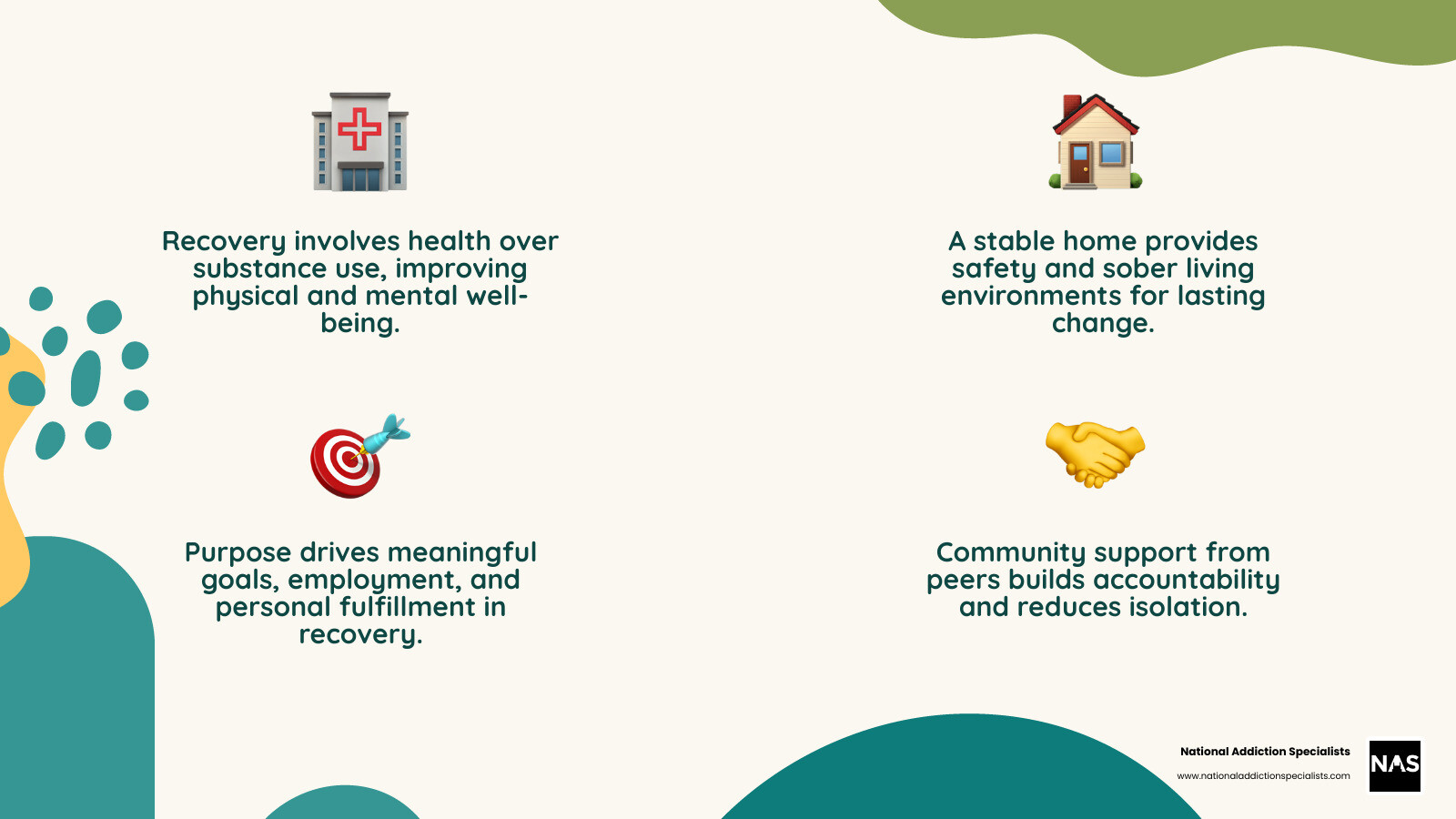
Recovery is built on four major dimensions:
- Health: Overcoming or managing one’s disease(s) or symptoms.
- Home: Having a stable and safe place to live.
- Purpose: Conducting meaningful daily activities, such as a job, school, or creative endeavors.
- Community: Having relationships and social networks that provide support, friendship, love, and hope.
Main Types of Addiction Recovery Support Services
There is no “one-size-fits-all” when it comes to addiction recovery support. Some people find their strength in spirituality, others in science, and many in a mix of both. Here are the primary avenues people use to stay on track.
Peer Support and Mutual Aid
Peer support is exactly what it sounds like: people who have “been there” helping those who are currently “going through it.” This is often referred to as mutual aid. While many people think of 12-step programs first, there are several evidence-informed options available today.
Scientific research on mutual aid effectiveness confirms that participating in these groups significantly increases the chances of maintaining abstinence. Whether it’s the camaraderie of a group or the accountability of a sponsor, these connections are vital.
SMART Recovery vs. 12-Step Programs
Two of the most common frameworks are SMART Recovery and 12-Step programs (like AA or NA). While they share the goal of sobriety, their methods differ.
| Feature | SMART Recovery | 12-Step Programs (AA/NA) |
|---|---|---|
| Core Philosophy | Self-empowerment and cognitive-behavioral tools. | Spiritual foundation and surrendering to a higher power. |
| Focus | Managing urges, thoughts, and behaviors. | Working the “Steps” and helping others. |
| Meeting Style | Discussion-based, led by a trained facilitator. | Peer-led, often involves sharing personal “stories.” |
| View of Addiction | A maladaptive behavior that can be unlearned. | A chronic, progressive disease. |
Community-Based Addiction Recovery Support
Sometimes, “home” isn’t a safe place to be when you’re early in recovery. This is where community-based addiction recovery support comes in.
- Recovery Housing: Often called “sober living,” these are alcohol- and drug-free living environments. Research on recovery housing outcomes suggests that these environments, such as Oxford Houses, provide the stability needed to prevent relapse during the first critical months of sobriety.
- Peer Specialists: These are individuals in recovery who are professionally trained to help others. They help bridge the gap between clinical treatment and real-world living.
Clinical Addiction Recovery Support and Co-occurring Disorders
For many of us, addiction doesn’t travel alone. It often brings friends like depression, anxiety, or PTSD. This is known as a “dual diagnosis” or co-occurring disorders. Scientific research on co-occurring disorders highlights that for treatment to be effective, both the addiction and the mental health issue must be treated at the same time.
In Tennessee and Virginia, we see many patients who benefit from Medication-Assisted Treatment (MAT). Using medications like Suboxone helps stabilize brain chemistry, reduce cravings, and prevent withdrawal symptoms. This allows you to focus on the “why” of your addiction through counseling, rather than just struggling to get through the “how” of the physical cravings.
Make an Appointment to Treat Addiction Please don’t hesitate. Make an appointment today.
Accessing Evidence-Based Treatment and Crisis Resources
Knowing you need help is one thing; finding it is another. If you are in Tennessee or Virginia, there are several ways to access high-quality addiction recovery support without having to navigate a maze of paperwork.
Immediate Crisis Addiction Recovery Support
If you or someone you love is in immediate danger or experiencing a mental health crisis, do not wait.
- 988 Suicide & Crisis Lifeline: You can call or text 988 anytime to be connected with trained counselors.
- Veterans Crisis Line: Veterans can call 988 and press 1, or text 838255. This service is specifically designed for the unique challenges faced by those who served. Visit the Veterans Crisis Line for more information.
- Disaster Distress Helpline: For those struggling with the emotional aftermath of a natural or human-caused disaster.
Finding Long-Term Treatment
For non-emergency situations, use the FindTreatment.gov locator. This is a confidential and anonymous source of information for persons seeking treatment facilities for substance use or mental health problems.
At National Addiction Specialists, we focus on making this process as easy as possible through telemedicine. We understand that in places like Virginia Beach or Brentwood, getting to a clinic every day isn’t always feasible. We accept Medicaid and Medicare to ensure that financial barriers don’t stand in the way of your recovery.
Specialized Resources for Diverse Populations
Addiction does not discriminate, but the barriers to care often do. Different communities face different hurdles, and addiction recovery support must be tailored to meet those needs.
- Veterans: Often require trauma-informed care that addresses the intersection of physical injury, PTSD, and substance use.
- Youth and Young Adults: Recovery support for younger people often involves more family integration and educational support.
- Tribal Communities: Culturally specific healing practices are often integrated with Western medicine to provide a holistic approach.
- Workplace Support: Many employers now offer Employee Assistance Programs (EAPs) and drug-free workplace initiatives that focus on getting employees help rather than just terminating them.
Scientific research on ethnic disparities in care shows that minority populations often face greater obstacles in accessing quality treatment. Part of our mission is to close that gap by providing confidential, home-based care that respects your privacy and your schedule.
Frequently Asked Questions about Addiction Recovery Support
How can I find local treatment if I don’t have insurance?
Many facilities offer “sliding scale” fees based on your income. Additionally, in Tennessee and Virginia, Medicaid (TennCare or Virginia Medicaid) covers many addiction recovery support services, including telemedicine and medication-assisted treatment. You can also look for state-funded programs through the local health department.
What is the difference between SMART Recovery and 12-step programs?
The main difference is the “engine” behind the recovery. 12-step programs rely on a spiritual foundation and a community of peers. SMART Recovery (Self-Management and Recovery Training) relies on cognitive-behavioral tools to help you manage your own recovery. Both are effective; it often comes down to which philosophy resonates more with you.
How can family members best support a loved one in recovery?
The best thing a family member can do is educate themselves. Understanding that addiction is a chronic brain disease—not a moral failing—is the first step. Setting healthy boundaries is also crucial. Programs like Al-Anon or SMART Recovery for Friends & Family can provide you with the tools to support your loved one without losing yourself in the process.
Conclusion
The journey of recovery is rarely a straight line. There will be bumps, turns, and perhaps a few u-turns. But with the right addiction recovery support, you don’t have to navigate that road alone. Whether it’s through a peer group, a sober living home, or personalized medical care via telemedicine, help is available.
At National Addiction Specialists, we believe that quality treatment should be convenient and confidential. Our expert providers in Tennessee and Virginia are here to help you find your feet and build a life that you don’t feel the need to escape from.
Make an Appointment to Treat Addiction Please don’t hesitate. Make an appointment today.
This article was medically reviewed by: Chad Elkin, MD, DFASAM is a board-certified addiction medicine physician, founder, and Chief Medical Officer of National Addiction Specialists, dedicated to treating substance use disorders. A Distinguished Fellow of the American Society of Addiction Medicine (ASAM), Dr Elkin currently serves as President of the Tennessee Society of Addiction Medicine (TNSAM) and has held various leadership roles within the organization. Dr Elkin chairs ASAM’s Health Technology Subcommittee and is an active member of its Practice Management and Regulatory Affairs Committee, State Advocacy and Legislative Affairs Committee, and other committees. He also serves on the planning committee for the Vanderbilt Mid-South Addiction Conference. Committed to advancing evidence-based policy, Dr Elkin is Chairman of the Tennessee Association of Alcohol, Drug, & Other Addiction Services (TAADAS) Addiction Medicine Council, which collaborates with the TN Department of Mental Health & Substance Abuse Services (TDMHSAS). He has contributed to numerous local, state, and national task forces, helping develop professional guidelines, policies, and laws that align with best practices in addiction medicine. His work focuses on reducing addiction-related harm, combating stigma, and ensuring access to effective treatment. Passionate about the field of addiction medicine, he remains dedicated to shaping policy and enhancing patient care.
Suboxone® and Subutex® are a registered trademark of Indivior UK Limited. Any mention and reference of Suboxone® and Subutex® in this website is for informational purposes only and is not an endorsement or sponsorship by Indivior UK Limited.