Why Outpatient Detox Treatment Matters for Your Recovery Journey
Outpatient detox treatment allows you to safely manage withdrawal symptoms from substances like alcohol or opioids while living at home and attending scheduled medical appointments. Here’s what you need to know:
Quick Answer: Outpatient Detox at a Glance
- What it is: Medical supervision for withdrawal while living at home
- How it works: Regular clinic visits (daily or several times weekly) for 3-14 days
- Who it’s for: People with mild-to-moderate withdrawal symptoms and stable home environments
- Key benefits: Lower cost, work/family flexibility, privacy, real-world recovery practice
- Main requirements: Strong support system, reliable transportation, personal commitment
- Not suitable for: Severe withdrawal risk, unstable living situations, or certain co-occurring conditions
If you’re struggling with addiction but can’t step away from daily responsibilities, outpatient detox may be your path forward. For many people with mild-to-moderate symptoms, research shows it’s as safe and effective as inpatient care. It’s also lower in cost, shorter in duration (averaging 6.5 days vs. 9 for inpatient), and allows you to maintain your daily life.
Detox is just the first step. It helps your body adjust to life without substances, but lasting recovery requires addressing the root causes of addiction through continued treatment like counseling or support groups.
Outpatient treatment addresses common concerns like privacy and life disruption. It offers discretion and flexibility that inpatient programs can’t, allowing you to attend appointments without overhauling your schedule and practice new coping skills in your real-world environment.
However, outpatient detox isn’t for everyone. If you’re at risk for severe withdrawal complications like seizures, or if your home environment isn’t supportive, inpatient care is the safer choice. The key is finding what fits your situation.
I’m Dr. Chad Elkin, founder of National Addiction Specialists. With over a decade of experience in addiction medicine, I’ve helped hundreds of people through outpatient detox treatment via our telehealth platform. My goal is to help you understand your options and make the best choice for your recovery.
Key Outpatient detox treatment vocabulary:
What is Outpatient Detox and How Does It Work?
Outpatient detox treatment is a medically supervised process that helps you safely withdraw from substances while living at home. Unlike inpatient programs that require a residential stay, outpatient detox involves regular appointments with a healthcare provider. During these visits, our medical team monitors your symptoms, administers medications, and provides support to ensure your safety and comfort.
The core concept is providing essential medical oversight without disrupting your daily life. This means you can maintain work, family, and social responsibilities while in treatment. Integrating recovery into your daily routine from the start helps you develop coping mechanisms in your natural environment.
Outpatient vs. Inpatient Detox: The Key Differences
Understanding how outpatient detox treatment compares to inpatient detox is key. Both aim for safe withdrawal but differ in structure, intensity, and suitability.
| Feature | Outpatient Detox | Inpatient Detox |
|---|---|---|
| Location | Live at home, attend daily or regular appointments at a clinic. | Reside full-time at a treatment facility, receiving 24/7 care. |
| Supervision | Scheduled medical check-ups and monitoring; self-management between visits with support. | Continuous, around-the-clock medical and emotional support and supervision. |
| Cost | Generally much less expensive due to no accommodation or meal costs. | Typically more expensive due to 24/7 care, lodging, and amenities. |
| Flexibility | High; allows continuation of work, school, and family responsibilities. | Low; requires a complete break from daily life and responsibilities. |
| Ideal Candidate | Mild-to-moderate withdrawal symptoms, stable home environment, strong support system, motivated. | Severe withdrawal risk (e.g., seizures, DTs), unstable home, co-occurring severe mental/physical health issues. |
| Duration | Typically 3 to 14 days; one study reported an average of 6.5 days. | Usually 5 to 14 days; one study reported an average of 9 days. |
The Benefits of Choosing an Outpatient Path
Choosing outpatient detox treatment offers compelling advantages for those whose circumstances allow for it:
- Flexibility for Work and Family: A key benefit is continuing your daily life. You can maintain your job, attend school, and be present for your family, preventing the financial strain and disruption of inpatient care.
- Lower Cost: Outpatient programs are more affordable as they don’t include residential costs like lodging and meals, making treatment more accessible.
- Maintaining Privacy: The discreet nature of outpatient detox treatment is invaluable. You can receive care without explaining an extended absence, managing recovery on your own terms.
- Real-World Recovery Practice: Staying at home means you immediately apply new coping strategies in the setting where you’ll need them most, building resilience against real-world triggers.
- Access to Home Support System: Leaning on your network of family and friends provides motivation and comfort. A supportive home is crucial for success. You can find more info about at home addiction recovery on our website.
Potential Risks and Disadvantages
While beneficial, outpatient detox treatment has limitations and isn’t a one-size-fits-all solution.
- Not for Severe Withdrawal: Individuals at risk for severe, life-threatening symptoms like seizures or delirium tremens (DTs) require 24/7 inpatient supervision. Outpatient care cannot provide the immediate intervention needed in these cases.
- Environmental Triggers: Remaining at home exposes you to people, places, and stressors that may have contributed to substance use. The risk of relapse can be higher without a strong support system.
- Requires Strong Personal Commitment: Success relies heavily on your commitment to attend appointments and follow your treatment plan, as there is less external accountability than in inpatient settings.
- Need for a Stable Home: A safe, supportive, and substance-free home is paramount. Outpatient detox may not be safe or effective in an unstable or chaotic living situation.
- Potential for Missed Appointments: The flexibility of outpatient care means missed appointments can jeopardize your safety and the detox process, as consistent medical monitoring is vital.
The Complete Guide to Outpatient Detox Treatment

Understanding how outpatient detox treatment works can help you feel more confident. We guide you through each step, ensuring personalized and effective care.
What Does the Outpatient Detox Treatment Process Involve?
Our patient-centered approach to outpatient detox treatment ensures your safety and sets the stage for long-term recovery. Here’s what to expect:
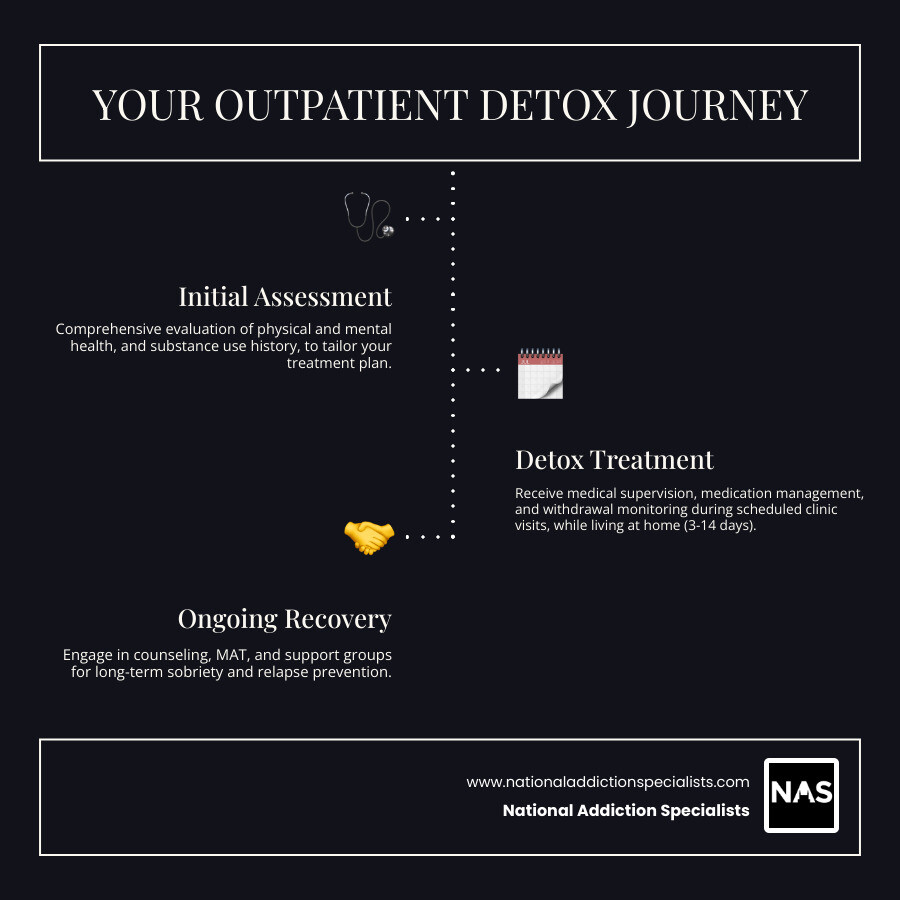
- Initial Evaluation: Your journey starts with a thorough assessment, including a physical health screening, a mental health evaluation for co-occurring conditions, and a detailed substance use history to predict withdrawal severity.
- Personalized Treatment Plan: Based on your assessment, our medical team creates a custom detox plan. This outlines your medications, appointment frequency, and supportive therapies.
- Regular Check-ins: You’ll attend scheduled appointments (often daily at first) for our team to monitor vital signs, assess withdrawal symptoms, and adjust medications. We also provide emotional support.
- Duration: The length of outpatient detox treatment varies by substance, dependence severity, and overall health, but generally lasts 3 to 14 days. For alcohol, one study showed an average of 6.5 days.
Medications Used to Manage Withdrawal
Medication is critical for making outpatient detox treatment safe and manageable. Known as Medication-Assisted Treatment (MAT), this approach alleviates withdrawal symptoms, reduces cravings, and prevents complications.
- For Alcohol Withdrawal: Under strict medical supervision, medications like benzodiazepines may be used to manage symptoms and prevent seizures. Other drugs, like clonidine, can help with symptoms like rapid heart rate.
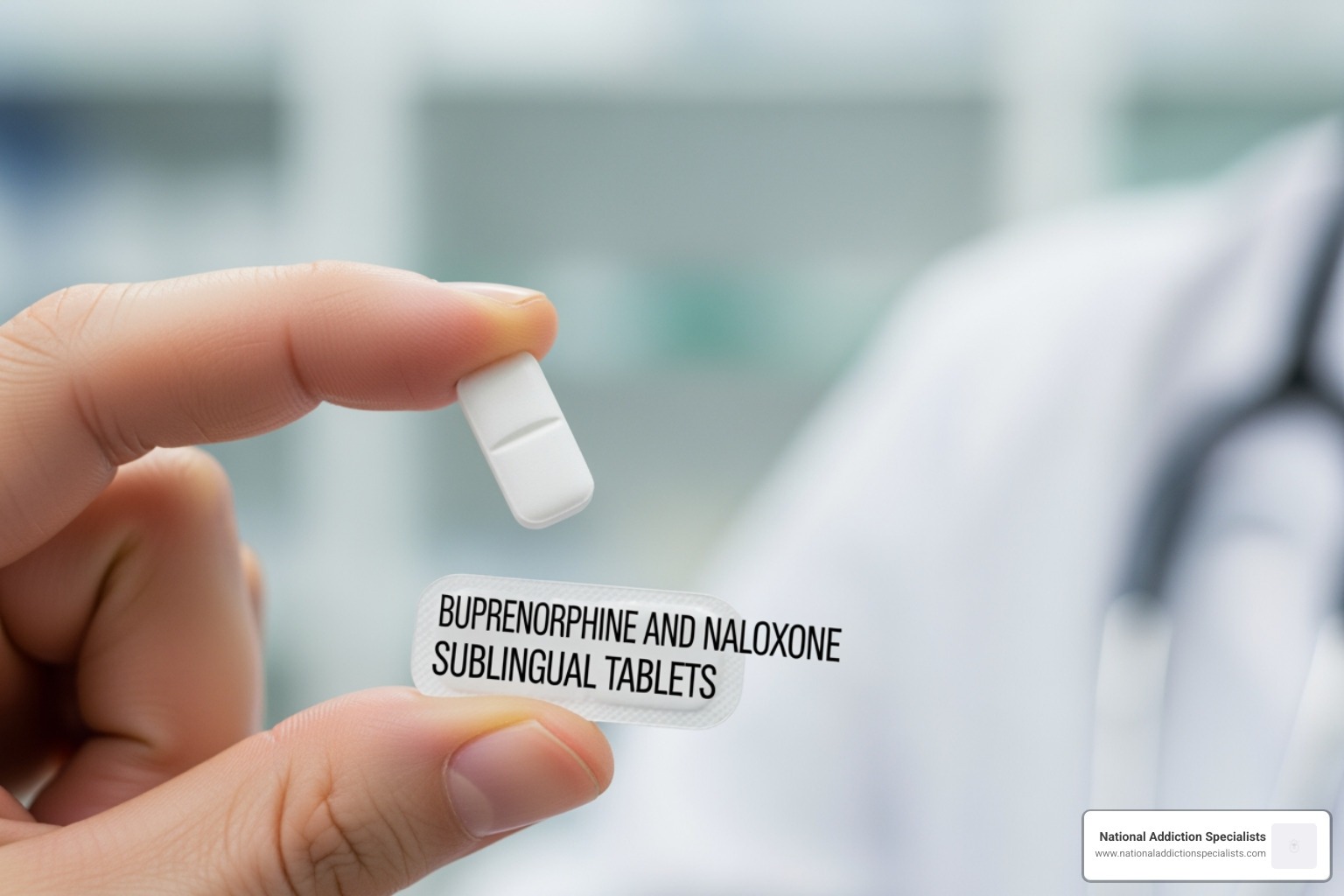
- For Opioid Withdrawal: Our specialists often use medications like Suboxone (buprenorphine/naloxone), buprenorphine, or naltrexone. These are cornerstones of MAT for opioid use disorder, significantly reducing withdrawal symptoms and cravings. Learn more about Suboxone for Opioid Addiction and get an overview of detoxification.
- Managing Specific Symptoms: We may also prescribe medications to address common issues like nausea, anxiety, or insomnia to ensure your comfort.
The Rise of Telehealth and At-Home Detox
Telehealth has become a powerful tool for outpatient detox treatment. At National Addiction Specialists, we use this innovation to provide convenient, confidential care to your home in Tennessee and Virginia.
Virtual consultations connect you with our expert medical team from the privacy of your home. This eliminates travel and waiting rooms, offering greater flexibility. Our Online Suboxone Doctors provide comprehensive care, from assessments to medication management, via secure video conferencing.
Our telemedicine model for outpatient detox treatment breaks down geographical barriers, increasing access to care. Whether you’re in rural Tennessee or a busy Virginia city, you receive the same high-quality, personalized care. This confidential approach lets you start recovery with discretion, knowing expert help is a click away.
Who is the Ideal Candidate for Outpatient Detox?

Deciding if outpatient detox treatment is right for you requires an honest assessment. We evaluate each person to ensure this path offers the best chance for a safe, successful detox.
Assessing Your Suitability
The ideal candidate for outpatient detox treatment typically meets these criteria:
- Mild-to-Moderate Withdrawal Symptoms: This is the most crucial factor. Outpatient detox is for those whose symptoms can be managed safely without 24/7 medical supervision.
- Strong Support System: Supportive family or friends who can monitor your well-being and provide encouragement are vital.
- Motivated and Committed: Personal commitment is paramount. You must be willing to follow medical instructions and attend all appointments.
- Stable Living Situation: A safe, substance-free, and stable home environment is essential for preventing relapse.
- Reliable Transportation: You must have a way to get to any required in-person appointments, though our telehealth model minimizes this need.
- No Severe Co-occurring Conditions: Individuals with severe, unmanaged medical or psychiatric issues are better suited for inpatient care. You can review ambulatory detoxification guidelines for more details.
When Inpatient Detox is the Safer Choice
While outpatient detox treatment is accessible, inpatient care is sometimes medically necessary for your safety.
- History of Severe Withdrawal: If you’ve previously had severe complications like seizures or delirium tremens (DTs), inpatient care is crucial, as these can be life-threatening.
- High-Risk Substance Dependence: Withdrawal from alcohol and benzodiazepines carries a higher risk of severe complications. Significant dependence often requires 24/7 inpatient supervision.
- Unstable Home Environment: If your home is not safe, supportive, or is a source of triggers, an inpatient setting provides necessary structure and protection.
- Severe Co-occurring Mental Health Issues: Unmanaged conditions like active suicidal ideation require the intensive, integrated care of an inpatient facility.
- Polysubstance Use: Dependence on multiple substances can create a complex withdrawal process that is more safely managed in an inpatient setting.
Your safety is our priority. We conduct thorough assessments to determine the safest level of care for you.
Key Considerations for Choosing Outpatient Detox Treatment
When considering outpatient detox treatment, think about these key points:
- Severity of Addiction: Longer and heavier use often means more intense withdrawal, which may point toward inpatient care.
- Type of Substance Used: Withdrawal from alcohol and benzodiazepines can be dangerous. Opioid withdrawal, while very uncomfortable, is rarely life-threatening but still requires medical support.
- Personal Responsibilities: If maintaining your daily life is a priority and your symptoms are manageable, outpatient detox is an invaluable solution for our patients in Tennessee and Virginia.
- Insurance and Pricing: Cost is a significant factor. Outpatient detox is more affordable, and we work with insurers like Medicaid and Medicare to make treatment accessible.
- Your Health Status: A full medical and psychological assessment will determine if any underlying conditions necessitate a higher level of care for a safe outpatient detox treatment.
Life After Detox: The Journey to Lasting Recovery
Detox is only the first step. While outpatient detox treatment clears substances from your body, it doesn’t address the root causes of addiction. Lasting recovery involves developing healthy coping skills and building a sober life through ongoing effort, a strong support system, and relapse prevention.
Transitioning to Long-Term Treatment
After completing outpatient detox treatment, transitioning to long-term treatment is crucial. Research shows that detox alone has a limited impact on long-term outcomes without follow-up therapeutic care.
Our approach integrates ongoing support:
- Outpatient Rehab Options: These programs offer structured therapy while you live at home, ranging from intensive outpatient programs (IOPs) to less frequent counseling.
- Addiction Counseling Services: Individual and group therapy are cornerstones of recovery. Approaches like Cognitive Behavioral Therapy (CBT) and Dialectical Behavior Therapy (DBT) help you change negative thought patterns and regulate emotions.
- Support Groups: Peer-led groups like Alcoholics Anonymous (AA), Narcotics Anonymous (NA), or SMART Recovery provide community, shared experience, and encouragement.
Here’s a list of post-detox support options we often recommend:
- Individual therapy with a licensed addiction counselor.
- Group therapy sessions for shared experiences and peer support.
- Family counseling to heal relationships and build a supportive home environment.
- Intensive Outpatient Programs (IOP) for structured, regular treatment.
- Medication-Assisted Treatment (MAT) for ongoing craving management and relapse prevention.
- 12-Step programs (AA, NA) or alternative support groups (SMART Recovery).
- Developing healthy hobbies, stress management techniques, and a strong sober network.
The Role of Medication-Assisted Treatment in Recovery
Medication-Assisted Treatment (MAT) is vital for long-term recovery, not just detox, especially for opioid and alcohol use disorders. After outpatient detox treatment, MAT continues to help manage cravings and prevent relapse.
Addiction is a chronic illness that benefits from ongoing medical management. Our MAT programs use medications like Suboxone, buprenorphine, and naltrexone to:
- Manage Cravings: These medications normalize brain chemistry, reducing the intense cravings that often lead to relapse.
- Support Counseling: By stabilizing your physical state, MAT allows you to fully engage in therapy and address the psychological aspects of addiction.
- Reduce Relapse Risk: Studies show that MAT combined with counseling dramatically lowers relapse risk and improves long-term outcomes. Explore the benefits of Medication Assisted Treatment.
Our team at National Addiction Specialists provides comprehensive MAT services integrated with counseling to support your recovery in Tennessee and Virginia.
Make an Appointment to Treat Addiction
Please don’t hesitate. Make an appointment today.
Frequently Asked Questions about Outpatient Detox Treatment
How long does outpatient detox usually last?
The duration of outpatient detox treatment varies but typically ranges from 3 to 14 days. One study found the average for outpatients was 6.5 days. Your personalized treatment plan will outline your specific timeline.
Is outpatient detox as effective as inpatient detox?
For individuals with mild-to-moderate withdrawal symptoms, research shows outpatient detox treatment can be as safe and effective as inpatient care. Long-term success depends more on patient commitment and follow-up treatment than the detox setting. Studies show similar 6-month abstinence rates for both inpatient and outpatient detox.
Can I get Suboxone through an outpatient detox program?
Yes, many outpatient programs, including ours, offer Medication Assisted Treatment for Opioid Addiction with medications like Suboxone. We provide this care via Telehealth Suboxone Treatment. Our online doctors can prescribe and manage your treatment from your home in Tennessee or Virginia, making access convenient and discreet.
Take the First Step Towards a Healthier Future
Deciding to seek help is the most challenging and impactful step. We understand the courage it takes and are here to support you. For many with mild-to-moderate symptoms and a supportive home, outpatient detox treatment is a flexible, effective, and discreet path to begin recovery.
Recovery is a journey, and detox is just the starting point. With the right medical supervision, personalized care, and a commitment to ongoing treatment, a healthier, substance-free future is within reach. We are dedicated to providing that support with compassion and expertise. Explore your treatment options today and let us help you find your path to lasting recovery.
This article was medically reviewed by:
Chad Elkin, MD, DFASAM is a board-certified addiction medicine physician, founder, and Chief Medical Officer of National Addiction Specialists, dedicated to treating substance use disorders. A Distinguished Fellow of the American Society of Addiction Medicine (ASAM), Dr Elkin currently serves as President of the Tennessee Society of Addiction Medicine (TNSAM) and has held various leadership roles within the organization. Dr Elkin chairs ASAM’s Health Technology Subcommittee and is an active member of its Practice Management and Regulatory Affairs Committee, State Advocacy and Legislative Affairs Committee, and other committees. He also serves on the planning committee for the Vanderbilt Mid-South Addiction Conference. Committed to advancing evidence-based policy, Dr Elkin is Chairman of the Tennessee Association of Alcohol, Drug, & Other Addiction Services (TAADAS) Addiction Medicine Council, which collaborates with the TN Department of Mental Health & Substance Abuse Services (TDMHSAS). He has contributed to numerous local, state, and national task forces, helping develop professional guidelines, policies, and laws that align with best practices in addiction medicine. His work focuses on reducing addiction-related harm, combating stigma, and ensuring access to effective treatment.Passionate about the field of addiction medicine, he remains dedicated to shaping policy and enhancing patient care.
Suboxone® and Subutex® are a registered trademark of Indivior UK Limited. Any mention and reference of Suboxone® and Subutex® in this website is for informational purposes only and is not an endorsement or sponsorship by Indivior UK Limited.