Everything You Need to Know About Medically Supervised Withdrawal
Why Medication Assisted Detox Is Critical for Safe Recovery

Medication assisted detox uses FDA-approved medications combined with medical supervision to help your body safely withdraw from drugs or alcohol. Unlike stopping “cold turkey,” this approach manages dangerous symptoms, prevents life-threatening complications, and gives you the best chance at successful recovery.
Quick Overview: What You Need to Know
- What it is: Medical supervision + medications to manage withdrawal symptoms safely
- Why it matters: Prevents seizures, delirium tremens, and other fatal complications
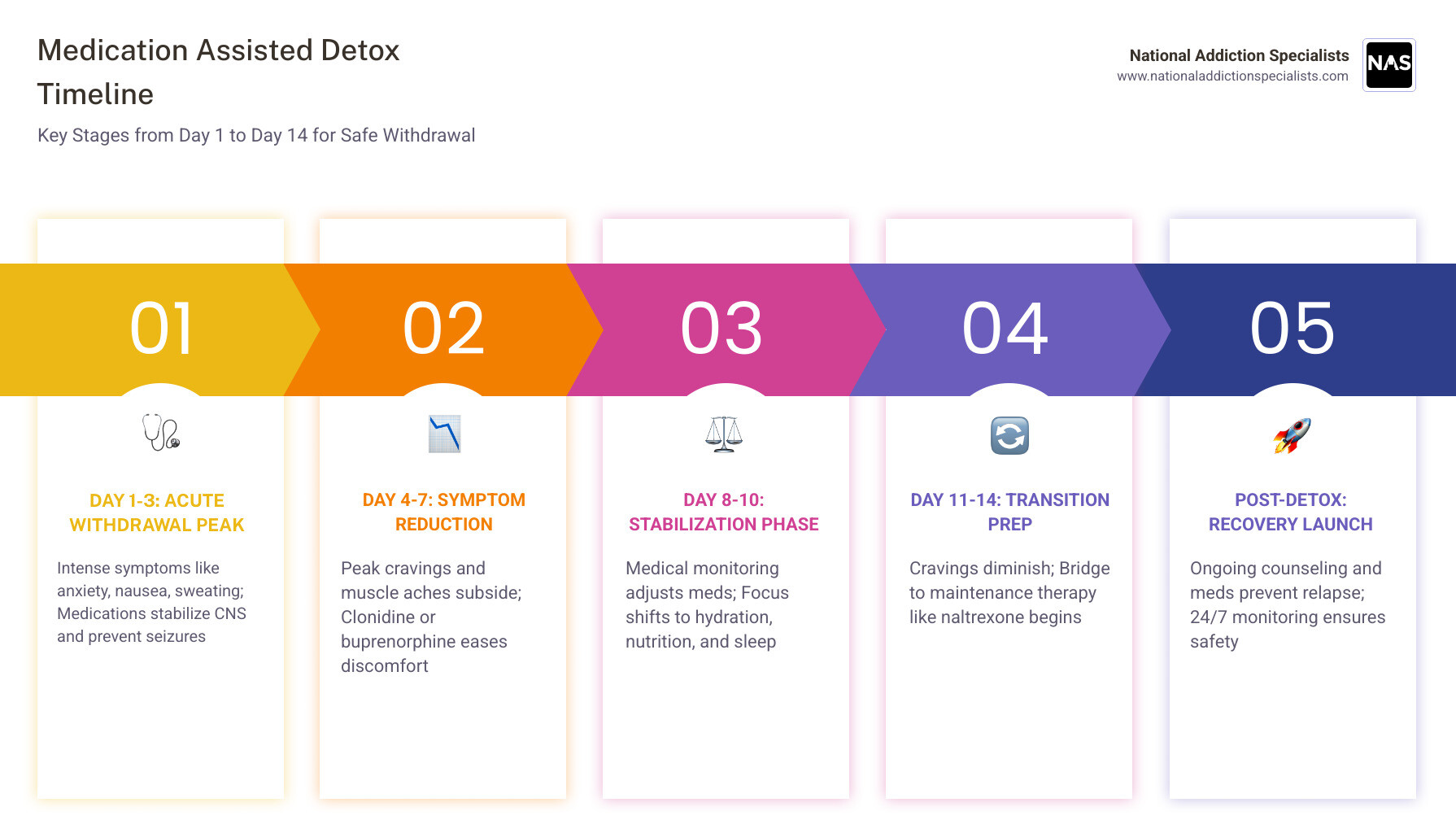
- How long: Typically 3-14 days depending on the substance and severity
- Where: Available in inpatient hospitals, residential facilities, or outpatient/telemedicine settings
- Next steps: Should transition immediately to ongoing treatment like counseling and maintenance medication
Understanding the Detox Process
When you’re physically dependent on alcohol or drugs, your brain chemistry has adapted to the substance. Stopping suddenly causes your central nervous system to go into overdrive.
Withdrawal symptoms vary by substance but can include anxiety, sweating, nausea, muscle aches, and in severe cases—seizures or hallucinations.
Without medical support, alcohol withdrawal can be fatal. Opioid withdrawal, while less medically dangerous, causes such intense discomfort that most people relapse within hours or days.
This is where medication assisted detox becomes essential. Medical providers use specific medications to calm your nervous system, reduce cravings, and prevent dangerous complications. You’re monitored 24/7 to adjust treatment as needed.
The goal isn’t just getting through withdrawal. It’s preparing you for long-term recovery with medications like buprenorphine or naltrexone, combined with counseling and support.
As Dr. Chad Elkin, board-certified addiction medicine physician and founder of National Addiction Specialists, I’ve guided hundreds of patients through medication assisted detox using evidence-based protocols. My work focuses on making safe, effective withdrawal management accessible through both in-person and telemedicine options.
Learn more about Medication assisted detox:
Understanding Medication Assisted Detox and Its Benefits
When we talk about Medication assisted detox, we are describing a pharmacological strategy designed to bridge the gap between active addiction and stable recovery. For many, the fear of withdrawal is the biggest hurdle to getting help. We want you to know that you don’t have to white-knuckle your way through this.
The primary Benefits of Medication Assisted Treatment during the detox phase include significant symptom relief and the stabilization of brain chemistry. When a person uses substances chronically, the brain stops producing certain chemicals naturally, relying instead on the external substance. When that substance is removed, the brain sends out distress signals—these are the withdrawal symptoms you feel.
Medication assisted detox allows for a gradual, safer withdrawal from drugs or alcohol by using medications that mimic some of the substance’s effects without the “high,” or that block the negative physical reactions of the central nervous system. This medical monitoring ensures that your heart rate, blood pressure, and hydration levels stay within safe limits. By managing the physical pain and intense cravings, we significantly lower the risk of early relapse, which is most common in the first few days of sobriety.
Managing Withdrawal Symptoms Across Different Substances
Withdrawal isn’t a “one size fits all” experience. The symptoms you face depend heavily on what you were using, how much, and for how long. At National Addiction Specialists, we tailor our approach to these specific challenges.

Alcohol and Sedative-Hypnotics
Withdrawal from alcohol and benzodiazepines (like Xanax or Valium) is uniquely dangerous. Because these substances suppress the central nervous system, stopping them causes a “rebound” effect where the brain becomes over-excited. This can lead to:
- Seizure risk: About 2-3% of people in alcohol withdrawal will experience a seizure.
- Delirium Tremens (DTs): A severe form of withdrawal involving hallucinations, high blood pressure, and fever.
- Dehydration: Caused by vomiting, sweating, and electrolyte imbalances.
Opioids
While Opioid Withdrawal is rarely fatal on its own, it is incredibly painful. Many describe it as the “worst flu of your life,” featuring:
- Intense muscle aches and bone pain
- Nausea, vomiting, and diarrhea
- Severe anxiety and insomnia
- “Gooseflesh” and cold sweats
Stimulants
Stimulants like meth, cocaine, or Adderall primarily cause psychological withdrawal. While you might not face the same seizure risk as alcohol, the Withdrawal Symptoms include:
- Intense, overwhelming cravings
- Severe depression or suicidal thoughts
- Extreme fatigue and “crashing”
Comparison Table: Withdrawal Expectations
| Substance | Common Symptoms | Peak Intensity | Typical Duration |
|---|---|---|---|
| Alcohol | Shaking, anxiety, sweating, seizures | 48–72 hours | 5–7 days |
| Opioids | Body aches, nausea, insomnia | 24–72 hours | 4–10 days |
| Benzos | Panic attacks, tremors, seizures | Week 1 or 2 | Weeks to Months (Taper) |
| Stimulants | Depression, fatigue, cravings | 2–4 days | 1–2 weeks |
Medication Assisted Detox for Alcohol and Sedatives
For alcohol and sedative withdrawal, the gold standard involves using benzodiazepines like Diazepam (Valium) or Chlordiazepoxide (Librium). It might seem strange to use one sedative to treat another, but these medications are long-acting, allowing us to slowly lower the dose and prevent the brain from “misfiring.”
We often use the CIWA-Ar scale (Clinical Institute Withdrawal Assessment for Alcohol) to measure the severity of symptoms. If your score is high, we increase the medication; if it’s low, we taper off. This prevents complications like Delirium tremens and seizures.
We also focus on the “kindling hypothesis.” This theory suggests that every time a person goes through withdrawal and relapses, the next withdrawal will be more severe and dangerous. This is why professional help is so important—we want to break that cycle safely. We also provide thiamine and multivitamins to prevent neurological damage common in long-term alcohol use.
Medication Assisted Detox for Opioid Use Disorder
Opioid addiction has reached epidemic levels in Tennessee and Virginia, leading to thousands of deaths each year. To combat this, we use medications that stabilize the brain’s opioid receptors.
Buprenorphine (the active ingredient in Suboxone) is a game-changer. It is a partial opioid agonist, meaning it satisfies the brain’s craving and stops withdrawal without causing the dangerous respiratory depression or intense euphoria of heroin or fentanyl. Because of the Buprenorphine training and certification required for providers, it is a highly regulated and safe way to manage addiction.
How Suboxone Treatment Works involves an “induction” phase where we help you transition from the illicit drug to the medication. We may also use Clonidine (off-label) to help with high blood pressure and anxiety, or Naltrexone later in the process to block opioid receptors entirely. This comprehensive approach significantly reduces the overdose risk that occurs when someone finishes detox and has a lowered tolerance.
Make an Appointment to Treat Addiction Please don’t hesitate. Make an appointment today. https://www.nationaladdictionspecialists.com/new-patient-packet/
Clinical Assessments and Biochemical Markers in Detox
We don’t just guess how your recovery is going; we use science to guide us. How Medication Assisted Treatment Works effectively is through constant assessment.
When you begin treatment, we may look at specific biochemical markers. For example, in alcohol cases, we look at GGT (gamma-glutamyl transferase) and CDT (carbohydrate-deficient transferrin). While the sensitivity of the GGT test alone is about 60-70%, when we combine CDT and GGT, the specificity rises to more than 90% for detecting recent heavy alcohol use.
We also use:
- BAC (Blood Alcohol Concentration): To determine current intoxication levels and elimination rates (usually 10-30mg% per hour).
- Urine drug screens: To understand what substances are in your system so we can avoid dangerous drug interactions.
- Psychosocial screening: To see if you have underlying depression, anxiety, or trauma that needs to be addressed alongside the physical detox.
This medical surveillance ensures that every dose of medication we provide is exactly what your body needs at that moment.
Choosing Between Inpatient and Outpatient Detoxification
One of the most common questions we get is: “Do I have to go to a hospital?” The answer depends on your medical history and the substance involved.
Inpatient Medical Hospitalization
This is recommended for high-risk patients, such as those with a history of seizures, DTs, or severe co-occurring medical conditions. It provides 24/7 nursing care and immediate access to emergency services.
Social Detoxification
This is a non-medical model that relies on peer support and a sober environment. While helpful for some, it lacks the pharmacological tools to manage severe withdrawal, making it less ideal for opioid or heavy alcohol dependence.
Telemedicine and Outpatient Options
At National Addiction Specialists, we specialize in Medication-Assisted Treatment Online. For many people struggling with opioid use disorder in Tennessee and Virginia, a telemedicine-based Suboxone program offers the perfect balance of medical safety and personal convenience.
You can receive expert care, prescriptions, and counseling from the privacy of your own home in Brentwood, Nashville, or Virginia Beach. This “continuum of care” model ensures you aren’t just “detoxed” and left alone; you are transitioned into a long-term maintenance program.
Insurance and Access Many patients worry about cost, but there is good news. Does Medicare Cover Medication Assisted Treatment? Yes, and we also accept Medicaid, making high-quality care accessible to more people in our communities.
Frequently Asked Questions about Medically Supervised Withdrawal
How long does the detox process typically take?
The detox duration usually ranges from 3 to 14 days. However, this is highly individual. Factors include the type of substance, the severity of use, and your personal metabolism. For example, someone using short-acting opioids might peak in 3 days, while From Start to Finish Understanding the Suboxone Withdrawal Timeline shows that a managed taper can take longer to ensure comfort and stability.
Is detox alone enough for long-term recovery?
Statistically, no. More than 90% of people who complete a standalone detox for opioids return to use within months. Detox is only the “clearing of the porch.” To rebuild the house, you need a Medication Assisted Treatment Program that includes ongoing maintenance therapy and counseling to address the root causes of addiction.
What are the risks of detoxing “cold turkey”?
Detoxing “cold turkey” from alcohol or benzodiazepines can lead to fatal complications like status epilepticus (continuous seizures) or cardiac arrest. For opioids, the risk is less about immediate death from withdrawal and more about the intense cravings and “brain rewiring” that lead to a high-dose relapse, which often results in a fatal overdose. Medical supervision provides the safety protocols necessary to prevent these tragedies.
Conclusion
At National Addiction Specialists, we believe that recovery should be accessible, respectful, and safe. Whether you are in Tennessee or Virginia, our personalized recovery plans and telemedicine Suboxone services are designed to meet you where you are.
Medication assisted detox is the first step in a life-changing journey. By choosing a Medication Assisted Treatment Program, you aren’t just stopping a drug; you are starting a new life with a team of experts behind you.
Make an Appointment to Treat Addiction
Please don’t hesitate. Make an appointment today.
https://www.nationaladdictionspecialists.com/new-patient-packet/
This article was medically reviewed by:
Chad Elkin, MD, DFASAM is a board-certified addiction medicine physician, founder, and Chief Medical Officer of National Addiction Specialists, dedicated to treating substance use disorders. A Distinguished Fellow of the American Society of Addiction Medicine (ASAM), Dr Elkin currently serves as President of the Tennessee Society of Addiction Medicine (TNSAM) and has held various leadership roles within the organization. Dr Elkin chairs ASAM’s Health Technology Subcommittee and is an active member of its Practice Management and Regulatory Affairs Committee, State Advocacy and Legislative Affairs Committee, and other committees. He also serves on the planning committee for the Vanderbilt Mid-South Addiction Conference. Committed to advancing evidence-based policy, Dr Elkin is Chairman of the Tennessee Association of Alcohol, Drug, & Other Addiction Services (TAADAS) Addiction Medicine Council, which collaborates with the TN Department of Mental Health & Substance Abuse Services (TDMHSAS). He has contributed to numerous local, state, and national task forces, helping develop professional guidelines, policies, and laws that align with best practices in addiction medicine. His work focuses on reducing addiction-related harm, combating stigma, and ensuring access to effective treatment. Passionate about the field of addiction medicine, he remains dedicated to shaping policy and enhancing patient care.
Suboxone® and Subutex® are a registered trademark of Indivior UK Limited. Any mention and reference of Suboxone® and Subutex® in this website is for informational purposes only and is not an endorsement or sponsorship by Indivior UK Limited.