Don’t Break the Bank: Finding Financial Help for Your Suboxone Prescription
The Path to Recovery Shouldn’t Be Blocked by Cost
Suboxone assistance program options can help you afford the medication you need to treat opioid addiction. Here’s how to access financial help:
Quick Guide to Suboxone Assistance Programs:
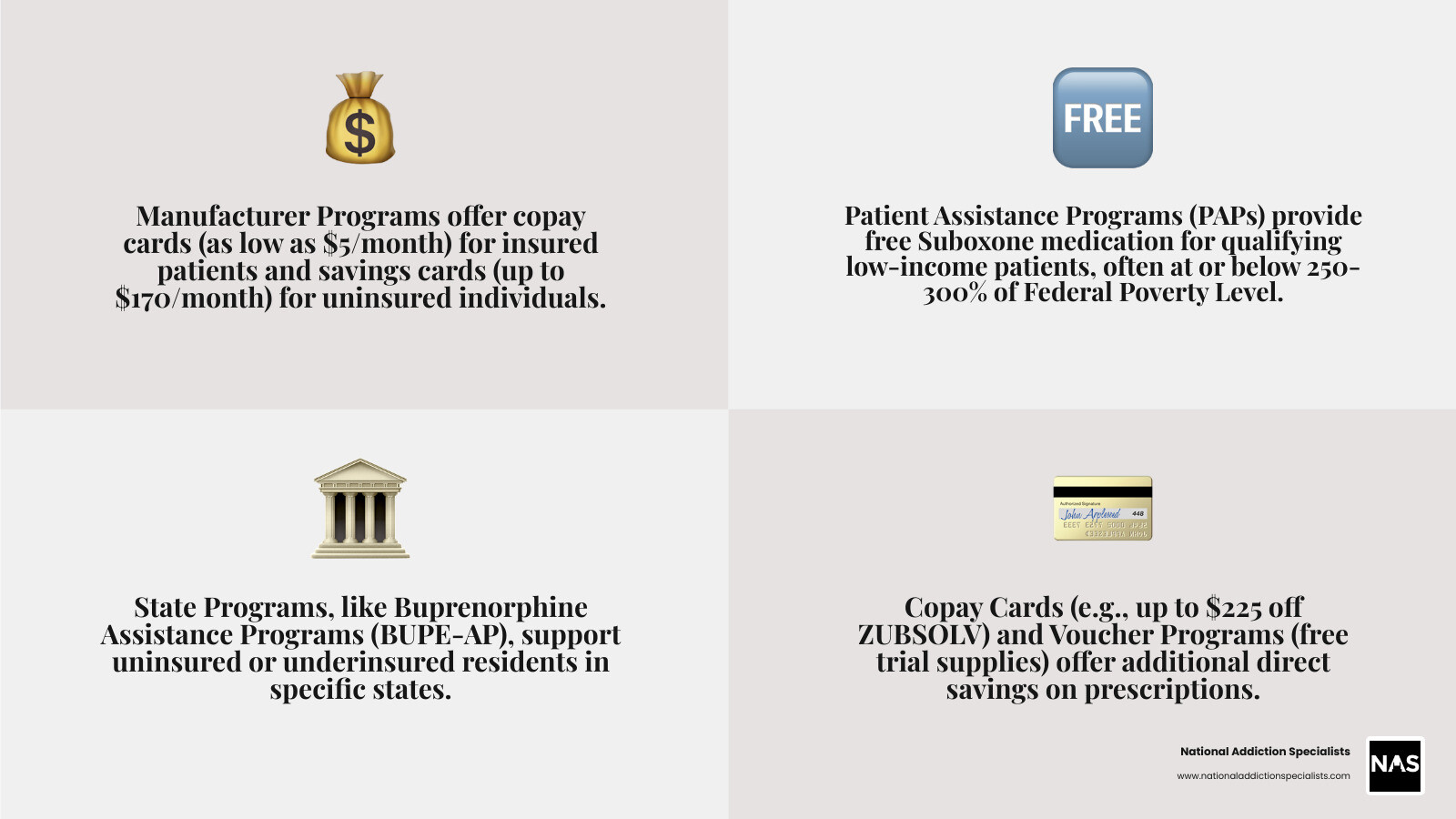
- Manufacturer Programs – INSUPPORT® offers copay cards (pay as low as $5/month with insurance) or savings cards (save up to $170/month without insurance)
- Patient Assistance Programs (PAPs) – Free medication for qualifying low-income patients (usually at or below 250-300% of Federal Poverty Level)
- State Programs – Buprenorphine Assistance Programs (BUPE-AP) in some states for uninsured/underinsured residents
- Copay Cards – ZUBSOLV (up to $225 off per prescription), Bunavail (first prescription free)
- Voucher Programs – Free trial supplies (up to 30 tablets with some programs)
The cost of Suboxone shouldn’t stand between you and recovery. Many people spend hundreds or even thousands of dollars each month on their addiction. Now that same barrier appears when seeking treatment—with Suboxone prescriptions sometimes costing over $500 monthly without assistance.
But here’s the good news: help exists.
Pharmaceutical manufacturers, state programs, and patient assistance initiatives have created multiple pathways to make this life-saving medication affordable or even free. Whether you have insurance, no insurance, or coverage that doesn’t adequately pay for Suboxone, programs are available specifically designed for your situation.
I’m Dr. Chad Elkin, a board-certified addiction medicine physician and founder of National Addiction Specialists, where I’ve helped hundreds of patients steer Suboxone assistance program options to access affordable treatment. My team and I work daily to eliminate financial barriers that prevent people from getting the medication-assisted treatment they need.
This guide will walk you through every option available—from manufacturer copay cards to state-funded programs—and show you exactly how to qualify and apply.
Understanding Suboxone and Its Role in Treatment
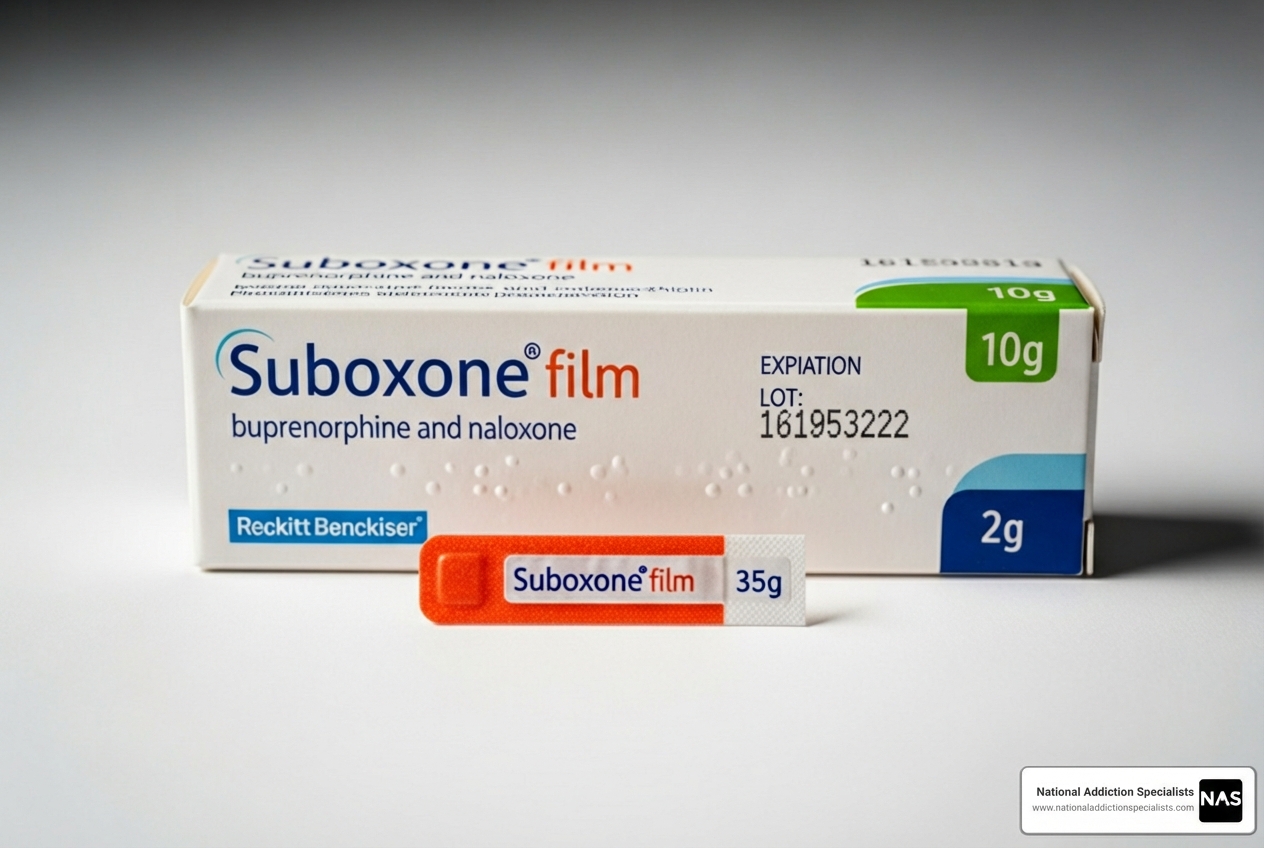
Before we dive into how to pay for it, let’s make sure we’re all on the same page about what Suboxone is and why it’s so vital for recovery. Suboxone is a prescription medication that combines two active ingredients: buprenorphine and naloxone.
Buprenorphine is a partial opioid agonist. This means it activates opioid receptors in the brain, but only partially. It helps to reduce opioid cravings and minimize withdrawal symptoms without producing the same euphoric “high” as full opioid agonists like heroin or prescription painkillers. Think of it as a gentle hug for your opioid receptors—enough to feel satisfied but not enough to get high.
Naloxone, on the other hand, is an opioid antagonist. It blocks opioid receptors. When Suboxone is taken as prescribed (usually dissolved under the tongue), very little naloxone is absorbed into the body, allowing the buprenorphine to do its job. However, if someone tries to inject or snort Suboxone, the naloxone becomes active, blocking the opioid effects and potentially causing uncomfortable withdrawal symptoms. This “built-in safety feature” helps deter misuse.
Together, buprenorphine and naloxone in Suboxone are incredibly effective at managing opioid dependence. They help stabilize individuals, reduce the constant preoccupation with obtaining and using opioids, and free up mental space to focus on recovery. It’s a cornerstone of Medication-Assisted Treatment (MAT), a holistic approach that combines medication with counseling and behavioral therapy. We believe in comprehensive care, and that means supporting you not just with medication, but with the tools and strategies for long-term recovery. You can learn more about What is Suboxone? and explore How Suboxone Treatment Works in more detail on our site.
Types of Financial Aid: From Manufacturer Programs to State Assistance
Navigating the financial landscape of Suboxone treatment can feel like a maze, but don’t worry, we’re here to guide you. There are several avenues for financial assistance, each with its own criteria and benefits.
Manufacturer Programs: The INSUPPORT® Program and Others
Many pharmaceutical companies that produce buprenorphine-based medications offer their own patient assistance programs. These are often the first stop for many of our patients in Tennessee and Virginia, and they can provide significant savings.
- INSUPPORT® Copay Assistance Program for SUBOXONE Film: For eligible patients with private insurance, this program can reduce your monthly out-of-pocket costs to as little as $5. We’ve seen 95% of enrolled patients with private insurance pay $0 for SUBLOCADE through a similar program, so these savings are very real. If you’re a new patient with insurance, you might even get two fills in your first month with savings up to $75.
- INSUPPORT® Savings Card for SUBOXONE Film: If you don’t have insurance, or choose not to use it, this card can still be a lifesaver, potentially saving you up to or more than $170 each month for SUBOXONE Film. For example, it offers up to $0.96 off per 2 mg Film (up to $86/month) and up to $1.92 off per 4 mg and 8 mg Film (up to $173/month).
- Zubsolv Patient Assistance Program: For those prescribed Zubsolv, this program offers up to 30 FREE TABLETS, with patients able to redeem up to two vouchers per lifetime. There’s also the Zubsolv Copay Card, which can help eligible patients (whether paying cash or using insurance) pay as little as $10, covering up to $225 off each prescription.
- Bunavail™ Buccal Film: Historically, programs like this have offered the first prescription for free, with subsequent savings of up to $100 off out-of-pocket costs.
These manufacturer programs are typically for U.S. residents and require you to meet specific eligibility criteria, often related to income and insurance status (e.g., no government insurance like Medicare or Medicaid for some copay programs).
Patient Assistance Programs (PAPs)
Beyond brand-specific programs, broader PAPs exist, often run by non-profit organizations or directly by manufacturers. These programs are generally designed for low-income patients who cannot afford their medication. They can offer free medication for up to a year. A common eligibility requirement is an income at or below 250% or 300% of the Federal Poverty Level (FPL).
State-Level Programs: Examples of Buprenorphine Assistance Programs
While we focus on serving patients in Tennessee and Virginia, it’s helpful to understand that some states offer their own buprenorphine assistance programs. For instance, programs like the Buprenorphine Assistance Program (BUPE-AP) in New York or the Buprenorphine Drug Assistance Program (BUP-DAP) in Washington D.C. are designed to cover the cost of buprenorphine for people who don’t have enough insurance, or any at all. These programs often target uninsured or underinsured individuals while they await enrollment in Medicaid or other insurance plans.
If you’re in Tennessee or Virginia and struggling with costs, we encourage you to check with your state’s Department of Health or Behavioral Health Services for similar programs that might be available to you. Every state’s offerings can vary, so it’s always best to check local resources.
| Program Type | Eligibility (General) | Coverage | Best For |
|---|---|---|---|
| Manufacturer Copay Cards | Private insurance, no government insurance | Significant reduction in copay, often $5-$10/month | Insured patients with high copays |
| Manufacturer Savings Cards | No insurance, or choosing not to use insurance | Monthly savings off cash price | Uninsured or cash-paying patients |
| Patient Assistance Programs (PAPs) | Low income (e.g., <250-300% FPL), no or inadequate insurance | Free medication for a period (e.g., up to a year) | Low-income, uninsured/underinsured patients |
| State-Funded Programs (e.g., BUP-DAP) | Uninsured/underinsured residents (state-specific) | Medication costs | Uninsured/underinsured residents in specific states |
| Voucher Programs | Often for new patients, some restrictions apply | Free trial supply of medication | Patients starting a new buprenorphine product |
We understand that navigating insurance and pricing can be complex. You can find more information about Does Insurance Cover Suboxone Treatment? on our website.
Where to Search for Programs:
- Manufacturer Websites: Always check the official websites for Suboxone, Zubsolv, and other buprenorphine products. Look for sections like “Patient Savings,” “Patient Support,” or “Assistance Programs.”
- NeedyMeds.org: This is a fantastic resource that compiles information on patient assistance programs for various medications, including Suboxone.
- SAMHSA’s Buprenorphine Treatment Locator: While primarily for finding providers, SAMHSA (Substance Abuse and Mental Health Services Administration) can also be a good starting point for general information on treatment access.
- Your State’s Department of Health/Behavioral Health: As mentioned, check for state-specific programs in Tennessee and Virginia.
How to Qualify and Apply for a Suboxone Assistance Program
Applying for a Suboxone assistance program might seem daunting, but with the right information and a little help from your healthcare provider, it’s completely manageable. We’ll walk you through the typical steps and requirements.
Eligibility Criteria:
While specific criteria can vary between programs, here are the common factors that determine your eligibility:
- Income Level: Most programs have income thresholds, often expressed as a percentage of the Federal Poverty Level (FPL). For example, the Suboxone Patient Assistance Program requires income at or below 250% of the FPL, while the Zubsolv program might allow up to 300% FPL. This ensures that assistance goes to those who need it most.
- Insurance Status: Many programs specifically target individuals who are uninsured or underinsured. Some manufacturer copay programs are designed for those with private insurance but explicitly exclude patients with government insurance like Medicare or Medicaid. However, other PAPs might accept Medicare Part D patients if the medication isn’t covered by their plan. We proudly accept Medicaid for Suboxone treatment, and you can learn more about Medicaid Suboxone Treatment with us.
- US Residency: Generally, these programs require applicants to be U.S. residents.
- Medical Diagnosis: You must have a medical diagnosis of opioid dependence (Opioid Use Disorder) and a valid prescription for Suboxone or another buprenorphine-naloxone product from a licensed healthcare provider.
- Geographic Restrictions: While many manufacturer programs are nationwide, some state-specific programs (like the BUP-DAP in D.C. or BUPE-AP in NY) are limited to residents of those particular states. For patients in Tennessee and Virginia, you’ll want to focus on programs that serve your state or are broadly available across the U.S.
Application Process and Required Documentation:
The application process typically involves a few key steps and documents:
- Obtain an Enrollment Form: You or your doctor’s office might need to call the program directly or download the form from their website.
- Patient Section: You’ll need to fill out your personal information, contact details, and sign any necessary authorizations for the use and disclosure of your health information. Signing these authorizations is usually required to participate in the program but not to receive treatment.
- Proof of Income: This is crucial. You’ll typically need to attach documentation like pay stubs, W-2 forms, tax returns, or other financial statements to verify your income level against the program’s FPL requirements.
- Prescription Copy: A copy of your valid prescription for Suboxone or the specific buprenorphine product is often required.
- Photo ID: A copy of a valid government-issued photo ID (like a driver’s license) might be needed to confirm your identity and residency.
The Healthcare Provider’s Critical Role
Your healthcare provider plays an absolutely critical role in the application process for a Suboxone assistance program. They’re not just there to prescribe your medication; they’re your partner in navigating the system.
Here’s how your provider helps:
- Medical Diagnosis and Prescription: First and foremost, your provider confirms your medical diagnosis of opioid dependence and provides the necessary prescription for Suboxone. This is the foundation of your application.
- Filling Out Forms: Many application forms have a section specifically for the doctor to complete. This includes information about your medical condition, the prescribed medication, and the doctor’s credentials. They will need to provide their DEA (Drug Enforcement Administration) and NPI (National Provider Identifier) numbers, which are standard for prescribing controlled substances.
- Patient Advocacy: A good provider understands the financial challenges many patients face and acts as an advocate. They can help you identify suitable programs, ensure the application is filled out correctly, and sometimes even submit it on your behalf. At National Addiction Specialists, our Telehealth Suboxone Doctors are experienced in this process and committed to helping our patients in Tennessee and Virginia access affordable care.
Don’t hesitate to discuss your financial concerns with your provider. They are there to support your recovery journey in every way possible.
Make an Appointment to Treat Addiction
Please don’t hesitate. Make an appointment today.
Finding a Specific Suboxone Assistance Program
Once you understand the general requirements, it’s time to identify and contact specific programs.
- Manufacturer Programs: For SUBOXONE Film, you can visit suboxone.com and look for their patient savings section. For Zubsolv, check zubsolv.com. These sites often have direct links to print copay or savings cards.
- RxAssist: This is a comprehensive database. For Zubsolv, you can find program details via RxAssist – OREXO US, INC..
- NeedyMeds: As mentioned earlier, NeedyMeds.org is an excellent resource for finding various patient assistance programs.
- Phone Numbers:
- For the Suboxone Patient Assistance Program, you might need to call for an enrollment form. Specific numbers can often be found on the manufacturer’s website or through resources like NeedyMeds.
- For Zubsolv copay card eligibility, call 1-877-264-2440.
- For questions about INSUPPORT® (for SUBLOCADE), you can call 1-844-INSPPRT.
Patient vs. Provider Enrollment: Some programs allow patients to initiate the application, especially for copay cards. For full patient assistance programs, your provider will almost always need to be involved in completing and submitting a portion of the application.

What to Expect After Your Application is Approved
Hooray! Your application for a Suboxone assistance program has been approved. Now, let’s look at what happens next to get your medication and maintain your access.
Medication Supply and How It’s Obtained:
- Typical Supply: Most Suboxone assistance program options, like the Suboxone Patient Assistance Program, provide up to a 30-day supply of medication. This ensures you have a consistent amount to support your recovery without frequent refills. For Zubsolv, you might receive up to 30 free tablets via vouchers.
- Pharmacy Card: If you’re approved for a copay or savings card, you’ll typically receive a physical or digital pharmacy card. You’ll present this card to your pharmacist along with your valid prescription. The discount is then applied at the point of sale.
- Retail Pharmacy Pickup: For most copay and savings cards, you will pick up your medication at a participating retail pharmacy. Always check if your preferred pharmacy accepts the specific program’s card.
- Direct Shipment: Some patient assistance programs, particularly those offering free medication, might ship the medication directly to you. For example, the Zubsolv Patient Assistance Program ships a 30-day supply directly to the patient, with delivery typically within 0-1 week. This can be a huge convenience, especially if transportation is an issue.
Program Duration and Re-application Process:
Assistance programs are not usually indefinite.
- Program Duration: The length of assistance varies. Some manufacturer PAPs might provide free medication for up to a year. Copay and savings cards typically have expiration dates and are often renewed annually.
- Re-application: It’s common to need to re-apply periodically. For instance, the Zubsolv Patient Assistance Program requires a new application every 6 months. This ensures that your eligibility (income, insurance status) is re-verified, as circumstances can change. We recommend keeping track of these dates and initiating the re-application process well in advance to avoid any gaps in your medication supply.
Consistent access to Suboxone is key to effective treatment. Understanding these logistics helps us maintain your personalized recovery plan. Our team at National Addiction Specialists is here to help you steer these processes, ensuring your How Suboxone Treatment Works smoothly and effectively.
Potential Costs with a Suboxone Assistance Program
While assistance programs aim to reduce financial barriers, it’s important to understand what your out-of-pocket costs might look like.
- Zero Cost: For many low-income patients enrolled in comprehensive patient assistance programs, the medication can be completely free. This is often the case for programs offering free medication for up to a year. Similarly, programs like the SUBLOCADE Copay Assistance Program report that 95% of enrolled patients with private insurance pay $0.
- Low Copay: Manufacturer copay cards often reduce your cost to a very manageable amount, such as $5 or $10 per month. For example, the INSUPPORT® Copay Assistance Program for SUBOXONE Film offers eligible patients with private insurance to pay as little as $5 each month. The Zubsolv Copay Card can help eligible patients pay as little as $10.
- Percentage Savings: Savings cards for uninsured patients provide a set discount off the cash price, which can result in significant savings, often hundreds of dollars a month.
- Covered Services: Generally, these programs cover the cost of the Suboxone medication itself.
- Non-Covered Costs: It’s crucial to remember that these programs usually do not cover other aspects of your treatment. This often includes:
- Office visits: Your appointments with your healthcare provider are typically separate costs.
- Counseling and therapy: While essential for comprehensive MAT, these services are usually billed separately.
- Drug testing: If your provider requires regular drug tests, these costs are usually not covered by medication assistance programs.
We understand that even with medication assistance, other costs can add up. That’s why we strive to make our services accessible and transparent. At National Addiction Specialists, we accept Medicaid and Medicare, helping to cover your office visits and comprehensive treatment. You can find more information about Medicaid Suboxone Treatment and other options on our site.
Key Safety Information for Suboxone Users
While a Suboxone assistance program helps ensure access, understanding the safety aspects of Suboxone is just as crucial for a successful and healthy recovery. Suboxone is a powerful medication, and it comes with important warnings and precautions that we discuss with all our patients.
- Child Safety and Accidental Exposure: This is paramount. Keep Suboxone (films or tablets) in a secure place, out of sight and reach of children and even visitors. Accidental ingestion by a child is a medical emergency and can be fatal due to serious breathing problems. If this happens, seek emergency help or call 911 immediately.
- Breathing Problems: Suboxone contains an opioid (buprenorphine) that can cause serious, life-threatening breathing problems. This risk is significantly increased if taken with other medicines or drugs that depress the central nervous system.
- Drug Interactions: This is a big one. Never take Suboxone with:
- Other Opioid Medicines: This can lead to overdose.
- Benzodiazepines: Medications like Xanax, Valium, or Klonopin. Combining these with Suboxone can cause severe drowsiness, decreased awareness, breathing problems, coma, and even death. If you are on benzodiazepines, discuss this thoroughly with your provider to develop a safe plan.
- Alcohol or other CNS depressants: Similar to benzodiazepines, alcohol and other substances that slow brain activity drastically increase the risk of severe side effects.
- REMS Information: Suboxone, especially in its various forms like SUBLOCADE (an injectable buprenorphine), is part of a restricted program called a REMS (Risk Evaluation and Mitigation Strategy). This means there are specific procedures healthcare providers must follow to ensure safe use, such as certified administration for injectables. You can find more general information about REMS programs at www.BTODREMS.com.
- Side Effects:
- Serious Side Effects: Beyond breathing problems, watch out for severe sleepiness, dizziness, problems with coordination, physical dependence (which is different from addiction but means your body relies on the medication), liver problems (call your provider if you notice yellowing of skin/eyes, dark urine, severe stomach pain), and allergic reactions.
- Common Side Effects: These can include headache, nausea, vomiting, constipation, pain, increased sweating, and insomnia.
- Opioid Withdrawal: If you stop taking Suboxone suddenly, you can experience opioid withdrawal symptoms. Always taper off under medical supervision.
- Dental Issues: Some transmucosal buprenorphine products have been associated with dental problems like cavities and tooth fracture. Maintain good oral hygiene and discuss any concerns with your provider.
- Pregnancy and Breastfeeding: If you are pregnant or plan to become pregnant, discuss this with your provider. Your baby could experience life-threatening withdrawal symptoms after birth. If breastfeeding, Suboxone can pass into breast milk, so monitor your baby for drowsiness or breathing problems.
- Driving and Operating Machinery: Do not drive or operate heavy machinery until you know how Suboxone affects you. It can cause drowsiness and impair your judgment.
- Reporting Side Effects: If you experience any side effects, especially serious ones, contact your healthcare provider immediately. You are also encouraged to report negative side effects of prescription drugs to the FDA. Visit www.fda.gov/medwatch or call 1-800-FDA-1088. For specific product-related queries or to report pregnancy/side effects related to SUBOXONE Sublingual Film, you can contact PatientSafetyNA@indivior.com or 1-877-782-6966.
We provide a comprehensive Medication Guide with even more detailed safety information, which we encourage all our patients to read thoroughly. Your safety is our priority.
Conclusion: Affordable Treatment is Within Reach
The journey to recovery from opioid addiction is a profound and courageous one. We firmly believe that financial barriers should never stand in the way of accessing life-saving treatment like Suboxone. As we’ve explored, there are numerous Suboxone assistance program options available, from manufacturer copay cards and patient assistance programs to state-specific initiatives.
Taking proactive steps to investigate these programs, working closely with your healthcare provider, and understanding the application process can significantly ease the financial burden of treatment. You don’t have to steer this alone.
At National Addiction Specialists, we are dedicated to providing convenient, confidential, and expert telemedicine-based Suboxone treatment for opioid addiction for patients in Tennessee and Virginia. Our personalized recovery plans, coupled with our commitment to accepting Medicaid and Medicare, reflect our mission to make effective care accessible to everyone who needs it.
Don’t let concerns about cost delay your path to healing. Reach out to us, and let us help you find the financial support you need to start on a healthier, brighter future.
Learn more about insurance and pricing options or explore our Medication Assisted Treatment (MAT) services.
This article was medically reviewed by:
Chad Elkin, MD, DFASAM is a board-certified addiction medicine physician, founder, and Chief Medical Officer of National Addiction Specialists, dedicated to treating substance use disorders. A Distinguished Fellow of the American Society of Addiction Medicine (ASAM), Dr Elkin currently serves as President of the Tennessee Society of Addiction Medicine (TNSAM) and has held various leadership roles within the organization. Dr Elkin chairs ASAM’s Health Technology Subcommittee and is an active member of its Practice Management and Regulatory Affairs Committee, State Advocacy and Legislative Affairs Committee, and other committees. He also serves on the planning committee for the Vanderbilt Mid-South Addiction Conference. Committed to advancing evidence-based policy, Dr Elkin is Chairman of the Tennessee Association of Alcohol, Drug, & Other Addiction Services (TAADAS) Addiction Medicine Council, which collaborates with the TN Department of Mental Health & Substance Abuse Services (TDMHSAS). He has contributed to numerous local, state, and national task forces, helping develop professional guidelines, policies, and laws that align with best practices in addiction medicine. His work focuses on reducing addiction-related harm, combating stigma, and ensuring access to effective treatment.Passionate about the field of addiction medicine, he remains dedicated to shaping policy and enhancing patient care.
Suboxone® and Subutex® are a registered trademark of Indivior UK Limited. Any mention and reference of Suboxone® and Subutex® in this website is for informational purposes only and is not an endorsement or sponsorship by Indivior UK Limited.