Discover Top Addiction Therapists in Virginia Beach
Why Finding the Right Support in Virginia Beach Matters
Addiction counseling Virginia Beach is available through multiple providers offering evidence-based treatment, including individual therapy, group counseling, and medication-assisted treatment. Here’s how to find help:
Quick Access to Virginia Beach Addiction Counseling:
- City Resources – Virginia Beach Behavioral Health Services provides local mental health and substance use support
- Private Practices – Licensed counselors (LPC, LCSW) offer CBT, DBT, and motivational interviewing
- Specialized Treatment Centers – Local facilities provide medication-assisted recovery, including options like methadone or buprenorphine
- Insurance Coverage – Most providers accept Medicaid, Medicare, and commercial insurance plans
- Telehealth Options – Virtual counseling sessions available for flexible, confidential care
If you’re questioning whether your substance use has become a problem, you’re not alone. This is a common and completely normal place to start. Maybe loved ones have expressed concern, or you’ve tried to cut back on your own but found it difficult to follow through. Perhaps you’re drinking when stressed or noticing that work or relationships are suffering.
The numbers tell an important story: approximately 23.5 million Americans struggle with addiction to alcohol or drugs—that’s about 1 out of every 10 people over age 12. Right here in Virginia Beach, 804 people sought addiction help just last year. These aren’t statistics about strangers. These are your neighbors, coworkers, and family members taking brave steps toward recovery.
This guide exists to help you understand what addiction counseling looks like, how it works, and where to find compassionate, qualified support in Virginia Beach. You’ll learn about different treatment approaches, what to expect from therapy, and how to steer insurance and costs. Most importantly, you’ll find that recovery is possible—more than three-quarters of people who become addicted to alcohol or drugs do recover.
I’m Dr. Chad Elkin, a board-certified addiction medicine physician and founder of National Addiction Specialists. Through years of providing addiction counseling Virginia Beach residents and patients across the country, I’ve witnessed how the right support at the right time can transform lives. Let me walk you through everything you need to know to take that crucial first step.
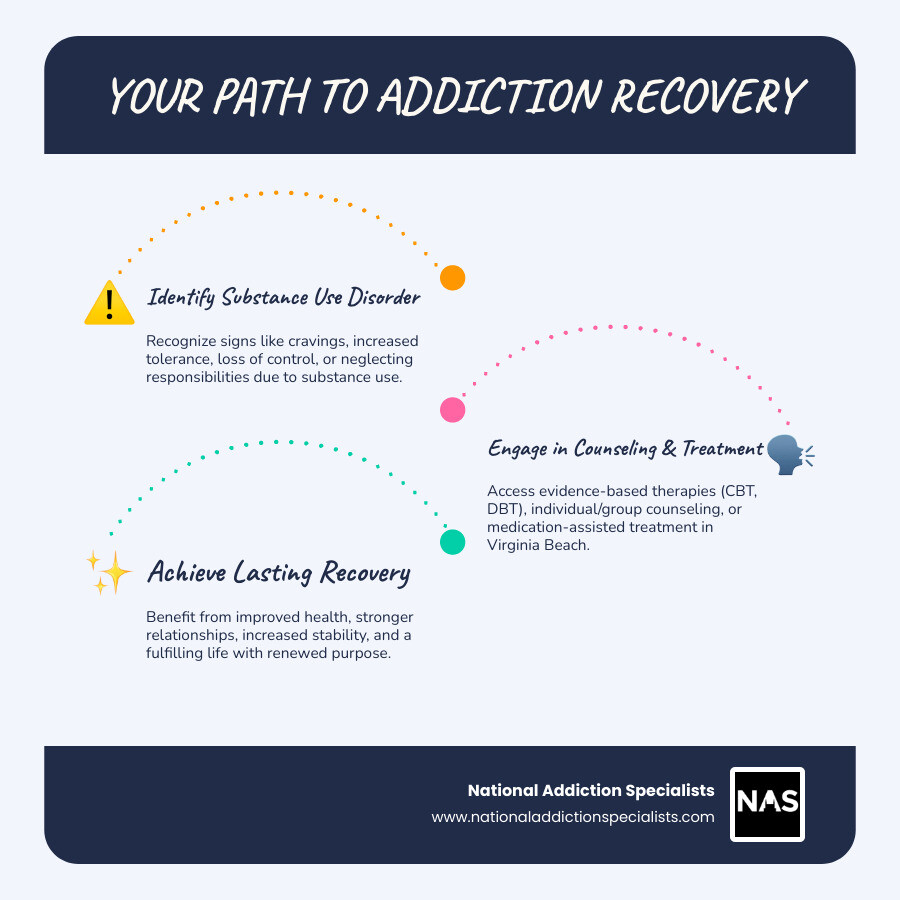
Terms related to Addiction counseling Virginia Beach:
Recognizing the Need for Help: Signs of Substance Use Disorder

It’s incredibly common to question whether your drug or alcohol use has become a problem. You might feel like others are concerned, but you’re not entirely sure if it’s serious. That’s perfectly okay. This journey often begins with self-reflection, and distinguishing between casual use, unhealthy patterns, and a full-blown substance use disorder is a crucial first step. We’re here to help you take a closer look, without judgment.
Behavioral and Psychological Signs
When substance use begins to shift from recreational to problematic, several behavioral and psychological signs often emerge. These can be subtle at first, but they tend to intensify over time:
- Cravings and Urges: Do you experience intense urges or cravings to drink or use drugs? This is a strong indicator that your brain has adapted to the substance.
- Increased Tolerance: Needing to use more and more of a substance to achieve the same effect you once did is a classic sign of developing tolerance.
- Loss of Control: You might find yourself using more than you intended, or for longer periods. Unsuccessful attempts to quit or cut back are also common.
- Neglecting Responsibilities: Has your substance use led to you missing work, school, or important family obligations?
- Relationship Problems: Concerns from loved ones, arguments about your use, or withdrawing from social circles can signal an issue.
- Loss of Interest in Hobbies: Activities you once enjoyed may lose their appeal as substance use takes precedence.
- Secretive Behavior: Drinking or using drugs in secret, or lying about the extent of your use, often indicates a growing problem.
- Using to Cope with Stress: Relying on substances to manage emotions like stress, boredom, or sadness is a common, but ultimately unhelpful, coping mechanism.
Physical Signs
Beyond the psychological and behavioral shifts, unhealthy substance use can manifest in noticeable physical ways:
- Changes in Appearance: This can include unexplained weight loss or gain, poor skin health, or a general decline in personal grooming.
- Different Sleep Patterns: Substance use can drastically alter sleep cycles, leading to insomnia, excessive sleepiness, or irregular patterns.
- Withdrawal Symptoms: When you try to cut back or stop, do you experience physical discomfort like tremors, nausea, sweating, or anxiety? These are signs of withdrawal.
- Unexplained Injuries: Accidents or injuries that occur while under the influence, or that you can’t recall, can be a red flag.
- Poor Hygiene: A disregard for personal hygiene can sometimes accompany more severe substance use issues.
When to Seek Help for Drug or Alcohol Use
If any of these signs resonate with you, or if you’re simply questioning your relationship with substances, it’s a good time to consider seeking support. Here are some clear indicators that professional help might be beneficial:
- Loved Ones Express Concern: If family, friends, or coworkers have commented on your use or asked you to cut back, their observations often hold significant weight.
- Legal or Financial Trouble: Substance use leading to arrests, fines, or difficulties managing money is a serious sign.
- Work or School Performance Suffers: Declining grades, job loss, or difficulty maintaining employment due to substance use indicate a need for intervention.
- You Feel Unable to Stop: Despite wanting to, you find yourself unable to cut down or quit using drugs or alcohol.
- Health is Declining: If your physical or mental health is noticeably worsening, and you suspect substance use is a factor, professional help is crucial.
Reaching out is a sign of strength, not weakness. Our compassionate team is ready to help you take the next step.
Make an Appointment to Treat Addiction
Understanding Addiction Counseling and Treatment Approaches
Addiction counseling is not about judgment; it’s about empowerment. It’s a supportive process designed to help you explore your relationship with substances, understand the underlying causes of your use, and develop healthier ways to steer life’s challenges. The ultimate goal is to help you build a life that is truly worth living, free from the grip of addiction.

What is Addiction Counseling?
Addiction counseling Virginia Beach services provide a safe, confidential space where you can work with a trained professional to manage urges, identify triggers, and develop robust coping strategies. It helps individuals understand that addiction is a complex medical issue, not a moral failure. Counselors assist in addressing not only the substance use itself but also the challenges that stem from it, such as relationship issues, job instability, or underlying trauma.
This process can involve several formats:
- Individual Therapy: One-on-one sessions provide personalized attention, allowing for deep exploration of personal issues, triggers, and coping mechanisms.
- Group Counseling: Sharing experiences with others facing similar struggles can be incredibly validating and provide a sense of community and mutual support.
- Family Counseling: Addiction affects the entire family system. Family therapy can help improve communication, heal relationships, and establish healthy boundaries.
The aim is to prevent relapse by equipping you with the tools and understanding needed to maintain long-term sobriety.
Common Counseling Modalities
In Virginia Beach, you’ll find a variety of evidence-based therapeutic approaches used in addiction counseling. These methods are backed by rigorous scientific research and have proven effective in helping individuals achieve and maintain recovery:
- Cognitive Behavioral Therapy (CBT): This widely used therapy helps you identify and change negative thought patterns and behaviors that contribute to substance use. CBT can be effective for various issues, including substance abuse, anxiety, and depression.
- Dialectical Behavior Therapy (DBT): Originally developed for individuals with intense emotional dysregulation, DBT teaches skills in mindfulness, distress tolerance, emotional regulation, and interpersonal effectiveness. It’s particularly helpful for those with co-occurring mental health disorders and can help build a life worth living.
- Motivational Interviewing (MI): This client-centered approach helps you explore and resolve ambivalence about change, strengthening your motivation to pursue recovery.
- Person-Centered Therapy (PCT): Emphasizing empathy, unconditional positive regard, and congruence from the therapist, PCT creates a supportive environment for self-findy and personal growth.
- EMDR Therapy (Eye Movement Desensitization and Reprocessing): Often used for trauma, EMDR helps process distressing memories and reduce their emotional impact, which can be a significant factor in substance use.
- Strength-Based Therapy: This approach focuses on identifying and utilizing your existing strengths and resources to overcome challenges and build resilience.
- Acceptance and Commitment Therapy (ACT): ACT helps you accept difficult thoughts and feelings, commit to actions aligned with your values, and live a more meaningful life, even in the presence of discomfort.
- Humanistic Therapy: This broad approach emphasizes self-actualization and human potential, helping you find balance, purpose, and peace.
- Solution-Focused Brief Therapy (SFBT): Rather than dwelling on problems, SFBT helps you focus on solutions and desired future states, building on small successes.
Levels of Care: Outpatient vs. Intensive Outpatient (IOP)
Addiction treatment isn’t one-size-fits-all. Different levels of care are available to meet varying needs, allowing for a flexible and dynamic treatment approach. In Virginia Beach and surrounding areas like Norfolk, you can find a structured progression of outpatient services.
| Feature | Traditional Outpatient | Mid-Intensive Outpatient | Intensive Outpatient Program (IOP) |
|---|---|---|---|
| Intensity | Least restrictive | Moderate | Most intensive outpatient level |
| Frequency | Usually once a week | Twice per week | 3 group sessions (3 hours each) per week |
| Individual Therapy | As needed, custom to clinical needs | At least one individual session per month | At least one individual session per month |
| Duration | Ongoing, based on individual needs | Typically 12-15 weeks | 4 months (up to 6 months for co-occurring disorders) |
| Purpose | Continued support, skill maintenance | Higher support than traditional, less than IOP | Achieving and maintaining abstinence while living in the community |
| Target Audience | Stable individuals in recovery or early stages | Individuals needing more structure than traditional | Adults abusing alcohol/drugs, including those with co-occurring disorders |
Co-occurring Disorders Treatment: Many programs, including IOP, specifically address co-occurring mental health disorders (like anxiety or depression) alongside substance dependence. This integrated approach is crucial for healing the whole person.
Aftercare Groups: Beyond these structured programs, aftercare groups like “Living in Balance” focus on long-term problem-solving and skill-building to sustain abstinence during the maintenance phase of recovery. These groups are vital for integrating recovery into daily life.
For more detailed information on outpatient program levels, especially those offered by city services in the region, you can refer to dedicated resources:
Information on Outpatient Program Levels
Duration and Effectiveness of Treatment
How long does addiction counseling Virginia Beach typically last? There’s no single answer, as recovery is a deeply personal journey. We understand that individuals progress at their own pace, and treatment duration depends on your unique needs, the severity of your addiction, and any co-occurring issues. While some make meaningful progress in the first weeks to months, patients and families should expect the work to last several months, if not longer. Recovery is an ongoing process, not a destination.
The good news is that addiction treatment is highly effective. Substance use disorders are treatable, and remission is achievable for many. The statistics offer powerful encouragement:
- More than three-quarters of people who become addicted to alcohol or drugs recover.
- 99% of patients in programs that include comprehensive treatment report their mental health and quality of life improved once treatment led them to recovery.
Relapse can be a common part of the process, but it’s often viewed not as a failure, but as a signal to adjust treatment and learn new strategies. In fact, after five years of abstinence, the risk of relapse is no greater than for those who have not faced addiction. This highlights the power of sustained effort and continuous support.
Your Guide to Finding Addiction Counseling in Virginia Beach
Taking the first step towards seeking help can feel daunting, but finding the right addiction counseling Virginia Beach resource is more accessible than you might think. We believe everyone deserves a safe, non-judgmental environment where their story is heard and their unique needs are met.
Where to Start Your Search for Addiction Counseling in Virginia Beach
Finding the right counselor or program is a personal process, but here are some excellent starting points:
- Online Directories: Websites like Psychology Today offer extensive listings of therapists in Virginia Beach, allowing you to filter by specialty (like addiction), insurance accepted, therapeutic approach, and even specific demographics or concerns.
Find Addiction Therapists in Virginia Beach, VA - Primary Care Physician Referrals: Your doctor can be an excellent resource, often having connections to local mental health professionals and addiction specialists.
- City-Provided Resources: The City of Virginia Beach’s behavioral health services offer a range of support and can guide you to appropriate programs. They are committed to informing residents about available services and resources.
Asking for help is a brave and crucial step. You don’t have to steer this alone.
Navigating Costs and Insurance for Addiction Counseling in Virginia Beach
One of the most common concerns when seeking treatment is the cost. We understand that affordability is a major factor, and many options exist to make addiction counseling Virginia Beach accessible:
- Verifying Your Benefits: The first step is always to contact your insurance provider to understand your mental health and substance abuse benefits. Our team can also help you with this process.
- Accepted Insurance Plans: Many providers in Virginia Beach accept a wide range of insurance plans, including:
- Medicaid: A state and federal program that provides healthcare coverage for low-income individuals and families.
- Medicare: A federal health insurance program for people 65 or older, certain younger people with disabilities, and people with End-Stage Renal Disease.
- Commercial Insurance: Most major commercial health insurance plans are accepted by various counseling centers and treatment facilities.
- Self-Pay Options: For those without insurance or who prefer not to use it, self-pay options are available. Some clinics offer competitive rates or flexible payment plans.
- Sliding Scale Fees: Many counselors and organizations offer sliding scale fees based on income, ensuring that quality care is accessible regardless of financial situation.
We are committed to transparent pricing and helping you understand your options.
More info about insurance and pricing
Overcoming Common Barriers to Treatment
Seeking help for addiction can present various challenges, but understanding them is the first step to overcoming them. We’ve heard many concerns, and we’re here to help you steer them:
- Addressing Stigma: The societal stigma around addiction can make people hesitant to seek help. We want you to know that addiction is a medical condition, not a moral failing. Our approach is always non-judgmental and confidential.
- Affordability Concerns: As discussed, many financial options exist, from insurance coverage (including Medicaid and Medicare) to sliding scale fees and self-pay plans. Don’t let cost deter you from exploring treatment.
- Time Constraints and Life Disruption: Concerns about how treatment will impact work, family, or daily life are valid. Outpatient programs, including intensive outpatient (IOP) and telehealth options, are designed to offer flexibility, allowing you to maintain your responsibilities while in recovery.
- Fear of Withdrawal: The thought of withdrawal symptoms can be a significant barrier. Medical supervision, especially in medication-assisted treatment (MAT) programs, can safely manage withdrawal and ease the process.
- The Convenience of Telehealth: For those in Virginia and Tennessee, our telemedicine services offer a convenient, confidential, and flexible way to access expert care from the comfort of your home, effectively overcoming geographical and logistical barriers.
The Lifelong Benefits of Seeking Help
Recovery is a journey of refindy, a path to reclaiming your life and finding joy in activities you may have once abandoned. It’s about more than just stopping substance use; it’s about rebuilding, healing, and fostering a fulfilling future. The hope for a better tomorrow is real, and it starts today.
Long-Term Benefits of Recovery
Embracing addiction counseling Virginia Beach and committing to recovery open ups a cascade of positive changes that profoundly impact every aspect of your life:
- Improved Mental and Physical Health: As your body and mind heal from the effects of substance use, you’ll experience increased energy, better sleep, reduced anxiety and depression, and an overall sense of well-being.
- Restored Relationships with Family and Friends: Healing communication, rebuilding trust, and re-engaging with loved ones are central to recovery. Many programs offer family counseling to support this vital process.
- Increased Financial and Career Stability: With clarity and focus, you can improve your work performance, pursue educational goals, and achieve greater financial security, moving away from the legal or financial troubles often associated with addiction.
- Refinding Purpose and Joy: Recovery allows you to reconnect with your passions, find new hobbies, and find a renewed sense of purpose. It’s about finding balance and peace, and truly building a life worth living.
Your Path to Recovery Starts Today
We hope this guide has illuminated the many avenues available for addiction counseling Virginia Beach. The path to recovery is unique for everyone, but the first step—reaching out for help—is the most important one you can take.
At National Addiction Specialists, we are dedicated to providing convenient, confidential, and compassionate care. For those in Virginia and Tennessee struggling with opioid addiction, our telemedicine-based Suboxone treatment offers personalized recovery plans from the comfort and privacy of your home. We specialize in medication-assisted treatment (MAT) combined with counseling, and we proudly accept Medicaid and Medicare, making expert care accessible.
Don’t let another day pass feeling overwhelmed or alone. Your journey to a healthier, happier life can begin right now.
Start your recovery with our online Suboxone clinic
Make an Appointment to Treat Addiction
This article was medically reviewed by:
Chad Elkin, MD, DFASAM is a board-certified addiction medicine physician, founder, and Chief Medical Officer of National Addiction Specialists, dedicated to treating substance use disorders. A Distinguished Fellow of the American Society of Addiction Medicine (ASAM), Dr Elkin currently serves as President of the Tennessee Society of Addiction Medicine (TNSAM) and has held various leadership roles within the organization. Dr Elkin chairs ASAM’s Health Technology Subcommittee and is an active member of its Practice Management and Regulatory Affairs Committee, State Advocacy and Legislative Affairs Committee, and other committees. He also serves on the planning committee for the Vanderbilt Mid-South Addiction Conference. Committed to advancing evidence-based policy, Dr Elkin is Chairman of the Tennessee Association of Alcohol, Drug, & Other Addiction Services (TAADAS) Addiction Medicine Council, which collaborates with the TN Department of Mental Health & Substance Abuse Services (TDMHSAS). He has contributed to numerous local, state, and national task forces, helping develop professional guidelines, policies, and laws that align with best practices in addiction medicine. His work focuses on reducing addiction-related harm, combating stigma, and ensuring access to effective treatment.Passionate about the field of addiction medicine, he remains dedicated to shaping policy and enhancing patient care.
Suboxone® and Subutex® are a registered trademark of Indivior UK Limited. Any mention and reference of Suboxone® and Subutex® in this website is for informational purposes only and is not an endorsement or sponsorship by Indivior UK Limited.