Why Expert Addiction Treatment Matters for Your Recovery
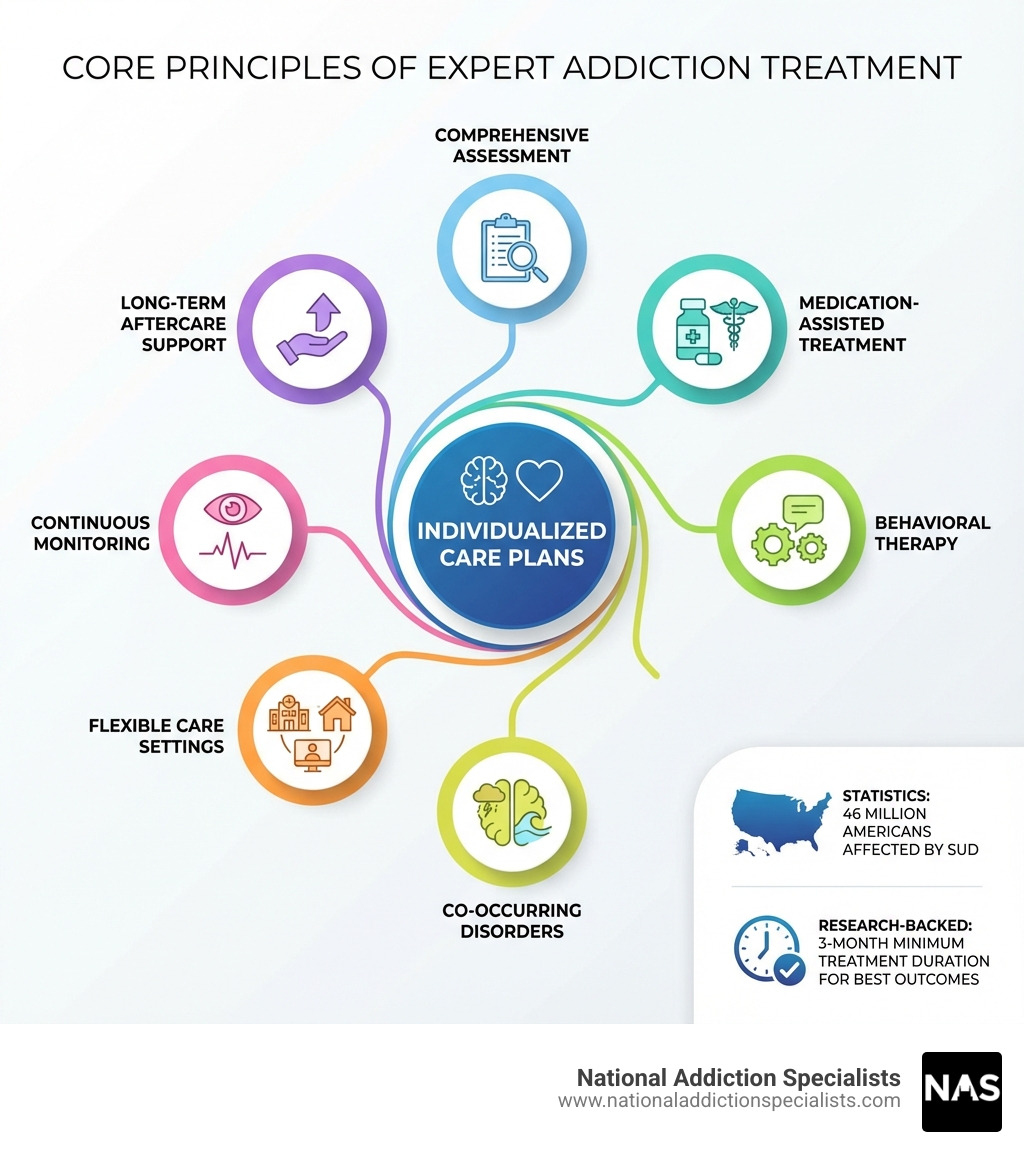
Expert addiction treatment is comprehensive, evidence-based care that combines medical support, behavioral therapy, and personalized recovery planning to help individuals overcome substance use disorders. It recognizes that addiction is a treatable brain disease affecting over 46 million Americans, yet 94% receive no treatment at all.
What Makes Treatment “Expert”:
- Individualized care plans custom to your specific needs and circumstances
- Medication-Assisted Treatment (MAT) to reduce cravings and manage withdrawal
- Behavioral therapies like CBT to develop coping strategies
- Treatment of co-occurring mental health disorders alongside addiction
- Flexible care options including telehealth for convenient, private access
- Long-term support with continuing care and monitoring
- Minimum 3-month duration for best outcomes (research-backed)
The landscape of addiction treatment has evolved significantly. We now understand that addiction alters brain function in ways that affect reward, motivation, learning, and self-control. This isn’t a moral failing. It’s a complex medical condition that responds to proper treatment.
The good news? Recovery is absolutely possible. Research shows that effective treatment helps people stop drug use, reduce criminal activity, and improve their work and relationships. Treatment works by helping you counteract addiction’s effects on your brain and behavior.
But here’s a critical truth: no single treatment works for everyone. Your path to recovery needs to fit your life, your challenges, and your goals. That’s why expert care focuses on personalized plans that address not just your substance use, but also your mental health, medical needs, family situation, and work life.
I am Dr. Chad Elkin, founder and Medical Director of National Addiction Specialists and board-certified in Addiction Medicine, and I’ve dedicated my career to providing accessible expert addiction treatment through innovative telehealth services that eliminate barriers like stigma, transportation, and time constraints. My work focuses on creating personalized recovery plans that meet people where they are and support them throughout their journey.
The Evolving Landscape of Recovery: Empowering Individual Choice
Addiction, once widely misunderstood as a moral failing or a lack of willpower, is now recognized as a complex, treatable disease that affects brain function and behavior. This evolution in understanding has profoundly changed how we approach recovery. Today, expert addiction treatment accepts a more holistic, evidence-based perspective, moving away from outdated notions that limited pathways to healing.
A significant shift in our understanding comes from challenging what is often called the ‘gatekeeper myth.’ This myth suggests that the only legitimate path to recovery is through professional, specialized addiction treatment. However, research clearly shows this isn’t true. As has been shown by survey research conducted over the past half-century, most people who recover from a substance use disorder never access any professional treatment at all. In fact, more individuals seek help from non-professional mutual help organizations than from addiction treatment professionals. This doesn’t diminish the value of professional care; rather, it highlights the diverse and powerful ways individuals find their path to sobriety.
The understanding and treatment of addiction have evolved to recognize multiple avenues to recovery. These include:
- Natural Recovery: Many individuals overcome substance use disorders without formal treatment, often driven by personal motivation, life changes, or shifts in their environment.
- Mutual-Help Organizations: Groups like Alcoholics Anonymous (AA) and Narcotics Anonymous (NA), along with other peer-led support networks, provide invaluable community, shared experience, and accountability. These organizations are often the first, and sometimes only, source of support for many individuals.
- Pastoral Counseling: In many communities, faith-based leaders and counselors play a crucial role in providing support and guidance for individuals struggling with addiction.
- Community Supervision Programs: Innovative programs that employ swift, certain, and fair consequences for substance use violations have shown remarkable ability to curtail substance use, even without traditional treatment.
Professional treatment, while not the sole pathway, remains a vital and often life-saving option for many. It offers specialized counseling, medication, skills training, and support services. Our role is not to be the sole gatekeepers of recovery, but to be expert guides who offer effective, evidence-based tools and support when and where they are needed. We believe in empowering individuals by recognizing their inherent capacity for change and supporting their chosen path to recovery, whether it fully involves professional care or complements other forms of support.

Core Components of Expert Addiction Treatment
When we talk about expert addiction treatment, we’re referring to a comprehensive, multi-faceted approach designed to address the individual’s entire well-being, not just their substance use. Addiction is a complex disease, and effective treatment must be equally comprehensive.
A key component of any effective plan begins with a thorough, comprehensive assessment. This isn’t just about identifying the substance being used; it digs into your medical history, psychological state, social circumstances, and any co-occurring mental health conditions. We look at your physical health, mental health, social support systems, vocational situation, and even legal issues. This holistic view allows us to create a truly personalized treatment plan.
What Defines an Expert Addiction Treatment Plan?
An expert addiction treatment plan is characterized by several critical elements:
- Individualized Care: No two individuals are alike, and neither are their paths to addiction or recovery. A personalized plan means tailoring interventions to your specific needs, preferences, and life circumstances. This includes the type of therapy, medication options, and the level of care.
- Addressing Co-Occurring Disorders: It’s common for individuals with substance use disorders to also experience other mental health conditions like depression, anxiety, or PTSD. These are often referred to as co-occurring disorders or dual diagnoses. An expert plan integrates treatment for both the addiction and any co-occurring mental health issues simultaneously, as treating one without the other significantly reduces the chances of long-term recovery. We recognize that both are mental disorders, and treatment should address both (or all) conditions, including the use of medications as appropriate.
- Adequate Treatment Duration: Research consistently shows that remaining in treatment for an adequate period is critical for successful outcomes. Most addicted individuals need at least 3 months in treatment to significantly reduce or stop their drug use, and the best outcomes occur with longer durations. For opioid addiction, for example, 12 months of medication-assisted treatment is often considered a minimum. We emphasize the importance of sustained engagement, not just a quick fix.
- Continuous Monitoring: Recovery is a dynamic process. An expert plan involves continuous monitoring of your progress, including regular check-ins and drug use monitoring, to assess effectiveness and make necessary adjustments.
- Integrated Services: Effective treatment combines various services, including medical care, counseling, psychological support, and social support. This integrated approach ensures all aspects of your life that contribute to or are affected by addiction are addressed. You can learn more about our integrated approach to care by exploring More on our Medication Assisted Treatment Program.
Accessing Expert Addiction Treatment Services
Access to care is a significant barrier for many. Despite over 46 million Americans having a substance use disorder, a staggering 94% do not receive treatment. This highlights the urgent need for readily available and accessible services.
We are committed to making expert addiction treatment accessible to residents of Tennessee and Virginia. Here’s how individuals can access our services:
- Rapid Access: While traditional rapid access clinics offer walk-in services, our telemedicine model provides an even faster and more convenient way to begin your journey. You can often schedule an initial appointment quickly from the comfort and privacy of your home.
- The Rise of Telehealth: Telemedicine has revolutionized access to addiction treatment, especially for those in rural areas or with limited transportation. It removes geographical barriers, allowing you to connect with expert providers in Tennessee and Virginia without needing to travel. Our Telemedicine Treatment options ensure that quality care is just a click away.
- Online Suboxone Doctors: For individuals seeking medication-assisted treatment for opioid addiction, our Online Suboxone Doctors provide convenient and confidential care, including prescriptions and ongoing support, all delivered through a secure online platform.
- Overcoming Barriers: Telehealth helps to overcome many common barriers to treatment:
- Stigma: Receiving care from home ensures privacy and reduces the fear of judgment.
- Transportation: No need to worry about travel, childcare, or taking time off work.
- Time Constraints: Appointments can often be scheduled to fit your busy life.
We believe that when someone is ready for help, that help should be readily available.
Inpatient vs. Outpatient Treatment
The choice between inpatient and outpatient treatment depends on the severity of the addiction, individual circumstances, and the level of support needed.
| Feature | Inpatient Treatment (Residential) | Outpatient Treatment (Telemedicine/Clinic-based) |
|---|---|---|
| Environment | 24/7 supervised, substance-free facility. | Live at home, attend scheduled sessions. |
| Intensity | High; immersive, structured daily programming. | Flexible; varying intensity, from a few hours a week to more intensive daily programs. |
| Medical Care | On-site medical staff, often including detox. | Medical support provided through scheduled appointments, often via telehealth for MAT. Detox may occur elsewhere first or be managed through intensive outpatient care. |
| Therapy | Individual, group, family therapy, educational sessions. | Individual, group, family counseling. Behavioral therapies are key. |
| Flexibility | Limited; removed from daily life. | High; allows continuation of work, school, family responsibilities. Ideal for those with strong home support and less severe addiction. |
| Cost | Generally higher due to 24/7 care and accommodation. | Generally lower. Often covered by insurance, including Medicaid and Medicare. |
| Suitability | Severe SUDs, unstable home environment, co-occurring mental health crises, need for medical detox. | Mild to moderate SUDs, stable home environment, strong support system, ability to manage triggers, step-down from inpatient care. Our telemedicine services in Tennessee and Virginia are a perfect fit for this, offering convenient and confidential expert addiction treatment. |
The Synergy of Medication and Therapy
Expert addiction treatment recognizes that addiction is a complex condition affecting both the brain and behavior. Therefore, the most effective approach combines both medication and behavioral therapies. This synergy addresses the physiological aspects of addiction while also equipping individuals with the psychological tools for long-term recovery.
What is the role of medication in addiction treatment?
Medications play a crucial role in supporting recovery, particularly for opioid and alcohol use disorders. They are not a “magic bullet” but a powerful tool when integrated into a comprehensive treatment plan. When combined with counseling and other behavioral therapies, medications are an important element of treatment for many patients.
For opioid addiction, medications like Suboxone and Naltrexone (Vivitrol) can significantly aid recovery:
- Suboxone (Buprenorphine/Naloxone): This medication helps to reduce opioid cravings and withdrawal symptoms without producing the same “high” as illicit opioids. It allows individuals to stabilize, focus on therapy, and regain control of their lives. We specialize in providing Suboxone for Opioid Addiction through our telemedicine services in Tennessee and Virginia.
- Naltrexone (Vivitrol): Available in oral form or as an injectable, extended-release version (Vivitrol), Naltrexone works by blocking the opioid receptors in the brain, preventing the euphoric effects of opioids and reducing cravings. It also helps with alcohol use disorder by reducing heavy drinking days. Vivitrol can be a valuable part of a personalized recovery plan.
These medications, when prescribed and monitored by expert addiction treatment professionals, are safe and effective. They are not simply replacing one addiction with another; they help normalize brain function and allow individuals to engage more fully in their recovery journey. You can learn more about the effectiveness of this approach at Is Medication Assisted Treatment Effective?.
How effective are different therapeutic approaches in treating addiction?
Behavioral therapies are the most commonly used forms of drug abuse treatment and are highly effective in helping individuals understand and change their addictive behaviors. They help people develop coping strategies, manage triggers, and prevent relapse. Some of the most effective approaches include:
- Cognitive-Behavioral Therapy (CBT): CBT helps individuals identify and change problematic thought patterns and behaviors that contribute to their substance use. It teaches coping skills for high-risk situations and cravings.
- Motivational Improvement Therapy (MET): MET helps individuals resolve their ambivalence about treatment and recovery, strengthening their motivation to change.
- Individual, Group, and Family Counseling: These formats provide safe spaces for individuals to explore their addiction, develop healthier communication skills, and build a strong support network.
- Treating Dual Diagnosis: Many individuals with substance use disorders also have other mental disorders. Because drug abuse and addiction often co-occur with other mental illnesses, patients presenting with one condition should be assessed for the other(s). When these problems co-occur, treatment should address both (or all) conditions. Our approach integrates mental health support into your addiction treatment, recognizing the intricate connection between Suboxone and Mental Health.
We offer comprehensive Addiction Counseling Services custom to your needs, providing the therapeutic support necessary to build a foundation for lasting recovery.

Make an Appointment to Treat Addiction
Please don’t hesitate. Make an appointment today.
Building a Foundation for Lifelong Recovery
Recovery from addiction is a journey, not a destination. We understand that addiction is a chronic condition, much like diabetes, hypertension, or asthma. Just as these conditions require ongoing management, so too does addiction. The relapse rate for addiction is similar to that for other chronic medical illnesses, emphasizing the need for continuous support and care.
What is the importance of aftercare and support groups in long-term recovery?
The period after initial treatment is critical. This is where aftercare and ongoing support come into play, forming the backbone of long-term recovery.
- Aftercare and Continuing Care Plans: Effective expert addiction treatment doesn’t end when a formal program concludes. It transitions into a comprehensive aftercare plan. This might include continued individual counseling, regular check-ins, or participation in specialized recovery strategies. These plans are designed to reinforce coping skills, address emerging challenges, and provide ongoing guidance. You can explore various Addiction Recovery Strategies to find what works best for you.
- The Role of Support Groups: Support groups are invaluable resources, offering a community of peers who understand the challenges of recovery. These groups provide a sense of belonging, reduce isolation, and offer practical advice and encouragement. While we don’t endorse specific external groups, we recognize the significant positive impact that mutual-help organizations, such as 12-Step programs, can have on an individual’s long-term sobriety. They offer a powerful complement to professional treatment.
What role do family and community play in the recovery process?
Family and community support are foundational to long-term recovery. Addiction is often referred to as a “family disease” because its effects ripple through relationships.
- Family Involvement: Including family members in the recovery process can be transformative. Family therapy helps to heal relationships, improve communication, and educate loved ones about addiction. It equips families with the tools to support their loved one effectively while also caring for their own well-being. Understanding How to Support Someone in Recovery is crucial for family members.
- Community Support: A supportive community provides a safety net and helps individuals reintegrate into a healthy, sober lifestyle. This can include friends, employers, faith-based organizations, and other community resources. A strong, supportive environment makes a non-drug-using lifestyle more rewarding and sustainable.
The new paradigm for long-term recovery emphasizes that addiction is not an island unto itself. It’s deeply intertwined with an individual’s life context, and building a strong foundation for lifelong recovery requires addressing these connections through sustained support from both professional care and personal networks.
Frequently Asked Questions about Addiction Treatment
We understand you likely have many questions about expert addiction treatment. Here are some common inquiries we address:
How long does addiction treatment last?
There’s no one-size-fits-all answer to how long addiction treatment lasts. The appropriate duration for an individual depends on the type and degree of their problems and needs. However, research indicates that most addicted individuals need at least 3 months in treatment to significantly reduce or stop their drug use, and that the best outcomes occur with longer durations of treatment. For some, especially those receiving medication-assisted treatment for opioid use disorder, treatment can last for many months or even years. This sustained engagement allows for the brain to heal and new coping mechanisms to become ingrained. We can discuss the specifics of How Long Does Suboxone Treatment Last? during your personalized consultation.
Does treatment have to be voluntary to be effective?
No, treatment does not need to be voluntary to be effective. Research unequivocally shows that sanctions or enticements from family, employment settings, and/or the criminal justice system can significantly increase treatment entry, retention rates, and the ultimate success of drug treatment interventions. While personal motivation is certainly beneficial, many individuals find their motivation to change grows during the course of treatment, even if they initially entered under pressure. The critical factor is engagement and retention in effective treatment, regardless of how it began.
How can I pay for addiction treatment?
The cost of expert addiction treatment can vary depending on the type of program and duration. However, many options exist to make treatment affordable and accessible. We are committed to removing financial barriers for residents in Tennessee and Virginia. We accept many insurance plans, including Medicaid and Medicare, to ensure that you can receive the care you need. We encourage you to Check if your insurance is accepted on our website or contact us directly to discuss your payment options. Our goal is to focus on your recovery, not your financial burden.
Conclusion: Your Personalized Path to Recovery Starts Here
Understanding expert addiction treatment means recognizing addiction as a complex, treatable disease that requires a comprehensive, individualized, and sustained approach. It’s about combining the best medical science with compassionate therapy, ensuring that your unique needs are met every step of the way. We’ve seen how the field has evolved, embracing diverse pathways to recovery and dispelling myths that once limited hope.
Recovery is undeniably a journey, not a singular event. It requires dedication, support, and access to effective care. At National Addiction Specialists, we are dedicated to providing that care through convenient and confidential telemedicine services in Tennessee and Virginia. We believe that everyone deserves the opportunity to heal and build a fulfilling life free from the grip of addiction.
Taking the first step can be the hardest, but it’s also the most powerful. We are here to guide you, support you, and empower you on your personalized path to recovery. To learn more about our approach to medication-assisted treatment and how we can help you, we invite you to Explore The Complete Guide to Suboxone Treatment Options.
This article was medically reviewed by:
Chad Elkin, MD, DFASAM is a board-certified addiction medicine physician, founder, and Chief Medical Officer of National Addiction Specialists, dedicated to treating substance use disorders. A Distinguished Fellow of the American Society of Addiction Medicine (ASAM), Dr Elkin currently serves as President of the Tennessee Society of Addiction Medicine (TNSAM) and has held various leadership roles within the organization. Dr Elkin chairs ASAM’s Health Technology Subcommittee and is an active member of its Practice Management and Regulatory Affairs Committee, State Advocacy and Legislative Affairs Committee, and other committees. He also serves on the planning committee for the Vanderbilt Mid-South Addiction Conference. Committed to advancing evidence-based policy, Dr Elkin is Chairman of the Tennessee Association of Alcohol, Drug, & Other Addiction Services (TAADAS) Addiction Medicine Council, which collaborates with the TN Department of Mental Health & Substance Abuse Services (TDMHSAS). He has contributed to numerous local, state, and national task forces, helping develop professional guidelines, policies, and laws that align with best practices in addiction medicine. His work focuses on reducing addiction-related harm, combating stigma, and ensuring access to effective treatment.Passionate about the field of addiction medicine, he remains dedicated to shaping policy and enhancing patient care.
Suboxone® and Subutex® are a registered trademark of Indivior UK Limited. Any mention and reference of Suboxone® and Subutex® in this website is for informational purposes only and is not an endorsement or sponsorship by Indivior UK Limited.