Understanding Your Privacy Rights in Addiction Treatment
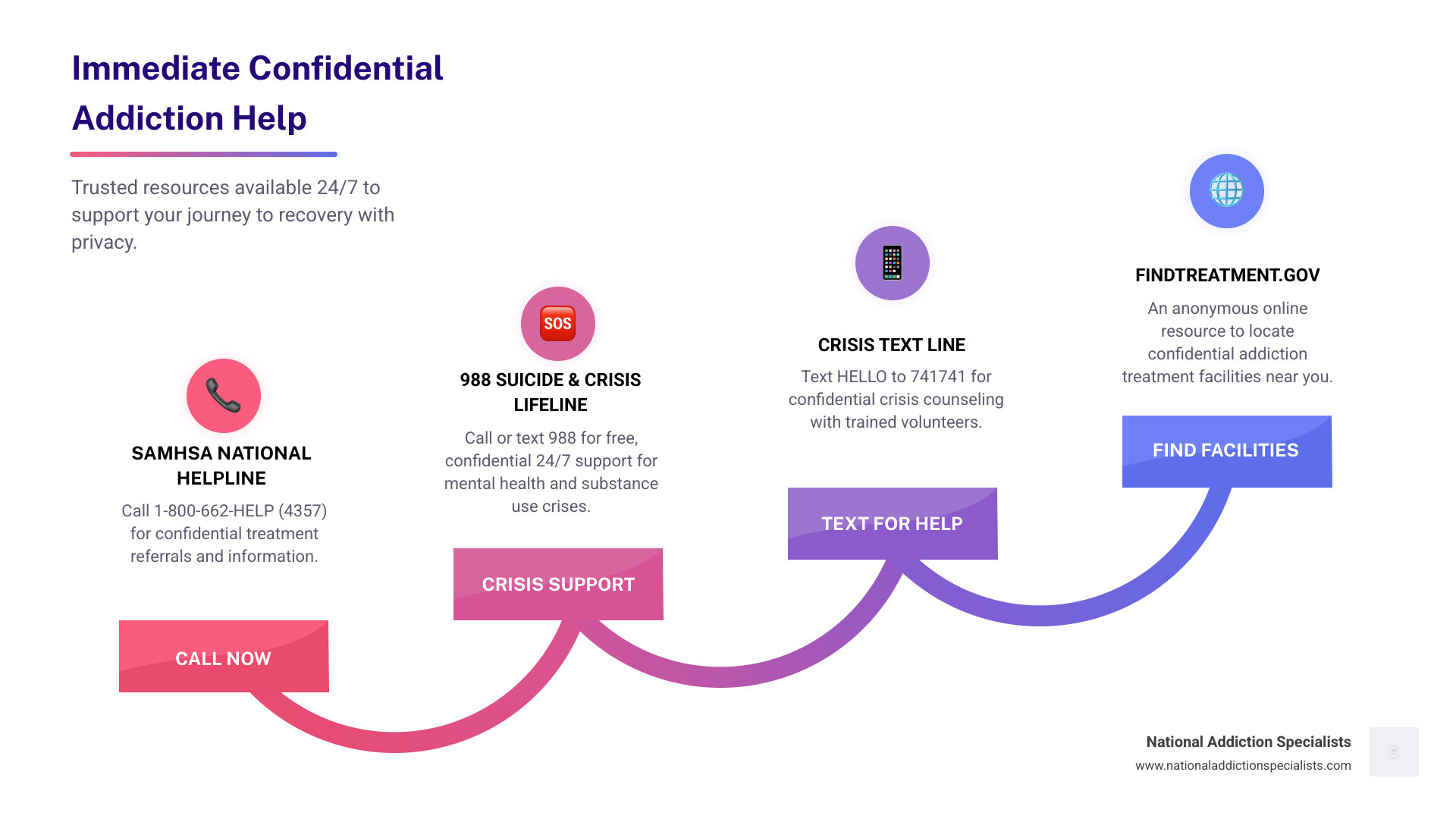
If you’re looking for Confidential addiction help, immediate support is available through several trusted resources:
- SAMHSA National Helpline: Call 1-800-662-HELP (4357) for confidential treatment referrals.
- 988 Suicide & Crisis Lifeline: Call or text 988 for free, confidential 24/7 support.
- Crisis Text Line: Text HELLO to 741741 for confidential crisis counseling.
- FindTreatment.gov: A confidential and anonymous online resource to locate treatment facilities.
Seeking help for addiction is a brave step. Millions of Americans face mental and substance use disorders each year. For many, the fear of judgment or stigma associated with addiction can make reaching out feel impossible. This is where Confidential addiction help becomes vital. Knowing your privacy is protected allows you to focus solely on healing and recovery.
I’m Chad Elkin, and as a board-certified addiction medicine physician, I have dedicated my career to making confidential addiction help accessible and effective for those who need it most.
Relevant articles related to Confidential addiction help:

When you seek help for addiction, your personal health information is protected by powerful federal laws. These laws ensure that your journey to recovery remains private, empowering you to seek help without fear of exposure. We understand that privacy is paramount, especially when dealing with sensitive health matters like substance use disorder.
What is HIPAA and How Does It Protect You?
The Health Insurance Portability and Accountability Act of 1996, commonly known as HIPAA, is a federal law that sets national standards to protect sensitive patient health information (PHI) from being disclosed without your consent or knowledge. HIPAA applies to most healthcare providers, health plans, and healthcare clearinghouses.
Under HIPAA’s Privacy Rule, your personal health information—including your demographics, health status, where you received care, and how you paid for it—is safeguarded. This means that generally, your healthcare providers cannot share your PHI with others without your explicit permission. The Security Rule further ensures that your electronic health information is kept confidential, secure, and available. This foundation of privacy is crucial for all medical care, including general mental health services.
The Gold Standard: How 42 CFR Part 2 Offers Extra Protection
While HIPAA provides a broad shield for your health information, records related to substance use disorder (SUD) treatment receive an even higher level of protection under a specific federal regulation called 42 CFR Part 2. This “gold standard” of confidentiality was enacted to encourage individuals to seek SUD treatment without fear of discrimination, legal repercussions, or stigma.
42 CFR Part 2 is generally stricter than HIPAA. It specifically protects records of patients in substance abuse treatment programs that receive federal assistance, which includes most treatment facilities in the U.S., including those in Tennessee and Virginia. This regulation mandates that information about your SUD treatment generally cannot be disclosed without your specific written consent. This heightened protection aims to prevent law enforcement, employers, or even family members from accessing your treatment records unless you explicitly allow it.
In early 2024, revisions to 42 CFR Part 2 were introduced to align some aspects more closely with HIPAA, particularly regarding disclosures for treatment, payment, and healthcare operations. However, these revisions also improve patient rights, such as the ability to request an accounting of disclosures and apply HIPAA’s penalties for violations, reinforcing the strong protections around SUD records.
Here’s a quick look at the key differences and overlaps between HIPAA and 42 CFR Part 2:
| Feature | HIPAA | 42 CFR Part 2 SAMHSA National Helpline is a confidential, free, 24-hour-day, 365-day-year, information service, in English and Spanish, for individuals and family members facing mental and/or substance use disorders. This service provides referrals to local treatment facilities, support groups, and community-based organizations.
When Can Your Treatment Information Be Shared?
Even with such strict confidentiality laws, there are specific circumstances under which your protected health information, including SUD records, can be disclosed. These are carefully defined to balance patient privacy with critical public health and safety needs.
The most common way information can be shared is through your explicit written consent. This consent form will detail exactly:
- Who can receive the information (e.g., a specific family member, another doctor).
- What information can be disclosed (e.g., dates of treatment, general progress, specific diagnoses).
- Why the information is being shared (e.g., for family support, coordination of care).
- When the consent expires.
It’s important to remember that you have the right to revoke this consent at any time, and the program must stop sharing your information immediately.
Other limited circumstances for disclosure without your consent include:
- Medical emergencies: If you are in immediate danger and unable to provide consent, information may be shared with medical personnel to save your life or prevent serious harm.
- Court orders: A court order, issued by a judge (not just a subpoena), can compel disclosure of certain information, but even then, it’s often limited in scope.
- Scientific research, audits, or program evaluation: Qualified personnel may access records for these purposes, provided strict protocols are in place to protect your identity and confidentiality.
- Reporting child abuse or neglect: If there’s suspicion of child abuse or neglect, providers are mandated reporters.
- Threats to health or safety: If you pose an immediate threat to yourself or others, disclosure may be permitted to prevent harm.
For comprehensive details on how we prioritize your privacy, please review our Privacy Policy.
Why Confidentiality in Addiction Recovery Matters

The decision to seek addiction treatment is deeply personal, and concerns about privacy are often a major barrier. Fears about seeking treatment are valid, but understanding the reality of confidentiality can provide the peace of mind needed to take the first step. We understand that individuals in Tennessee and Virginia, and across the nation, worry about how their treatment might impact their lives.
Common reasons individuals seek to keep their rehab treatment confidential include:
- Stigma and shame: Addiction, unfortunately, still carries a social stigma, leading many to fear judgment from friends, family, and community.
- Employment concerns: There’s a common fear that a history of addiction treatment could jeopardize current employment or future career prospects.
- Professional reputation: Professionals in various fields may worry about their reputation being tarnished if their struggle with addiction becomes public.
- Family relationships: While some family support is crucial, individuals may wish to control who knows about their treatment, especially if family dynamics are complex.
- Legal fears: Although federal laws protect SUD records, some may worry about legal repercussions, particularly if their substance use involved illegal activities.
Doctor-Patient Confidentiality and Substance Use
Doctor-patient confidentiality is a cornerstone of ethical medical practice, and it applies strongly to discussions about drug and alcohol use. This means that when you speak honestly with your doctor about your substance use, that information is protected. Your doctor cannot have you arrested for admitting to illicit drug use or risky alcohol consumption based solely on your disclosure.
This protection is vital because it allows for honest, open conversations necessary for effective treatment. We want you to feel safe discussing your full medical history and current challenges without fear that what you say will be used against you. This trust is essential for building an effective treatment plan focused on your health and safety.
Will Rehab Show Up on a Background Check?
A common concern for many seeking Confidential addiction help is whether their treatment history will appear on background checks, potentially affecting their employment or other opportunities. We’re here to tell you: no, prior drug and alcohol treatment does not show up on general background checks.
Your treatment records are protected by federal laws like HIPAA and 42 CFR Part 2, which prevent their disclosure without your consent. Standard employment background checks typically look for criminal convictions, driving records, and sometimes credit history, not medical treatment records. This helps ease fears about the impact of seeking help on your career.
Your Guide to Finding Confidential Addiction Help
Navigating the path to recovery starts with knowing where to find trusted, private resources. Here are the best places to start your search for Confidential addiction help in Tennessee and Virginia, and across the U.S.
National Helplines for Immediate, Confidential Addiction Help
When you need immediate support, national helplines offer a confidential and anonymous starting point. These services are available 24/7 and can provide guidance, information, and referrals to treatment options.
- SAMHSA National Helpline (1-800-662-HELP (4357)): This is a confidential, free, 24-hour-a-day, 365-day-a-year information service provided by the Substance Abuse and Mental Health Services Administration. It offers information and treatment referrals in English and Spanish for individuals and families facing mental and/or substance use disorders. Many of the services they refer to, including our own, serve residents of Tennessee and Virginia. You can find substance abuse help through the Substance Abuse and Mental Health Services Administration (SAMHSA) National Helpline.
- 988 Suicide & Crisis Lifeline: By calling or texting 988, you can connect with a free, confidential, 24/7 service that provides support for individuals in emotional distress or crisis, including those struggling with substance use. This service is available nationwide, including in Tennessee and Virginia.
- Veterans Crisis Line: For veterans and service members, the Veterans Crisis Line offers confidential support. You can call 988 and then press 1, text 838255, or chat online at VeteransCrisisLine.net.
These helplines are staffed by trained professionals who can offer a compassionate ear and guide you toward appropriate resources without requiring any personal identifying information.
Online Tools to Find Treatment Near You
Beyond helplines, several online tools can help you locate confidential addiction treatment facilities and programs custom to your needs in Tennessee and Virginia.
- FindTreatment.gov: This is a confidential and anonymous online resource provided by SAMHSA for persons seeking treatment for mental and substance use disorders in the United States and its territories. You can search for a treatment facility near you at FindTreatment.gov. This tool allows you to search for different types of care, including inpatient and outpatient programs, and telehealth options, which is particularly useful for finding services in areas like Brentwood, TN, Virginia Beach, VA, and other communities across Tennessee and Virginia.
- Alcohol Treatment Navigator (NIAAA): This tool, offered by the National Institute on Alcohol Abuse and Alcoholism, helps you choose between different alcohol treatment programs and provides advice on supporting yourself or a loved one through recovery.
These online locators are excellent resources for finding vetted facilities and understanding your options, all while maintaining your privacy.
The Rise of Telemedicine for Confidential Addiction Help
One of the most significant advancements in Confidential addiction help is the rise of telemedicine. This approach allows you to receive high-quality treatment from the comfort and privacy of your own home, eliminating the need for travel and discreetly integrating care into your daily life.
Telemedicine-based treatment offers:
- Convenience: Access appointments from anywhere in Tennessee or Virginia with an internet connection.
- Discretion: Your appointments are private, reducing concerns about being seen entering a clinic.
- Accessibility: Overcomes geographical barriers, making expert care available even in rural areas.
- Flexibility: Easily schedule appointments that fit your work or family commitments.
We specialize in providing Telemedicine Treatment for individuals seeking Confidential addiction help, particularly for opioid use disorder. Our Online Suboxone Doctors are able to provide personalized care, counseling, and medication management through secure video platforms.
Exploring Your Treatment and Support Options
Confidentiality is just the first step. Understanding the different types of effective treatment will help you choose the right path for your recovery. We know that addiction is a complex and chronic disease, affecting nearly 49 million people in the United States. Effective treatment often involves a combination of approaches, including medical detox, outpatient programs, counseling, and medication-assisted treatment (MAT), alongside crucial peer support.
Types of Addiction Treatment Programs
Treatment for substance use disorder is not one-size-fits-all. It’s often custom to your specific needs, the substance used, and the severity of your addiction. Here are some common types of programs available in Tennessee and Virginia:
- Outpatient Care: This allows you to live at home while attending scheduled therapy sessions and medical appointments. It’s ideal for those with strong support systems and less severe addictions.
- Intensive Outpatient Programs (IOP): IOPs offer a more structured approach than standard outpatient care, with several hours of treatment per week, but still allow you to maintain your daily responsibilities.
- Partial Hospitalization Programs (PHP): PHPs provide a level of care similar to inpatient treatment but allow you to return home at night.
- Inpatient/Residential Treatment: For those needing a higher level of care, inpatient programs involve living at a facility for a period, providing 24/7 support and a structured environment.
- Medical Detox: Often the first step, medical detox safely manages withdrawal symptoms under medical supervision. This is crucial as withdrawal can be dangerous, especially for alcohol or benzodiazepines.
Regardless of the program type, behavioral counseling is a core component. Our Addiction Counseling Services are designed to help you develop coping mechanisms, address underlying issues, and prevent relapse.
What is Medication-Assisted Treatment (MAT)?
Medication-Assisted Treatment (MAT) is an evidence-based approach that combines FDA-approved medications with counseling and behavioral therapies. MAT is highly effective, particularly for opioid use disorder (OUD) and alcohol use disorder (AUD).
For OUD, medications like Suboxone (buprenorphine and naloxone), methadone, and naltrexone help to:
- Reduce cravings.
- Manage withdrawal symptoms.
- Block the euphoric effects of opioids.
For AUD, medications like naltrexone, acamprosate, and disulfiram can help reduce drinking and prevent relapse.
MAT is not simply replacing one drug with another; it’s a comprehensive treatment that addresses the physiological aspects of addiction, making it easier for you to engage in therapy and build a stable recovery. We specialize in providing Medication Assisted Treatment Program, including Suboxone treatment, to individuals in Tennessee and Virginia, helping them achieve long-term recovery.
Make an Appointment to Treat Addiction
Please don’t hesitate. Make an appointment today.
Finding Strength in Peer Support Groups
Connecting with others who understand your experiences can be incredibly powerful in recovery. Peer support groups offer a safe, confidential space to share, learn, and grow. These groups are available across Tennessee and Virginia, providing a sense of community and accountability.
- Alcoholics Anonymous (A.A.): A.A. helps people who have had a drinking problem through a 12-step program and mutual support. You can find a local meeting center or an online support group.
- Narcotics Anonymous (NA): Similar to A.A., NA assists people who want to stop abusing prescription or illegal drugs. Find an NA meeting center, helpline, or online support group.
- SMART Recovery: This program helps young people and adults with alcohol or other addictions through group therapy, focusing on self-empowerment and self-reliance. You can find SMART Recovery meetings in person or online.
- Al-Anon and Nar-Anon: These groups provide crucial support for family members and friends affected by someone else’s drinking (Al-Anon) or drug use (Nar-Anon). If you’re in Tennessee or Virginia and your loved one is struggling, these groups can offer invaluable guidance. You can find an Al-Anon meeting in your area and search for a Nar-Anon meeting in your area. Alateen, a part of Al-Anon, also offers help for teens affected by a parent’s alcoholism.
Frequently Asked Questions about Confidential Treatment
How do I pay for addiction treatment and verify my insurance?
Understanding the cost of addiction treatment and how your insurance factors in is a critical step for many seeking Confidential addiction help. We aim to make this process as clear as possible for our patients in Tennessee and Virginia.
- Insurance Coverage: Many health insurance plans, both private and public, cover addiction treatment. The Affordable Care Act (ACA) mandates that addiction and mental health services are essential health benefits, meaning most plans must offer coverage. The extent of coverage can vary, so verify your specific benefits.
- Medicaid and Medicare: We proudly accept both Medicaid and Medicare in Tennessee and Virginia. These government-funded programs can significantly reduce or eliminate out-ofpocket costs for eligible individuals, making treatment more accessible.
- Private Pay Options: If you don’t have insurance or prefer not to use it, many providers offer private pay options, sometimes including sliding scale fees or payment plans.
- Verifying Coverage: The best way to understand your coverage is to contact your insurance provider directly or speak with an admissions specialist at the treatment facility. They can clarify your deductible, co-pays, and what services are covered. Our team can help you steer this process. You can also visit our site to learn more about insurance and pricing.
How do consent forms work for rehab?
Consent forms are a cornerstone of patient privacy in addiction treatment. They are legally binding documents that give you control over who can access your highly protected SUD treatment information.
- Patient Control: You, and only you, decide what information can be shared and with whom.
- Specificity: Consent forms for SUD treatment are highly specific. They must clearly name the person or entity authorized to receive the information, the specific purpose for the disclosure, and the exact type and amount of information that can be shared. For example, you might consent to share only your appointment dates with a specific family member, or allow your primary care physician to receive a summary of your treatment plan.
- Designating Recipients: If you want your spouse, parent, or another doctor to receive updates about your care, you must explicitly name them on a consent form. Without your written consent, programs cannot even acknowledge that you are a patient there to an inquiring family member.
- Right to Revoke: You have the absolute right to revoke your consent at any time. This revocation can be given orally or in writing, and the program must immediately stop all future disclosures based on that consent.
Always read consent forms carefully and ask questions if anything is unclear. Your privacy is our priority, and we ensure you understand your rights before any information is shared.
Are addiction hotlines truly anonymous and free?
Yes, addiction hotlines are designed to be truly anonymous and free. We understand that taking the first step can be daunting, and these resources are built to remove as many barriers as possible.
- Confidential and Free to Call: All calls to reputable addiction hotlines, such as the SAMHSA National Helpline or the 988 Suicide & Crisis Lifeline, are confidential and completely free of charge. You do not need health insurance to call, nor will you be billed for the conversation.
- No Personal Information Required: You are not typically required to provide your name or any identifying information when calling. The goal is to provide a safe space for you to explore your options without fear of judgment or having your identity revealed.
- Staffed by Trained Advisors: These hotlines are staffed by trained crisis counselors or recovery advocates who can offer support, information, and referrals to treatment facilities in your area, including those in Tennessee and Virginia. They are there to listen and guide you, not to gather personal data.
These hotlines serve as a vital first point of contact for many, offering Confidential addiction help without any commitment or personal risk.
Conclusion: Take the First Confidential Step to Recovery
Seeking help for addiction is a courageous decision, and we want you to know that you don’t have to steer it alone or in fear of exposure. Your privacy is not just a courtesy; it’s protected by strong federal laws like HIPAA and 42 CFR Part 2, especially when it comes to substance use disorder treatment. These protections are in place precisely so you can focus on healing.
Confidential resources are readily available, from national helplines offering immediate, anonymous support to online tools that help you find treatment facilities in Tennessee and Virginia. The rise of telemedicine has further improved access to discreet, effective care, allowing you to receive personalized treatment from the comfort of your home.
Seeking help is a sign of strength, not weakness. Recovery is possible, and with the right support and the assurance of confidentiality, you can take that crucial first step towards a healthier, more fulfilling life.
At National Addiction Specialists, we are committed to providing private Telehealth Suboxone Treatment from home in Tennessee and Virginia. Our expert providers specialize in medication-assisted treatment and counseling, accepting Medicaid and Medicare, to ensure you receive the confidential care you deserve.
Learn more about our Medication-Assisted Treatment program.
This article was medically reviewed by:
Chad Elkin, MD, DFASAM is a board-certified addiction medicine physician, founder, and Chief Medical Officer of National Addiction Specialists, dedicated to treating substance use disorders. A Distinguished Fellow of the American Society of Addiction Medicine (ASAM), Dr Elkin currently serves as President of the Tennessee Society of Addiction Medicine (TNSAM) and has held various leadership roles within the organization. Dr Elkin chairs ASAM’s Health Technology Subcommittee and is an active member of its Practice Management and Regulatory Affairs Committee, State Advocacy and Legislative Affairs Committee, and other committees. He also serves on the planning committee for the Vanderbilt Mid-South Addiction Conference. Committed to advancing evidence-based policy, Dr Elkin is Chairman of the Tennessee Association of Alcohol, Drug, & Other Addiction Services (TAADAS) Addiction Medicine Council, which collaborates with the TN Department of Mental Health & Substance Abuse Services (TDMHSAS). He has contributed to numerous local, state, and national task forces, helping develop professional guidelines, policies, and laws that align with best practices in addiction medicine. His work focuses on reducing addiction-related harm, combating stigma, and ensuring access to effective treatment.Passionate about the field of addiction medicine, he remains dedicated to shaping policy and enhancing patient care.
Suboxone® and Subutex® are a registered trademark of Indivior UK Limited. Any mention and reference of Suboxone® and Subutex® in this website is for informational purposes only and is not an endorsement or sponsorship by Indivior UK Limited.