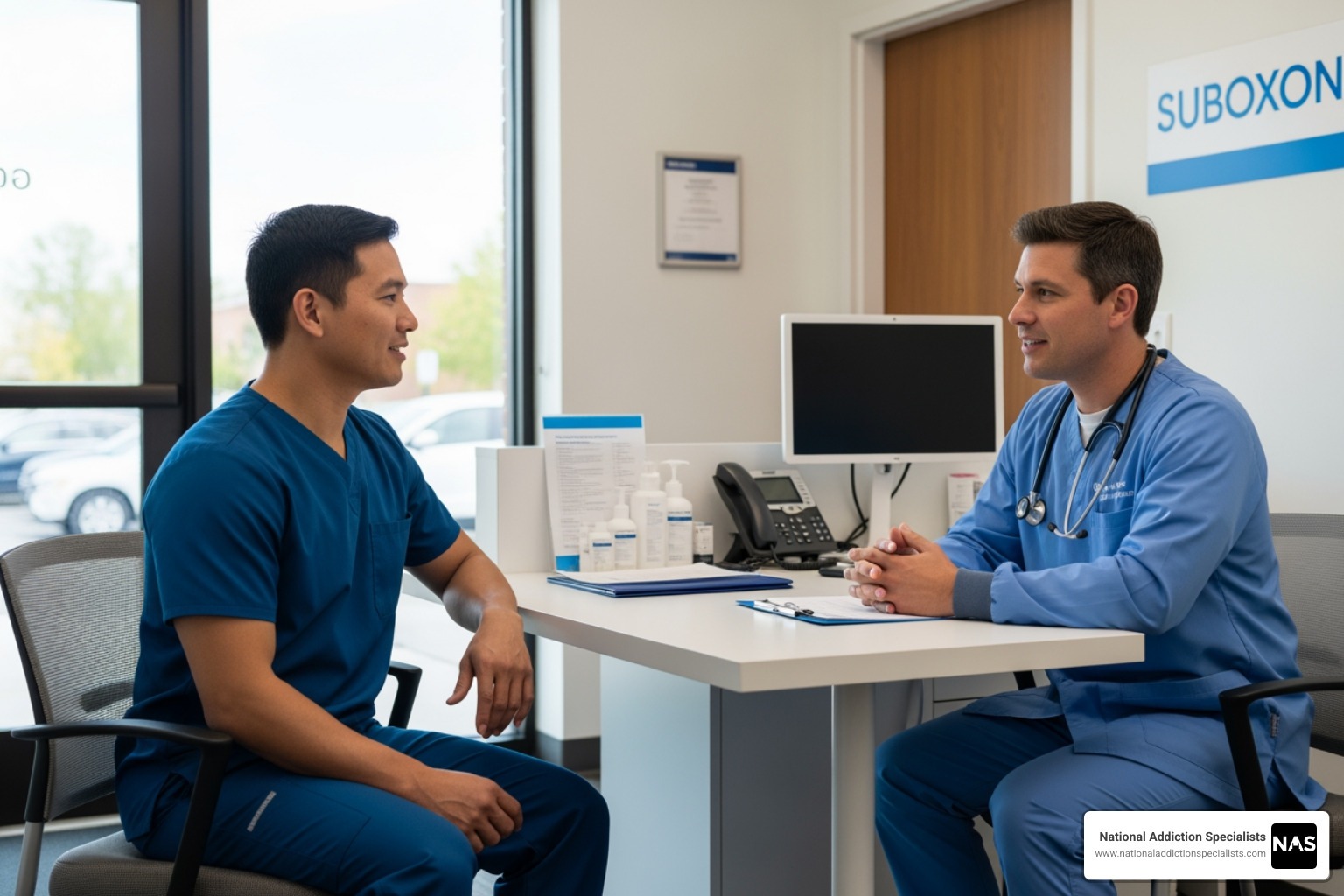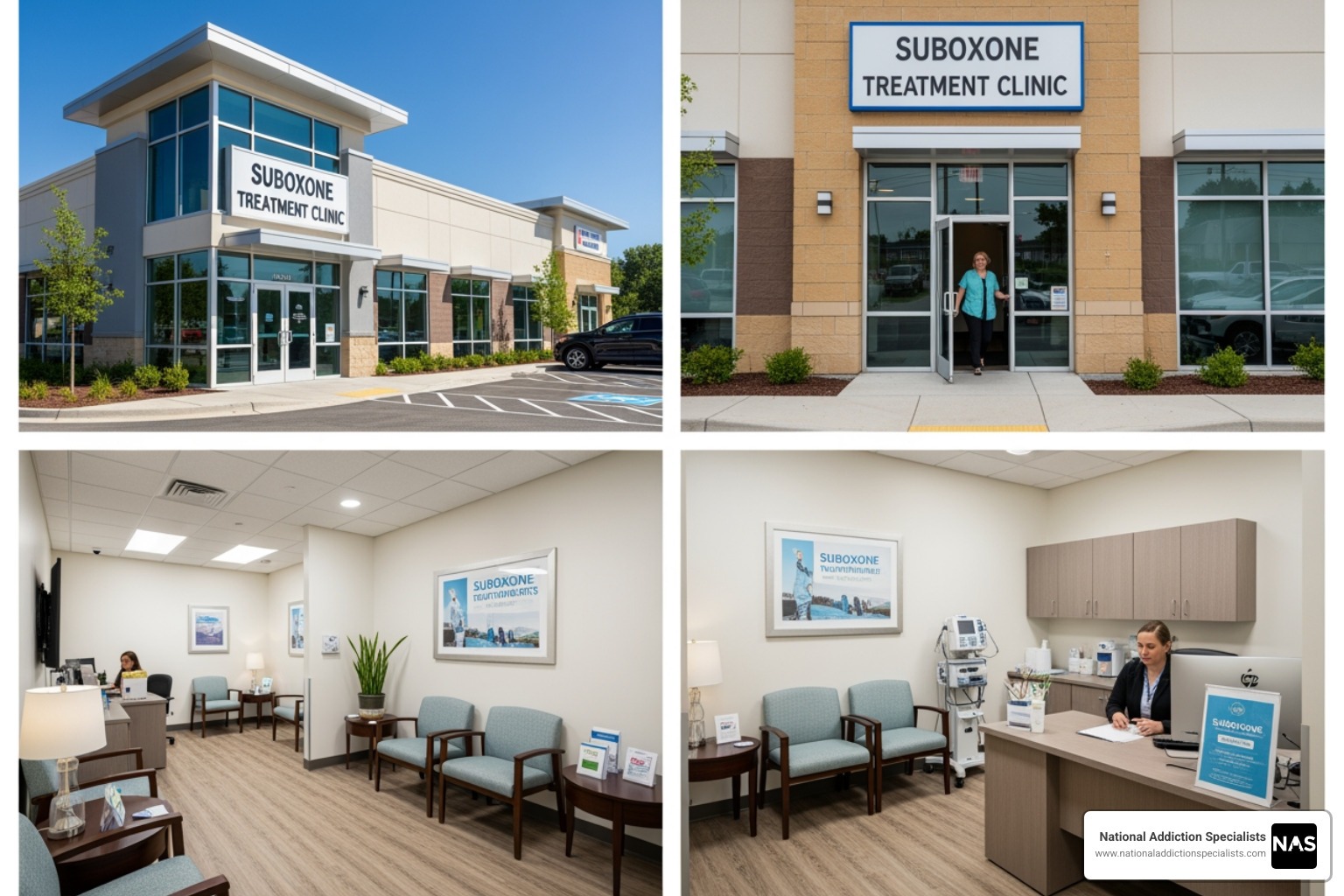
Clinic Quest: Unlocking Effective Suboxone Treatment Options
What Is a Suboxone Treatment Clinic and How Can It Help You?
A suboxone treatment clinic is a medical facility — or telehealth service — where licensed providers prescribe and manage Suboxone (buprenorphine/naloxone) to treat opioid use disorder (OUD). Here’s what you need to know at a glance:
| What You Want to Know | Quick Answer |
|---|---|
| Do I need a referral? | No — most clinics accept walk-ins or self-referrals |
| Is it covered by insurance? | Yes — Medicaid, Medicare, and many private plans cover treatment |
| Can I do it from home? | Yes — telehealth options are widely available |
| How fast can I start? | Often same day or within days of first contact |
| What does it treat? | Opioid dependence (heroin, fentanyl, oxycodone, and others) |
Opioid addiction is a medical condition — not a personal failure. Yet millions of people delay getting help because they don’t know where to start, fear judgment, or worry about the time commitment. That barrier is real, and it costs lives. In Ontario alone, opioid-related deaths occur at twice the rate of HIV-related deaths. Across the U.S. and Canada, opioid use disorder continues to be one of the most urgent public health challenges of our time.
The good news? Effective, evidence-based treatment exists — and it’s more accessible than most people realize.
Suboxone, a combination of buprenorphine and naloxone, is one of the most well-supported medications for opioid use disorder available today. When managed through a qualified clinic, it can reduce cravings, ease withdrawal, and support long-term recovery — whether you visit in person or connect from home via telehealth.
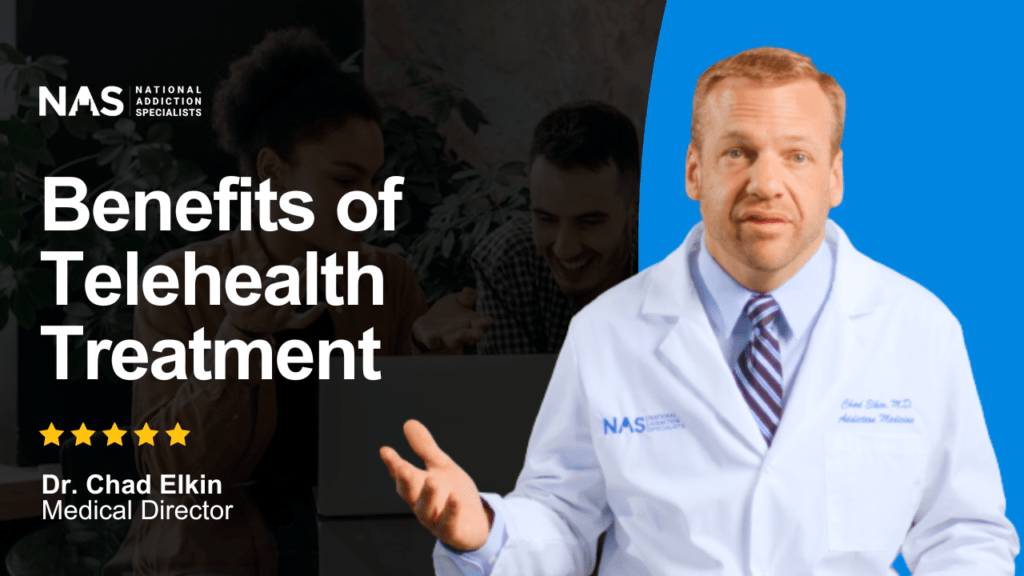
I’m Chad Elkin, MD — board-certified in Addiction Medicine and founder of National Addiction Specialists — and I’ve spent my career breaking down barriers to accessing suboxone treatment clinic care across Tennessee, Virginia, and beyond. In this guide, I’ll walk you through everything you need to know to find the right treatment path for you.
Quick suboxone treatment clinic definitions:
Understanding the Role of a Suboxone Treatment Clinic
When you walk into a suboxone treatment clinic (or log in for a virtual visit), you are entering a space designed specifically to combat the chemical hooks of opioid addiction. These clinics specialize in Opioid Agonist Therapy (OAT), which is widely considered the “gold standard” for treating addiction to substances like heroin, fentanyl, oxycodone, and morphine.
The primary tool used in these clinics is Suboxone, a medication that combines two key ingredients: Buprenorphine and Naloxone.
- Buprenorphine is a “partial agonist.” This means it attaches to the same receptors in the brain as opioids but doesn’t produce the same intense “high.” Instead, it quiets cravings and stops the agonizing symptoms of withdrawal.
- Naloxone is added as a safety feature. If the medication is taken as directed (dissolved under the tongue), the naloxone stays inactive. However, if someone tries to inject the medication to get high, the naloxone activates and blocks the opioid effects, potentially triggering withdrawal. This “built-in” deterrent makes Suboxone much safer than older treatments.
At a suboxone treatment clinic, the goal isn’t just to swap one drug for another. It is to stabilize your brain chemistry so you can focus on rebuilding your life. Without the constant, overwhelming “noise” of cravings, patients can return to work, mend relationships, and improve their overall health.
To find a certified facility near you, you can use the Opioid Treatment Program Directory.

Suboxone: A Flexible and Effective Treatment Option
One of the biggest advantages of choosing a suboxone treatment clinic over a traditional methadone clinic is flexibility. For decades, methadone was the only primary option, but it often required patients to show up at a clinic every single morning for their dose.
Suboxone changed the game. Because it has a “ceiling effect”—meaning taking more of it doesn’t continue to increase its effects indefinitely—it has a much lower risk of lethal overdose compared to full opioids. This safety profile allows doctors to provide “office-based” care. In many cases, you can receive a prescription that you fill at a regular pharmacy and take in the privacy of your own home.
We believe in a personalized approach. No two recovery journeys are identical. A high-quality suboxone treatment clinic will look at your specific history, the types of opioids you were using, and your lifestyle to create a plan that fits you, not a generic template.
The Suboxone Treatment Process: From Induction to Maintenance
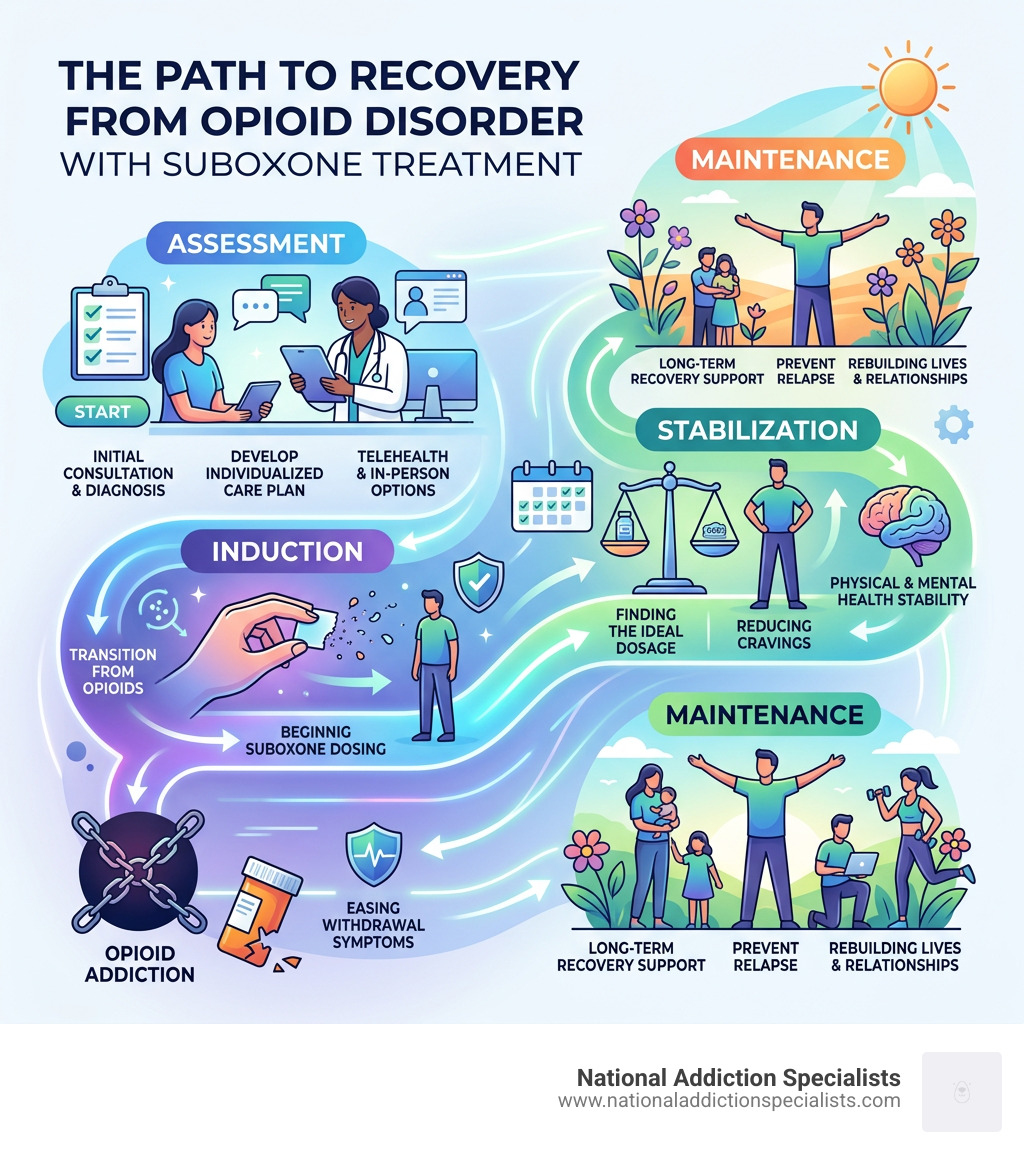
Starting treatment can feel intimidating, but the process is structured to keep you safe and comfortable. At National Addiction Specialists, we follow a science-backed three-phase approach.
1. The Induction Phase This is the “reset” button. It begins when you are in the early stages of withdrawal. It might sound counterintuitive, but you must be feeling some withdrawal symptoms before taking your first dose. If you take Suboxone too soon while other opioids are still active in your system, it can cause “precipitated withdrawal,” which is very uncomfortable. During induction, we start with a low dose and monitor you closely to ensure the withdrawal symptoms fade away. Most patients feel significant relief within just a few hours.
2. The Stabilization Phase Once the initial withdrawal is managed, we move into stabilization. During this period, we adjust your dosage to find the “sweet spot” where you have zero cravings and no side effects. You should feel “normal”—not high, and not sick. You’ll have regular check-ins with your care team to make sure the medication is working exactly as it should.
3. The Maintenance Phase This is the long-term part of the journey. Once you are stable, you enter maintenance. You continue taking your prescribed dose while focusing on therapy, support groups, or simply living your life. This phase can last for months or even years. There is no “right” timeline; some people use Suboxone as a long-term tool to prevent relapse, much like someone with high blood pressure takes daily medication to stay healthy.
What to Expect During Your First Visit to a Suboxone Treatment Clinic
Your first visit is essentially a “get to know you” session focused on your health. Whether it’s in person or via a telemedicine platform, here is what typically happens:
- Medical Assessment: We’ll talk about your physical health, any other medications you’re taking, and your history with substance use.
- History Review: Understanding how long you’ve been using and what substances you’ve used helps us determine the right starting dose.
- Urine Testing: This isn’t about “catching” you or judging you. It’s a vital medical tool to ensure we know what’s in your system so we can prescribe Suboxone safely.
- Personalized Treatment Plan: We’ll map out your goals. Do you want to stay on maintenance long-term? Are you interested in eventually tapering off? We decide this together.
- Same-Day Prescriptions: In many cases, if you meet the criteria, you can receive your first prescription the very same day.
Comprehensive Services and Harm Reduction Support
A suboxone treatment clinic should be more than just a place to get a prescription. Recovery is a whole-person process. That’s why the best clinics offer “wraparound” services that address the emotional and physical toll of addiction.
- Counseling and Behavioral Therapy: Medication handles the chemistry; counseling handles the “why.” We provide support to help you develop new coping mechanisms and address the underlying issues that led to substance use.
- Naloxone Education: We provide training and prescriptions for Naloxone (Narcan) kits. This lifesaving medication can reverse an overdose in minutes. We believe everyone in recovery—and their loved ones—should have one on hand.
- Hepatitis C Screening: Because many people who use opioids may have been exposed to Hep C through shared equipment, we offer routine screening. Modern treatments for Hep C are highly effective, and catching it early is key.
- Linkages to Community Support: We help connect you with local resources, from housing assistance to peer recovery specialists who have walked in your shoes.
Accessing Care at a Suboxone Treatment Clinic: Insurance and Costs
One of the biggest myths is that high-quality addiction care is unaffordable. At National Addiction Specialists, we work hard to make sure that isn’t the case.
- Medicaid and Medicare: We proudly accept Medicaid and Medicare in Tennessee and Virginia. These programs often cover the full cost of your clinic visits and a significant portion of your medication.
- Private Insurance: Many private health plans cover Suboxone treatment as part of their mental health and substance abuse benefits.
- No Referral Needed: You don’t need to wait for your primary care doctor to give you a “golden ticket.” You can call us directly to start the process. This “low-barrier” entry is designed to get you help the moment you decide you’re ready.
- Walk-In and Rapid Access: While we focus on telemedicine, many physical suboxone treatment clinic locations offer walk-in intakes to ensure no one is turned away during a moment of crisis.
Make an Appointment to Treat Addiction Please don’t hesitate. Make an appointment today. Make an Appointment
Telehealth vs. In-Person Clinic Visits
The world of addiction medicine has changed rapidly, especially with the rise of telemedicine. You now have the choice between visiting a physical clinic or receiving care from your own living room.
The Case for Telehealth: For many of our patients in rural Tennessee or Virginia, driving two hours to a suboxone treatment clinic every week is impossible. Telehealth removes that “door.”
- Privacy: No one sees your car in the clinic parking lot.
- Convenience: You can have your appointment during a lunch break or while the kids are napping.
- Consistency: It’s much easier to keep your appointments when you don’t have to worry about transportation or childcare.
The Case for In-Person Visits: Some people prefer the face-to-face connection of a physical office. In-person clinics can also provide immediate on-site services like safe-use supply exchanges or physical exams that might be necessary for complex medical cases.
Regardless of the format, the quality of care remains the same. Our online doctors are the same experts you would see in an office, providing the same level of medical oversight and support.
Frequently Asked Questions about Suboxone Clinics
How long does Suboxone treatment typically last?
There is no “expiration date” on recovery. Some people find that a few months of treatment gives them the stability they need to move on. Others stay on Suboxone for years. We view it as a long-term maintenance tool. If and when you are ready to stop, we will work with you on a “gradual tapering” plan. This involves slowly lowering your dose over weeks or months to ensure your brain has time to adjust, which drastically reduces the risk of relapse.
Do I need a referral to start treatment?
No. At National Addiction Specialists, we offer direct access. You can self-refer by calling us or filling out our new patient packet. We aim to be waitlist-free because we know that when someone asks for help, every hour counts.
What are the common side effects of Suboxone?
Like any medication, Suboxone can have side effects, though most are manageable. Common ones include:
- Nausea
- Headaches
- Constipation
- Sleep disturbances If you experience these, we can often manage them by adjusting your dosage or suggesting simple over-the-counter remedies. Most side effects fade as your body gets used to the medication during the stabilization phase.
Conclusion
Finding the right suboxone treatment clinic is the first step toward a life that isn’t dictated by the next dose. Whether you choose an in-person facility in Virginia Beach or use our telemedicine services from your home in Tennessee, the most important thing is that you start.
At National Addiction Specialists, we provide more than just a prescription; we provide a partnership. Our expert providers are dedicated to giving you the confidential, non-judgmental care you deserve. Recovery is possible, and it starts with a single conversation.
This article was medically reviewed by: Chad Elkin, MD, DFASAM is a board-certified addiction medicine physician, founder, and Chief Medical Officer of National Addiction Specialists, dedicated to treating substance use disorders. A Distinguished Fellow of the American Society of Addiction Medicine (ASAM), Dr Elkin currently serves as President of the Tennessee Society of Addiction Medicine (TNSAM) and has held various leadership roles within the organization. Dr Elkin chairs ASAM’s Health Technology Subcommittee and is an active member of its Practice Management and Regulatory Affairs Committee, State Advocacy and Legislative Affairs Committee, and other committees. He also serves on the planning committee for the Vanderbilt Mid-South Addiction Conference. Committed to advancing evidence-based policy, Dr Elkin is Chairman of the Tennessee Association of Alcohol, Drug, & Other Addiction Services (TAADAS) Addiction Medicine Council, which collaborates with the TN Department of Mental Health & Substance Abuse Services (TDMHSAS). He has contributed to numerous local, state, and national task forces, helping develop professional guidelines, policies, and laws that align with best practices in addiction medicine. His work focuses on reducing addiction-related harm, combating stigma, and ensuring access to effective treatment. Passionate about the field of addiction medicine, he remains dedicated to shaping policy and enhancing patient care.
Suboxone® and Subutex® are a registered trademark of Indivior UK Limited. Any mention and reference of Suboxone® and Subutex® in this website is for informational purposes only and is not an endorsement or sponsorship by Indivior UK Limited.