
The New Frontier of Recovery
Virtual recovery plans are personalized, written roadmaps for overcoming addiction that can be created, maintained, and supported entirely online through telehealth platforms, digital tools, and virtual support communities. They include your goals, triggers, coping strategies, support contacts, and relapse prevention steps—all accessible from the privacy of your home.
Key Elements of Virtual Recovery Plans:
- What They Are: Written guides outlining your recovery goals, triggers, coping strategies, and support system—adapted for online access
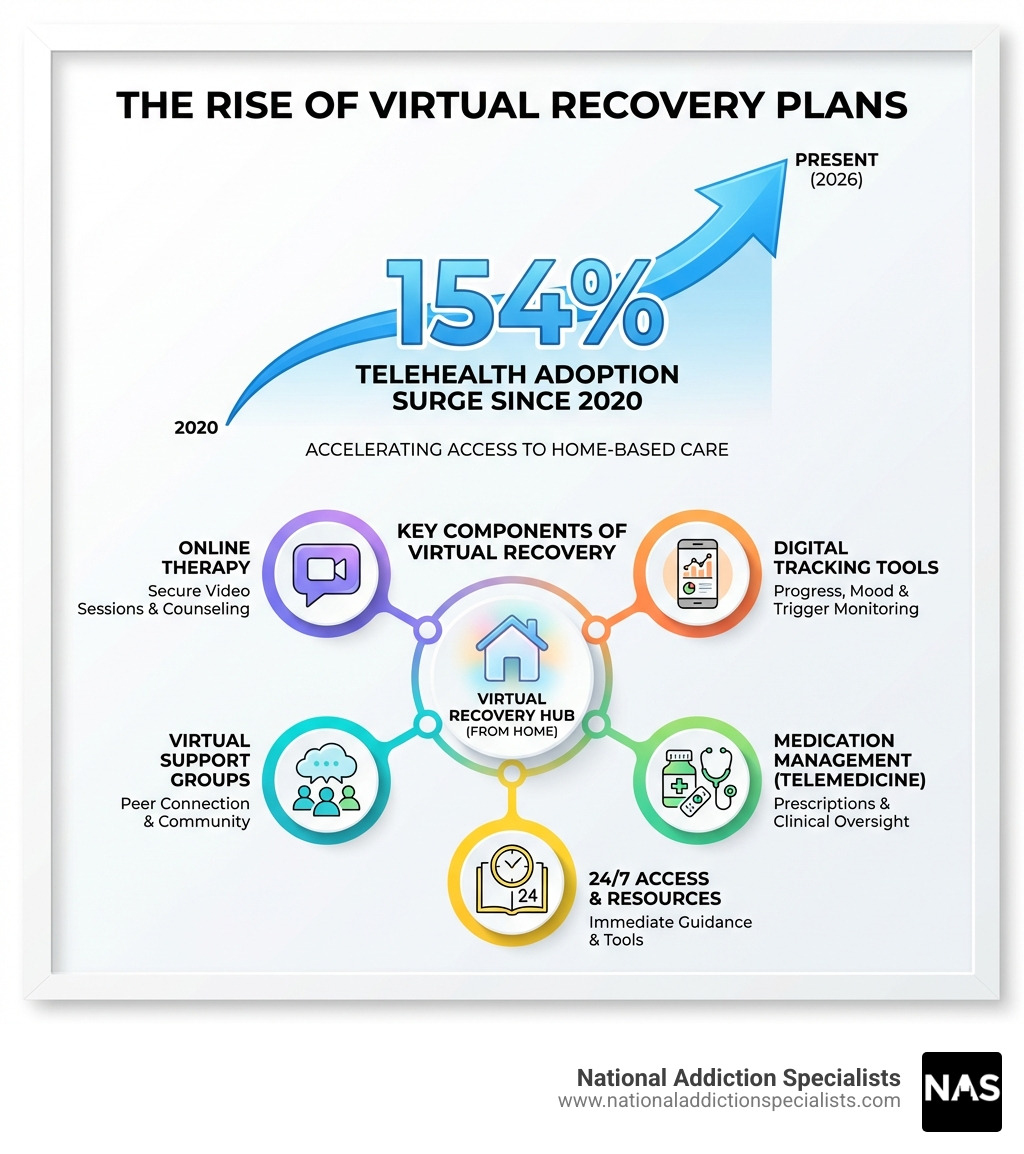
- How They Work: Combine telehealth appointments, digital tracking tools, virtual support groups, and online therapy
- Main Benefits: Privacy, flexibility, accessibility, and affordability compared to traditional in-person programs
- Who They Help: Anyone seeking sobriety, especially those facing barriers like transportation, stigma, or scheduling conflicts
- Technology Used: Secure video platforms, sobriety apps, digital journals, and encrypted messaging
The landscape of addiction recovery is changing fast. Telehealth adoption surged by 154% during the COVID-19 pandemic, forever changing how people access treatment. What started as an emergency solution has become a proven pathway to recovery for thousands of people who couldn’t—or wouldn’t—seek help through traditional clinics.
Virtual recovery plans adapt the proven framework of personal recovery planning for the digital age. Instead of paper documents, your plan lives on your phone or laptop. You connect to appointments from your living room and join support groups when it works for your schedule.
The core principle remains unchanged: a written recovery plan gives you direction, structure, and confidence. It’s your blueprint for staying sober. But going virtual removes many of the barriers that keep people from getting help in the first place—barriers like distance, cost, time constraints, and fear of being seen entering a treatment facility.
I’m Dr. Chad Elkin, a board-certified addiction medicine physician and founder of National Addiction Specialists. For years, I’ve helped people develop and implement Virtual recovery plans through telehealth services, witnessing how digital tools can make recovery more accessible and effective. This guide will show you exactly how to create your own plan and leverage technology to support your recovery journey.
Virtual recovery plans further reading:
Understanding the Foundation: What is a Personal Recovery Plan?
A personal recovery plan is more than just a to-do list; it’s a living document, a compass guiding you through the journey of overcoming addiction and building a healthier life. At its core, a personal recovery plan is a written guide that outlines your goals, coping strategies, triggers, and concrete steps to support your recovery. It helps you stay focused, organized, and prepared for challenges, serving as a constant reminder of your commitment.
Why is this so important? Think of it this way: when you’re building a house, you don’t just start nailing boards together. You need a blueprint, right? A personal recovery plan acts as that blueprint for your sobriety. Writing a formal, detailed plan custom to your needs greatly improves your chances of sustained recovery. It provides direction, structure, and confidence. A written plan makes your commitments tangible, reducing the chance of forgetting your goals during stressful moments and offering a clear roadmap when motivation wavers.
According to SAMHSA (Substance Abuse and Mental Health Services Administration), recovery is a process of change through which individuals improve their health and wellness, live self-directed lives, and strive to reach their full potential. A personal recovery plan helps you align with this definition, providing the framework to achieve it.
Who can benefit from such a plan? Anyone working to maintain sobriety or change their relationship with substances. This includes patients in treatment programs, individuals who have completed treatment, and even those navigating recovery on their own. It’s a versatile tool for anyone committed to a balanced, substance-free life.
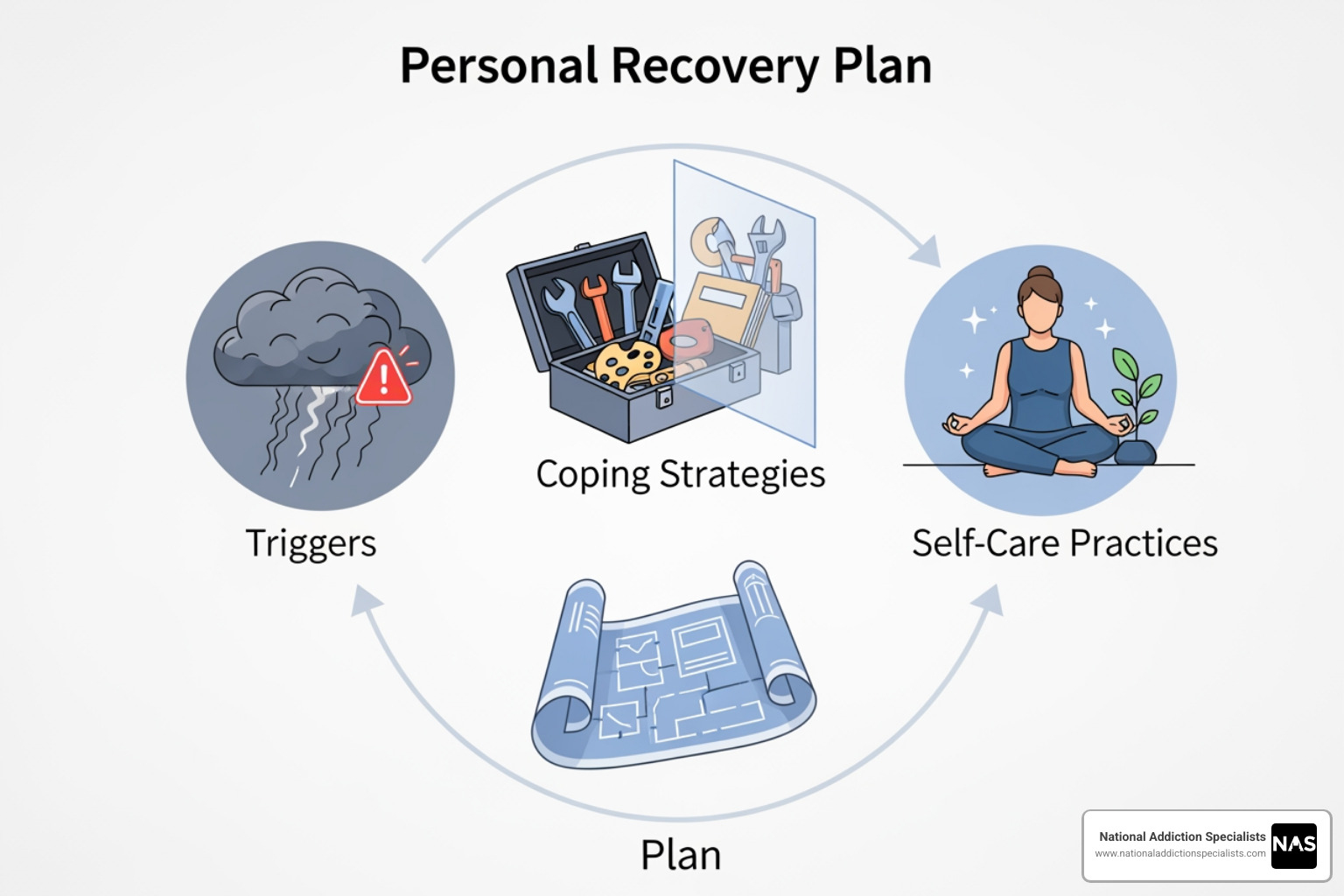
A truly effective recovery plan isn’t just a single page of notes; it’s a comprehensive strategy. While each plan is unique to the individual, most plans include several key components that form a robust framework for lasting recovery:
- Personal Triggers: These are the people, places, things, emotions, or situations that make you want to use substances. Identifying them is the first step toward managing them.
- Coping & Management Strategies: Once you know your triggers, you need a plan for how to handle them. This includes healthy coping skills to develop (like mindfulness or exercise) and specific actions to take when triggers arise.
- Self-Care Practices: Recovery is hard work, and you need to replenish your energy. This component focuses on activities that promote your physical, mental, and emotional well-being, such as adequate sleep, healthy nutrition, relaxation techniques, and hobbies.
- Support System & Contacts: No one recovers alone. This section lists trusted individuals (family, friends, sponsors, therapists, doctors) and groups (like SMART Recovery or LifeRing) you can reach out to, along with their contact information.
- Relapse Prevention Strategies: This is your emergency plan. It outlines what to do if you feel an urge to use, who to call, and steps to take to prevent a full relapse. It’s about having a crisis plan in place before a crisis hits.
- Long-Term Goals: Beyond initial sobriety, what does a fulfilling life look like for you? These goals can be related to career, relationships, education, health, or personal growth, providing motivation and a vision for the future.
These components work together to create a holistic and proactive approach to recovery, ensuring you’re prepared for whatever comes your way.
How to Create Your Personal Recovery Plan: A Step-by-Step Guide
Creating your personal recovery plan is a deeply personal and empowering process. It requires self-reflection and honesty, but the effort pays dividends. Before you even put pen to paper (or fingers to keyboard), there are some crucial preparatory steps.
First, engage in a thorough self-assessment. Ask yourself:
- What are my motivations for making this change? What truly drives me towards sobriety?
- What challenges will potentially be my biggest barriers? Be honest about your weaknesses and potential pitfalls.
- Can I commit to following the steps I create to change my life? This isn’t about perfection, but about dedication.
Once you’ve reflected on these questions, you’re ready to dive into the practical steps of writing your plan. Writing it down makes your commitments tangible and provides a clear roadmap for your journey.
Here are the steps we recommend for crafting your own personal recovery plan, drawing from best practices in the field:
Step 1: Gather Information and Get Organized
Start by collecting all relevant information. This could include contact details for your doctor, therapist, sponsor, or support group members. If you’re receiving medication-assisted treatment (MAT) like Suboxone, keep your clinic’s information handy. Consider creating a dedicated digital folder or binder for all your recovery resources.
Step 2: Make Note of Your Feelings and Define Goals
Take time to observe and record your feelings—mental, emotional, and physical. What triggers them? What situations make you feel strong, and what makes you feel vulnerable? Then, translate this self-awareness into clear, achievable goals for your recovery. These goals should cover both short-term milestones (e.g., “attend three virtual meetings this week”) and long-term aspirations (e.g., “complete my degree,” “rebuild relationships”). Your goals should align with SAMHSA’s definition of recovery: improving health and wellness, living a self-directed life, and striving to reach your full potential.
Step 3: Identify Your Triggers and Create a Plan of Attack
This is where you list those specific people, places, things, or emotions that tempt you to use. For each trigger, develop a concrete strategy to manage or avoid it. For example, if a certain social circle is a trigger, your plan might be to politely decline invitations or suggest alternative, sober activities. If stress is a trigger, your plan might involve deep breathing exercises or a quick call to a support person.
Step 4: Outline Your Support System
Detail who your support network consists of. This includes family, friends, mentors, and professional help. List their names, contact information, and how they can assist you. Don’t forget about professional support like Online Addiction Counseling which can be a vital part of your recovery journey, offering expert guidance right from your home in Tennessee or Virginia.
Step 5: Design a Relapse Crisis Plan and Learn Coping Skills
This is your “what if” plan. What will you do if you feel an intense craving? Who will you call immediately? Where will you go? Having these answers ready before a crisis greatly increases your chances of preventing a full relapse. Simultaneously, focus on developing and practicing healthy coping skills. These could be anything from meditation and exercise to journaling or engaging in creative pursuits. Regularly assess which coping skills work best for you.
Step 6: Take Care of Yourself Holistically
Your recovery plan should also address your overall well-being. This involves good nutrition, regular exercise, adequate sleep, and managing any co-occurring mental health conditions. Looking at your “whole person” ensures that you’re building a strong foundation for lasting sobriety.
Step 7: Implement Your Plan
A plan is only as good as its implementation. Start putting your strategies into action. This means actively engaging with your support system, practicing your coping skills, and making conscious choices that align with your recovery goals every single day.
Creating this plan is an investment in yourself. It might seem daunting, but the clarity and confidence it provides are invaluable.
Make an Appointment to Treat Addiction
Please don’t hesitate. Make an appointment today.
Make an Appointment to Treat Addiction
Taking It Online: Crafting Effective Virtual Recovery Plans
A personal recovery plan is adaptable. In today’s interconnected world, we can easily convert these recovery blueprints to a virtual format. Your plan can live on your computer, tablet, or smartphone, making it accessible whenever and wherever you need it.
Adapting your plan online involves converting your written guide into digital documents, utilizing sobriety tracking apps, and leveraging secure online platforms for communication and support. Imagine having your triggers list, coping mechanisms, and emergency contacts just a tap away, rather than buried in a drawer.
The benefits of using a virtual platform for creating and maintaining a recovery plan are extensive, especially for individuals in states like Tennessee and Virginia where access to in-person services might be limited.
- Accessibility: Virtual platforms remove geographical barriers. For those in rural areas or without reliable transportation, online options mean treatment and support are no longer out of reach. In 2022, there were 17,353 substance abuse treatment facilities in the U.S., but access to these facilities can still be limited for many. Virtual programs bridge this gap.
- Affordability: Virtual programs are generally more affordable than traditional in-person treatment, making them an excellent entry point for those with financial constraints. By eliminating the need for physical facilities and reducing overhead costs, virtual addiction treatment can be more cost-effective.
- Privacy: For many, the stigma associated with addiction can be a significant barrier to seeking help. Virtual platforms offer a discreet way to engage in recovery. You can participate in therapy sessions or support groups from the comfort and privacy of your own home, reducing the fear of being seen or judged.
- Flexibility: Life doesn’t stop for recovery. Virtual plans allow you to schedule sessions and engage with resources around your work, school, or family commitments. This flexibility is a game-changer for maintaining consistency in your recovery efforts.

While virtual programs offer incredible advantages, it’s important to note that they may not be suitable for everyone. Severe addiction cases often require more structured care, such as in-person treatment or hybrid models like intensive outpatient programs. However, for many, especially those with mild to moderate substance use disorders, virtual programs can be just as effective, offering convenience, accessibility, and personalized support that rivals in-person care.
To learn more about the effectiveness and benefits of virtual care, you can explore the Benefits of telehealth for addiction services from HHS.
How Technology Supports Virtual Recovery Plans
Technology is not just a facilitator for virtual recovery plans; it’s an active partner in your journey. It provides the infrastructure and tools necessary to implement and track your plan effectively.
- Telehealth Platforms: These are the backbone of virtual recovery. Secure video conferencing platforms allow for individual counseling, group therapy, and medication management with licensed professionals. Here at National Addiction Specialists, we leverage state-of-the-art telehealth technology to provide compassionate, evidence-based care, including Telemedicine in Suboxone Treatment for opioid use disorder.
- Sobriety Tracking Apps: Numerous apps are designed to help you track your sobriety milestones, monitor cravings, log your moods, and connect with peers. These tools can provide real-time data and insights into your progress and challenges.
- Online Support Groups: Platforms like SMART Recovery and LifeRing host online meetings, providing confidential and supportive spaces for individuals committed to achieving and maintaining sobriety. These virtual meetings offer a sense of community and accountability, with convenor-led discussions focused on present-day recovery experiences and future plans.
- Digital Journals and Planners: Keeping a digital journal allows you to record your thoughts, feelings, and progress. Online planners can help you schedule appointments, self-care activities, and support group meetings, ensuring your recovery plan stays organized and actionable.
- Wearable Technology: While still emerging, wearables can offer insights into sleep patterns, stress levels, and physical activity, all of which are important aspects of holistic recovery.
These technological tools make it easier to stay connected to your recovery plan, adapt to challenges, and celebrate successes, all from the palm of your hand.
Examples of Resources for Your Virtual Recovery Plan
Integrating various virtual resources into your personal recovery plan can create a robust and comprehensive support system. Here are some examples that can be particularly helpful:
- Online Therapy and Counseling: Access to qualified therapists and counselors through secure video calls is a cornerstone of virtual recovery. We offer Virtual Addiction Counseling services, allowing you to connect with experts from anywhere in Tennessee or Virginia. This is especially beneficial for addressing underlying mental health conditions that often co-occur with substance use disorders.
- Medication-Assisted Treatment (MAT) Online: For opioid use disorder, MAT, particularly with medications like Suboxone, is a highly effective treatment. Telehealth has made MAT more accessible than ever. Our services include Medication Assisted Treatment Online, providing convenient and confidential care.
- Virtual Support Communities:
- SMART Recovery: This is a leading, evidence-informed approach to overcoming addictive behaviors and leading a balanced life. Their online meetings and tools emphasize self-empowerment and self-reliance, making it an excellent resource for building coping skills and managing thoughts, feelings, and behaviors.
- LifeRing: LifeRing online meetings provide a confidential and supportive space for individuals committed to achieving and maintaining sobriety. The only requirement to participate is a desire to be sober, and you must be sober to share or crosstalk. These meetings foster a “living-room-like” atmosphere where participants share their current recovery experiences.
- Government Resources:
- FindTreatment.gov: This is a confidential and anonymous resource for persons seeking treatment for mental and substance use disorders in the United States. It can help you locate facilities and programs that might offer virtual components or integrate with your virtual plan.
- 988 Suicide & Crisis Lifeline: While not directly a recovery plan tool, it’s a critical resource for immediate support during mental health or substance-related crises. Having this number handy is an essential part of any comprehensive safety plan.
- Veterans Crisis Line: For veterans in Tennessee and Virginia, this resource provides confidential support, which can be integrated into their recovery plan.
By combining these resources, you can build a personalized, accessible, and highly effective virtual recovery plan that meets your unique needs and circumstances.
Ensuring Success and Security with Your Plan
A virtual recovery plan requires ongoing attention. It’s not a static tool but a living document that evolves with you and your recovery journey. Regular maintenance is crucial, especially as your needs and circumstances change.
Keeping Your Virtual Recovery Plan Confidential
When your personal recovery plan and sensitive health information are online, confidentiality and security become paramount. We understand that privacy is a major concern, and we take it very seriously. Here’s how we ensure the confidentiality and security of your virtual recovery plan and how you can protect your data:
- HIPAA Compliance: Any reputable telehealth provider, including National Addiction Specialists, must adhere to the Health Insurance Portability and Accountability Act (HIPAA) regulations. This means strict rules are in place to protect your medical information. We ensure that our platforms and practices meet or exceed these standards, especially for services like Telehealth Suboxone Treatment in Tennessee and Virginia.
- Secure Platforms: We use encrypted, secure video conferencing and patient portal platforms specifically designed for healthcare. These platforms prevent unauthorized access to your sessions and data. Think of it like a digital vault for your sensitive conversations and documents.
- Password Protection and Two-Factor Authentication (2FA): Always use strong, unique passwords for all your recovery-related accounts. Enabling two-factor authentication adds an extra layer of security, requiring a second verification step (like a code sent to your phone) to access your accounts. This is a fundamental principle of cybersecurity, as highlighted in general cybersecurity guidelines that emphasize protecting sensitive information.
- Reputable Providers: Choosing a trustworthy provider is key. We, at National Addiction Specialists, are committed to maintaining the highest standards of data security, ensuring your personal information and recovery plan remain confidential. We are transparent about our privacy practices and the security measures we employ.
- Personal Device Security: Ensure your personal devices (computer, tablet, phone) are secure. Keep your operating system and apps updated, use antivirus software, and avoid public Wi-Fi for sensitive recovery sessions or accessing your plan. The principles of IT recovery planning, while often applied to large organizations, underscore the importance of having personal safeguards and understanding the vulnerabilities of digital systems. Just as organizations plan for cybersecurity event recovery, individuals should be aware of protecting their personal digital footprint. You can learn more about general cybersecurity best practices from resources like the Guide for Cybersecurity Event Recovery, which, while focused on IT systems, emphasizes the need for robust security measures to protect critical information.
By taking these steps, we work together to ensure that your virtual recovery plan is not only effective but also safe and private.
A Living Document: Reviewing and Updating Your Plan
Your personal recovery plan is not set in stone; it’s a living, breathing document that should evolve as you do. The journey of recovery is dynamic, filled with new insights, challenges, and triumphs. Therefore, how often should a personal recovery plan, virtual or otherwise, be reviewed and updated?
We recommend regular reviews, and definitely during specific life transitions or changes in stress levels. Think of your plan like a favorite sweater: it might need a little mending or adjusting over time to fit you perfectly.
- Regular Reviews: Aim for a consistent review schedule, perhaps monthly or quarterly. This allows you to check in with your goals, assess the effectiveness of your coping strategies, and identify any new triggers or challenges that have emerged.
- Life Transitions: Major life changes—such as a new job, moving to a new city (like from Nashville to Virginia Beach), starting a new relationship, or experiencing a significant loss—can significantly impact your recovery. These are critical times to revisit and update your plan to reflect your new circumstances and needs.
- Post-Relapse Review: If a relapse occurs, it’s not a failure, but an opportunity to learn. A post-relapse review of your plan is essential. What led to the relapse? What aspects of your plan need strengthening? This is a time for honest reflection and adjustment, not self-blame.
- Goal Changes: As you progress in recovery, your goals will naturally shift. What was once a primary goal (e.g., achieving initial sobriety) might be replaced by new aspirations (e.g., pursuing education, volunteering, or deepening relationships). Your plan should always reflect your current vision for a fulfilling, sober life.
- Evolving Document: Remember the research insight: “Your plan should evolve as you do. Review it regularly—especially during life transitions or changes in stress levels—and update it to reflect new goals, supports, or challenges.” This continuous adaptation ensures your plan remains relevant, effective, and truly yours.
By regularly reviewing and updating your virtual recovery plan, you ensure that it continues to be a powerful and personalized tool, keeping you on track toward sustained sobriety and a life of wellness.
Conclusion: Your Path to Accessible and Personalized Recovery
We’ve explored the profound impact virtual recovery plans can have on your journey to sobriety. From their foundational role as a personal blueprint to the incredible accessibility and flexibility offered by online platforms, these plans represent a new frontier in addiction recovery. We’ve seen how they can be carefully crafted, leveraging technology to provide support, structure, and confidence, regardless of where you are in Tennessee or Virginia.
The benefits are clear: improved accessibility for those facing geographical or logistical barriers, increased affordability, and a level of privacy that can significantly reduce the stigma often associated with seeking help. Technology, from secure telehealth platforms to sobriety apps and virtual support groups, empowers us to implement and track these plans with unprecedented effectiveness. And by understanding the importance of confidentiality and regularly updating our plans, we ensure they remain secure, relevant, and responsive to our evolving needs.
Your recovery journey is deeply personal, and your plan should reflect that. At National Addiction Specialists, we believe in empowering individuals with the tools and support they need to achieve lasting sobriety. Our telemedicine-based Suboxone treatment and comprehensive online addiction counseling are designed to integrate seamlessly into your virtual recovery plan, offering expert care conveniently from your home.
Don’t let distance or apprehension stand in the way of a healthier, sober future. Take the first step today.
Start your recovery journey with our new patient packet
This article was medically reviewed by:
Chad Elkin, MD, DFASAM is a board-certified addiction medicine physician, founder, and Chief Medical Officer of National Addiction Specialists, dedicated to treating substance use disorders. A Distinguished Fellow of the American Society of Addiction Medicine (ASAM), Dr Elkin currently serves as President of the Tennessee Society of Addiction Medicine (TNSAM) and has held various leadership roles within the organization. Dr Elkin chairs ASAM’s Health Technology Subcommittee and is an active member of its Practice Management and Regulatory Affairs Committee, State Advocacy and Legislative Affairs Committee, and other committees. He also serves on the planning committee for the Vanderbilt Mid-South Addiction Conference. Committed to advancing evidence-based policy, Dr Elkin is Chairman of the Tennessee Association of Alcohol, Drug, & Other Addiction Services (TAADAS) Addiction Medicine Council, which collaborates with the TN Department of Mental Health & Substance Abuse Services (TDMHSAS). He has contributed to numerous local, state, and national task forces, helping develop professional guidelines, policies, and laws that align with best practices in addiction medicine. His work focuses on reducing addiction-related harm, combating stigma, and ensuring access to effective treatment.Passionate about the field of addiction medicine, he remains dedicated to shaping policy and enhancing patient care.
Suboxone® and Subutex® are a registered trademark of Indivior UK Limited. Any mention and reference of Suboxone® and Subutex® in this website is for informational purposes only and is not an endorsement or sponsorship by Indivior UK Limited.