Why Recovery Isn’t One-Size-Fits-All
Personalized recovery plans are customized roadmaps for addiction recovery that address your unique needs, triggers, goals, and circumstances. Here’s what makes them essential:
- Custom to You: Plans consider your specific substance use history, mental health, physical health, and life situation
- Higher Success Rates: When recovery plans match individual needs and goals, research shows faster progress and improved outcomes
- Active Participation: You become the author of your own recovery, not just a passive participant
- Holistic Approach: Address physical health, mental wellness, emotional healing, and social support together
- Flexible and Evolving: Your plan adapts as your needs change throughout recovery
The difference between generic treatment and a personalized approach is profound. Generic programs often focus solely on abstinence using standardized steps. Personalized recovery plans recognize that your path to wellness is uniquely yours—shaped by your relationships, your triggers, your strengths, and your definition of a fulfilling life.
This personalized approach boosts motivation and encourages a deeper sense of commitment towards the recovery process. When patients take an active role in their recovery program, they frequently experience a greater sense of independence and confidence in managing their own progress.
I’m Dr. Chad Elkin, a board-certified addiction medicine physician and founder of National Addiction Specialists, where I’ve helped thousands of individuals develop Personalized recovery plans that address their unique circumstances through evidence-based telehealth services. My work focuses on eliminating barriers to care and empowering people to take ownership of their recovery journey.
Personalized recovery plans glossary:
What Are Personalized Recovery Plans and Why Are They Crucial?
A personalized recovery plan is essentially a bespoke blueprint for healing. It’s a comprehensive strategy that tailors every aspect of the recovery journey to an individual’s specific needs, abilities, and goals. Unlike a one-size-fits-all approach, our personalized plans recognize that each person’s experience with addiction is unique, influenced by their personal history, mental and physical health, social environment, and aspirations for the future.
Why is this level of customization so crucial? Because recovery isn’t just about stopping substance use; it’s about rebuilding a life that is fulfilling and sustainable. This requires a holistic approach that addresses not only the physical aspects of addiction but also mental, emotional, and social well-being. When a recovery plan is custom to a patient’s unique needs, abilities, and goals, we often see faster progress and improved outcomes. This customized approach boosts motivation and encourages a deeper sense of commitment towards the recovery process. Patients who take an active role in their home exercise program frequently experience a greater sense of independence and confidence in managing their own progress.

The Key Benefits of a Custom-Custom Approach
The advantages of personalized recovery plans are profound and far-reaching:
- Higher Engagement and Motivation: When a plan reflects your personal values and goals, you’re more likely to feel invested and motivated. This active participation fosters a sense of ownership over your well-being.
- Addressing Co-occurring Disorders: Many individuals struggling with addiction also face mental health challenges like anxiety, depression, or trauma. A personalized plan can integrate treatment for these co-occurring disorders, ensuring holistic care. For example, a plan might include specific therapies like CBT or EMDR to address underlying trauma, alongside medication management for mental health conditions.
- Incorporating Personal Preferences: From therapeutic modalities to self-care activities, a personalized plan allows for the inclusion of what genuinely resonates with you. This could mean incorporating mindfulness practices, specific types of exercise, or even cultural practices that are important to your healing.
- Building Trust and Engagement in Treatment: When your views and preferences are heard and integrated into your treatment, it builds trust with your care team. This collaborative approach improves engagement, making treatment feel like a partnership rather than a directive.
- Increased Confidence and Autonomy: Taking an active role in developing and maintaining your plan empowers you. It helps you recognize your body’s signals, adjust exercises independently, and fosters a sense of mastery that translates into greater independence in daily life.
- Improved Recovery Outcomes: By addressing specific issues that contribute to substance use, recognizing and managing additional mental or physical health issues, and incorporating your unique circumstances, personalized recovery plans lead to more effective and lasting recovery. They provide the specific support needed to overcome unique obstacles and achieve sustainable healing.
To explore various strategies for your journey, visit our page on Addiction Recovery Strategies.
Generic vs. Personalized Plans: A Clear Distinction
To truly understand the power of personalization, let’s look at how a generic recovery approach differs from a custom one:
| Aspect | Generic Recovery Plan | Personalized Recovery Plan |
|---|---|---|
| Flexibility | Rigid, standardized steps for all. | Adaptable, evolving with individual needs and progress. |
| Goal Setting | Broad, abstinence-focused goals. | SMART (Specific, Measurable, Achievable, Relevant, Time-bound) goals custom to individual aspirations (e.g., playing with grandchildren, training for a marathon). |
| Core Focus | Primarily abstinence from substance use. | Holistic wellness, addressing physical, mental, emotional, and social health. |
| Individual Involvement | Passive recipient of treatment. | Active participant, co-creating the plan with professionals and support systems. |
| Addressing Underlying Issues | May offer general support for common issues. | Digs into specific triggers, traumas, co-occurring disorders, and unique life circumstances. |
| Motivation & Commitment | Relies on external motivation and program structure. | Fosters internal motivation, ownership, and a deeper sense of commitment. |
| Relapse Prevention | Standardized relapse prevention techniques. | Customized strategies based on personal triggers, coping skills, and support networks. |
How to Create Your Personalized Recovery Plan: A Step-by-Step Guide
Creating your own personalized recovery plan is an empowering process. It’s about taking stock of where you are, envisioning where you want to be, and mapping out the steps to get there. This isn’t just a clinical document; it’s a living guide for your life.

Step 1: Conduct a Thorough Self-Assessment
Before you can build a roadmap, you need to know your starting point. This initial assessment is crucial for understanding your unique landscape of needs, strengths, and potential challenges.
- Identify Motivations: What truly drives your desire for recovery? Is it to reclaim a career, reconnect with family, improve your health, or improve your self-esteem? These motivations will be your North Star.
- Recognize Challenges and Barriers: Be honest about what might stand in your way. This could include limited coping skills, insufficient support systems, legal or financial issues, or specific triggers. Identifying these early allows you to develop strategies to overcome them.
- Assess Strengths and Resources (Recovery Capital): We all have inherent strengths and resources. These are often referred to as “recovery capital,” encompassing personal (physical health, human capital), family/social (relationships, sober outlets), and community resources (treatment centers, support groups, role models). Understanding your recovery capital helps us identify resources you can leverage.
- Physical Health Status: A comprehensive assessment includes your physical health history. Are there any chronic conditions, nutritional deficiencies, or other physical needs that impact your recovery? For those dealing with opioid addiction, this might involve considering medication-assisted treatment (MAT) options.
- Mental Health History: Many individuals in recovery have co-occurring mental health conditions. A thorough review of your mental health history helps us integrate appropriate therapies and support into your plan.
- Social Circumstances: Your living situation, relationships, and daily routines all play a role. Do you have a supportive home environment? Are there social circles that might pose a risk?
- Consider Triggers: What specific people, places, things, or emotions tend to make you want to use substances? This can include environmental triggers (like certain locations in Brentwood, TN, or Virginia Beach, VA), emotional triggers (stress, sadness), or social triggers (peer pressure).
Understanding yourself is the first step towards taking control of your journey. For more in-depth knowledge about your health, explore our Patient Education resources.
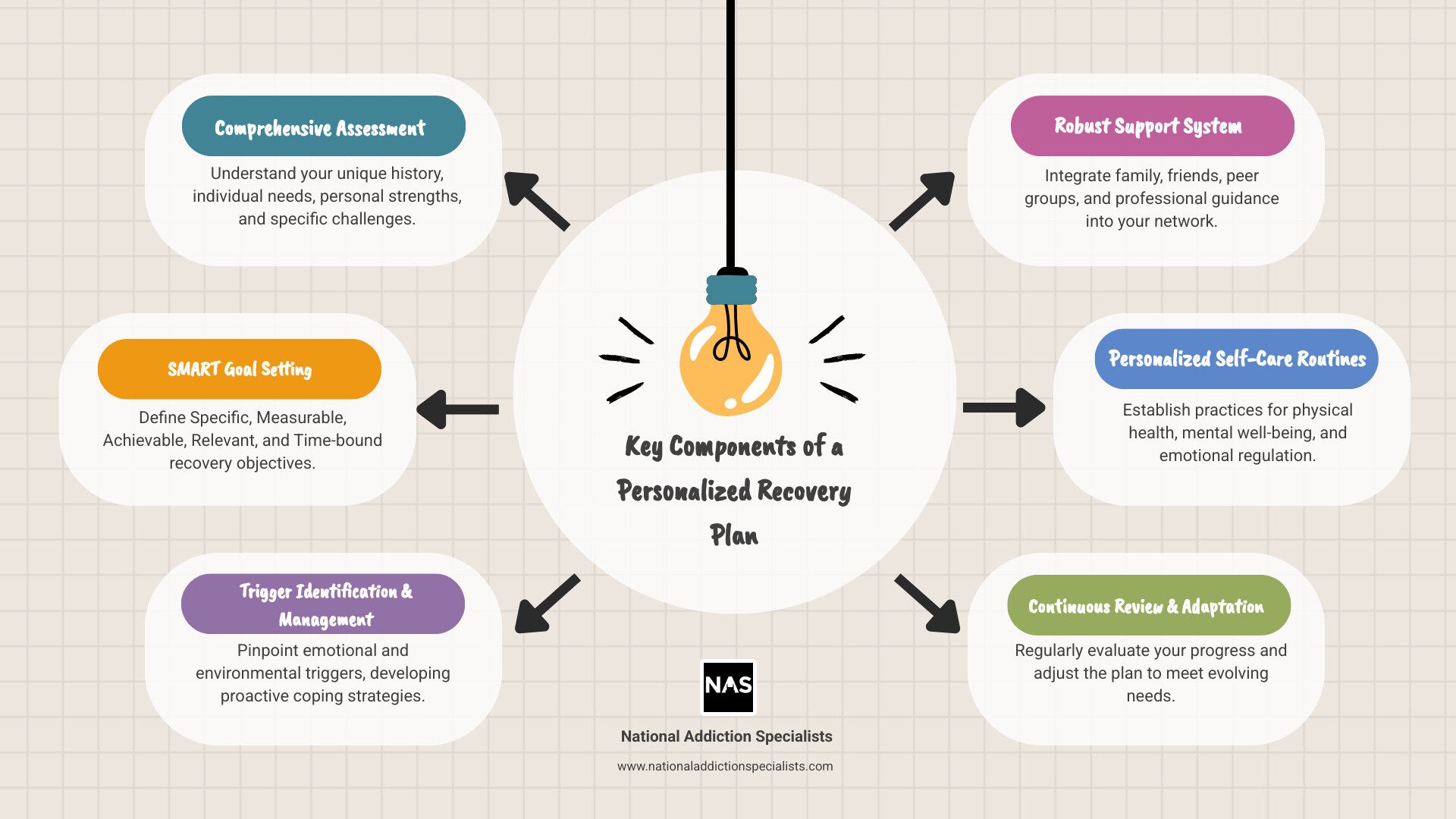
Step 2: Define the Core Components of Your Personalized Recovery Plan
With your self-assessment complete, it’s time to outline the practical elements of your plan. This is where your roadmap truly begins to take shape.
- Set SMART Goals: Your goals should be Specific, Measurable, Achievable, Relevant, and Time-bound. Instead of “get better,” aim for “attend three support group meetings per week for the next month” or “start a new hobby in Virginia Beach, VA, to replace old routines.” These clear goals provide direction and allow you to track progress.
- Trigger Identification and Management: List your personal triggers and develop specific strategies for addressing each one. For example, if “passing a certain bar on the way home” is a trigger, your strategy might be to “take an alternative route home every day.” If “stress at work” is a trigger, strategies could include “practicing mindfulness for 10 minutes daily” or “scheduling regular breaks.”
- Coping Mechanisms: Identify healthy ways to manage stress, cravings, and difficult emotions. This could involve learning new skills like deep breathing, journaling, engaging in healthy activities, or practicing self-soothing techniques. What coping skills will you learn or improve, and how will you do this?
- Self-Care Routines: Prioritize activities that nourish your physical and mental well-being. This includes adequate sleep, a nutritious diet, regular exercise, and engaging in hobbies or relaxation techniques. For example, committing to “go to bed by 11 pm to get eight hours of sleep” or “pack healthy snacks instead of relying on fast food.” The role of nutrition in recovery is often underestimated; learn more about the Importance of Nutrition in Addiction Recovery.
- Relapse Prevention Strategies: This is a critical part of your plan. Outline warning signs of potential relapse and specific responses. This might include contacting a sponsor, attending extra support group meetings, or reaching out to a therapist.
- Additional Commitments: What other promises will you make to yourself to support long-term recovery? This could be anything from volunteering in your community to pursuing further education.
A written plan acts as a blueprint and a reliable source of good ideas, especially when motivation wanes or stress increases. You can find templates and guidance to help you structure your plan, such as those found in Developing Your Personal Recovery Plan (Template Included).
Step 3: Integrate a Strong Support System
You don’t have to walk this path alone. A robust support system is a cornerstone of successful recovery.
- Family Involvement: Healing damaged relationships and involving loved ones in your recovery journey can be incredibly powerful. Family therapy can help rebuild trust and communication.
- Supportive Friends: Identify friends who genuinely support your sobriety and can be positive influences. It’s equally important to distance yourself from relationships that might jeopardize your recovery.
- Peer Support Groups: Groups like Alcoholics Anonymous (AA) or Narcotics Anonymous (NA) offer invaluable camaraderie, shared experiences, and a structured path to recovery. There are many such groups available in Tennessee and Virginia.
- Finding a Sponsor: A sponsor, typically someone with sustained recovery, can provide guidance, mentorship, and accountability.
- Professional Guidance: This includes therapists, counselors, and medical doctors who specialize in addiction medicine. Their expertise can provide evidence-based strategies, medication management, and clinical support.
Building this network is about creating a safety net and a cheering squad. To learn more about supporting others, or to understand how others can support you, read our guide on How to Support Someone in Recovery.
Step 4: Write It Down and Make It Real
The act of writing down your plan formalizes your commitments. It makes them tangible and provides a clear roadmap you can return to when motivation shifts.
- Formalizing Commitments: A written plan reduces the chance of forgetting goals during stress and provides a clear reference point.
- Using a Template: Use a recovery planning worksheet or template to organize your thoughts and ensure you cover all essential components. This can include sections for triggers, strategies, self-care, coping skills, relapse prevention, and commitments.
- Making the Plan Accessible: Keep your plan in a place where you can easily access it – whether it’s a journal, a digital document, or even a printed copy.
- Sharing with Your Support System: Sharing your plan with a trusted loved one or your therapist adds a layer of accountability. They can help remind you of your commitments and offer support when needed.
- Accountability and Consequences: Some individuals find it helpful to include specific consequences for not adhering to the plan, which can increase accountability. This might be a personal consequence you set for yourself, or one discussed with your support system.
You can download a helpful Recovery Planning Worksheet and Template to get started on documenting your personalized plan.
Make an Appointment to Treat Addiction
Please don’t hesitate. Make an appointment today.
https://www.nationaladdictionspecialists.com/new-patient-packet/
Bringing Your Plan to Life: Improvement, Maintenance, and Support
Your personalized recovery plan is not a static document; it’s a living guide that evolves with you. As you grow and change, so too will your needs and goals. The beauty of a personalized approach lies in its dynamic nature, allowing for continuous improvement and adaptation.
Enhancing Your Plan with Professional Guidance
While self-assessment and personal commitment are vital, professional guidance can significantly improve the effectiveness of your recovery plan. We believe in providing comprehensive, evidence-based support right to your home in Tennessee and Virginia.
- Motivational Interviewing (MI): This person-centered counseling approach helps you explore and resolve ambivalence about change, tapping into your internal motivation. MI improves recovery planning by fostering confidence and personal ownership, making your plan more relevant and motivating.
- Cognitive-Behavioral Therapy (CBT): CBT helps you identify and change negative thought patterns and behaviors that contribute to substance use. It equips you with practical tools to manage stress, cravings, and triggers effectively.
- Medication-Assisted Treatment (MAT): For opioid use disorder, MAT combines medications like Suboxone with counseling and behavioral therapies. This approach is highly effective in reducing cravings and withdrawal symptoms, providing a stable foundation for recovery. We specialize in providing MAT services through telemedicine, making access convenient and confidential. Learn more about How Medication Assisted Treatment Works.
- Suboxone Treatment: As a core component of MAT for opioid use disorder, Suboxone helps manage withdrawal symptoms and cravings. Our expert providers in Tennessee and Virginia offer personalized Suboxone treatment plans designed to support your unique journey.
- Virtual Addiction Counseling: Our telemedicine services provide access to expert counseling from the comfort and privacy of your home. This removes barriers like travel time and scheduling conflicts, making consistent support easier to maintain. Explore our Virtual Addiction Counseling options.
How to Maintain Your Personalized Recovery Plan Over Time
Maintaining your recovery plan is an ongoing process that requires vigilance, flexibility, and self-compassion.
- Regular Reviews: Schedule regular check-ins with yourself and your support system (e.g., monthly or quarterly) to evaluate your progress. Are your goals still relevant? Have new challenges emerged?
- Adjusting Goals: Recovery is not linear. It’s okay to adjust your goals as you achieve milestones or encounter new obstacles. Celebrate your successes, no matter how small, and learn from setbacks without judgment.
- Consistency: Integrating rehabilitation exercises and self-care into your daily life is key. Performing exercises during routine activities, like brushing your teeth or showering, can make consistency easier.
- Overcoming Plateaus: There might be times when progress feels slow. This is normal. Revisit your motivations, seek additional professional guidance, or try new coping strategies to reignite your momentum.
- Accept the Journey: Recovery is a marathon, not a sprint. It’s a continuous process of growth and self-findy. Each step, whether forward or seemingly sideways, is part of your unique Addiction Recovery Journey.
Navigating Potential Challenges in Implementation
Even the most carefully crafted plan can face problems. Anticipating and preparing for these challenges can make all the difference.
- Managing Expectations: Recovery is challenging, and setbacks can happen. It’s important to approach your plan with realistic expectations and understand that perfection isn’t the goal.
- Dealing with Setbacks: If you experience a setback, don’t view it as a failure. Instead, see it as an opportunity to learn and adjust your plan. Re-engage with your support system and professionals immediately.
- Lack of Motivation: There will be days when motivation wanes. This is where your written plan, your identified motivations, and your support system become invaluable. Remind yourself why you started and lean on your network.
- Unexpected Life Stressors: Life happens. Illness, job loss, relationship issues – these can all impact your recovery. Your plan should include strategies for managing these external pressures without resorting to old coping mechanisms.
- Accessing Resources: If you find yourself struggling to access necessary resources, whether it’s therapy, MAT, or support groups in Tennessee or Virginia, reach out to us. We’re here to help you steer those challenges.
Understanding common pitfalls and having strategies in place can significantly reduce the risk of relapse. For more insights, refer to our Tips to Prevent Addiction Relapse.
Frequently Asked Questions About Custom Recovery Journeys
How is a personalized recovery plan different from an Individualized Treatment Plan (ITP)?
While often used interchangeably, there’s a nuanced difference. An Individualized Treatment Plan (ITP) is typically a clinical document developed by healthcare professionals (like our team at National Addiction Specialists) in collaboration with you. It outlines specific treatments, interventions, and medical strategies. It’s focused on addressing the symptoms and experiences of your condition.
A personalized recovery plan, while informed by the ITP, is broader. It’s a comprehensive life guide that you actively co-create. It integrates not just clinical treatments but also your personal goals, values, self-care routines, social support, and coping mechanisms for all aspects of life. Think of the ITP as the medical roadmap, and the personalized recovery plan as your overall life journey plan, where the ITP is a crucial part. Both are collaborative and aim for improved outcomes, but the recovery plan extends beyond the clinical setting into your daily life and aspirations.
How often should I update my recovery plan?
Your personalized recovery plan is a living document, not something you create once and forget. We recommend reviewing it regularly – at least monthly or quarterly, and definitely after any major life events or significant changes in your circumstances (e.g., a new job, a move, a relationship change, or a health issue). As you grow and evolve in recovery, your needs and goals will shift, and your plan should reflect that. Regular updates ensure your plan remains relevant, effective, and custom to your evolving self.
Can I create a recovery plan on my own?
Yes, you can certainly begin the process of creating a recovery plan on your own. Many individuals start by reflecting on their motivations, triggers, and goals. However, the benefits of collaboration are immense. Working with professionals, such as our addiction specialists and counselors, provides expert guidance, evidence-based strategies, and an objective perspective. Integrating a strong support system – family, friends, or peer groups – also adds layers of accountability and encouragement. While self-creation is a powerful first step, leveraging professional support, like our Online Addiction Counseling services, can significantly improve the depth and effectiveness of your personalized plan.
Conclusion: Take Control of Your Recovery Journey Today
Starting on a journey of recovery is one of the most courageous steps you can take. With a personalized recovery plan, you’re not just reacting to addiction; you’re proactively building a life of purpose, health, and fulfillment. We believe in your capacity for change and your right to a recovery path that honors your unique story.
At National Addiction Specialists, we are committed to being your partner in this journey, offering the expert guidance and compassionate care you deserve, right here in Tennessee and Virginia. Your hopeful future is achievable, and it starts with a plan designed just for you.
Begin your journey with Medication Assisted Treatment.
This article was medically reviewed by:
Chad Elkin, MD, DFASAM is a board-certified addiction medicine physician, founder, and Chief Medical Officer of National Addiction Specialists, dedicated to treating substance use disorders. A Distinguished Fellow of the American Society of Addiction Medicine (ASAM), Dr Elkin currently serves as President of the Tennessee Society of Addiction Medicine (TNSAM) and has held various leadership roles within the organization. Dr Elkin chairs ASAM’s Health Technology Subcommittee and is an active member of its Practice Management and Regulatory Affairs Committee, State Advocacy and Legislative Affairs Committee, and other committees. He also serves on the planning committee for the Vanderbilt Mid-South Addiction Conference. Committed to advancing evidence-based policy, Dr Elkin is Chairman of the Tennessee Association of Alcohol, Drug, & Other Addiction Services (TAADAS) Addiction Medicine Council, which collaborates with the TN Department of Mental Health & Substance Abuse Services (TDMHSAS). He has contributed to numerous local, state, and national task forces, helping develop professional guidelines, policies, and laws that align with best practices in addiction medicine. His work focuses on reducing addiction-related harm, combating stigma, and ensuring access to effective treatment.Passionate about the field of addiction medicine, he remains dedicated to shaping policy and enhancing patient care.
Suboxone® and Subutex® are a registered trademark of Indivior UK Limited. Any mention and reference of Suboxone® and Subutex® in this website is for informational purposes only and is not an endorsement or sponsorship by Indivior UK Limited.