Understanding Addiction Recovery: Your Questions Answered
Addiction recovery is a process of change through which you improve your health and wellness, live a self-directed life, and strive to reach your full potential. It’s not about perfection—it’s about progress.
If you’re looking for addiction recovery services, here’s what you need to know:
- Recovery is possible. Addiction is a treatable chronic disease, not a character flaw or moral failing.
- There are many pathways. Recovery can include professional treatment (inpatient, outpatient, or telehealth), medication-assisted treatment, counseling, peer support, and self-management strategies.
- Help is available now. Call SAMHSA’s National Helpline at 1-800-662-HELP (4357) or visit FindTreatment.gov to locate services near you.
- The first step is reaching out. Simply acknowledging the problem and seeking support moves you forward on your recovery journey.
Recovery isn’t a straight line. It’s a deeply personal journey that unfolds through stages—from first recognizing a problem exists, to preparing for change, to taking action, and finally maintaining a new way of life. Some people achieve lasting recovery through complete abstinence. Others find success through controlled or reduced use. What matters most is finding what works for you.
The good news? You don’t have to do this alone. Research shows that combining medication, counseling, and support from peers and loved ones gives you the best chance at long-term recovery. Today, more treatment options exist than ever before—including convenient, private telehealth services that let you access care from home.
Whether you’re struggling with opioids, alcohol, stimulants, or other substances, recovery starts with a single step: deciding that change is possible.
Make an Appointment to Treat Addiction
Please don’t hesitate. Make an appointment today.
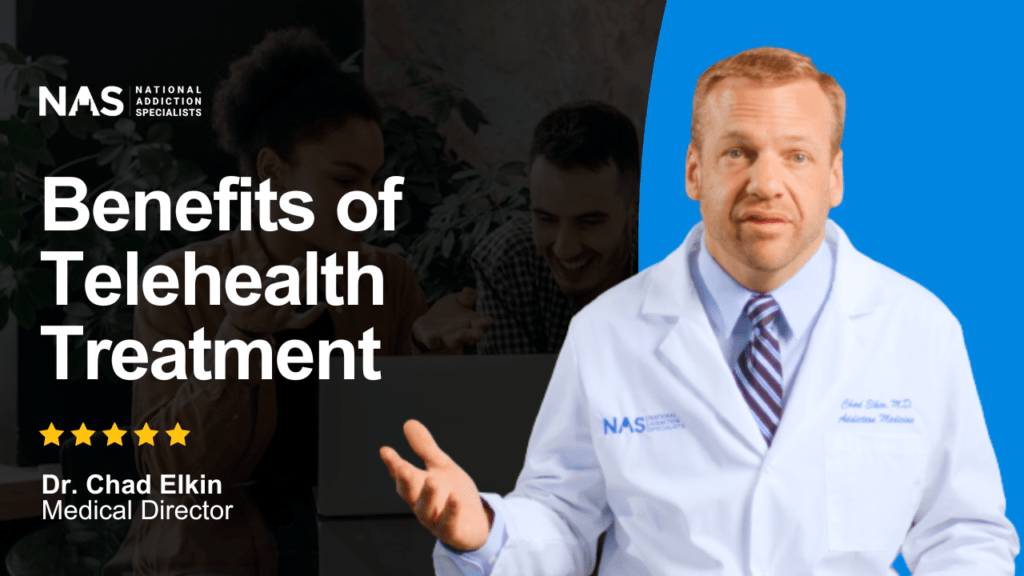
I’m Dr. Chad Elkin, a board-certified addiction medicine physician and founder of National Addiction Specialists, where I’ve dedicated my career to breaking down barriers to effective addiction recovery through evidence-based telehealth treatment. My work focuses on helping people like you access compassionate, confidential care that fits into your life—no matter where you’re starting from.
What is Addiction and How is Recovery Defined?
At its heart, addiction recovery is about finding your way back to yourself and reclaiming a life filled with purpose. For many years, addiction was often misunderstood, unfairly seen as a personal failing or a lack of willpower. But science has shown us a different, much more compassionate truth.
Extensive research, especially from trusted organizations like the National Institute on Drug Abuse (NIDA), has made it clear: addiction is a chronic brain disease. It’s not a character flaw. It’s a complex health condition that profoundly changes how the brain works. As NIDA explains in The Science of Addiction, long-term substance use actually changes the brain’s structure and function. These changes make it incredibly difficult for someone to control their urges, even when faced with serious consequences. These changes impact areas of the brain that control reward, motivation, memory, and self-control. This makes recovery a challenging journey, but it’s absolutely achievable with the right support.
The Substance Abuse and Mental Health Services Administration (SAMHSA) offers a definition of recovery that brings a lot of hope. They describe recovery as a process of change. Through this process, individuals improve their health and wellness, live lives they direct themselves, and work to reach their full potential. This means addiction recovery is much more than just stopping substance use. It’s a full-picture journey toward a healthy, meaningful, and fulfilling life. This definition reminds us that recovery is possible for everyone, filling us with hope and empowering individuals to take an active role in their own healing.
SAMHSA’s Four Dimensions of Recovery
To help us better understand the many parts of addiction recovery, SAMHSA has identified four key dimensions that support a life in recovery. These dimensions highlight just how comprehensive healing can be and give both individuals and treatment providers a clear path to focus on. They are:
- Health: This means working to overcome or manage one’s disease(s) and making smart, healthy choices for overall well-being. For those in recovery, this includes not just substance use, but also any other physical or mental health conditions they might have.
- Home: Having a stable and safe place to live is incredibly important for recovery. A secure environment provides a solid base for healing, reduces stress, and offers a sense of stability that’s vital for lasting sobriety.
- Purpose: This involves engaging in daily activities that bring meaning, like work, school, volunteering, or creative hobbies. It’s also about gaining independence. Finding purpose helps people see themselves beyond their addiction, boosting their self-worth and connecting them to their community.
- Community: This dimension stresses how important it is to build and keep relationships and social networks. These connections offer support, friendship, love, and hope. A strong community can fight against feelings of isolation, offer encouragement, and link individuals with others who truly understand their journey.
The Stages of the Recovery Journey
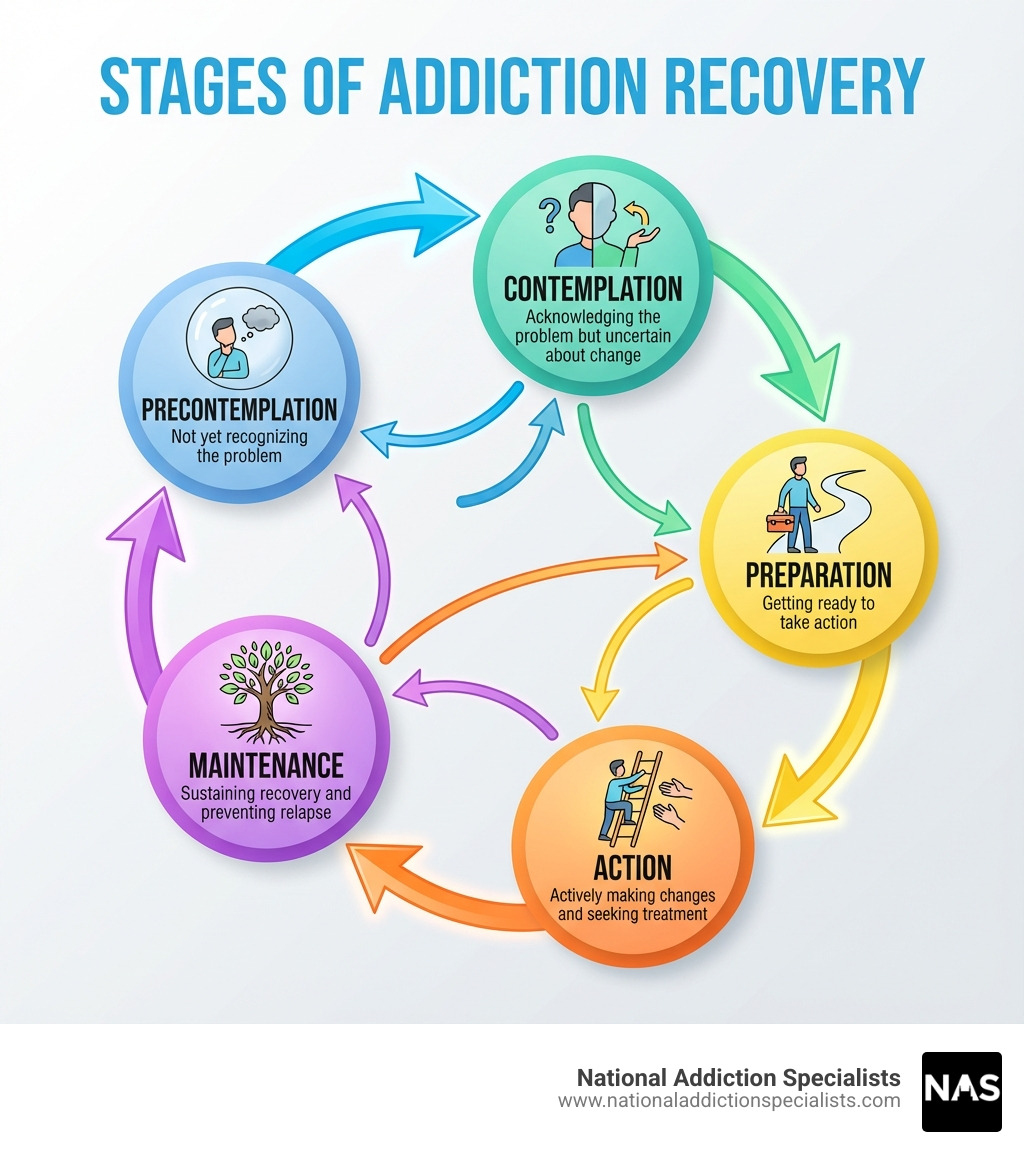
It’s helpful to remember that recovery is a journey, not a single event. This journey often unfolds in different stages, described by the Transtheoretical Model (also known as the Stages of Change). This model helps us understand where someone might be in their recovery and how to offer the best support. It’s important to know that these stages aren’t always a straight line; people often move back and forth between them. Still, it provides a useful roadmap:
- Precontemplation: In this first stage, individuals might not yet realize they have a problem or that they need to change. They might even defend their substance use, focusing on what they see as benefits rather than the harms.
- Contemplation: Here, individuals start to acknowledge that a problem exists and begin to think about making a change. However, they might feel unsure or torn. They might weigh the good and bad points of sobriety, maybe even fearing the unknown parts of a life without substances.
- Preparation: This is the stage where people decide to act and begin making plans for change. They might research treatment options, make small adjustments to their habits, or ask for advice. They’re moving from just thinking about change to getting ready for it.
- Action: In the action stage, individuals are actively working to overcome their addiction. This often means getting professional help, stopping substance use, and learning new ways to cope with challenges.
- Maintenance: This final stage is all about keeping up the changes made during the action stage and working hard to prevent relapse. Individuals focus on making their new healthy habits permanent, continuing therapy or support groups, and managing possible triggers. It’s easy to get too comfortable here, so staying engaged is crucial.
Understanding these stages helps us offer the right kind of support, set realistic expectations, and boost the chances of lasting sobriety. For a deeper look into this journey, we invite you to explore The Addiction Recovery Journey.

Key Components of a Successful Recovery
Imagine building a strong house. You wouldn’t just focus on the walls; you’d think about the foundation, the roof, the plumbing, and even the garden. Achieving lasting addiction recovery is much the same. It’s rarely a quick fix or a one-size-fits-all solution. Instead, it asks for a holistic approach, meaning we look at your entire well-being – mind, body, and spirit – and how they connect.
Because everyone’s journey is unique, individualized care plans are essential. Your treatment should be custom-made for you, taking into account your specific history, what substances you’ve used, and your personal life situation. What works for one person might not work for another, and that’s perfectly okay.
Often, addiction doesn’t travel alone. Many people dealing with substance use also face mental health challenges like anxiety or depression. This is called a co-occurring disorder, and treating both at the same time is usually the most effective way forward. It’s like trying to fix a flat tire while the engine is also misfiring – you need to address both issues for the car to run smoothly. You can learn more about this important connection at Mental Health and Substance Use Disorders.
Life throws curveballs, and recovery is no exception. That’s why building resilience is so important. Resilience is your ability to bounce back from challenges, learn from setbacks, and keep moving forward. It reminds us that recovery is a process, not a destination, and it’s okay if the path isn’t always straight. Addiction recovery is a long-term commitment. It’s a marathon, not a sprint, requiring ongoing effort and support to build a truly healthy and fulfilling life.
The Role of Community and Support Systems
You absolutely do not have to walk the path of addiction recovery alone. In fact, having a strong network of people who care about you is one of the most powerful tools for lasting success. Think of it like a team sport – everyone plays a part in helping you reach your goals.
Peer support is incredibly helpful. Connecting with others who have been through similar experiences offers a unique sense of understanding and comfort. They “get it” in a way others might not, and their shared wisdom can be a guiding light. Family involvement also plays a huge role. When loved ones are involved and supportive, it can make a world of difference. Family therapy can help heal old wounds and build stronger, healthier connections. Want to know how to help someone you care about? Check out How to Support Someone in Recovery.
Support groups like Alcoholics Anonymous (AA) or Narcotics Anonymous (NA) provide a safe space to share your story, listen to others, and learn new coping skills. They help in reducing isolation, which is a big enemy of recovery. Addiction often thrives when you feel alone, so connecting with a community helps break down those walls. Finally, creating a sober network means building friendships with people who also choose a substance-free lifestyle. These relationships offer positive influence and reinforce your healthy choices.
Holistic Wellness Strategies
Beyond professional treatment and supportive communities, simple, everyday practices can make a huge difference in your addiction recovery. These are your holistic wellness strategies, focusing on nurturing your whole self.

We often talk about the mind-body connection because our thoughts, feelings, and physical health are all linked. Taking care of your body helps your mind, and a calm mind can help your body heal. For instance, good nutrition is vital. Eating well can help repair damage from substance use, balance your mood, and give you the energy you need for recovery activities. Dive deeper into this at Importance of Nutrition in Addiction Recovery.
Don’t underestimate the power of exercise. Physical activity can reduce stress, lift your mood, and offer a healthy way to release energy. It’s a fantastic tool to help you stay on track. Read more about its benefits at Exercise and Alcohol Addiction Recovery. Practices like meditation can also be game-changers. They help you manage stress, understand your emotions better, and develop stronger coping skills, making it easier to handle cravings and triggers. Find more at Meditation for Addiction Recovery. Learning healthy stress management techniques, whether it’s deep breathing, journaling, or enjoying a hobby, is crucial to steer daily life without turning back to old habits.
The Long-Term Benefits of Sustained Addiction Recovery
While the journey of addiction recovery certainly has its challenges, the rewards are truly life-changing. When you commit to recovery, you open the door to a future filled with incredible benefits that touch every part of your life.
First, you’ll experience improved physical health. Saying goodbye to substance use dramatically reduces your risk of many health problems, from liver damage to heart issues. You’ll likely feel more energized, sleep better, and simply feel healthier overall. Next, your restored mental health will shine through. Many people find their anxiety, depression, and other mental health struggles lessen significantly, leading to greater emotional stability and peace of mind.
Your stronger relationships will be a source of joy. Addiction often strains or breaks connections with loved ones, but recovery offers a chance to rebuild trust, communicate openly, and create more meaningful bonds with family and friends. You’ll also likely find financial stability. Substance use can lead to money troubles, but in recovery, you can regain control over your finances, find steady employment, and enjoy a greater sense of security.
As you achieve milestones and make positive choices, your increased self-esteem will grow. This renewed confidence will empower you to chase new goals and believe in your brighter future. And finally, you’ll experience refinding purpose. Recovery helps you reconnect with your passions, talents, and values. Finding a new sense of meaning, whether through work, hobbies, volunteering, or spiritual practices, is a powerful motivator for continued sobriety and a truly fulfilling life.
Exploring the Many Pathways to Effective Addiction Recovery
Here’s something that might surprise you: there’s no single “right” way to recover from addiction. What helps one person find lasting sobriety might not work at all for someone else—and that’s not just okay, it’s actually how recovery is supposed to work.
SAMHSA puts it beautifully: recovery happens through many personalized pathways. Your background, your specific challenges, your preferences, and even your daily schedule all play a role in determining which approach will serve you best. Some people thrive in residential treatment programs with round-the-clock support. Others find their footing through outpatient counseling combined with medication. Still others build their recovery primarily through peer support groups and self-management strategies.
The key is exploring your options without judgment. Addiction recovery isn’t about finding the “perfect” path—it’s about finding your path. Clinical treatment, medication-assisted treatment, counseling, peer support, spiritual practices, holistic wellness strategies—these can all be part of the picture. You might start with one approach and later add others. You might try something that doesn’t quite fit, then pivot to something that clicks. That’s all part of the journey.
What matters most is that you don’t give up searching for what works. We’ve put together a comprehensive guide to help you explore different approaches at Addiction Recovery Strategies. The best treatment plan is the one you’ll actually stick with—the one that fits into your life and addresses your unique needs.
Professional Treatment Options
Professional treatment provides structured, evidence-based care delivered by trained specialists. These programs vary in intensity and setting, creating what we call a “continuum of care”—meaning you can access the level of support that matches where you are in your recovery journey.
Inpatient (residential) treatment means living at a treatment facility for a period of time, typically 30 to 90 days or longer. You receive 24-hour care and support in a structured environment, completely removed from the triggers and stressors of daily life. This intensive approach works well for people with severe addictions, those who’ve tried outpatient treatment without success, or anyone who needs a safe place to focus entirely on healing. The downside? It requires taking time away from work, family, and other responsibilities.
Outpatient treatment lets you live at home while attending scheduled therapy sessions and medical appointments. Intensive outpatient programs (IOPs) might meet several times a week for a few hours at a time, while standard outpatient care might involve weekly or bi-weekly sessions. This approach offers flexibility—you can maintain your job, care for your family, and apply what you’re learning in real-time to your daily life. It works especially well for people with strong support systems at home and those stepping down from more intensive care.
Telehealth treatment brings professional care directly to you through secure video appointments. This is where National Addiction Specialists truly shines. Our telemedicine-based approach means you can meet with board-certified addiction medicine physicians and counselors from your own home—no travel required, no waiting rooms, no taking time off work. You receive the same high-quality, evidence-based care you’d get in person, but with the convenience and privacy that makes it easier to commit to treatment long-term. We serve patients throughout Tennessee and Virginia, accepting both Medicaid and Medicare.
Detoxification (withdrawal management) is often the first step for people with physical dependence on substances. Medical professionals monitor you closely and provide medications to ease withdrawal symptoms, keeping you safe and as comfortable as possible during this challenging phase. Detox alone isn’t treatment—it’s just the beginning—but it’s a crucial foundation that prepares you for the recovery work ahead.
For more information about comprehensive care options, visit our Rehabilitation Center page.
The beauty of modern addiction recovery treatment is that these approaches often work together. You might start with detox, transition to residential care, step down to intensive outpatient services, and then continue with ongoing telehealth appointments and medication management. Your treatment plan can—and should—evolve as your needs change.
Make an Appointment to Treat Addiction
Please don’t hesitate. Make an appointment today.
Medication-Assisted Treatment (MAT)
Medication-Assisted Treatment, or MAT, combines FDA-approved medications with counseling and behavioral therapies to treat substance use disorders. Think of it as treating the whole person—the medication addresses the physical aspects of addiction, while counseling tackles the psychological and behavioral components.
For opioid addiction specifically, medications like buprenorphine (the active ingredient in Suboxone) and naltrexone work by reducing cravings and normalizing brain chemistry without producing the euphoric high of opioids. Buprenorphine also blocks other opioids from binding to receptors in your brain, which helps prevent relapse and reduces the risk of overdose. These medications don’t just make you “feel better”—they give your brain the stability it needs to heal while you build the skills and support systems for long-term recovery.
The evidence supporting MAT is overwhelming. Studies consistently show that people who receive medication along with counseling stay in treatment longer, use substances less frequently, and have better overall outcomes than those who receive counseling alone. MAT also significantly reduces the risk of fatal overdose—a critical benefit during a time when opioid overdose deaths continue to climb.
At National Addiction Specialists, we’ve built our entire practice around making MAT accessible and convenient through telehealth. You can receive comprehensive care—including prescriptions, medication management, and counseling—all from home. We offer specialized programs for Online Suboxone Treatment and Telehealth Opioid Treatment, designed to fit into your life rather than disrupting it.
Want to learn more about how MAT works and whether it’s right for you? Check out our Beginner’s Guide to Medication-Assisted Treatment. This comprehensive resource answers common questions and helps you understand what to expect.
Counseling and Behavioral Therapies
Medication can stabilize your brain chemistry, but counseling teaches you how to live differently. Behavioral therapies help you understand the patterns behind your substance use, identify what triggers your cravings, and develop practical coping skills for handling stress, difficult emotions, and challenging situations without turning to drugs or alcohol.
Cognitive-Behavioral Therapy (CBT) is one of the most effective approaches for treating addiction. CBT helps you recognize the thoughts and beliefs that lead to substance use, then teaches you how to challenge and change those patterns. You’ll learn to spot negative thinking, develop healthier perspectives, and practice new behaviors in a safe, supportive environment. CBT gives you concrete tools you can use immediately when cravings hit or when you encounter triggers.
Motivational Interviewing takes a different approach. Instead of telling you what to do, your counselor helps you find your own reasons for change. This technique is especially helpful if you’re feeling ambivalent about recovery or if you’ve been pushed into treatment by others. By exploring your own values, goals, and concerns, you build internal motivation that’s far more powerful than external pressure.
Family therapy recognizes that addiction affects everyone in a household, not just the person using substances. These sessions help heal damaged relationships, improve communication, teach family members how to support recovery without enabling, and address any family dynamics that might contribute to substance use. When your loved ones understand addiction as a disease and learn how to help effectively, your chances of long-term success improve dramatically.
All of these approaches share a common goal: helping you build a life where substances no longer have a place. Whether you’re working with a counselor in person or through our Online Addiction Counseling services, you’re developing the emotional tools and practical skills that make lasting addiction recovery possible.
The most effective treatment plans often combine medication with multiple types of therapy, adjusted over time as your needs evolve. There’s no shame in needing this level of support—in fact, using every tool available shows wisdom and commitment to your recovery.
This article was medically reviewed by:
Chad Elkin, MD, DFASAM is a board-certified addiction medicine physician, founder, and Chief Medical Officer of National Addiction Specialists, dedicated to treating substance use disorders. A Distinguished Fellow of the American Society of Addiction Medicine (ASAM), Dr Elkin currently serves as President of the Tennessee Society of Addiction Medicine (TNSAM) and has held various leadership roles within the organization. Dr Elkin chairs ASAM’s Health Technology Subcommittee and is an active member of its Practice Management and Regulatory Affairs Committee, State Advocacy and Legislative Affairs Committee, and other committees. He also serves on the planning committee for the Vanderbilt Mid-South Addiction Conference. Committed to advancing evidence-based policy, Dr Elkin is Chairman of the Tennessee Association of Alcohol, Drug, & Other Addiction Services (TAADAS) Addiction Medicine Council, which collaborates with the TN Department of Mental Health & Substance Abuse Services (TDMHSAS). He has contributed to numerous local, state, and national task forces, helping develop professional guidelines, policies, and laws that align with best practices in addiction medicine. His work focuses on reducing addiction-related harm, combating stigma, and ensuring access to effective treatment. Passionate about the field of addiction medicine, he remains dedicated to shaping policy and enhancing patient care.
Suboxone® and Subutex® are a registered trademark of Indivior UK Limited. Any mention and reference of Suboxone® and Subutex® in this website is for informational purposes only and is not an endorsement or sponsorship by Indivior UK Limited.